
It’s Q1 2026, and a Series A startup with solid funding needs to hire three senior ML engineers and a data platform lead to deliver on its roadmap. The CTO posts roles on LinkedIn, activates their network, and waits. Eight weeks later, the results are underwhelming: a few interviews, two candidates who ghosted after the second round, one who accepted a competing offer while the team debated compensation, and another whose “production experience” didn’t hold up under scrutiny. Situations like this are common in fast-moving startups, and many leaders respond by bringing in a business coach to help with growth and leadership challenges. Coaches can be incredibly valuable for clarifying priorities, improving delegation, and designing stronger team structures, but they can’t fix a weak hiring pipeline, verify great technical skills, or move faster than competitors competing for the same small pool of talent.
A business coach typically works with founders and senior leaders on strategy, mindset, and accountability through regular sessions over several months. They help define priorities, structure workflows, and sharpen decision-making, but they’re not recruiters, sourcers, or technical evaluators. That’s where specialized hiring infrastructure becomes critical. Platforms like Fonzi AI focus specifically on the execution side of technical hiring, combining AI systems with human recruiting expertise to identify and vet AI and engineering talent more efficiently. For growing companies, the takeaway is straightforward: coaching can help you decide what to hire and why, while platforms like Fonzi help you actually find and close the engineers needed to build the product.
Key Takeaways
Traditional hiring for AI and engineering roles takes 6+ months on average—far too slow when top candidates accept offers within days.
A business coach excels at strategy, leadership development, and organizational clarity but does not source candidates, run technical screens, or detect resume fraud.
AI-powered talent marketplaces like Fonzi use multi-agent systems to screen, verify, and evaluate candidates in days instead of weeks, while keeping humans in control of final decisions.
The best hiring stack combines strategic guidance from coaches or advisors with execution-focused tools that handle the operational heavy lifting.
Why Hiring for Tech Roles Is So Hard Right Now
The 2023–2026 tech landscape has fundamentally changed how companies compete for engineers and AI specialists. Remote-first work expanded the talent pool, but it also expanded the competition. Every company with venture funding is chasing the same senior ML engineers, and salary expectations have risen accordingly.
Slow Hiring Cycles
According to the 2024 Tech Talent Report from the Linux Foundation, the average time-to-hire for AI/ML engineer roles is approximately 6.1 months. That’s nearly half a year to fill a single critical position. For executive management roles, it stretches even longer.
When your hiring process takes 10–16 weeks while competitors using pre-vetted marketplaces close in 3–4 weeks, you will lose candidates. The best engineers don’t wait around.
Recruiter Bandwidth
Internal talent acquisition teams spend enormous hours on repetitive tasks: manual resume screening, initial phone screens, scheduling interviews across time zones, and chasing candidates through slow feedback loops. This leaves little space for strategic work like employer branding, candidate experience optimization, or proactive pipeline building.
Inconsistent Candidate Quality
Noisy inbound channels flood recruiters with applications that don’t match role requirements. Embellished resumes are common, as titles like “AI Engineer” often mask candidates with no production ML experience. Without structured evaluation rubrics, different interviewers assess candidates against different criteria, creating inconsistent hiring decisions.
Fraud and Misrepresentation
The rise of AI has made candidate fraud more sophisticated. Fonzi’s internal data from screening thousands of candidates internationally reveals frequent issues: AI-generated resumes, fake portfolios, duplicate profiles across platforms, and even proxy test-takers. These create serious business risk when unqualified hires enter production environments.
Business Impact
Every month a critical engineering role stays open represents missed product deadlines, slower roadmap velocity, and opportunity cost versus better-funded competitors. For small business owners scaling their first tech team, a single mis-hire can cost $17,000+ in direct costs plus incalculable indirect losses in morale and momentum.
What a Business Coach Can (and Can’t) Do for Tech Hiring
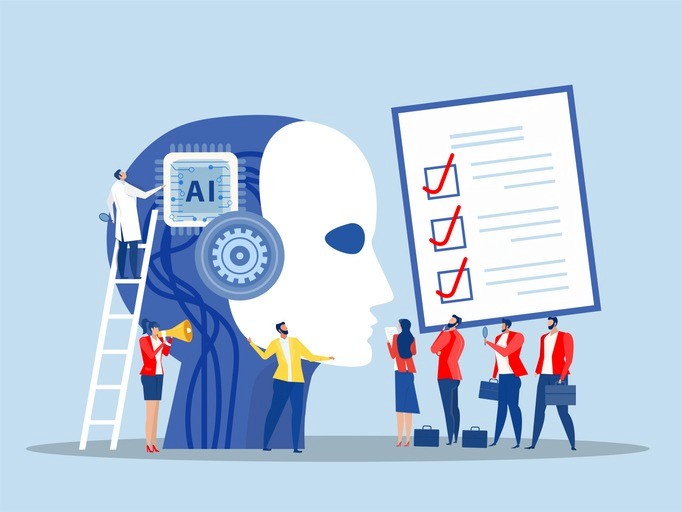
Business coaches typically engage founders and hiring leaders over 3–12 month periods. They work one on one with clients to improve leadership, create accountability structures, and develop proven systems for growth. For many entrepreneurs, this expert guidance is transformational.
What Coaches Do Well for Hiring
A skilled coach can help you in several critical areas:
Clarifying headcount strategy: When should you hire a VP of Engineering versus promote internally? Which roles matter most for your business plan this quarter?
Defining leadership roles: Who reports to whom? What does success look like in the first 90 days?
Improving interview behavior: Reducing bias, creating consistency, and helping hiring managers delegate more effectively.
Building a talent brand narrative: What makes your engineering culture distinctive? Why would a senior ML engineer choose you over a FAANG offer?
Mindset Benefits
Coaches also address the psychological challenges of business ownership. Many founders struggle with fear of hiring, fear of over-hiring, fear of losing control, and fear of making “panic hires” under pressure. A coach helped one CTO I’ve observed overcome the habit of micromanaging engineers, which was driving top talent away.
Clear Limitations
However, business coaches generally do not:
Source candidates or build pipelines
Run technical screens or code reviews
Detect resume fraud or verify work histories
Design automated multi-step evaluation flows
Manage interview logistics at scale
Consider a concrete example: a coach might help a CTO define exactly when to hire a VP of Engineering in Q3 2026, clarify the reporting structure, and develop the action plan for onboarding. But the coach will not run the actual candidate pipeline, assess coding skills, or verify that a candidate’s GitHub contributions are genuine.
A coach is a strategic multiplier. They provide expert guidance on the right direction. But you still need tools and partners to execute repeatable, high-quality technical hiring at speed.
Where AI and Talent Marketplaces Outperform Traditional Coaching
In 2024–2026, AI has moved from experimental to essential in technical recruiting. Modern systems can parse resumes, structure interviews, evaluate code samples, and detect fraud at a scale no human team can match.
Multi-Agent AI Approach
Fonzi uses a multi-agent architecture where specialized AI agents collaborate on different hiring tasks:
Sourcing agents identify candidates from pre-vetted pools
Screening agents parse resumes and match skills to role requirements
Fraud detection agents cross-verify work histories, identify AI-generated content, and flag inconsistencies
Evaluation synthesis agents compile structured candidate profiles with consistent scoring
This approach treats hiring as a system of specialized resources working together, rather than relying on a single recruiter to do everything.
Speed Advantage
Using Fonzi’s AI marketplace and pre-vetted pool, companies report reducing time-to-hire by 30–50%. Most hires happen within three weeks of engagement—compared to the 6+ month average for AI roles through traditional channels. When candidates move fast, you need a system that moves faster.
Fraud Detection at Scale
Fonzi’s fraud detection capabilities include:
Cross-checking candidate claims against public data (GitHub, LinkedIn)
Identifying AI-generated resume content and duplicate profiles
Monitoring behavior anomalies during assessments (device changes, clipboard pasting)
Flagging misaligned titles and inflated experience claims
In screening thousands of candidates globally, Fonzi consistently uncovers misrepresentations that would slip past traditional recruiting processes.
Structured Evaluation
Instead of relying on gut-feel decisions, AI platforms enforce consistent rubrics across all candidates. A Senior ML Engineer is evaluated against the same criteria, whether they interview Monday morning or Friday afternoon, whether with your most experienced interviewer or your newest hiring manager.
The key contrast: coaches advise you how to think about hiring. Fonzi and its AI tools directly execute the heavy lifting inside the hiring funnel.
Fonzi’s Multi-Agent AI vs. Business Coach vs. Traditional Recruiting
Tech leaders rarely compare these three options side by side, which leads to misaligned expectations and wasted investment. The following table breaks down how each approach performs across critical hiring dimensions.
Comparison Table: Choosing the Right Support for Tech Hiring
Dimension | Business Coach | Traditional Recruiting Agency | Fonzi (Multi-Agent AI Talent Marketplace) |
Typical engagement length | 3–12 months (ongoing advisory) | Project-based or retainer | Flexible: per-role or ongoing partnership |
Who does candidate sourcing? | Client’s internal team | Agency recruiters | AI agents + pre-vetted marketplace pool |
Time to candidate shortlist | N/A (coach doesn’t source) | 4–8 weeks for specialized roles | Days to 1–3 weeks |
Tech stack and AI role specialization | Varies; often generalist | Varies; many are generalist | Built specifically for AI, ML, and engineering |
Level of automation | None; human advisory only | Minimal; mostly manual processes | High; AI handles screening, parsing, fraud checks |
Fraud detection capability | Awareness coaching only | Manual reference checks | Automated multi-signal verification |
Candidate evaluation depth | Helps design rubrics | Varies; often inconsistent | Standardized scoring with transparent rubrics |
Control over final decision | Full control with client | Client decides after agency handoff | Human-in-the-loop: recruiters approve all AI outputs |
Fonzi combines AI scale with human decision control. Coaching focuses on strategic and leadership development. Traditional agencies provide relationship depth but often lack speed and specialization. For tech hiring in 2026, the combination that works best is strategic clarity (from coaching or advisors) plus execution firepower (from AI-powered marketplaces).
How Fonzi’s Multi-Agent AI Fits into Your Hiring Stack
Consider a Series B SaaS company in 2026. They need to add 10 engineers and 3 AI roles over six months. Their internal TA team is stretched, cash flow constraints mean they can’t double headcount, and their last two ML hires took four months each.
Integration, Not Replacement
Fonzi integrates with existing ATS and interview processes rather than replacing them. The goal is compatibility and low-friction onboarding, not ripping out your current systems.
The Multi-Agent Workflow
At a high level, Fonzi’s multi-agent system works like this:
Resume parsing agent: Extracts skills, experience, and signals from applications
Technical screening agent: Matches candidates against role requirements and generates initial scores
Fraud detection agent: Verifies claims, checks for AI-generated content, flags anomalies
Profile synthesis agent: Compiles a structured candidate summary for human review
Human recruiters stay in control throughout. They approve shortlists, customize rubrics for their specific business needs, and conduct final culture and team-fit interviews.
Roles Fonzi Supports
Specific roles Fonzi can help fill include:
Senior Platform Engineer
MLOps Engineer
Applied Scientist
Staff Frontend Engineer
Data Engineer
AI/ML Research Engineer
This approach gives hiring leaders leverage similar to adding multiple recruiting coordinators and sourcers without scaling headcount or sacrificing quality. Your employees stay focused on high-value work while AI handles the repetitive tasks.
Implementation Roadmap: From Business Coaching Advice to AI-Driven Execution

Many leaders already have strategic guidance from a coach or consultant. They understand what they need to hire and why it matters for business growth. What they lack is an execution roadmap for tech hiring that actually works in 2026’s competitive market.
30–60–90 Day Plan
Weeks 1–2: Define and Align
Work with hiring managers to create role scorecards with non-negotiable skills
Clarify what success looks like at 30, 60, and 90 days for each role
If you have a coach, use this time to finalize headcount strategy and priorities
Weeks 3–4: Connect and Calibrate
Connect Fonzi to your pipeline and ATS
Run calibration on real candidates to ensure AI scoring aligns with your team’s expectations
Train internal recruiters on reviewing AI-generated candidate profiles
Weeks 5–8: Scale and Optimize
Review initial shortlists and provide feedback to improve AI accuracy
Track early metrics: time-to-candidate, interview-to-offer conversion
Iterate on rubrics based on real hiring outcomes
Ongoing: Measure and Improve
Monitor quality-of-hire at 90 days for engineering and AI roles
Track offer acceptance rates to assess competitiveness
Use data to continuously refine your hiring process
Change Management Tips
When introducing AI to your hiring stack, communicate clearly with internal recruiters:
AI will offload repetitive tasks (screening, scheduling, initial parsing)
Human judgment remains central to final decisions and stakeholder relationships
The goal is to free up time for strategic work, not to replace jobs
Key Metrics to Track
Metric | Why It Matters |
Time-to-hire | Speed directly impacts candidate drop-off |
Onsite-to-offer rate | Measures evaluation efficiency |
Offer acceptance rate | Indicates competitiveness and candidate experience |
Quality-of-hire (90-day) | The ultimate measure of hiring success |
Fraudulent candidates flagged | Tracks risk reduction |
The best outcome is synergy: coaches shape hiring strategy and leadership behavior, while Fonzi’s AI and marketplace execute the day-to-day hiring work.
Conclusion
A business coach can significantly improve how founders and leaders approach leadership, accountability, and organizational design. Through structured guidance and real-world experience, coaches help entrepreneurs clarify business priorities, avoid reactive hiring decisions, and build more thoughtful team structures. For many startups and small business leaders, this type of support can shape the long-term trajectory of the company and create the confidence needed to scale effectively.
However, coaching alone doesn’t solve the operational challenge of hiring highly specialized technical talent. Coaches aren’t responsible for sourcing candidates, verifying machine learning credentials, or identifying inflated portfolios. That work requires tools and partners designed specifically for technical recruiting. Platforms like Fonzi AI address this gap by combining AI systems with human recruiters to streamline the hiring process for AI and engineering roles. By accelerating sourcing, improving verification, and standardizing evaluation, Fonzi helps companies reduce time-to-hire while keeping hiring decisions firmly in the hands of human leaders.
FAQ
Can a business coach help a small business owner hire for technical roles?
What should a small business coach know about building a tech team?
When should a startup founder get a business coach vs. a recruiting partner to hire engineers?
What do business coaches typically advise small companies on when it comes to hiring?
How much does a business coach cost for a small business, and is it worth hiring?


