How to Build a FAANG-Ready Resume in 2026: Templates & Examples
By
Ethan Fahey
•

You polish your resume, apply to a Google role that looks tailor-made for you, and two days later, an automated rejection lands in your inbox. No interview, no feedback, and chances are a human never even opened the file. That experience is increasingly common in 2026, as FAANG companies and top AI startups rely on ATS and internal AI tools to handle roughly 70% of first-round screening. Your resume often has one to three seconds to prove it belongs in the “yes” pile before an algorithm moves on.
If you’re an AI engineer, ML researcher, LLM specialist, infra engineer, or data platform lead, this guide is designed for you. We’ll break down how to structure a resume that survives modern screening, still resonates with hiring managers, and maps cleanly to the roles you actually want. We’ll also show how Fonzi AI fits into this shift: as a curated talent marketplace, Fonzi uses AI to raise signal and transparency, not to replace people, but to help recruiters quickly find engineers who truly fit. Through Match Day, your resume becomes a fast path to high-signal interviews instead of another document lost in the ATS void.
Key Takeaways
A FAANG-ready resume in 2026 follows a clean, one-page structure for most engineers, but must now highlight AI/LLM impact, ownership, and quantifiable outcomes; not just tasks.
Hiring at Google, Meta, Amazon, Apple, Netflix, and top AI startups is now AI-assisted and ATS-driven, but human recruiters still make final decisions. Fonzi AI uses bias-audited tooling to keep that process fair.
Fonzi AI’s Match Day can get senior engineers offers in approximately 48 hours once they have a polished profile and resume ready to go.
Keywords matter more than ever: your resume must pass the AI filter before a hiring manager ever sees your name.
2026 Reality Check: How FAANG & Top AI Companies Actually Screen Resumes

Before you write a single bullet, you need to understand what happens after you click “Apply.”
Modern AI engineer FAANG-level screening combines internal referrals, ATS filtering (think Greenhouse, Workday, or proprietary systems), internal database searches, and AI-powered scoring. Here’s how it actually works:
Keyword-based search is the first gate. Most FAANG recruiters now search internal databases by specific phrases like “LLM inference optimization,” “multi-tenant vector store,” or “PyTorch distributed training.” They’re not reading every resume linearly—they’re hunting for exact matches to their open roles.
ATS parsing still favors simplicity. Despite advances in AI, these systems work best with clean PDF or .docx files. No columns, no images, no graphics, no fancy headers. If your resume uses a creative template from a design tool, there’s a good chance the ATS mangles it into unreadable text.
Internal AI tools score resumes on skill coverage, impact, and recency. Engineers who highlight 2023–2026 experience on modern stacks, OpenAI API, Vertex AI, Ray, Kubernetes, Rust, and Go get prioritized. Legacy-heavy resumes without recent project signals often get filtered out.
Curated marketplaces bypass the noise. Platforms like Fonzi AI pre-vet engineers, standardize resume signals, and feed hiring managers high-signal profiles instead of raw resume dumps. This is a fundamentally different experience from mass-applying through job boards.
Human hiring managers still make offers. Despite all the AI filtering, a real person decides whether to extend an offer. Your resume’s job is to survive the AI layer and make you look like a low-risk, high-impact hire when it finally reaches that human.
FAANG Resume Format in 2026: Structure, Sections, and Length
This section provides a concrete, FAANG-style layout for experienced engineers (3–15 years) targeting big tech and top AI startups. The format hasn’t changed dramatically, but the expectations for content density have increased.
One page is still the standard for most engineers. If you have up to 8–10 years of experience, keep it to one page. Senior staff or principal-level ICs and engineering managers with multi-team scope can use a tight two-page resume, but only if every line adds new, high-signal impact.
Use a standard section order. For most candidates, this means: Contact & Links → Professional Summary → Skills Snapshot → Work Experience → Select Projects → Education → Awards/Patents (optional). This structure matches what recruiters expect and what ATS systems parse most reliably.
Name your sections literally. Use headers like “Work Experience,” “Education,” “Skills,” and “Projects” to maximize ATS compatibility. Creative section names like “My Journey” or “What I’ve Built” confuse parsing systems.
Stick to a single-column layout. Left-aligned dates, no photos, no icons, and standard fonts like Arial, Calibri, Times New Roman, or Helvetica at 10–12 pt size. This isn’t about being boring; it’s about ensuring your resume renders correctly across every system.
File format matters. Create your resume in Google Docs or Microsoft Word, then export to PDF with simple styling. Run the “plain text test” by copying your resume into a plain text editor; if it’s readable there, it’s ATS-friendly.
Include location preferences clearly. For global candidates or those open to relocation, add a line near the top like: “Locations: SF Bay Area, NYC, Remote US; US citizen, open to relocation in 2026.” This saves recruiters time and prevents mismatches.
Section-by-Section: What a FAANG-Ready Resume Should Contain
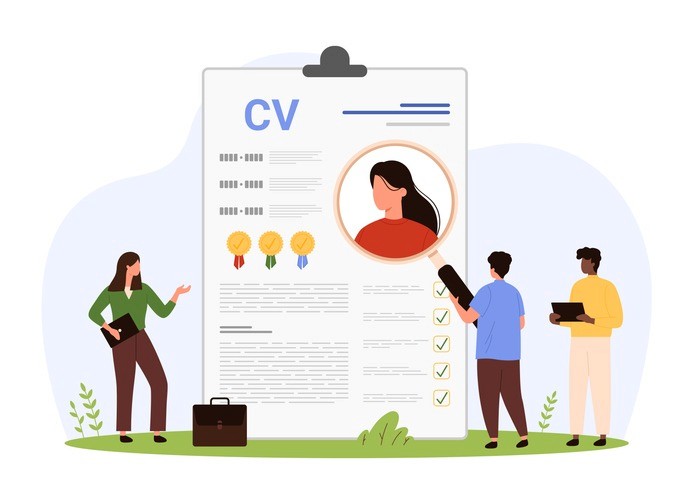
Let’s walk through each resume section with specific guidance tailored to AI, ML, LLM, and infra engineers.
Contact & Links
Include your name, city and country, email, GitHub profile, personal site or portfolio, and LinkedIn URL. Skip the full street address; no one needs it, and it adds clutter. Avoid unnecessary social links unless they’re directly relevant to your work.
Professional Summary
Write 3–4 concise lines focused on your title, years of experience, core stack, and 2–3 quantified achievements relevant to FAANG-scale systems. This is not a place for soft skills or generic statements. Example: “Senior ML Engineer with 6 years building recommendation systems at scale. Reduced inference latency by 40% on 100M+ user platforms. Core expertise in PyTorch, distributed training, and RAG architectures.”
Skills Snapshot
Group technologies by category: Languages, Frameworks, ML/LLM, Infra & Cloud, and Data. Order by strength and relevance to your target-specific role. Avoid long alphabetized lists that bury your strongest technical skills. Most candidates fail here by either listing too much or not being specific enough about their expertise level.
Work Experience
Use reverse chronological order. Each role-focused bullet should have a strong action verb and hard metrics: latency, throughput, cost, user impact, revenue, or model quality deltas like ROUGE or NDCG. If you led a team, say so explicitly. If you owned a system, make that clear.
Projects
Include 2–4 high-signal work or personal projects from 2020 onward. For AI/LLM demos or infra tooling, include GitHub links. Emphasize ownership and measurable outcomes, not just what the project was, but what it achieved and how you contributed.
Education
Include degree, institution, graduation year, and GPA if 3.5+ on a 4.0 scale. Add one line on relevant coursework or thesis if you’re a recent graduate. For senior engineers with much work experience, keep this section compact; your work history matters more.
Awards, Publications & Patents
Only list meaningful, role-relevant items. Examples: NeurIPS 2023 paper, 2024 patent on retrieval-augmented generation, or internal excellence award. Include dates and enough context for someone outside your company to understand the significance.
Example FAANG-Ready Resume Layout for AI/ML & Infra Engineers
Section | Weak 2026 Resume Example | FAANG-Ready 2026 Resume Example |
Professional Summary | “Experienced software engineer looking for new opportunities in AI.” | “Senior AI Engineer, 6 years. Built RAG systems serving 50M queries/day. Reduced LLM inference cost by 35% via quantization. PyTorch, Ray, Kubernetes.” |
Skills | “Python, Java, Machine Learning, Cloud, Databases, Git, Docker, Agile” | “ML/LLM: PyTorch 2.2, JAX, Triton, LoRA, RAG, LangChain, Ray Train. Infra: Kubernetes, Terraform, AWS SageMaker, GCP Vertex AI. Languages: Python, Rust, Go.” |
Work Experience | “Worked on recommendation system. Helped improve user engagement.” | “Improved video recommender CTR by 7.9% at 40M DAU via two-tower transformer model with Approximate Nearest Neighbor retrieval, reducing p99 latency from 120ms to 45ms.” |
Projects | “Built a chatbot using GPT.” | “Open-source LLM evaluation harness (github.com/handle/llm-eval) with 2.1k stars. Adopted by 3 internal teams at previous company. Benchmarked 15 models on MMLU and HumanEval.” |
Awards | “Won award at work. 2024. Best Applied ML Paper.” | “ICML. Efficient retrieval methods for domain-specific LLMs.” |
This table demonstrates that the difference between an ATS-friendly resume that gets filtered out and one that lands interviews often comes down to specificity, metrics, and clarity.
Writing Impactful Bullets: AI, LLM & Infra Examples Recruiters Actually Want
FAANG hiring managers care less about task lists and more about impact, scope, and complexity. This is especially true for AI/ML and infra roles where specific numbers and outcomes separate strong candidates from the rest.
The Formula
Follow this pattern for every bullet: [Action verb] + [what you built/optimized] + [how you did it: tools/techniques] + [measurable outcome with baseline → new value].
LLM Engineer Examples
“Optimized LLM inference throughput from 800 to 2,400 tokens/sec on T4 GPUs via dynamic batching and KV-cache optimization, reducing serving costs by 28%.”
“Designed and deployed RAG pipeline using LangChain + Pinecone for internal knowledge retrieval, achieving 91% answer accuracy on enterprise support queries.”
“Fine-tuned Llama-3-70B on proprietary customer data using LoRA, improving domain-specific task accuracy from 72% to 89% on internal benchmarks.”
ML Platform/Infra Engineer Examples
“Reduced model training costs by 40% by migrating from on-prem to spot-instance GPU clusters on AWS, orchestrated via Ray and Kubernetes.”
“Built feature store serving 200M feature lookups/day with p99 latency under 15ms, accelerating experimentation cycles from 2 weeks to 3 days.”
“Implemented MLOps pipeline with automated model validation, reducing production incidents from model deployments by 65%.”
Backend/Infra Engineer Examples (Supporting AI Products)
“Scaled inference service from 10K to 150K QPS by implementing horizontal auto-scaling and connection pooling, maintaining p99 latency at 35ms.”
“Hardened observability stack (Prometheus, Grafana, distributed tracing) for ML inference services, reducing mean time to detection from 45 minutes to 3 minutes.”
“Migrated 2PB data pipeline to Apache Kafka + Flink, cutting batch processing time by 60% and enabling real-time feature updates.”
Use “before vs after” framing with real metrics wherever company confidentiality allows. Rewrite bullets for your 2024–2026 roles first, as FAANG reviewers focus heavily on your most recent 3–4 years of work experience.
ATS & Keyword Optimization: Getting Past the First AI Filter
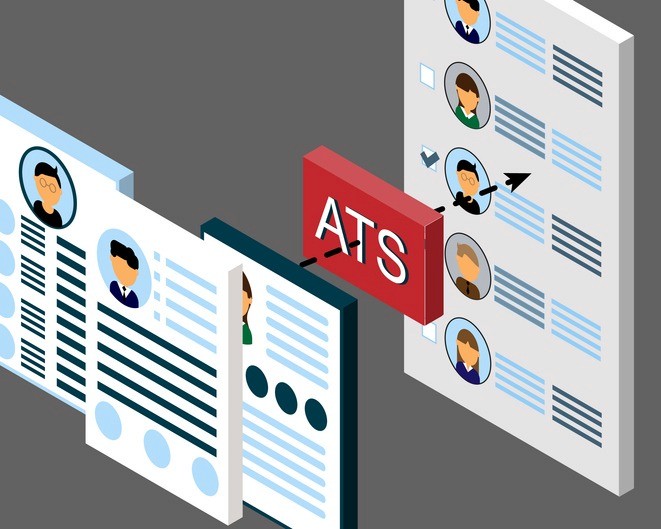
While ATS and AI filters are more sophisticated in 2026, they still rely heavily on clear, explicit mentions of technologies, responsibilities, and domains. Here’s how to optimize without making your resume read like a keyword dump.
Mine job descriptions for recurring terms. Scan postings from Google, Meta, Apple, Amazon, Netflix, and top AI startups. Look for phrases like “retrieval-augmented generation,” “multi-tenant inference,” “CUDA kernels,” “K8s,” or “data plane.” These are the terms recruiters are literally searching for.
Integrate keywords naturally. Weave them into your Skills, Summary, and Work Experience sections. Keyword stuffing a separate “buzzword block” at the bottom is a common mistake that can flag your resume as low-quality to both humans and AI systems.
Standardize your titles and skills. Fonzi AI’s intake process helps candidates normalize skill tags and titles (e.g., “Senior Machine Learning Engineer” vs “AI Scientist”) to align with how companies search their databases. Consistency matters.
Include both generic and specific names. Write “large language models (LLMs) – GPT-4, Claude, Llama 3” rather than just one or the other. Different ATS configurations match differently, so covering both bases improves your odds.
Spell out acronyms once. Use formats like “Kubernetes (K8s)” or “Retrieval-Augmented Generation (RAG)” to maximize search hits. Some systems index full names, others index abbreviations.
Run a keyword audit. Paste your resume and your target job description into an AI tool or a simple word-frequency checker to identify gaps. If the JD mentions “distributed systems” five times and your resume mentions it zero times, that’s a problem.
How Fonzi AI Uses AI Responsibly in Hiring (and Why It Helps Your Resume)
Fonzi AI’s philosophy is simple: AI should reduce noise, bias, and friction in hiring while keeping human recruiters and founders in control of final decisions. Here’s what that means in practice.
Pre-vetted engineers only. Fonzi reviews resumes, verifies experience, and maps skills before candidates join the marketplace. This ensures only high-signal engineers get in front of companies without wading through unqualified applicants.
Bias-audited evaluation. Fonzi uses structured profiles, consistent rubrics, and automated checks designed to mitigate obvious sources of bias (name, photo, school prestige) when surfacing candidates. The focus is on what you’ve built and shipped.
Fraud detection built in. Identity checks and project verification mean legitimate engineers don’t compete with fake or embellished profiles. This protects both candidates and employers.
AI standardizes, not fabricates. Fonzi uses AI to summarize and standardize your experience (titles, skills, impact) but does not generate fake achievements or alter your history. Candidates approve all content before it goes live.
Better candidate experience. AI handles scheduling, reminders, and status updates so engineering recruiters and founders can spend more time on actual technical discussions rather than coordinating logistics.
Privacy and consent respected. Your data is used strictly for matching and evaluation within the hiring event context. No surprises, no selling your information to third parties.
Inside Fonzi’s Match Day: Turning a FAANG-Ready Resume into Offers
Match Day is a focused, time-boxed hiring event where pre-vetted engineers and committed employers meet under clear salary bands. It’s designed to compress what normally takes months into days.
Preparation phase. Candidates submit their resume, GitHub, and portfolio. Fonzi helps align your profile with FAANG-style expectations and your target role preferences. This is where the detail work on your resume pays off.
Salary transparency from day one. Companies provide role details and base salary ranges upfront, so you know comp expectations before interviews even begin. No more wasting time on roles that don’t match your targets.
The 48-hour window. During a typical Match Day, employers receive a curated shortlist of candidates, send interview requests, and start live conversations quickly. The compressed timeline forces decisions and creates momentum.
AI/ML role highlighting. For engineers in AI, ML, and infra, Fonzi highlights specific strengths in your profile summary, such as LLM fine-tuning experience, large-scale data infrastructure, and distributed training platforms. Recruiters see exactly what makes you relevant.
Mutual opt-in model. Match Day is not a mass-apply system. Both sides choose to participate, which leads to higher response rates and more serious conversations than traditional job boards, where most candidates get ghosted.
Your profile as resume-plus. Treat your Fonzi profile as your FAANG-ready resume plus context: links, code, and projects that don’t fit on one page but matter to technical founders evaluating senior hires.
Interview Preparation: Aligning Your Resume With 2026 FAANG-Style Screens

Your resume sets the agenda for interviews. Every bullet you write is a potential deep-dive topic, so prepare to defend and expand on everything you list.
Create a “story bank.” Map each major resume bullet to a detailed narrative including context, choices, tradeoffs, metrics, and what you’d do differently. Interviewers will probe, and vague answers kill momentum.
Prepare 5–7 in-depth stories. Match these to common FAANG interview loops: system design, ML modeling walkthrough, LLM and systems architecture decisions, debugging a production incident, and leading cross-functional work.
Use structured frameworks. Align your prep with STAR (Situation, Task, Action, Result) or PAR (Problem, Action, Result) so you can clearly communicate impact during behavioral and leadership questions.
Rehearse live coding. If you claim Python, Go, or Rust as “primary” programming languages in your skills section, you need to be able to write clean code in those languages under pressure. Resume claims must match live ability.
Leverage Fonzi’s concierge support. Fonzi’s recruiters can help candidates prioritize which experiences to highlight based on the target roles in an upcoming Match Day. This is particularly helpful when you’re targeting multiple company types.
Don’t exaggerate. FAANG and top startup interviewers will quickly probe claimed experience in LLMs, distributed systems, or low-level optimization. If you say you “architected” something, be prepared to answer why you made every major decision.
Conclusion
Building a FAANG-ready resume in 2026 means understanding how AI-powered screening works and designing your resume for both algorithms and people. That starts with a clean, simple structure, continues with impact-driven bullets backed by real numbers, and ends with tight alignment to the specific AI, ML, or infrastructure role you’re targeting. For technical roles, clarity and depth matter just as much as keywords; recruiters want to see what you built, at what scale, and why it mattered.
AI in hiring should reduce friction, not strip away the human element. That’s the idea behind Fonzi AI: a curated marketplace and Match Day model that keeps engineers in control while shortening time-to-offer with transparent, high-signal matching. Once you’ve audited and updated your resume using the guidance in this article, starting with your most recent roles, you can put it to work on Fonzi by applying for upcoming Match Days tailored to AI and infra hiring. With demand rising across FAANG teams and AI startups alike, modernizing your resume now positions you to enter your next interview loop from a place of strength, not a last-minute scramble.
FAQ
What is the standard FAANG resume template for software engineers in 2026?
How do I quantify my software engineering impact for a FAANG recruiter?
What are the must-have keywords for an ATS-friendly tech resume in 2026?
Is a one-page resume mandatory for FAANG companies if I have 5+ years of experience?
Should I include personal AI or LLM projects on my FAANG resume this year?


