How to Stand Out in a Group Interview
By
Ethan Fahey
•
Picture this: it’s Q1 2026, and you’re in a Zoom room with five other AI engineers. A hiring manager shares a prompt: design a fault-tolerant LLM inference pipeline serving one million daily users, and you have 45 minutes to architect it together while interviewers quietly evaluate how you think, communicate, and collaborate. That’s the new reality of AI hiring. Group interviews, where multiple candidates tackle a shared system design or technical challenge, are increasingly common across AI startups, research labs, and infra teams because they surface qualities that a one-on-one simply can’t: how you handle ambiguity, whether you build on others’ ideas, and how you operate under real-world constraints.
For recruiters and engineering leaders, this format offers a clearer signal of team-level impact. And at Fonzi AI, we see this shift every day. As a curated marketplace for AI, ML, full-stack, and data engineers, Fonzi partners with companies that care not just about what candidates know, but how they work in high-stakes, collaborative environments. In the rest of this article, we’ll break down how to stand out authentically in group settings, how AI can be used responsibly to support fairness and clarity in hiring, and how Fonzi’s 48-hour Match Day condenses the entire evaluation process into a high-signal, business-ready hiring event.
Key Takeaways
Group interviews are standard for AI, ML, and engineering roles at startups and larger tech companies, designed to evaluate collaboration, problem-solving, and communication under realistic pressure.
Standing out requires balancing initiative with collaboration. Interviewers want to see you lead when appropriate and support others when it matters.
Fonzi AI is a curated, bias-audited talent marketplace that uses AI to make hiring faster, more transparent, and more human-centric for experienced engineers.
Preparation is the biggest differentiator: knowing the company’s stack, rehearsing STAR stories, and practicing group dynamics gives you an edge over unprepared candidates.
Fonzi’s Match Day compresses group-style evaluation into 48-hour hiring outcomes, connecting pre-vetted engineers with multiple high-growth companies in a single structured event.
What Is a Group Interview (for Technical Roles)?
A group interview for technical roles typically involves multiple candidates or multiple interviewers, or both, in a shared session, often conducted over video. Unlike an individual interview where you’re the sole focus, a group format puts you alongside other candidates or in front of a panel, requiring you to demonstrate your skills while others watch and participate.
For AI and ML engineers, there are two main formats to understand:
Multiple-candidate group interview: Several candidates work through problems together while one or more interviewers observe. You might be asked to design an LLM evaluation framework collaboratively or prioritize MLOps improvements as a group.
Panel interview: One candidate faces several interviewers, typically a mix of engineering leads, hiring managers, and sometimes product managers or an HR representative. Each panelist brings a different perspective and set of concerns.
Typical activities for AI and ML roles include:
Collaborative whiteboard system design (e.g., scaling recommendation systems)
Prioritization exercises for competing technical initiatives
Pair debugging or incident triage simulations
Discussing tradeoffs in LLM architectures or infra choices
Group interviews often appear at early or mid stages of hiring loops at AI startups across San Francisco, London, Berlin, Bangalore, and other tech hubs. At Fonzi AI, we prepare candidates for both styles and work with hiring teams to clearly define what they’re actually assessing in each group session, so there’s no guesswork about what success looks like.
Why Employers Use Group Interviews in AI & Engineering
Fast-growing AI companies use group interviews because they need to see how engineers collaborate under time pressure. A solo AI coding challenge tells them you can solve problems. A group format tells them whether you can solve problems with other people, which is what the job actually requires.
Here’s what employers are looking for:
Live comparison of candidates on communication skills, leadership qualities, and depth of technical thinking
Reaction to ambiguity when facing complex AI/ML or infra problems without clear right answers
Efficiency in hiring when filling several roles on the same team simultaneously
Consider a startup hiring three ML engineers for a recommendation team in Q1 2026. Instead of running nine separate interviews, they might conduct a 90-minute group exercise where candidates collaboratively design an online ranking system. The hiring manager and a staff engineer observe and score each person on a structured rubric.
Responsible employers, the ones worth working for, use structured rubrics rather than “vibes.” This aligns with Fonzi AI’s bias-audited evaluation approach: every candidate is assessed against the same criteria, reducing the influence of unconscious bias.
Panel interviews serve a different purpose. When multiple interviewers evaluate one candidate, they’re bringing together perspectives from engineering, product, and sometimes security or compliance. The goal is to see how you answer questions from diverse perspectives and whether your technical depth holds up under scrutiny from different angles.
How Group Interview Questions Work (Technical & Behavioral)
Even in group formats, questions fall into two buckets: behavioral (how you work) and technical (what you know and how you think). Understanding how these questions surface in a group context helps you prepare for what’s coming.
In multi-candidate sessions, everyone may answer the same behavioral question in turn. The interviewer might ask each person to describe a time they disagreed with a teammate about a technical approach. In task-based sessions, questions surface organically as the group works through a problem; someone might ask, “How should we handle cold-start users in this recommendation system?”
For AI and ML roles, expect questions that connect your past experience to the group task at hand: collaborating on model deployment, handling data quality issues, or evaluating LLM outputs for safety.
At Fonzi AI, we encourage partner companies to share expected formats before Match Day, whether it’s collaborative coding, a discussion-based design review, or a structured panel. This lets candidates prepare intentionally rather than walking in blind.
Multiple-Candidate Group Interview Questions
When you’re in a room (virtual or physical) with several candidates, questions typically probe soft skills like teamwork, conflict resolution, and collaborative problem-solving. Here are common themes:
Teamwork under pressure: “Tell us about a time your ML experiment failed and how you handled it with your team.”
Conflict resolution in technical debates: “Describe a situation where you and a colleague disagreed on architecture. How did you resolve it?”
Handling ambiguity: “How would you approach a product direction that’s unclear from leadership?”
Prioritization: “Given limited GPU budget, which training jobs would you cut first?”
These prompts often lead to group activities. You might be asked to design a data pipeline collaboratively, divide tasks for building an evaluation framework, or prioritize a backlog of MLOps improvements.
When answering, reference what other candidates have said. Build on prior ideas rather than ignoring them. Use specific, recent coding projects from 2022–2026 as examples; interviewers can tell when you’re speaking from real experience versus reciting textbook answers.
Example approach: If a peer suggests using vector databases for retrieval, you might say: “Building on what Priya mentioned about using vector DBs, I’d add that we could integrate ONNX for an additional 20-25% latency reduction during inference. I did something similar when we scaled our recommendation service last year.”
Panel Interview Questions for AI / ML Roles
Panel interviews involve two to five interviewers asking from different perspectives. You might face a Head of ML, a Staff Engineer, and a Product Manager all in the same session, each with different concerns.
Common question patterns include:
Deep dives into past systems: “Walk us through the recommendation system you built. What were the key technical decisions?”
Cross-functional scenarios: “How do you balance AI research velocity with infrastructure reliability?”
Tradeoff questions: “When would you sacrifice model accuracy for lower latency? How do you make that call?”
The key is mapping each answer to the concerns of each panelist. When a PM asks about your past project, mention the business impact. When the infra lead asks, emphasize reliability and cost. When the ML lead asks, go deep on model performance and research decisions.
At Fonzi AI, we push companies to use consistent question sets and scorecards across candidates. This makes panel results more objective and reduces the bias that creeps in when each interviewer asks whatever they feel like.
Example reframe: Instead of just saying “I improved the model,” try: “This reduced GPU costs by 30% while maintaining our ROC AUC above 0.92, the PM was happy about the cost, and the research team was satisfied we didn’t sacrifice performance.”
Core Group Interview Tips for Success
This is the practical section. What should you actually do before, during, and after a group job interview to stand out? What should you bring to the job interview?
The central idea: standing out means showing you’re the engineer people want on a hard project at 11 PM, not just the loudest voice in the room. Interviewers are evaluating whether they want to work with you every day, not whether you can dominate a conversation.
For AI and ML engineers, clarity of thinking, humility, and constructive collaboration matter as much as raw algorithm knowledge. You can be technically brilliant and still fail a group interview if you steamroll others or fail to listen.
At Fonzi AI, we offer prep guidance and recruiter coaching before Match Day so candidates enter group and panel rounds with a clear game plan. The following subsections go deeper into specific behaviors that make the difference.
Be Prepared (for Technical and Group Dynamics)
Preparation is the biggest differentiator in 2026’s competitive AI job market. Most candidates show up having skimmed the job description. You should show up knowing the company’s stack, their recent technical or AI blog posts, and what problems they’re likely facing.
Technical preparation:
Research the company’s AI stack (PyTorch vs. JAX, AWS vs. GCP, in-house vs. managed vector DBs) using public repos and blog posts
Prepare 3–4 concrete project stories: shipping an LLM feature, debugging a data pipeline outage, re-architecting a training loop
Rehearse behavioral answers using the STAR format, focusing on the team context and your specific contribution
Group-specific preparation:
Practice summarizing others’ viewpoints in 1–2 sentences
Prepare one or two open questions to bring quieter candidates into the conversation
Run a mock group interview with peers over Zoom, rotating facilitation roles
Fonzi AI helps candidates rebuild their resume and narrative around high-signal stories before Match Day. This isn’t about fabricating experience; it’s about articulating the valuable and relevant technical skills you already have in a way that resonates with what companies are looking for.
Be the First to Answer (Sometimes, on Purpose)
Occasionally, answering first can signal confidence and leadership potential. But it should be strategic, not reflexive.
Choose to go first on questions where you have a strong, relevant example, scaling training on distributed GPUs, designing an experimentation framework, or building an LLM agent
Keep first answers crisp (60–90 seconds) to leave room for others and avoid dominating time
Set structure for the group by going first on high-level design questions with a clear framework that others can build on
Going first on a “How would you approach this LLM system design?” question lets you establish a thoughtful structure. Other candidates can then contribute ideas within that framework, and you’ve demonstrated initiative without shutting anyone out.
Warning: Don’t always jump in first. Doing so reads as poor collaboration, especially when you’re cutting off peers. Data from 2024 hiring reports shows that candidates who over-dominate are rejected 2x more often than those who balance speaking and listening.
Listen Carefully and Think Out Loud
Active listening is as visible as speaking in a group setting. Interviewers are watching how you engage with others’ ideas, not just waiting for your next turn to talk.
Visible listening behaviors:
Turn your camera on, face the speaker, and maintain eye contact
Reference peers by name: “As Priya mentioned about latency constraints…”
Ask clarifying questions before disagreeing with a technical approach
Use body language cues; nodding increases perceived engagement by 50% in nonverbal studies
For technical roles, thinking out loud on architecture or algorithm tradeoffs lets interviewers see your reasoning, not just your final answer. This matters more than getting the right answer immediately.
Fonzi’s partner companies are encouraged to score “collaborative reasoning” separately from “final solution correctness.” You can be wrong about a technical detail and still demonstrate excellent problem-solving skills.
One note: thoughtful silence while reading or sketching is fine, just signal what you’re doing. “I’m sketching the data flow here; I’ll share in 20 seconds,” tells interviewers you’re working, not checked out.
Be Respectful and Make Others Better
Senior engineers are judged on how they make everyone around them more effective. This is what separates someone who can code from someone who can lead.
Behaviors that stand out:
Invite quieter people into the discussion: “Alex, you’ve worked with retrieval systems, what do you think about this approach?”
Disagree constructively: “I see the benefit of that approach; my concern is cost scaling. What if we cached the embeddings instead?”
Share credit when summarizing: “We converged on this design after Jamie’s suggestion about caching layers.”
Interrupting, steamrolling, or dismissing others’ ideas is a major red flag, even if your technical answer is strong. Interviewers are evaluating whether you’ll improve team dynamics or damage them.
Fonzi AI’s bias-audited evaluation pushes interviewers to distinguish assertiveness from dominance and to value inclusive behaviors explicitly. Companies are hiring you to improve team culture, not just ship code.
How AI Is Changing Group Interviews (and How Fonzi Uses It Responsibly)
AI is increasingly used to structure the hiring process (though not at responsible companies) to “auto-reject” candidates through opaque algorithms.
Here’s how some companies use AI in hiring:
Generating structured interview scorecards
Summarizing multi-interviewer feedback for consistency
Flagging missing ratings or inconsistencies across candidate evaluations
This is different from problematic uses like fully automated “fit scores” derived from video analysis or voice patterns. Those methods are unvalidated and prone to bias. Fonzi AI does not use such opaque approaches.
Fonzi AI’s approach to responsible AI:
Fraud detection to keep the marketplace clean, detecting plagiarized coding work, mismatched histories, or inconsistent credentials
Bias-audited evaluation pipelines where prompts, rubrics, and scoring models are reviewed to reduce demographic bias
Automations that free recruiters to spend more time giving human feedback and supporting candidates through interview stages
At Fonzi, AI supports human judgment; it doesn’t replace it. The goal is to speed up hiring decisions, so candidates aren’t left waiting weeks after group rounds while still ensuring every evaluation is fair and transparent.
Fonzi Match Day: High-Signal Group Evaluation Without the Chaos
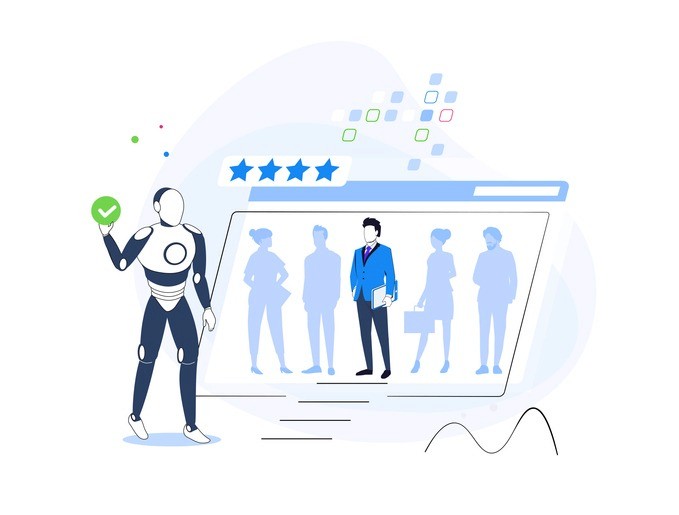
Match Day is a structured hiring event where pre-vetted AI, ML, full-stack, and data engineers meet multiple startups over 48 hours. It’s designed to compress what normally takes weeks into a focused, high-signal experience.
How Match Day relates to group and panel interviews:
Companies commit to salary ranges upfront, eliminating guesswork about compensation
Candidates may have panel-style sessions or small-group discussions with multiple hiring teams
The focus is on substantive technical conversations rather than drawn-out, unfocused processes
Benefits for candidates:
One profile, multiple opportunities with AI-first startups and high-growth companies
Clear interview logistics handled by Fonzi’s concierge recruiters
Rapid decisions: many offers are made within 48 hours of the event window
Benefits for employers:
Structured evaluation rubrics applied consistently across candidates
Centralized scheduling, feedback collection, and bias-audited processes
Ability to compare job candidates fairly after seeing them in similar contexts
Traditional Group Interviews vs. Fonzi Match Day
Here’s how the traditional group interview process compares to Fonzi’s Match Day approach:
Aspect | Traditional Process | Fonzi Match Day |
Timeline | 3–6 weeks across multiple disconnected rounds | 48-hour structured hiring event with parallel interviews |
Salary Transparency | Often unclear until late stages | Companies commit salary ranges upfront |
Use of AI | Varies widely; sometimes opaque or absent | Bias-audited AI for fraud detection and fair evaluation |
Candidate Support | Minimal; candidates navigate alone | Concierge recruiter support throughout |
Evaluation Structure | Inconsistent across interviewers | Standardized rubrics across all companies |
Bias Mitigation | Depends on individual company practices | Systematic bias auditing of prompts and scoring |
Outcome Speed | 4+ weeks to offer | Many offers within 48 hours |
The table highlights how Fonzi uses AI to reduce friction and bias while keeping humans in control of final decisions. Job seekers benefit from a more efficient, transparent, and respectful experience, especially while waiting for a response after an interview.
Practical Preparation Checklist for AI Group Interviews
Use this checklist 24–48 hours before any group or panel interview:
Update your GitHub and portfolio with recent LLM, ML, or infra work (2023–2026)
Write out 5 STAR stories covering teamwork, conflict resolution, and ownership
Run one mock group interview with peers over Zoom, rotating who facilitates
Prepare 3 questions to ask interviewers about their AI roadmap, research practices, and infra choices
Review the company’s recent blog posts, conference talks, and open-source contributions
If you’re on Fonzi, review company briefs and salary ranges before Match Day to decide which teams to prioritize
Practice summarizing a peer’s viewpoint in 1–2 sentences before adding your own perspective
Prepare to answer questions about your career goals and how this role fits
Treat this list as a pre-interview ritual. The candidates who feel confident walking into a group interview are the ones who’ve done this work beforehand; there’s no substitute for preparation.
Conclusion
In group interviews, the engineers who stand out aren’t always the loudest or the flashiest; they’re the ones who combine technical clarity with calm leadership and genuine respect for others in the room. The real signal for hiring teams isn’t just raw problem-solving ability; it’s whether you elevate the discussion, create structure under ambiguity, and help the group arrive at a stronger solution together. For recruiters and AI leaders, that collaborative lift is often a better predictor of on-the-job impact than solo brilliance.
AI is reshaping how this signal gets measured, but it shouldn’t replace human judgment. At Fonzi, AI supports the process by improving speed, fairness, and transparency, while final decisions remain firmly human-centered. Through Fonzi’s 48-hour Match Day, experienced AI, ML, full-stack, backend, frontend, and data engineers submit one profile and get in front of multiple salary-transparent, high-growth companies at once. If you’re looking to reduce hiring chaos and increase signal density, Fonzi offers a structured, business-ready way to do it, whether you’re building a team or aiming to join one.
FAQ
What are the most common group interview questions and how should they be answered?
How do employers evaluate leadership and collaboration during a group interview task?
What are the best strategies for introverts to remain visible in a loud group interview?
How should a candidate handle the “who else in this room would you hire” question?
What is the ideal balance between taking initiative and being a team player in a group setting?


