Group Interviews: What They Are, How They Work & Standing Out
By
Liz Fujiwara
•

It’s Q2 2026, and you’re an AI engineer in a group interview with six candidates. The prompt: “Design a scalable inference pipeline for our LLM-based customer support product. You have 45 minutes. Go.”
Group interviews are common for AI, ML, infra, and LLM roles because companies hire fast while maintaining a high technical bar and evaluating teamwork. This article helps candidates navigate these interviews, understand AI in hiring, and position themselves for success.
Fonzi, a curated marketplace for AI talent, connects vetted candidates with companies offering real, well-defined roles, ensuring that while AI can reduce noise and bias, interviews remain fundamentally about people.
Key Takeaways
Group interviews for AI and ML roles are either multi-candidate sessions or panel interviews, and employers use them to evaluate collaboration, technical communication, and decision-making under pressure, which resumes and coding tests cannot fully capture.
Responsible AI in hiring involves using technology for matching and logistics while keeping humans in charge, and Fonzi’s curated marketplace and Match Day provide AI engineers higher-signal opportunities without random mass outreach.
Standing out in a group setting means contributing structured, high-impact ideas, synthesizing others’ input, and helping the team succeed rather than just speaking the most, and Fonzi offers a clear path to curated, transparent interviews with top AI companies.
What Is a Group Interview for AI and ML Roles?
A group interview is any interview involving more than two people. In practice, this means either:
Multi-candidate group interviews: Multiple candidates are evaluated together by one or more interviewers. You might be in a room with four to eight other job seekers, working through a shared exercise while hiring managers observe.
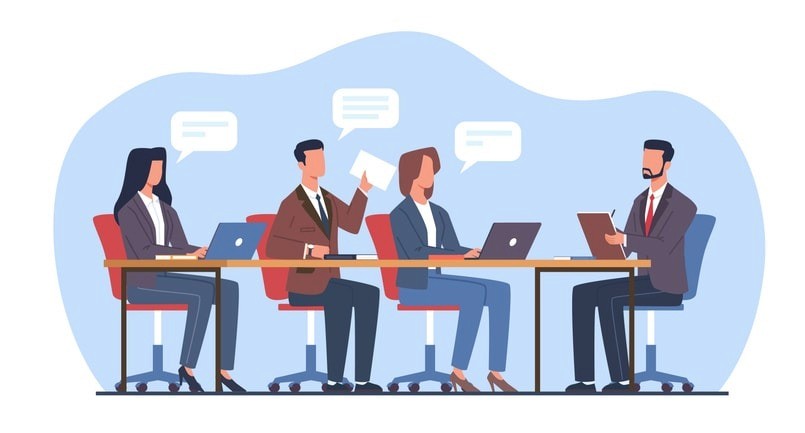
Panel interviews: One candidate faces multiple interviewers, such as a senior ML engineer, an engineering manager, a PM, and an HR representative, who each probe different dimensions of your experience.
Both formats differ from the one-on-one interviews most candidates are used to. In a 1:1, you control the airtime. In a group setting, you are sharing it.
For AI and ML roles, group interviews might include:
A collaborative design exercise where candidates interact to architect a recommendation system
A debugging session where several candidates work together to diagnose why a model’s accuracy dropped in production
A product brainstorm for a new LLM feature, with interviewers observing how you balance technical constraints with user needs
What’s being assessed goes beyond technical skills. Interviewers are looking for communication under pressure, collaborative problem-solving, prioritization instincts, and the ability to explain complex systems at the right level for mixed audiences.
Group interviews typically appear early to mid-funnel in larger AI-driven companies, after a resume screen or technical assessment but before final onsite loops. They are an efficient way for companies to observe candidate interactions and evaluate multiple applicants at the same time.
Why Employers Use Group Interviews in AI Hiring
AI-focused teams at Series B+ startups and big tech face a scaling problem: candidate volume is rising, and they need to fill multiple similar roles quickly. A company launching a new LLM feature in Q3 2025 might need to hire three applied ML engineers, two infra leads, and a research scientist in the same quarter.
Group interviews offer several advantages:
Faster comparison: Seeing multiple candidates work through the same tasks in one session saves weeks of scheduling.
Real-time collaboration signals: Resumes show what you’ve done, but group settings reveal how you actually work with others, whether you listen, build on ideas, or dominate conversations.
Cross-functional testing: Many AI roles require working with PMs, designers, and business stakeholders, and group formats test communication across functions.
Leadership potential visibility: For senior roles, group dynamics show who frames problems clearly, structures discussion, and helps unblock others.
However, group interviews are not perfect. They can favor extroverts or certain communication styles over equally capable but quieter engineers, and technical depth is harder to assess when airtime is shared. These limitations are part of why platforms like Fonzi focus on structured, high-signal interview experiences.
How Do Group Interviews Actually Work in Tech?
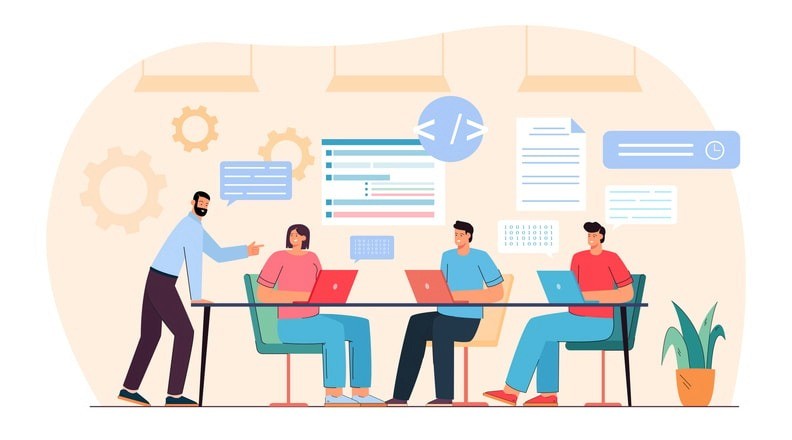
A typical group interview at a tech or AI company runs 60 to 90 minutes. Here’s what to expect:
Introduction (5-10 minutes): Interviewers introduce themselves and explain the format. Candidates give brief self-introductions.
Company or role overview (5-10 minutes): A quick pitch on what the team is building, the problem space, and why the role matters.
Collaborative task (30-45 minutes): The core of the session. Candidates work through a shared exercise which includes system design, scenario discussion, or problem-solving task. Interviewers observe and sometimes ask probing questions.
Debrief and Q&A (10-20 minutes): Candidates reflect on the exercise, and interviewers may ask individual follow-ups. Time for candidates to ask questions about the team or role.
Many of these sessions happen on Zoom or Google Meet. Expect shared documents, virtual whiteboards like Miro or FigJam, or collaborative coding environments. In-person sessions still occur, especially for later-stage interviews or when the company culture emphasizes on-site presence.
Each candidate typically gets limited speaking time, maybe two to three minutes per question or topic, so concise, structured answers are critical. Rambling will hurt your chances.
Interviewers usually take structured notes and compare impressions afterward. They focus on:
Quality of individual contributions
How clearly you communicated your reasoning
How you interacted with other candidates, whether collaboratively or competitively
For highly technical roles like ML engineering or infrastructure, group interviews are often paired with separate deep-dive screens, such as coding challenges, systems design interviews, or research talks. The group format tests different skills and does not replace technical evaluation.
Common Group Interview Formats for AI / ML Candidates
Not all group interviews look the same. Here are the formats you’re most likely to encounter when interviewing for AI, ML, and infrastructure roles:
Task-Oriented Group Exercises
Candidates collectively tackle a technical challenge. Examples:
Design a scalable inference pipeline for real-time predictions
Architect an A/B testing framework for a new ranking model
Plan a data pipeline that handles model retraining at scale
Interviewers watch how the group divides work, shares ideas, and navigates disagreements.
Scenario-Based Discussions
The group debates a realistic technical dilemma:
How would you handle model drift in production?
Should we use a larger fine-tuned LLM or retrieval-augmented generation for this use case?
What’s the right trade-off between latency and accuracy for our recommendation system?
These scenarios test judgment, not just knowledge.
Round-Robin Question Formats
Each candidate answers the same question in sequence, behavioral or technical. For example:
“Describe a time you resolved a disagreement about model architecture with a teammate.”
“How would you debug a sudden drop in data quality?”
This format levels the playing field but requires you to add a new perspective when speaking later in the rotation.
Hybrid Group + Panel
Candidates first work through a group exercise, then pivot to a panel interview with multiple interviewers. Engineers, PMs, and hiring managers ask follow-up questions about your contributions and reasoning.
This hybrid is increasingly popular because it captures both collaboration signals and individual depth in a single session.
What Employers Look For in Group Interviews (Beyond the Resume)
Most AI employers have already seen your GitHub, arXiv papers, or portfolio before a group interview. They know your technical background, but they cannot see from a resume how you work with people.
Here’s what the interview panel is actually evaluating:
Collaboration
Do you share airtime or dominate?
Do you build on others’ ideas or dismiss them?
Can you invite quieter voices into the conversation?
Technical Communication
Can you explain distributed training, vector search, or a complex ML architecture at the right level for the room?
Do you adjust your communication style for technical and non-technical audiences?
Leadership Without Steamrolling
Who structures the discussion and clarifies goals?
Who unblocks the group when it is stuck?
Are you leading or just being loud?
Decision-Making Under Constraints
How do you trade off latency versus accuracy?
How do you balance cost versus performance?
Can you move toward a decision when the group has partial information?
Composure
How do you handle disagreement gracefully?
What happens when the interviewer throws a curveball (like a surprise constraint on GPU budget)?
Do you stay focused under time pressure?
Interviewers are explicitly watching for emotional intelligence and active listening, not just technical firepower.
Responsible Use of AI in Hiring and How Fonzi Is Different
By the mid-2020s, most AI engineers know the frustration of black-box ATS filters, keyword-matching algorithms, and automated rejections that feel arbitrary. Your resume might get filtered out despite relevant skills, or you may never hear back after a promising application.
Some companies have taken AI in hiring too far:
Opaque resume scoring that penalizes unconventional backgrounds
“Keyword shock tests” that reward gaming the system over genuine qualification
Poorly calibrated automated rejections that screen out strong candidates
This is not responsible AI use. It erodes trust and wastes everyone’s time.
Responsible AI looks different. AI should surface signals, such as skills, experience, and preferences, while humans remain in charge of final decisions and candidate communication. Automation should reduce friction, not replace judgment.
How Fonzi uses AI responsibly:
Profile parsing and matching: Fonzi’s algorithms analyze your background in AI/ML, infrastructure, and LLMs to match you with roles where you are genuinely qualified and interested.
Mutual fit forecasting: Matching considers both your preferences, such as type of AI work, location, and compensation, and what companies actually need.
No opaque auto-rejection: Humans review matches, so you do not get mass ranking emails or silent rejections based on shallow heuristics.
Transparent expectations: Before any interview, you know the format, who will be in the room, and which skills are being evaluated.
Fonzi’s goal is to reduce randomness and bias in who gets into high-signal interview processes. The selection process should be efficient, but it should also respect your time and expertise.
How Fonzi’s Match Day Works for AI / ML Talent
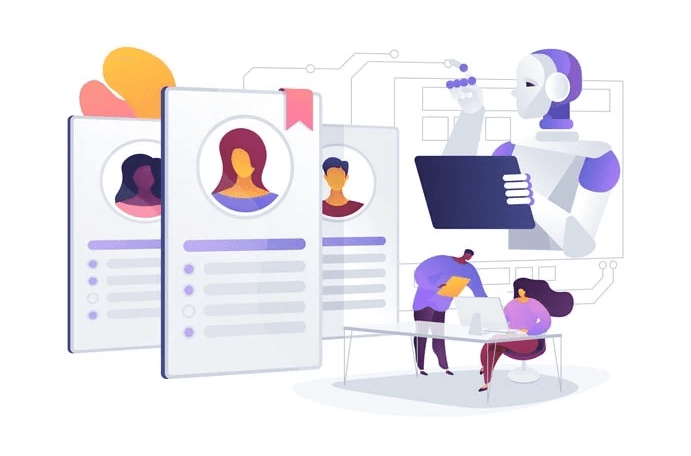
Match Day is a focused event where vetted AI candidates and curated companies engage in a concentrated burst of introductions, screens, and interviews. It’s designed to compress what normally takes weeks of applications and scheduling into a high-signal, high-efficiency experience.
Here’s how it works:
Step 1 – Curation
Fonzi vets both sides. For candidates, this means reviewing your background in AI, ML, infrastructure, or LLMs to ensure you are ready for the roles in the marketplace. For companies, it means verifying they have real, well-defined roles with clear timelines, not vaporware positions.
Step 2 – Matching
Fonzi’s AI models and human talent partners pair candidates with roles based on:
Technical skills such as applied research, infrastructure, data engineering, and MLOps
Career interests and growth goals
Constraints including location, compensation, and the type of AI work you want to do
This is not random matching. It is a deliberate pairing designed to maximize mutual fit.
Step 3 – Signal-Rich Introductions
On Match Day, you speak directly with a small set of aligned companies rather than receiving dozens of generic recruiter messages. Every conversation has context, and every company has already expressed genuine interest in your profile.
Step 4 – Conversations and Interviews
Match Day often leads quickly to group or panel interviews, but with crucial context shared upfront. You know what format to expect, what’s being evaluated, and why you’re a fit for the role.
The benefits:
Fewer random screens where you’re one of 200 applicants
Faster time-to-offer because both sides are pre-qualified
Higher probability that any group interview you attend is for a role that genuinely fits your profile
This is the opposite of the cattle-call experience. It’s curated, not chaotic.
Standing Out in Group Interviews as a Technical Candidate
Here’s the playbook AI candidates came for: how to show impact without being the loudest voice in the room.
Think in terms of “value per minute”
In a group setting, your speaking time is limited. Every contribution should be concise, structured, and anchored to impact. Ask yourself: does this comment move the discussion forward, or am I just filling airtime?
Use simple frameworks when answering
Structure makes your thinking visible. Try:
Context → Options → Trade-offs → Decision for technical questions
Situation → Action → Result for behavioral questions
Interviewers notice candidates who can organize complex ideas clearly.
Look for chances to synthesize
One of the most powerful moves in a group interview is saying, “So far I’ve heard three approaches. A focuses on latency, B prioritizes accuracy, and C optimizes for cost. Here’s how I think we might combine them.”
Synthesis demonstrates leadership and systems thinking without requiring you to dominate the conversation.
Tie contributions to impact
Whether discussing AI features, infra decisions, or research directions, connect your ideas to:
User impact
Reliability and uptime
Business value or cost savings
This shows you think beyond the technical puzzle to real-world outcomes.
Make others better
The best candidates do not just shine individually, they elevate the group. Invite quieter members into the conversation, build on good ideas from fellow candidates, and acknowledge strong points before adding your own perspective.
Practical Preparation Tips for AI / ML Group Interviews
Prep for group interviews is different from 1:1s. You’re also rehearsing interaction, not just answers.
Research the company’s AI stack
Before the interview begins, review what’s publicly available:
Engineering blog posts about their ML infrastructure
Tech talks on YouTube or at conferences
Open-source contributions and GitHub repos
Prepare two to three targeted questions about their infra, models, and data practices. This shows genuine interest and technical depth.
Practice 60-90 second answers
Group settings demand concision. Rehearse your responses to common group interview questions, especially behavioral ones focused on collaboration.
“Tell me about a time you resolved a disagreement over model architecture.”
“How do you prioritize when facing competing technical demands?”
Time yourself. If you’re over 90 seconds, trim.
Do mock group sessions with peers
Find two to three other job seekers and practice answering the same questions in sequence. This simulates the pacing of real group formats and helps you get comfortable speaking after others.
Prepare scalable project stories
Have a concise version of your strongest project story that takes under two minutes. Also prepare an extended version you can expand if interviewers ask for more depth. This lets you adapt to whatever airtime you get.
Know the job description cold
Review the job requirements before your interview. Map your experience to what they’re looking for. Be ready to speak to your relevant skills with specific examples.
AI-Specific Group Exercises You Might Encounter
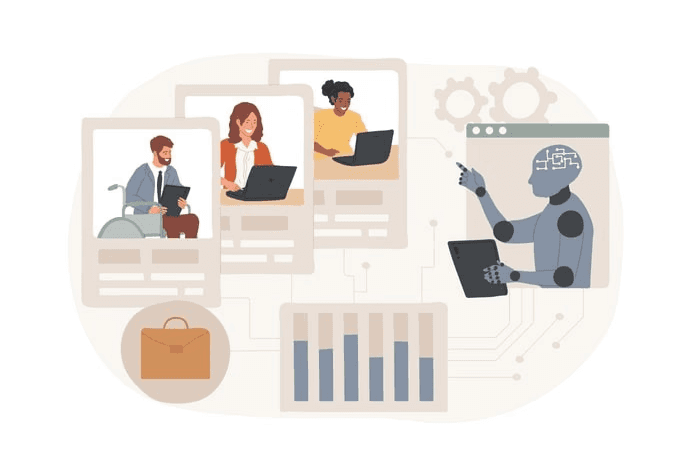
Here’s a preview of realistic group tasks you might face in AI interviews:
Collaborative System Design
Teams are asked to design an end-to-end solution given fixed constraints:
A recommendation system with 50ms latency requirements
A fraud detection pipeline processing 10M events per day
An LLM-based support assistant with strict cost per query limits
Interviewers watch how you navigate trade-offs, divide work, and reach decisions as a team.
Trade-Off Debates
Small groups argue for or against a specific approach and must reach consensus:
Fine-tuning vs. retrieval-augmented generation for a specific use case
GPUs vs. specialized accelerators for inference
Monolithic model vs. ensemble approach
These test your judgment, not just your knowledge of the options.
Bug Triage Simulations
Candidates collectively diagnose a real life example of production problems:
A sudden drop in model performance tied to data drift
A latency spike after a feature change
An inference bottleneck under peak load
This reveals how you think about debugging, root cause analysis, and cross-team communication.
Ethics and Safety Scenarios
Teams discuss how to handle sensitive situations:
Bias discovered in a deployed generative model
A user finding ways to misuse an LLM feature
Setting safety thresholds for a new AI product
This showcases judgment and alignment with responsible AI practices which is increasingly important as AI regulation evolves.
Sample Behaviors That Impress in Group Interviews
Here’s a “do this, not that” checklist for how to behave in real-time group settings:
Demonstrate turn-taking
✓ Acknowledge strong points others made, then add a distinct angle
✗ Repeat what someone just said in slightly different words
Make constraints explicit
✓ When proposing solutions, call out assumptions: “This assumes we have access to 100GB of training data and can tolerate 200ms latency.”
✗ Propose solutions without acknowledging real-world limits
Clarify problem scope
✓ Pause to restate the problem and success metrics before diving into architecture
✗ Jump straight to solutions without ensuring the group agrees on the goal
Invite input
✓ Use prompts like: “What do you think about this trade-off from a data perspective?”
✗ Treat group exercises as solo performances
Handle disagreement gracefully
✓ Disagree with ideas, not people. Back alternatives with examples from past projects or industry standards.
✗ Get defensive or dismissive when challenged
Manage time
✓ Keep an eye on the clock and help the group prioritize
✗ Let the discussion drift without progress toward a decision
How Fonzi Helps You Navigate and Succeed in Group Interviews
Fonzi isn’t just a matching layer; it’s also a context and preparation layer for AI candidates.
Clear expectations before interviews
When you are matched with a company through Fonzi, you know:
Who will be in the room, such as the hiring manager, engineers, and cross-functional partners
What format to expect, whether group, panel, or 1:1
What skills are being evaluated
Help interpreting job descriptions
Fonzi talent partners can help you determine if a role leans toward research, platform or infrastructure, applied ML, or product work, letting you tailor your group interview strategy to what matters.
Structured, fair interview rubrics
Curated companies are encouraged to share structured evaluation criteria, reducing randomness and ensuring assessment on clear, job-relevant dimensions.
Shorter cycles
Candidates often experience faster timelines between initial conversation, group or panel interview, and final decision when both sides are pre-qualified and genuinely interested.
Conclusion
Group interviews are here to stay for AI talent because they test collaboration, communication, and judgment, skills technical screens cannot capture. Whether in a multi-candidate session or a panel, be clear, concise, and help your team succeed.
AI in hiring should increase clarity and fairness, not dehumanize the process. Fonzi uses AI to reduce noise and surface signal while keeping humans in charge of decisions.
As an AI engineer, ML researcher, infra engineer, or LLM specialist, use group interviews to show how you elevate teams, not just your technical skills. Join Fonzi, complete your profile, and access curated, high-signal interviews with top AI companies.
FAQ
What is a group interview and how does it work?
What are employers looking for in group job interviews?
How can I stand out in a group interview without being overbearing?
What are common group interview formats and activities?
What’s the best advice for succeeding in group interviews?