Facebook Jobs: How to Get Hired at Meta & What Recruitment Looks Like
By
Samara Garcia
•
A few years ago, searching “fb jobs” might surface local hourly roles posted directly on Facebook. By 2026, that world is gone. Today, people searching for Facebook jobs are aiming for high-stakes roles on Meta teams like GenAI, Reality Labs, Infra, and Core ML.
The process feels tougher than ever. Applications disappear into black boxes, rejections are slow or generic, and it’s hard to know if a human ever saw your resume. This guide breaks down how Meta's interview process actually works now, where AI helps or hurts, and how platforms like Fonzi help strong technical candidates reach the right teams faster.
Key Takeaways
Meta’s AI hiring is highly competitive, with structured interview loops, clear leveling, and timelines that often stretch several weeks.
AI is widely used for resume parsing and screening, but recruiters and hiring managers still make final decisions.
Fonzi is a curated, human-led marketplace for AI and infra roles that uses AI to reduce noise and bias, not replace judgment.
This guide explains how to stand out for Meta roles, how Match Day works, and how to prepare for 2025–2026 interviews.
Whether applying directly or through curated platforms, understanding modern hiring systems helps you reach the right teams faster.
How Facebook (Meta) Jobs Work in 2026
Meta now centralizes all external roles on its careers site and fills positions through a mix of referrals, internal mobility, and external talent marketplaces. The old “Jobs on Facebook” product is no longer the primary channel for technical hiring.

Main Job Families for AI Talent
Here are the role categories most relevant to AI and infra candidates in 2026:
AI/ML Engineering: Feed ranking, recommendations, ads optimization, content integrity, and personalization across Facebook, Instagram, and Threads
Generative AI/LLM: Roles focused on Meta Llama significantly elevate capabilities, such as LLM fine-tuning, inference optimization, and assistant products like Meta AI
Infrastructure & Systems: Distributed training clusters, storage, networking, and the reliable global infrastructure that powers Meta’s AI workloads
AR/VR & Reality Labs: Positions involving Meta Quest headsets, immersive virtual reality headsets, and consumer AR glasses development
Product Engineering: Building and optimizing large-scale products that touch ML, from Facebook Marketplace to the video calling app and beyond
How Candidates Find Meta Roles
Most external candidates discover Meta roles by:
Searching meta careers by location (Menlo Park, London, Tel Aviv, New York) and filtering by remote/hybrid options
Filtering by role level (E4–E7 for engineers) to find positions matching their experience
Receiving outreach from Meta recruiters who source from GitHub, arXiv papers, and conference talks at NeurIPS, ICML, and ICLR
Getting introductions through specialized marketplaces like Fonzi or referrals from current employees
Getting noticed is often the hardest step. Having curated representation or a strong public profile, open-source contributions, publications, and visible projects helps tilt the odds before you even enter the formal interview process.
What Jobs Are AI & Infra Candidates Actually Doing at Meta?
“Facebook jobs” in 2026 span multiple product surfaces (Facebook, Instagram, WhatsApp, Threads, Reality Labs) and deep infra/ML stacks. Even when a role is advertised under the Facebook brand, teams create cross-product systems that power the entire Meta ecosystem.
Common Role Archetypes
Here’s what AI and infra candidates are actually building:
AI Engineer (Ranking & Recommendations): Working on feed ranking and recommendations for Facebook and Instagram, optimizing engagement and relevance at a massive scale
ML Research Engineer (GenAI): Building LLM-based assistants for WhatsApp Business, exploring customized AI-generated chatbots, and developing groundbreaking technologies drive research in generative AI
Infra Engineer (Training Systems): Optimizing large-scale training clusters for 10B–400B parameter models, focusing on GPU utilization, memory efficiency, and building scalable systems for AI workloads
Applied Scientist (Content Integrity): Working on abuse detection, misinformation classification, and safety systems that maintain user trust across platforms
Reality Labs Engineer: Developing next-generation hardware for Meta Quest, Ray-Ban Meta glasses, and other devices Meta Connect announcements showcase
Seniority and Scope
Meta uses a leveling system where:
E4–E5 engineers focus on well-scoped projects with direct guidance
E6 engineers own complex, ambiguous problems and influence team direction
Staff/Principal levels (E7+) drive cross-team strategy and represent technical leadership
The higher you go, the more ambiguity you handle and the more cross-team influence you need to demonstrate. Tailor your CV and portfolio to one or two of these archetypes rather than trying to appear “good at everything.”
Inside the Facebook / Meta Recruitment Process
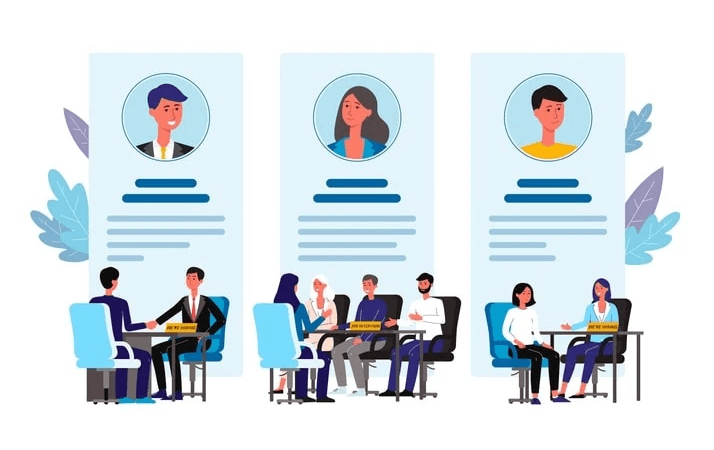
Meta’s global recruiting pipeline is standardized across locations and role families, though specifics vary by team and seniority. The process typically includes a recruiter screen, technical screens, an on-site/virtual loop, and a hiring committee review before an offer.
Stage-by-Stage Breakdown
Initial Sourcing and Recruiter Screen
Meta recruiters in 2026 review LinkedIn profiles, GitHub activity, Google Scholar citations, and referrals. During the 30–45 minute recruiter call, they’ll ask about:
Your compensation expectations and location preferences
Visa or relocation constraints
Which product areas interest you (e.g., Ads ML, GenAI, Integrity, Reality Labs)
Basic background questions to confirm role alignment
Online/Technical Screens
You’ll typically complete 1–2 technical interviews via collaborative coding environments. Expect:
LeetCode-style data structures and algorithms problems (medium to hard difficulty)
ML-specific coding tasks for ML roles (e.g., implementing training loops, evaluation metrics)
System design questions for senior candidates (designing a ranking service, feature store, or inference cluster)
Onsite/Virtual Loop
The full loop includes 4–6 interviews over a half or full day:
Coding interviews, testing algorithms, data structures, and code quality
System design interviews for mid/senior roles
ML/LLM deep dive for AI roles (discussing architectures, training strategies, evaluation frameworks)
Behavioral interviews tied to Meta’s values (“Move fast,” “Be bold,” “Focus on impact”)
Hiring Committee and Offer
After the loop, interviewers submit feedback, and a hiring committee reviews the packet. For research roles, this may include additional publication reviews and presentations. Successful candidates receive offers with base salary, bonus, and RSU grants.
Typical Timelines
Expect 4–8 weeks from first contact to offer in 2025–2026. Research roles requiring publication reviews may take longer. Meta increasingly pre-matches candidates to “role families” rather than single teams, so articulate your domain preferences early.
Meta often runs parallel processes with competing offers from companies like OpenAI, Google DeepMind, and Anthropic. Clear timelines and expectations help you navigate multiple opportunities.
How Big Tech Uses AI in Hiring, and Where It Falls Short
By 2026, most large tech companies, including Meta, Microsoft, and Amazon, will use AI in at least three hiring steps: resume screening, communication and scheduling, and candidate-job matching. Understanding this helps you optimize your approach.
How AI Is Used
Resume parsing and ranking: AI scans for keywords like PyTorch, CUDA, distributed training, LLM fine-tuning, and infra at scale, then ranks candidates against job descriptions
Matching to requisitions: Algorithms match candidates to internal openings based on skills, location, and experience level
Automated outreach and scheduling: Email assistants and chatbots schedule interviews, send reminders, and answer basic questions
Portfolio assessment: High-level analysis of GitHub activity, publication topics, and code repositories to surface relevant signals
Limitations and Risks
Despite efficiency gains, AI-driven hiring has real problems:
Keyword over-reliance: Candidates with non-traditional backgrounds or self-taught engineers may get filtered out because their resumes don’t match expected patterns
Bias amplification: If historical data skews toward particular schools, companies, or demographics, AI models can perpetuate and amplify those biases
Reduced transparency: Candidates often receive generic rejections with no feedback, leaving them unsure what went wrong or how to improve
False negatives: Strong candidates get lost in automated filters because their profiles don’t fit rigid templates
Meta and peers still rely on human interviewers and hiring managers for final decisions, especially for Staff+ roles and research positions. But the early funnel is heavily automated, which is exactly why curated, higher-signal channels like Fonzi exist.
Meet Fonzi: A Curated Marketplace for AI & Infra Talent
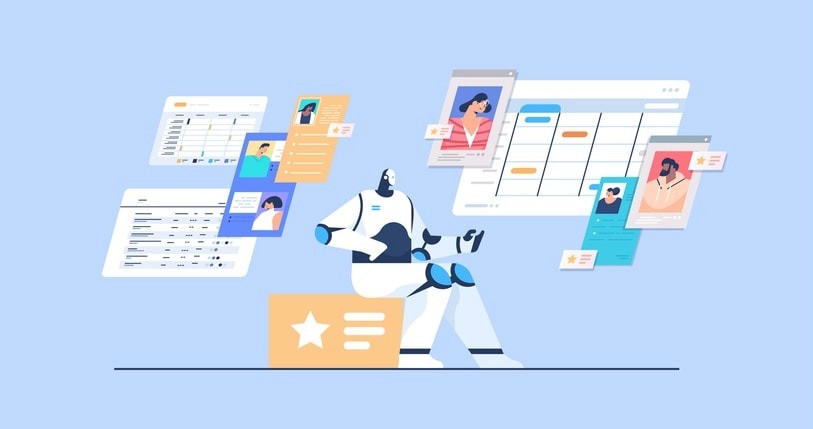
Fonzi is a curated talent marketplace launched specifically for AI engineers, ML researchers, infra engineers, and LLM specialists looking for roles at Meta, Frontier AI labs, and high-caliber startups building AI and metaverse technologies.
Unlike generic job boards, where anyone can apply to anything, Fonzi vets both sides:
Candidates are evaluated by skills, experience, and career goals
Companies are vetted for tech rigor, compensation transparency, and responsible AI practices
What Fonzi Emphasizes
Reduced bias: Fonzi doesn’t over-weight pedigree (FAANG experience, PhD) alone; it focuses on demonstrated skills and impact
Candidate-first design: No surprise profile sharing, transparent processes, and tight feedback loops
Faster processes: Companies commit to clear SLAs for first-contact and decision timelines to schedule interviews promptly
Fonzi often works with companies seeking engineers who could successfully pass Meta-style interviews, helping candidates prepare for the same rigorous standards while accessing a broader range of opportunities.
How Fonzi’s Match Day Works (And Why It Beats Cold-Applying)
Match Day is Fonzi’s flagship experience: a specific day when pre-vetted candidates are introduced to a curated set of companies actively hiring for AI, LLM, and infra roles. It’s designed to create high-signal, high-intent connections rather than spray-and-pray applications.
The Match Day Timeline
Before Match Day:
Candidates apply to Fonzi and complete a detailed profile (skills, salary bands, location preferences, visa situation, timeline)
Optionally upload code samples, papers, or portfolio links
Fonzi’s talent team clusters candidates by expertise (inference infra, agentic workflows, foundation model pretraining, recommender systems)
During Match Day:
Hiring teams from companies (including those competing with Meta for AI talent) receive anonymized or semi-anonymized profiles
Companies send explicit “yes” interest signals for candidates they want to interview
The matching happens in a compressed window, creating urgency and commitment
After Match Day:
Candidates receive a clear list of interested companies with role summaries, comp ranges, and interview plans
Candidates choose whom to engage with; they’re in control
First interviews often happen within days, not weeks
Preparing for Meta-Style Interviews as an AI, ML, or Infra Engineer
Preparing for Meta-style interviews means pairing great technical skills with clear communication and proof of impact.
You’ll need strong coding fundamentals in Python or C++, especially around data structures, graphs, trees, and concurrency. Interviewers care about clean, well-reasoned solutions, so practice explaining your thinking as you code. System and infra design are equally important. Be ready to design large-scale services like ranking systems or LLM inference clusters and discuss tradeoffs around latency, reliability, cost, and scale.
For AI and ML roles, expect to walk through end-to-end pipelines you’ve owned, from data and training to evaluation and deployment. You should be comfortable discussing modern architectures, fine-tuning approaches, and inference optimization. Behavioral interviews matter too. Prepare clear stories about ownership, problem-solving under ambiguity, and cross-team collaboration that align with Meta’s values.
Showcasing Your Skills: Portfolios, Research, and Signals That Matter
AI-heavy hiring increasingly relies on visible, verifiable signals beyond the resume. When many applicants share similar job titles, what makes you stand out?
High-Value Signals for Meta and Similar Employers
Strong GitHub/GitLab repos: Real-world ML/infra work like distributed training tools, inference optimization, or production-ready LLM serving
Publications: ArXiv preprints or peer-reviewed papers at NeurIPS, ICML, ICLR, MLSys, or CVPR
Industry whitepapers: Technical write-ups on systems you’ve built, especially if they show metrics and tradeoffs
Open-source contributions: Commits to widely used frameworks (PyTorch, JAX, Kubernetes, Ray, vLLM)
Building a Portfolio That Converts
Create a concise “brag document” or portfolio link summarizing:
3–5 flagship projects with impact metrics and role descriptions
Links to talks, blog posts, or demos relevant to your target area (recsys, LLMs, infra)
Clear write-ups explaining what you built, why it mattered, and what results you achieved (e.g., “3% engagement lift,” “20% infra cost reduction”)
Success Stories and Practical Pathways (Composite Examples)
Due to confidentiality, Fonzi uses anonymized composites to illustrate typical candidate journeys. These examples show how curated marketplaces surface non-obvious talent and how structured support increases offer rates.
Example 1: Senior Infra Engineer
A senior infra engineer from a non-FAANG company had built a high-throughput inference stack handling millions of requests daily. Despite strong credentials, cold applications to Meta went nowhere, likely filtered by AI systems looking for recognizable brand names.
Through Fonzi, they were matched to a top AI platform team at another large tech firm with a Meta-like interview process. Within 7 days of Match Day, they had their first interview scheduled. The offer came 4 weeks later.
Example 2: ML Researcher Transitioning to Industry
An ML researcher with 3 NeurIPS papers had limited production experience and struggled to tell a “product impact” story during initial screens. Fonzi’s talent partners helped reframe their narrative around research contributions that could translate to shipping products.
They were matched with a company building GenAI products, gained interview experience, and later successfully reopened a Meta conversation with a stronger narrative. The key: structured support that addressed their specific gap.
What These Examples Show
Curated marketplaces surface candidates who might be overlooked by rigid filters
Structured guidance on positioning and preparation increases success rates
There’s no single “ideal” background impact, and skills come from many career paths
Time-to-first-interview dropped from 6 weeks to 7 days in multiple cases
Your background doesn’t have to look like everyone else’s. What matters is demonstrating real skills and finding channels that give you a fair shot.
Summary
Getting hired at Meta in 2026 is very different from the old “Facebook jobs” era. Today’s roles focus on high-impact AI, ML, infra, and GenAI work, with competitive, highly structured interview loops and heavy use of automated screening early on. While AI helps Meta scale recruiting, it also creates opaque funnels where strong candidates can get filtered out before a human ever engages.
This guide explains how Meta hiring actually works, what signals matter most for AI and infra roles, and how to prepare for Meta-style interviews. It also shows how curated platforms like Fonzi help candidates cut through automation by matching real skills to active hiring plans and accelerating introductions through high-signal Match Days. The core takeaway is simple: optimize enough to get past systems, but focus on depth, impact, and fit to get hired.
FAQ
What jobs are available at Facebook (Meta) in 2026?
What is the Facebook recruitment and interview process like?
How competitive is hiring at Facebook?
What does Facebook look for when they hire candidates?
How can I improve my chances of getting a job at Meta?