What to Wear to a Job Interview in 2026 (Every Dress Code)
By
Ethan Fahey
•
AI has reshaped hiring workflows between 2020 and 2026, automating scheduling, filtering candidates through ATS systems, and improving matching with AI-driven tools. But even with all that progress, first impressions still matter. Interviewers often form an initial opinion within seconds, which means candidates need to present themselves with what you might call “low-friction professionalism.” For AI engineers, ML researchers, infrastructure engineers, and LLM specialists, that usually translates to clean, intentional attire that signals good judgment without drawing attention away from your technical expertise.
Expectations can vary depending on the environment. For example, remote-first AI labs, hybrid big tech offices, and fast-moving startups all have slightly different norms, but the goal is consistent: let your skills stand out, not your outfit. Platforms like Fonzi AI see this play out across hundreds of interview processes, helping match vetted candidates with vetted companies and providing insight into what actually works in practice. By combining hiring data with real-world outcomes, Fonzi helps both candidates and recruiters reduce guesswork and focus on high-signal interactions. The rest of this article breaks down specific, practical outfit formulas so you can prepare the night before your next interview.
Key Takeaways
Interview outfits in 2026 must align with the company’s dress code, role seniority, and whether the interview is virtual or onsite; there’s no universal formula.
For AI and ML roles, interviewers care about signal and clarity. Your interview outfit should be simple, clean, and non-distracting so the focus stays on your portfolio, GitHub, and system design skills.
When in doubt, dress one notch more formal than what current employees wear. Check LinkedIn profile photos, engineering blogs, or conference talks from recent years to calibrate.
Fonzi is a curated talent marketplace for AI engineers, ML researchers, infra engineers, and LLM specialists that uses AI to reduce noise and bias in hiring, not to replace human judgment.
How to Decode a Company’s Dress Code Before the Interview
Guessing is unnecessary in 2026. You can triangulate a company’s dress code in 15–20 minutes of targeted research.
Start by checking recent engineering team photos on the company’s website, blog, and LinkedIn posts from 2024–2026. Pay attention to what senior engineers, tech leads, and VPs actually wear, not interns at a happy hour. Search YouTube or conference sites for talks by the company’s CTO, Head of AI, or Principal Engineer to see stage outfits and extrapolate norms.
You can also email or message your recruiter with a concrete question: “For context, what do engineers typically wear onsite? I’d like to match the culture.” This shows professionalism, not weakness.
Additional research channels:
Glassdoor and Blind for employee insights
Team GitHub profile photos for additional signal
The company’s location matters, as an SF startup differs from a London fintech
If the company is on Fonzi, the platform shares dress-code notes in the role brief so candidates don’t waste energy decoding expectations. This eliminates guesswork entirely.
Interview Dress Codes Explained: From Casual to Business Formal
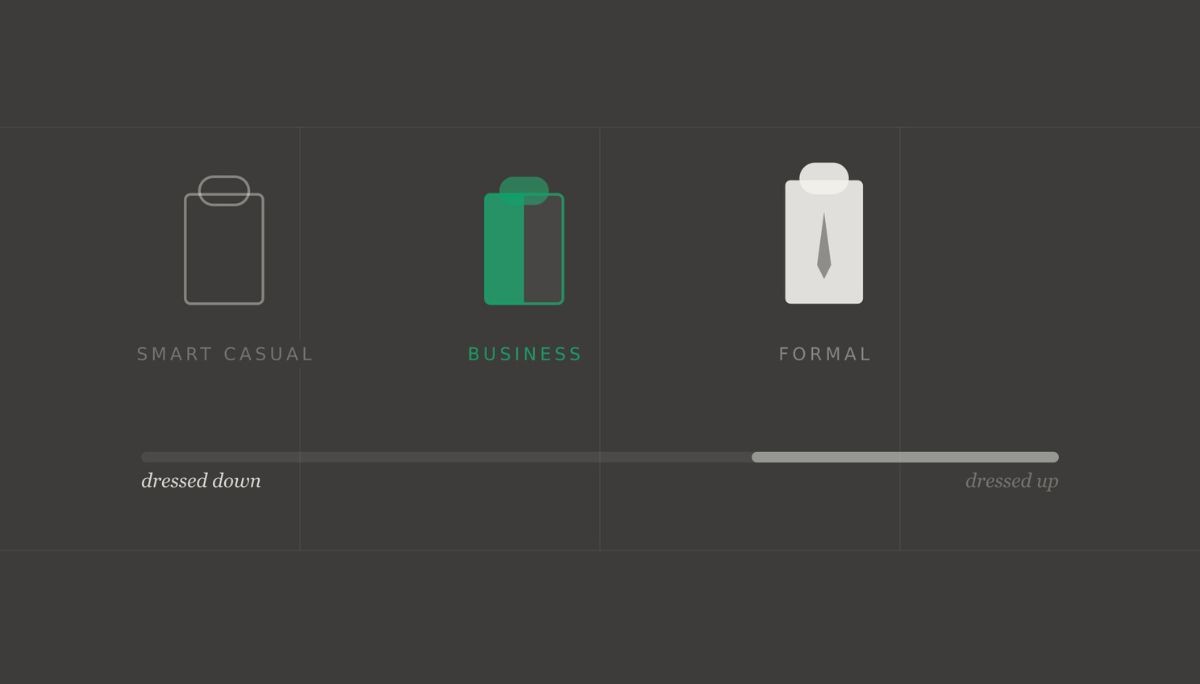
Most AI and dev interviews in 2026 sit between smart casual and business casual. Business formal is reserved for more formal industries like finance, consulting, and government labs. Understanding where your potential employer falls on this spectrum helps you prepare the right outfit.
Dress codes are spectrums, not rigid boxes. The goal is to lean slightly more formal than current employees without looking like you wandered in from a different industry. Your interview attire should match the company’s culture while showing you understand professional dress expectations.
Dress Code Comparison Table (2026 Tech & AI Interviews)
Dress Code | Typical Companies | Example Outfits | Shoes | Best For Roles | Risk Notes |
Casual-Plus | Seed-stage AI startups, remote-first labs, SF hacker houses | Dark indigo jeans, heavyweight tee, overshirt or casual blazer | Minimalist sneakers, clean canvas shoes | Early-stage ML engineers, research interns | Underdressed risk at enterprise clients |
Smart Casual | Series B+ startups, mid-sized tech, product companies | Navy chinos, Oxford button down shirt, merino crew-neck | Loafers, leather sneakers, clean white sneakers | ML engineers, infra/SRE, data scientists | Safe default for most tech interviews |
Business Casual | Public tech firms, B2B SaaS, enterprise AI vendors | Tailored pants, tucked dress shirt, blazer | Oxfords, closed toe shoes, low heels | AI solutions architects, ML sales engineers | Slightly formal for casual startups |
Business Formal | Banks, consultancies, government labs, defense contractors | Gray suit or navy suit, dress shirt, conservative tie optional | Polished leather dress shoes, pumps | AI researchers at financial institutions, government AI roles | Overdressed at most startups |
Interview Outfit Formulas by Dress Code
We’ll go over some ready-to-wear outfit recipes tailored to 2026 tech and AI interviews. These focus on silhouettes and materials rather than rigid gender rules: adapt cuts to what fits your body and identity best.
All outfits assume temperate weather. In cold climates, add a simple wool coat in dark colors. Choose 1–2 go-to interview outfits and rehearse wearing them before high-stakes onsite loops to ensure comfort.
Smart Casual: The Default for Most Tech & AI Interviews
Smart casual is the safest choice for most interviews with product companies, AI startups, and mid-sized tech firms in 2026. It signals professionalism without appearing disconnected from the workplace environment.
Outfit formulas:
Dark slim jeans or navy chinos + crisp white Oxford shirt + clean low-profile leather sneakers
Charcoal dress pants + fine-knit polo in solid colors + suede loafers
Tailored pants + structured merino crew-neck sweater + minimalist sneakers
For remote Zoom interviews, opt for a solid-color knit top that contrasts with your background. Choose quiet fabrics that won’t rustle against your headset mic.
Avoid graphic tees, distressed denim, and loud sneakers, as these can read as junior even at hoodie-friendly companies. Keep accessories minimal: a simple watch or small stud earrings work well. Excessive jewelry can distract during whiteboard sessions.
Business Casual: For Mature Tech, B2B SaaS, and Enterprise AI
Business casual is common at established SaaS companies, public tech firms, and enterprise AI vendors selling into Fortune 500 clients. This dress code bridges technical expertise with client-facing professionalism.
Outfit ideas:
Wool blend tailored pants + tucked-in button down shirt + structured blazer + oxfords
Knee length skirt or tailored pants + professional blouse + blazer + closed toe shoes
Heavy cotton chinos + dress shirt + unstructured sport coat + leather loafers
Stick to dark colors and neutral colors: navy, charcoal, forest green, burgundy, and muted earth tones. Patterns should stay subtle, with micro-checks or quiet stripes only.
This level of formality is ideal for AI roles that meet non-technical stakeholders, such as AI solutions architects or ML engineers on sales engineering teams. The classic look communicates competence without intimidating technical interviewers.
Business Formal: For Finance, Consulting, and Government AI Roles
Business formal still matters in 2026 for AI positions at banks, consultancies, defense contractors, and government research labs. These more formal industries expect traditional professional dress that signals you understand client-facing standards.
Specific looks:
Well-fitted navy or gray suit + light dress shirt or professional blouse + conservative tie (optional) + polished leather dress shoes
Charcoal pantsuit + white blouse + closed-toe shoes or pumps + minimal jewelry
Tailoring tips:
Jacket shoulders should lie flat without pulling
Sleeves should show about 1 cm of shirt cuff
Trousers or a knee-length skirt should break cleanly at the shoe
Test-sit in your suit to ensure comfort during long panel sessions. Even when everyone else appears more casual, being slightly overdressed in these environments is interpreted as respect for the process; a strong first impression that works in your favor.
Casual-Plus: When the Team Lives in Hoodies and Tees
Some early-stage AI startups, especially fully remote or in SF Bay Area hacker houses, operate in near-loungewear. But candidates should still upgrade one level. Dressing appropriately means showing intention even in casual contexts.
Recommended outfits:
Premium dark jeans + plain high-quality T-shirt + clean overshirt or casual blazer + minimalist sneakers
Tech pants + heavyweight long-sleeve tee + unstructured jacket + clean canvas shoes
“Casual-plus” means nothing ripped, stained, or faded. Your clothes should be intentional and well-fitted, not sloppy. Keep logos minimal and avoid controversial or meme shirts.
If Fonzi or the recruiter explicitly says, “everyone will be in hoodies, don’t overthink it,” you can safely wear a polished hoodie layered under a jacket with good shoes. But when in doubt, add structure.
Virtual vs. In-Person Interviews: Outfit Tactics That Work
In 2026, many AI interviews are hybrid: initial screens and coding rounds on Zoom, final loops often onsite. Your approach should adapt accordingly, but the core principle remains: dress to match the company’s norm while prioritizing comfort.
What Works Best on Camera (Zoom, Meet, Teams)
Color guidance:
Mid-tone blues, greens, and earth tones avoid both washout and harsh contrast on standard webcams
Colorful shades work, but avoid more colorful shades that overwhelm the frame
Bold colors can work if they’re muted rather than neon
Avoid these on camera:
Tiny high-contrast patterns (like small checks) that cause moiré effects
Shiny fabrics that reflect ring lights
All-white or all-black outfits that confuse auto-exposure
Test your outfit on your actual video platform before the interview. Record 30 seconds to check for glare, wrinkles, and how your posture interacts with clothing. Still wear full outfits including shoes, which maintains your professional mindset.
Onsite Days and Onsite Loops: Dressing for Comfort and Stamina
A typical onsite in 2026 involves multiple rounds over 4–6 hours. Breathable, non-restrictive clothing is essential for in-person interviews that require stamina.
Practical considerations:
Choose dress shoes or leather sneakers with cushioning for walking between buildings
Bring a neutral bag (black or navy canvas, leather) for a laptop, notebook, and water
Layer strategically: base layer plus removable cardigan or blazer to adapt to office AC
If you have a long commute, arrive early and use a restroom mirror to do a quick check for wrinkles, collar alignment, and pet hair. Remove any lint before your interviewer greets you.
How Fonzi Uses AI (and How It Changes How You Prepare)
Fonzi is a curated talent marketplace built for AI and ML specialists. The matching algorithm prioritizes skills, experience, and preferences over superficial markers, using embedding-based matching on competencies like PyTorch, JAX, distributed systems, and RLHF.
Unlike platforms that auto-reject based on résumé keywords, Fonzi shares contextual info upfront—including dress expectations, interview format, and team culture. This means you can decide how to present yourself with confidence rather than guesswork.
AI for Clarity, Not Gatekeeping
Fonzi’s philosophy: AI should remove friction and clarify role fit, not replace human interviews.
How this works in practice:
Automated extraction of must-have skills from JD PDFs into candidate-friendly summaries
Proactive alerts about interview structure, panel composition, and recommended dress code
Human talent partners review matches before they reach candidates
Fonzi never uses AI-generated “scores” as the sole criterion to block candidates. If you’re unsure how to present yourself, including clothing choices, you can get guidance from Fonzi’s human talent advisors before major interviews. Match Day events lean toward smart casual, so candidates can take multiple calls comfortably.

Practical Prep Checklist: The Night Before Your Interview
Clothing tasks:
Lay out the full outfit, including socks and shoes
Check for wrinkles, loose threads, and manicured nails
Test zippers and buttons
Prepare a backup top in case of spills
Grooming items:
Trim nails, choose a subtle fragrance or none
Verify hair is manageable with minimal fuss
Pack touch-up items in your bag
Tech tasks:
Test the webcam and microphone with your chosen outfit
Confirm colors and patterns look good on camera
Check meeting links or office address
Fonzi-specific prep:
Review the Fonzi brief for dress guidance
Note interview focus areas (ML system design vs. research depth)
Check any suggested resources for the company
Conclusion
In 2026, the most effective approach to interview attire is simple: dress with intent. Aim to be slightly more polished than the team, comfortable in what you’re wearing, and never distracting. The goal isn’t to stand out; it’s to present a clean, professional image that allows interviewers to focus entirely on your capabilities. In technical roles, that means your outfit should fade into the background while your thinking around model design, infrastructure trade-offs, and code quality takes center stage.
Clothing alone won’t land the job, but it does remove uncertainty around professionalism and helps you show up with confidence. When you’re not second-guessing how you look, you can focus on performing at your best. Platforms like Fonzi AI reinforce this clarity by connecting candidates with vetted companies where expectations, including interview structure and culture, are more transparent from the start. For both recruiters and engineers, that alignment reduces friction and creates a more focused, high-signal hiring experience.
FAQ
What should I wear to a job interview if the company doesn’t specify a dress code?
What’s appropriate interview attire for a startup or casual office?
Are there outfit differences for in-person vs. virtual job interviews?
What colors and styles make the best impression in a job interview?
What should I avoid wearing to a job interview?


