Between late 2024 and mid-2025, AI coding assistants like GitHub Copilot, Gemini Code Assist, Cursor, and Windsurf became default tools at top engineering teams. AI-powered code completion and real-time suggestions are now table stakes.
What founders and CTOs quickly realized, though, is that tools aren’t the bottleneck; talent is. The real challenge is hiring elite AI engineers who can design robust architectures, make the right trade-offs, and ship AI safely to production.
That’s where Fonzi comes in. Rather than another coding assistant, Fonzi is a modern “Codely AI” hiring engine that helps companies find and hire top AI engineers who know how to use these tools for 2–3× productivity gains.
Key Takeaways
When people search for “Codely AI,” they’re typically looking for the best AI coding assistants and how to build strong AI engineering teams. This article addresses both, because tools without top talent limit impact.
Fonzi helps companies hire top 1-3% AI engineers in under three weeks, including roles in LLM infrastructure, agents, and RAG systems.
AI coding tools like GitHub Copilot, Gemini Code Assist, and Tabnine boost productivity, but they don’t replace experienced engineers.
The winning approach combines great talent, the right tools, and a scalable hiring process.
Fonzi makes AI hiring global, consistent, and candidate-friendly.
What Are AI Coding Assistants & How Do They Boost Productivity?
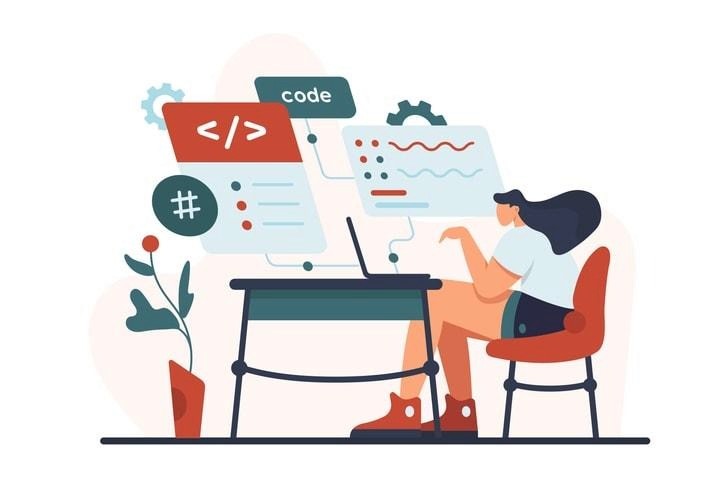
AI coding assistants are tools powered by large language models (GPT-4.1, Gemini 2.5, Claude, Qwen3-Coder) that sit inside IDEs, CLIs, or browsers to help with code suggestions, debugging, error detection, and more.
Concrete Use Cases
Here’s what these tools actually do in practice:
Autocomplete functions in TypeScript or generate code snippets in Python
Suggest unit tests for existing codebases
Refactor legacy Java services into modern patterns
Explain unfamiliar Rust code to developers new to a codebase
Generate SQL queries from natural language prompts
How They Improve Productivity
The productivity gains are measurable:
Fewer context switches: Stay in flow state instead of jumping to documentation
Reduced boilerplate: Write code faster by letting AI handle repetitive patterns
Faster iteration: Prototype ideas in hours instead of days
Quicker code reviews: AI-assisted pull request review catches issues earlier
By 2026, many teams will adopt multi-tool setups (e.g., Copilot in VS Code + Gemini in terminal + Tabnine for enterprise context) rather than relying on a single assistant.
However, these tools do not replace core software engineering skills: system design, security, data modeling, and cost/performance optimization. That’s why talent selection remains critical.
Best AI Coding Assistants in 2026
A quick, opinionated look at the tools modern engineering teams rely on while developing engineering skills:
GitHub Copilot
The most widely used assistant. Offers inline code completion, chat, PR reviews, and deep IDE integration. Best for teams already in the GitHub ecosystem.
Google’s alternative is with very large context windows and strong cloud and terminal integrations. Ideal for teams on Google Cloud or working with large codebases.
Enterprise-focused and privacy-first. Supports on-prem deployment, multiple models, and strict compliance. Best for regulated or security-sensitive organizations.
AI-native IDEs built on VS Code concepts. Enable project-wide refactoring, agent workflows, and deep context awareness. Point toward AI-first development environments.
Other notable tools
Qodo for AI-driven code reviews and testing, Sourcegraph Cody for large codebase search, Cline for local agent workflows, and Aider for CLI-based AI pair programming.
Comparison Table: Top AI Coding Assistants for 2026
The following table compares key tools by criteria relevant to founders and engineering leaders making tooling decisions.
Tool | Primary Use Case | Ideal Users | Context Strength | Enterprise Controls | Pricing (2025-2026) | Notable Limitations |
GitHub Copilot | Inline completion + chat | GitHub-centric teams | Good (repo-aware) | SOC 2, data exclusion | $10-19/user/month | Hallucinations in complex logic |
Gemini Code Assist | Multi-modal dev assistance | Google Cloud users | Excellent (~1M tokens) | Google Cloud security | Free tier + enterprise | Limited outside Google ecosystem |
Tabnine | Enterprise-secure coding | Regulated industries | Strong (enterprise engine) | On-prem, air-gapped | $12-39/user/month | Higher setup complexity |
Cursor | AI-native IDE | Power users, startups | Excellent (project-wide) | Limited vs enterprise tools | $20/user/month | Steep learning curve |
Windsurf | Agentic development | Early adopters | Strong (multi-repo) | Developing | $10-15/user/month | Newer, less battle-tested |
Qodo | AI code review | Quality-focused teams | Good (PR context) | Enterprise options | Custom pricing | Narrower scope |
aider (OSS) | CLI pair programming | Terminal-first devs | Configurable | Self-hosted | Free (OSS) | Requires technical setup |
How AI Coding Helpers Actually Improve Developer Productivity
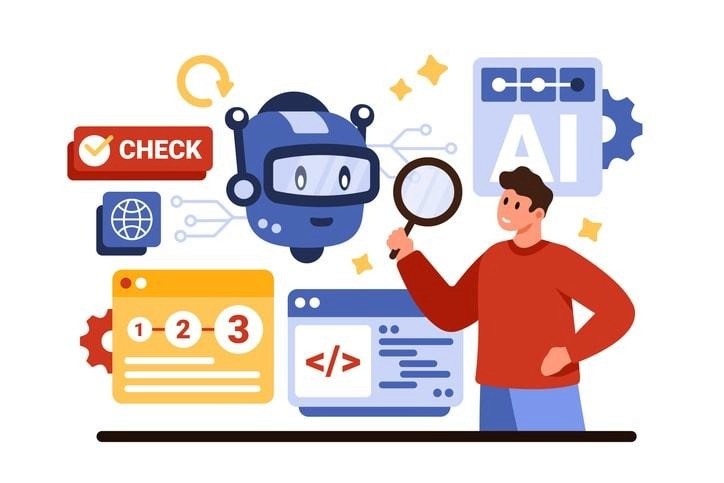
Let’s get specific about how these tools translate into measurable outcomes for software development teams.
Fewer Bugs, Faster Reviews
Tools like Qodo, Gemini for GitHub, and Copilot’s PR review features catch subtle issues earlier in the development process:
Security vulnerabilities and error handling gaps
Off-by-one errors and edge cases
Missing tests and incomplete code coverage
Inconsistent coding standards
Refactoring and Legacy Modernization
Practical examples of AI-assisted code optimization:
Migrating a 2018 Node.js service to a 2025 NestJS or Bun-based stack
Converting monolithic Python code into modular, testable components
Updating deprecated API calls across large existing codebases
Standardizing error detection and error handling patterns
What previously took weeks of developer time now happens in days.
Onboarding and Knowledge Transfer
Assistants that index repos and docs (Cody, Tabnine Enterprise Context Engine) help new hires understand code faster:
Query the codebase in natural language to understand the architecture
Get explanations of complex functions without interrupting teammates
Navigate unfamiliar code understanding with contextual hints
New engineers can become productive in days rather than weeks.
Compounding Gains
Productivity gains compound when teams standardize how they use these tools, establishing coding standards, prompt libraries, and review guidelines, rather than leaving AI usage entirely ad hoc.
Teams that create internal playbooks for their AI tools see 2-3x the productivity gains of teams that adopt tools without process changes.
Limitations of AI Code Assistants: Why Talent Still Matters
AI coding assistants are powerful, but they aren’t foolproof. Without strong human oversight, they can produce incorrect, insecure, or poorly designed code, especially in complex systems or regulated industries like finance, healthcare, and defense.
Common pitfalls include:
Hallucinated APIs: suggestions that reference functions or libraries that don’t exist
Subtle concurrency bugs: race conditions that slip past reviews
Performance regressions: solutions that work in isolation but fail at scale
Weak test coverage: generated code without sufficient validation
Where tools fall short
AI assistants don’t understand product context. They can’t set priorities, weigh trade-offs, design architectures aligned with long-term strategy, or interpret industry-specific compliance requirements. They also can’t make nuanced judgment calls about technical debt versus shipping speed.
Compliance and governance challenges
By 2025–2026, many teams face stricter constraints around data residency, intellectual property, and internal security policies; areas where generic AI tools often fall short.
The real leverage point
The biggest gains come from hiring engineers who combine strong software judgment with deep familiarity with AI tools. They know when to trust AI, and when not to. That’s why companies need a better way to find and hire these engineers, which brings us to Fonzi.
The 12-Week Hiring Cycle is Killing Your AI Roadmap
In the AI world, three months is an eternity. Yet, most companies are still stuck in a legacy recruiting loop: matching keywords on resumes and waiting twelve weeks to close a hire. By the time the engineer starts, the tech stack has already evolved.
Fonzi was built to break that cycle. We’ve replaced the traditional recruiter’s "gut feel" with a standardized, AI-aware process that focuses on one thing: real production skills. While typical recruiting drags on for months, Fonzi closes roles in about three weeks.
Engineering-First, Not Resume-First
We don’t believe in abstract puzzles or long, unpaid projects. Instead, we align with founders and technical leaders on concrete outcomes, like shipping a RAG-based search MVP or scaling inference infrastructure.
We then source from elite, pre-vetted networks of open-source contributors and practitioners. Candidates are evaluated through short, 2–4 hour exercises that mirror the job they’ll actually do, debugging AI agents or optimizing pipelines. This provides high-signal data for the company and a respectful, fast-paced experience for the candidate.
Scalable Talent for an AI-Native World
Whether you are a seed-stage startup hiring your first engineer or an enterprise scaling a team across regions, the value is the same: predictability. Fonzi handles everything from the initial source to the final offer support, guaranteeing you hire engineers who don't just know the theory but also know how to turn AI tools into real productivity gains. In a market where top talent has infinite options, our transparent, focused process ensures you don't just find the best engineers; you actually land them.
Stop hunting for resumes and start shipping systems. With Fonzi, the elite AI team you need is only three weeks away.
The Shift from Autocomplete to Autonomous Agents
As we move through 2026, the industry is witnessing a fundamental shift in how "coding assistants" are defined. We have moved past the era of simple autocomplete where a tool like GitHub Copilot merely predicted the next line of code. We are now in the era of Agentic Software Development.
What is Agentic Coding?
In 2026, the best tools (like Cursor and Windsurf) act as autonomous agents. Instead of you writing code and the AI suggesting a completion, you provide a high-level intent, "Refactor the authentication module to use JWT instead of sessions," and the agent plans the task. It doesn't just write the code; it identifies every file that needs to change, creates a plan, executes the edits, runs the local test suite, and presents you with a single, verified Pull Request. This "Plan-Execute-Verify" loop is what separates a 2026 assistant from the tools of 2024.
The Rise of Context-Aware Infrastructure
The second major evolution is Deep Context Awareness. Traditional assistants were limited by "context windows," they could only see a few files at a time. In 2026, tools like Gemini Code Assist and Sourcegraph Cody utilize massive 1M+ token windows or RAG-based (Retrieval-Augmented Generation) indexing to "know" your entire repository. This means the AI understands that a change in the user-service will require a corresponding update in the billing-engine three microservices away.
Why the "Human-in-the-Loop" is Changing
With AI handling the "implementations," the role of the software engineer is shifting toward System Design and Review. Engineers in 2026 spend less time typing and more time auditing "Agentic Traces," reviewing the steps the AI took to reach a solution. This requires a higher level of architectural judgment. It's no longer enough to know how to code; you must know how to verify that the code produced by an agent aligns with security standards, cost constraints, and long-term scalability.
Building Your 2026 AI-Native Stack
Most high-performing teams no longer use a single tool. They use a "Stack":
Cursor/Windsurf for heavy, multi-file refactors.
GitHub Copilot for quick, inline logic and PR reviews.
Aider or Cline for CLI-based agentic tasks and terminal operations.
Qodo for automated testing and code quality assurance.
By diversifying your toolset, you ensure that you have the right "Agent" for the right task, maximizing the 3x productivity gains promised by the AI revolution.
Turn “Codely AI” Into a Competitive Advantage
In 2026, AI coding assistants like Cursor, GitHub Copilot, and Gemini are no longer just "nice-to-haves"; they are the baseline for high-performance teams. These tools can slash bug rates and handle massive refactors, but they aren't a silver bullet. The real bottleneck isn't the software; it’s finding the elite talent capable of steering these tools to build secure, scalable architectures. Without engineers who possess deep architectural judgment, even the best AI assistants will simply produce "faster technical debt."
That is where Fonzi comes in. We bridge the gap between world-class tooling and elite talent by helping companies hire the top 1% AI engineers in just three weeks. By replacing outdated 12-week recruiting cycles with high-signal, production-based evaluations, like debugging AI agents or scaling RAG systems, we guarantee you hire builders who actually ship. Don't let your roadmap stall while hunting through resumes; use Fonzi to build the AI-native team you need today.
FAQ
What are the best AI coding assistants in 2026?
How do AI programming helpers actually improve coding productivity?
What’s the difference between GitHub Copilot and other AI code assistants?
Can AI coding helpers write entire programs or just assist with snippets?
Are AI programming assistants worth the cost for developers and teams?