Developer Burnout: Signs, Causes, and How to Actually Recover
By
Liz Fujiwara
•
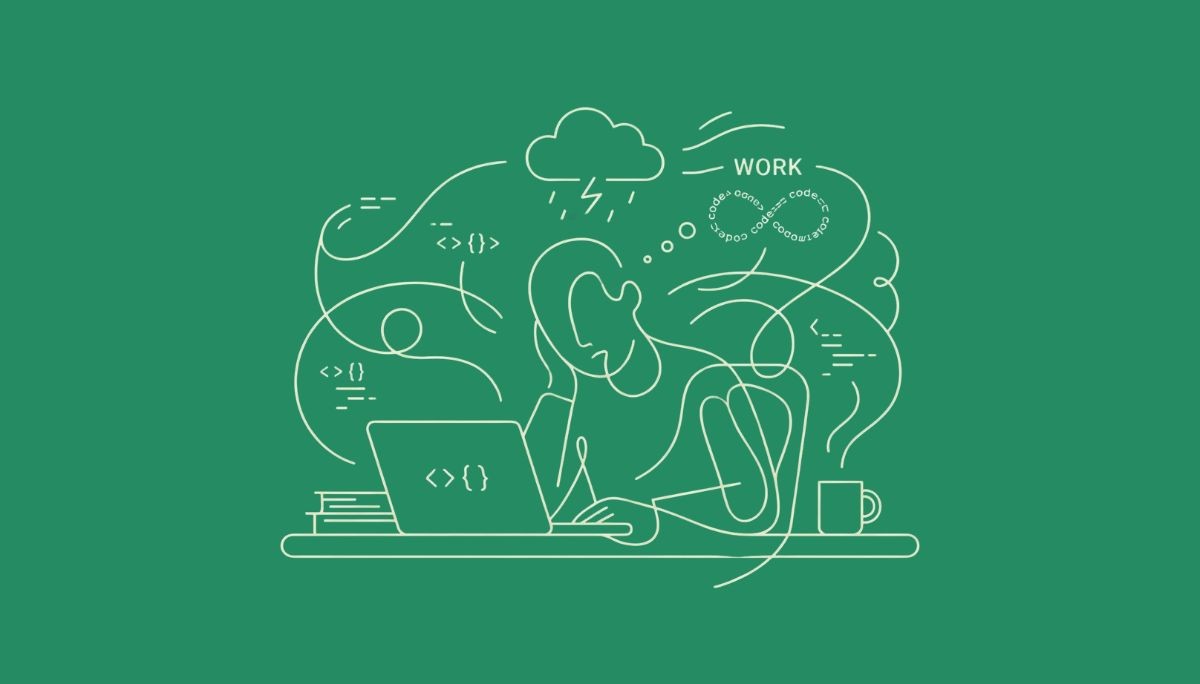
It's early 2026, and you're a senior AI engineer juggling an LLM incident, a wall of Slack alerts, and multiple interview loops, feeling constantly behind. For many high-demand developers, that's not a bad week. It's every day.
Since 2022, AI adoption has ramped up pressure to deliver "10x productivity" while managing the same complex problems, pushing software engineering burnout past 80 percent.
Burnout is chronic stress that causes exhaustion, cynicism, and lower effectiveness, and it often peaks while navigating noisy hiring funnels and automated screens. Fonzi is a curated talent marketplace for AI and engineering roles, designed to make hiring less stressful and more human-centered so developers can find positions that actually fit.
Key Takeaways
Developer burnout exists on a spectrum and disproportionately affects AI engineers, ML researchers, infra engineers, and LLM specialists due to constant cognitive load, rapid framework changes, and high-stakes deployments, with most burnout stemming from structural issues like unrealistic deadlines, poor planning, and lack of autonomy rather than personal weakness.
True recovery requires both personal strategies, such as rest, boundaries, and physical health, and systemic changes, including better workload management, psychological safety, and sustainable culture.
Modern hiring increasingly uses AI, but poorly designed systems add noise and bias; Fonzi’s Match Day model concentrates high-signal opportunities into a predictable, low-stress window, and this article provides steps to recognize burnout early, recover effectively, evaluate new roles, and leverage Fonzi to find healthier AI and engineering positions.
What is Developer Burnout?
The World Health Organization classified burnout in 2019 as an occupational phenomenon tied to chronic stress that hasn’t been successfully managed, characterized by three dimensions: energy depletion or exhaustion, increased mental distance or cynicism toward one’s job, and reduced professional efficacy. This workplace syndrome is distinct from general fatigue or clinical depression.
Normal stress is a short-term adaptive response that can boost focus, like the tension before a launch, while burnout persists over months, escalating from mild drain to severe dysfunction. Depression is a clinical disorder with broader life impacts requiring medical intervention, whereas burnout is specifically tied to the work environment and often improves when conditions change. One developer might feel restored after switching teams, while another might need extended leave and professional support.
Consider a staff ML engineer who dreads opening their IDE because of endless research churn, or a platform engineer numbed by another 3 a.m. on-call alert amid brittle infra. These symptoms reflect sustained workplace conditions exceeding human capacity, not personal failure. Burnout exists on a gradient from “I’m drained this quarter” to “I can’t function and need extended leave,” and early detection through self-assessments like the Maslach Burnout Inventory is crucial to prevent advanced stages where performance collapses despite effort.
How Common Is Developer Burnout?
Surveys paint a stark picture: Haystack Analytics found 83% of developers experienced burnout in 2021, with 81% reporting worsened conditions from COVID-era workloads. JetBrains 2023 data showed 73% of developers have experienced burnout at some point, and a J L Partners poll of 500 US/UK developers noted that 70% of project delays are tied directly to flawed metrics that fuel burnout cycles.
Software and AI-specific roles face particularly high rates, including game development, security, and AI infrastructure positions. Developers managing LLM operations, model training, safety evaluations, and high-availability MLOps systems face persistent cognitive demands that amplify risk. The post-2020 shift to remote work removed commutes but introduced isolation, blurred boundaries, and “always-on” Slack cultures that many find equally draining.
AI and ML roles carry additional stressors, including rapid framework churn, pressure to ship or publish quickly, and ethical tensions around deployments. Many developers only recognize burnout when they start job hunting and failing interviews, assuming they’re “rusty” rather than depleted, by which point mental fatigue has compounded with the stress of navigating a demanding job market.
Early and Advanced Signs of Developer Burnout
Early detection matters because burnout spans emotional, behavioral, cognitive, and physical dimensions. Recognizing the early warning signs before they become severe can prevent months of lost productivity and personal suffering. The following table compares healthy engagement with early and advanced burnout across key indicators:
Indicator | Healthy Engagement | Early Burnout | Advanced Burnout |
Motivation | High enthusiasm for challenging work | Waning interest, harder to start tasks | Hopelessness, complete disengagement |
Work Quality | Crisp, efficient output | Minor errors, slower delivery | Sharp productivity drops, missed deadlines |
Code Reviews | Positive, constructive participation | Mild annoyance, less patience | Cynicism, hostility, avoidance |
Physical Symptoms | No persistent issues | Occasional fatigue, tension | Chronic exhaustion, sleep disruption, frequent headaches |
Emotional signs of burnout include rising cynicism toward users and stakeholders, loss of enthusiasm for once-interesting problems, irritability during code reviews, and Sunday evening dread, often accompanied by frequent negative emotions or vanished intrinsic motivation.
Behavioral signs appear as procrastination, doom-scrolling instead of coding, avoiding 1:1s and standups, snapping in Slack threads, or refusing ownership of production issues, and can affect developers at all levels when mental energy is depleted.
Cognitive signs include trouble holding complex system models in mind, rereading the same design documents, forgetting context between meetings, and mental fatigue during interviews or whiteboard sessions, making problem solving harder and slowing decision making.
Physical symptoms that demand attention include sleep disturbances, headaches, digestive issues, constant fatigue despite rest, and increased reliance on caffeine or alcohol, and persistent symptoms should prompt consultation with a medical professional.
Why Software and AI Developers Burn Out
Burnout is primarily systemic and organizational, not a personal failure, and usually results from multiple compounding factors over months or years.
Workload and pace are top drivers, with research showing unrealistic deadlines, inefficient processes, and unclear goals contribute heavily, while sustained crunch, frequent weekend releases, constant on-call rotations, and endless migrations create conditions where even resilient developers burn out.
Cognitive load and technical debt turn every change into a risky, exhausting task, with legacy monoliths, unclear ownership, brittle pipelines, and poorly documented ML stacks consuming disproportionate mental energy and reducing productivity.
Lack of control and autonomy erodes well-being, as top-down decision making, weekly priority changes, and no input on roadmap or tech choices leave developers feeling powerless and cynical.
Misaligned values and culture create toxic environments, with metrics worship, hero culture, blame-heavy postmortems, glorification of long hours, and “do more with less” messaging signaling a lack of sustainability.
AI and ML roles face additional amplifiers, including rapid research churn, pressure to publish or ship models quickly, ethical concerns, and constant re-skilling across frameworks and serving stacks, explaining why burnout is particularly intense in AI-adjacent roles.
How to Recover from Developer Burnout
Recovery from burnout varies, but usually requires both immediate triage and long-term redesign of work and personal habits, with the goal of sustainable capacity for a decades-long career rather than short bursts of heroic effort followed by collapse.
Start by stopping and assessing: take a short break if possible, journal symptoms to detect patterns, and consult a doctor or mental health professional to rule out underlying conditions; this is a critical foundation, not a sign of weakness.
Set explicit boundaries by establishing fixed work hours, turning off notifications after a certain time, saying no to extra projects when at capacity, and negotiating realistic timelines instead of silently absorbing impossible deadlines.
Disconnect meaningfully by pursuing non-screen hobbies, spending time in nature, maintaining social support outside tech, and carving out free time without GitHub, arXiv, or Discord, so work doesn’t consume every waking hour.
Address the fear of “falling behind” by focusing on sustained capacity over short bursts of overwork, allowing both junior developers and senior architects to complete tasks without sacrificing health.
What Teams and Managers Can Do Differently
Even the best personal habits cannot offset a chronically unhealthy work environment, so this section addresses both individual contributors and managers who can influence systems.
Sustainable planning includes right-sized sprints, fewer fire drills, clear trade-offs when adding scope, and respecting no-meeting focus blocks for deep work on complex systems or models. Research shows context-switching costs roughly 23 minutes of refocus time per interruption, so protecting deep work directly reduces burnout.
Workload management requires tracking on-call load, rotating responsibilities fairly, limiting after-hours pings, and addressing chronic under-staffing rather than relying on heroics. When software teams are perpetually stretched thin, burnout becomes inevitable regardless of individual coping strategies.
Psychological safety allows engineers to raise concerns about deadlines, ethics, or technical risk without fear of reprisal. Blameless postmortems, managers inviting dissent, and cultures where certain tasks can be questioned create environments where burned out developers can actually recover.
Investing in technical health pays long-term dividends. Scheduled time for refactoring, documentation, test coverage, and infrastructure reliability work reduces cognitive and operational load, preventing the cycle where teams are constantly firefighting rather than building.
Manager behaviors matter: regular 1:1 check-ins about energy levels, modeling boundaries personally, and advocating upward when team dynamics show signs of strain to signal to the team that work-life balance is valued. A chief architect or engineering lead who demonstrates balance gives permission for others to do the same.
Why the Hiring Process Feels So Draining
Many developers only recognize burnout while interviewing, often after layoffs or difficult product cycles, and job searching itself can worsen stress. Common pain points include endless generic recruiter outreach, repetitive take-home assignments, multi-week interview loops with inconsistent feedback, and automated rejections with no explanation. High-volume hiring funnels use shallow screening signals, favoring time-rich candidates and disadvantaging burned-out but capable engineers.
AI and ML roles face specific friction, including unclear role definitions, misaligned expectations about publications versus shipping, and interview loops testing irrelevant skills. A software engineer with expertise in distributed training might be asked algorithm questions unrelated to their target role. This adds uncertainty, rejection, and time pressure on top of already overloaded schedules. Remote work makes it easier to interview while employed, but also easier to burn out from parallel processes.
How AI Is Changing Hiring and Where It Goes Wrong
Since 2022, companies have adopted AI for resume parsing, automated outreach, ranking systems, and FAQ chatbots, reshaping talent acquisition. The benefits include faster triage of large applicant pools, reduced manual screening, and the potential to surface non-obvious matches beyond pedigree or big-tech logos. For burned-out developers with unconventional backgrounds, AI can offer a path to recognition.
The downsides of misused AI are significant. Overreliance on keyword matching can reject capable candidates, black-box scoring amplifies historical bias, and dehumanized experiences with no feedback leave applicants anxious and uncertain. Burned-out developers feel this acutely when they are scored by opaque systems and receive no context or guidance. AI’s impact depends on whether it creates clarity and fairness or simply pushes more candidates through a noisy funnel.
Using AI to Create Clarity, Not More Noise
Fonzi is a curated talent marketplace for AI engineers, ML researchers, infra engineers, and LLM specialists, not a generic job board. It uses AI to understand candidates’ real skills and match them with relevant roles based on actual capabilities rather than keyword density. This reduces noise that makes job searching exhausting.
Curation works differently: candidates are vetted once, then matched to a focused set of actively hiring companies, eliminating random outreach and repetitive screening that consume time better spent on preparation or recovery.
Bias safeguards include human oversight of matching logic, regular outcome audits, and attention to factors beyond school or previous employer. Open-source contributions, independent research, and infra-scale experience receive appropriate weight regardless of pedigree.
Candidate experience is prioritized with clear timelines, fewer but higher-quality processes, and support resources including interview prep guidance and role clarity. In Fonzi’s model, AI augments human recruiters and hiring managers, giving them better signals so they can spend more time talking with candidates.
Comparing Traditional Job Search vs. Fonzi for Burned-Out Developers
This comparison illustrates how process design directly impacts cognitive load and recovery capacity for developers experiencing burnout:
Aspect | Traditional Search | Fonzi Marketplace |
Parallel Processes | 10+ open applications with minimal context | 3-5 curated matches aligned with your skills and preferences |
Outreach Signal | Noisy LinkedIn messages, generic recruiter spam | Skill-aligned introductions from vetted companies |
Role Clarity | Generic job descriptions with unclear expectations | Detailed context on stack, mission, team dynamics, and compensation |
Time to First Interview | Weeks of screening and scheduling | Days after Match Day connection |
Preparation Support | None; figure it out yourself | Tailored guidance based on specific role requirements |
Bias and Pedigree Reliance | Heavy weight on brand-name employers and schools | Audited matching with OSS and research contributions weighted fairly |
Human Support | Automated responses or silence | Dedicated team available throughout process |
Better process design directly supports burnout prevention and recovery by reducing uncertainty and cognitive overhead.
Preparing for High-Signal Interviews Without Burning Out
Even with a better marketplace like Fonzi, interviews still require energy, so smart preparation focuses on efficiency, not volume. Stop coding practice problems for eight hours daily and start targeting your effort.
Create a simple preparation plan with specific blocks for algorithms, systems design, ML fundamentals, and role-specific deep dives. Focus on the domains relevant to your target role, whether serving infrastructure or evaluation design.
Prioritize realistic practice by walking through previous projects, articulating trade-offs, and explaining complex systems clearly to non-experts, which matters more than grinding endless LeetCode problems.
Pace yourself based on energy levels by limiting weekly interviews to two or three processes and scheduling recovery time between intense loops, allowing mental resets that prevent cumulative fatigue. The goal is showing your best, not surviving a gauntlet, and choosing fewer, well-aligned interviews is often a superior strategy.
How AI Helps Recruiters Focus on People
Fonzi does not replace human judgment; it uses AI to reduce busywork and surface high-potential matches so recruiters and hiring managers can focus on understanding candidates as people. This frees talent teams to learn about motivations, constraints, and long-term goals rather than manually scanning resumes, which provides emotional relief to burned-out developers compared with generic outreach.
Fonzi emphasizes finding roles that fit not just skills, but energy, values, and preferred ways of working, including research versus product focus, company stage, and remote versus in-office arrangements. A side project you’re passionate about might indicate fit for a research role better than any credential.
Sustainable careers in AI and software development depend on aligning humans and systems, and modern hiring supports that goal when designed thoughtfully, with Fonzi demonstrating responsible AI implementation that benefits both candidates and companies.
Conclusion
Burnout is common in high-demand AI, ML, and infra roles, but it is not permanent and not a personal failure; recognition is the first step, along with personal changes and environmental improvements.
Recovery relies on three pillars: recognize early signs, make personal changes to rest and reset, and seek or shape environments that prioritize sustainable pace and psychological safety.
Career moves should reduce rather than add to burnout. Create a Fonzi profile, join a Match Day, and explore roles curated for AI engineers, ML researchers, infra engineers, and LLM specialists who value long-term health, building a sustainable career around your expertise.
FAQ
What are the most common signs of developer burnout?
What causes burnout in software developers specifically?
How do I recover from developer burnout without quitting my job?
Is developer burnout a reason to switch companies or change careers entirely?
What can engineering managers do to prevent burnout on their teams?


