Jobs That Hire Fast: 20+ Industries with Quick Hiring Processes
By
Liz Fujiwara
•

Two candidates apply on the same Monday. One submits 47 applications through a job board, waits weeks for interviews, and then hears nothing. The other, an ML researcher, is introduced to three aligned companies through a curated marketplace on Friday and has an offer in hand ten days later.
The difference is not luck. Fast hires come from predictable demand, standardized roles, and streamlined screening that removes unnecessary rounds. While many quick-hire roles are in logistics or customer service, high-skill AI and engineering positions also move fast when signal outweighs volume.
Fonzi is a vetted talent marketplace for AI engineers, ML researchers, infra engineers, and LLM specialists, designed to compress the hiring funnel while keeping a high bar. This guide covers fast-hire industries, AI’s role in recruitment, how Fonzi’s Match Day works, and practical steps to move from application to offer faster.
Key Takeaways
Some industries, like logistics, customer support, healthcare support, skilled trades, and gig work, routinely move from application to offer in under 7 to 14 days due to high turnover, seasonal demand, and standardized onboarding.
AI and ML roles can also move quickly, especially on curated marketplaces where both candidates and companies are pre-vetted and aligned.
Responsible AI in hiring should reduce noise and bias without replacing human judgment, as exemplified by Fonzi’s human-centered matching approach.
Fast-Hire Jobs 101: What “Quick Hiring” Really Looks Like
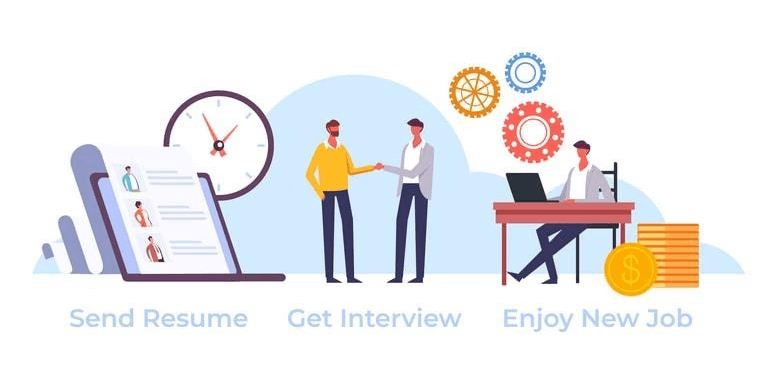
Before diving into specific industries, let’s set expectations. “Quick” varies dramatically by sector:
Same-day offers are common in warehousing and gig work
One to two weeks is typical for customer support and entry-level healthcare
Two to four weeks is fast for technical roles at startups
Two to six weeks is exceptional for AI and ML positions, which typically take three to four months at large enterprises
Typical hiring stages that can be compressed include:
Application and initial screening, either automated or via recruiter review
Skills assessment or phone interview
Technical or on-site interviews, usually one to three rounds
Offer and background verification
Onboarding and training
Factors that speed up hiring include high turnover rates (some retail and hospitality employers see over 50% annual churn), seasonal surges (November through January for logistics), standardized training programs that reduce onboarding risk, and urgent project timelines at startups racing to ship.
For technical roles, speed often depends on aligned expectations between both parties. When candidates come from pre-vetted talent pools with clear skills documentation, companies can skip generic screening calls and move directly to substantive conversations. This is precisely where platforms like Fonzi change the game for AI engineers.
Next, we will break down 20+ paths by category, with realistic pay ranges and timeline expectations.
Logistics, Warehousing, and Delivery: The Classic Fast-Hire Path
Constant demand and predictable workflows make logistics one of the fastest-hiring sectors in North America and Europe. With e-commerce continuing to grow, warehouse and delivery roles face persistent openings that employers need to fill quickly.
Examples of fast-hire logistics roles:
Amazon sortation and fulfillment center associates
UPS package handlers, unionized in many locations
FedEx Ground handlers and drivers
Regional third-party logistics (3PL) warehouse workers
Local courier and last-mile delivery hubs
DHL and OnTrac sorting facilities
Realistic pay ranges:
Entry-level warehouse roles: $16–$22 per hour
Unionized package handlers in major metros: $21–$24 per hour
Delivery drivers with company vehicles: $18–$25 per hour plus overtime
Shift supervisors: $22–$28 per hour
Typical requirements:
Age 18+ (21+ for commercial driving)
Ability to lift 40–70 lbs repeatedly
Basic English comprehension for safety protocols
Background check, usually 24–72 hours via services like Checkr
Drug screening at some employers
Hiring timelines:
Most employers use streamlined processes. An online application with a brief screening quiz takes 24–72 hours to review. Many host virtual or walk-in hiring events where candidates can complete verification and start orientation the same week. From application to first day on the floor typically takes 7–10 days.
Customer Support, Call Centers, and Front-Line Service Roles
Call centers, customer support teams, and front-desk positions frequently hire in under two weeks. The combination of high volume, standardized training, and clear performance metrics means employers can onboard new hires quickly without extensive interview loops.
Examples of fast-hire support roles:
Remote customer support representatives for e-commerce
Call center agents at telecoms, banks, and insurance companies
Hotel and resort front-desk clerks
Medical office receptionists and schedulers
Help-desk and technical support at SaaS companies
Retail customer service associates
Common hiring process:
Short online assessment (typing, basic problem-solving)
1–2 interviews, often scheduled same-week
Quick reference and background check
Start dates within 1–3 weeks
Skills that speed up your candidacy:
Clear written and verbal communication
Typing proficiency (40+ WPM for chat roles)
Calm demeanor under pressure
Prior customer-facing experience
Familiarity with CRM tools (Zendesk, Salesforce)
AI is increasingly used in these hiring processes for automated screening and scheduling. Most applicants should expect AI-based assessments, but a human will still review applications before final decisions. While these roles may offer limited day-to-day variety, they provide stable income and often include benefits such as anytime pay options and vacation time.
Healthcare Support, Hospital Services, and Entry-Level Clinical Roles
Aging populations and chronic staff shortages make healthcare support roles some of the quickest to fill. According to BLS projections, healthcare is growing faster than average, with hospitals, clinics, and long-term care facilities facing what some reports describe as “desperate” openings.
Fast-hire healthcare roles:
Patient care technician (PCT)
Certified nursing assistant (CNA)
Medical assistant
Hospital environmental services (EVS)
Phlebotomy technician
Front-office admin and schedulers at clinics
Home health aide
Role | Hourly Range (USD) |
CNA/PCT | $16–$24 |
Medical assistant | $18–$25 |
Phlebotomist | $18–$24 |
EVS/housekeeping | $15–$20 |
Home health aide | $14–$20 |
Some roles require short certifications—typically 4–12 week courses for CNA or phlebotomy credentials. Many employers offer tuition reimbursement or fee assistance, willing to hire trainees and support their certification journey.
Typical time-to-hire:
Phone screen within a few days of application
On-site or virtual interview within a week
Offer and onboarding in 1–3 weeks (compliance checks add time)
Long-term upside:
Clear career ladders into LPN, RN, or specialized technician roles
Tuition assistance for continuing education
Recession-resistant demand
Multiple shifts available (part time, full time, per diem)
For candidates who want both quick entry and long-term growth, healthcare support provides a stable foundation in a world where these skills remain essential.
Skilled Trades and Field Services That Hire Fast
Skilled trades combine strong demand, limited supply, and apprenticeship structures that often lead to faster hiring decisions for motivated candidates. With construction and infrastructure spending increasing, these paths offer both speed and solid compensation.
Examples of fast-hire trade roles:
Plumbing apprenticeships
Electrical apprenticeships
HVAC technicians
Elevator technicians
Commercial cleaning crews
Biohazard and toxic waste cleanup teams
Pest control technicians
Role Type | Starting Hourly | After 2–3 Years |
Trade apprentice | $18–$25 | $28–$40+ |
Specialized cleanup | $22–$30+ | $35–$50+ |
HVAC technician | $20–$28 | $30–$45 |
Many employers hire based on reliability, ability to learn, and willingness to do physical work rather than formal degrees, which speeds up the process significantly.
Realistic timelines:
Initial call or walk-in inquiry within days
Ride-along or trial shift to assess fit
Start dates often within 1–2 weeks after the interview
Some trade companies actively recruit underrepresented candidates, such as women in electrical or plumbing, and may fast-track motivated applicants who show genuine interest. These roles offer steady income, clear skill development, and eventual licensing, making trades an attractive alternative to jobs with less growth potential.
Gig Work, Contract Roles, and On-Demand Platforms
Gig platforms and temp agencies provide the fastest way to start earning, sometimes within 24–48 hours of completing an app download and background check. The tradeoff is income variability and limited traditional employee benefits.

Examples of quick-start gig work:
Rideshare driving (Uber, Lyft)
Food and package delivery (DoorDash, Instacart, Amazon Flex)
Freelance marketplaces for design, writing, and development
Local staffing agencies for light industrial and seasonal work
Event staffing for concerts, sports, and conferences
Requirements are typically minimal:
Background and driving record checks
Proof of insurance (for driving roles)
Identity verification (often completed via app)
Smartphone with reliable data connection
Pros:
Immediate cash flow to pay bills
Schedule flexibility
Low barrier to entry
Experimentation across sectors
Cons:
No traditional benefits (health, retirement)
Inconsistent demand and earnings
Self-employment taxes
Wear and tear on personal vehicle
While gig work addresses short-term income needs, it differs from the curated, high-signal contract roles that AI and ML specialists can find through specialized marketplaces. For engineers seeking contract work, platforms like Fonzi offer a more strategic path, which we will cover next.
Fast-Hire Tech and AI Roles: Yes, They Exist
Many AI engineers and ML researchers are conditioned to expect 3–4 month hiring cycles at major tech companies. But startups, scaleups, and research labs frequently hire much faster when the need is urgent and the candidate is clearly qualified.
Fast-hire tech scenarios:
Early-stage startups needing an LLM specialist before a product launch
Infrastructure teams urgently hiring to handle scaling traffic
Research labs with funded, time-boxed projects requiring specific expertise
Companies preparing for seasonal spikes in usage
Teams backfilling after unexpected departures
Example roles that move quickly:
AI engineer (applications or research)
ML platform engineer
Infrastructure engineer (ML-focused)
LLM applications engineer
ML ops engineer
Data engineer supporting foundation models
Realistic timeframes:
When both sides are aligned and candidates are pre-vetted, these roles can close in 2–6 weeks, much faster than the months typical at enterprise employers. Traditional job boards slow the process with unqualified applicants and generic resumes. The fastest AI and infra hires often happen through networks and curated marketplaces rather than cold applications, and if you have ever felt like your resume disappeared after clicking submit, you understand why a different approach matters.
How AI Is Changing Hiring—And Why Fonzi Is Different
Today, many companies use AI throughout hiring, including resume parsing, keyword-based screening, automated scheduling, and simple assessments. In theory, this creates efficiency, but in practice, it often creates noise.
Common problems with AI in hiring:
Opaque filters that reject strong candidates based on missing keywords
Increased false positives with too many matches that are not actual fits
The feeling of sending applications into a black box with no human connection
Bias encoded in training data that disadvantages non-traditional backgrounds
Fonzi takes an intentionally different approach. As a curated marketplace focused on AI engineers, ML researchers, infra engineers, and LLM specialists, Fonzi uses technology to clarify signals, not hide them.
How Fonzi uses AI responsibly:
Normalizes profiles to surface relevant experience consistently
Helps employers understand candidate fit faster through structured data
Humans make final matching decisions, not algorithms alone
Feedback loops from both sides continuously improve quality
Fonzi is built to reduce bias through structured profiles and consistent criteria, protect the candidate experience with transparent timelines, and shorten hiring cycles without dehumanizing the process. The goal is to free recruiters from low-signal tasks, such as screening thousands of resumes, so they can focus on thoughtful conversations with serious candidates. Features like Match Day and high-intent company participation make Fonzi personally relevant for technical talent seeking speed without sacrificing quality.
Fonzi for AI Talent: How the Curated Marketplace Works
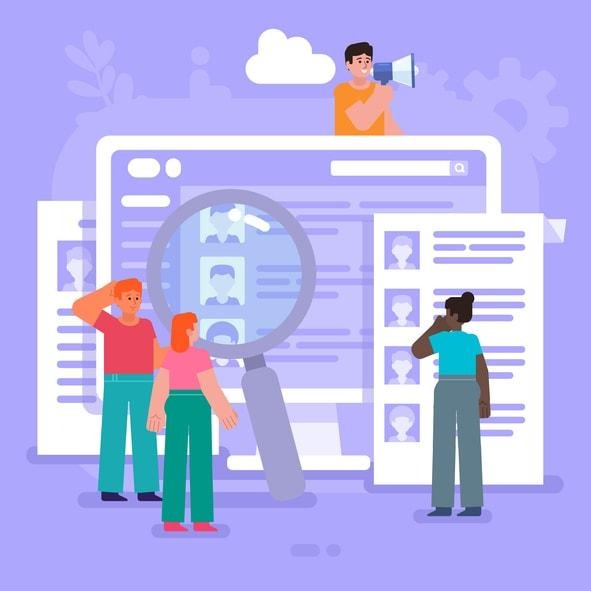
Fonzi operates as an application-based marketplace where AI and infra talent are vetted once and then introduced to multiple aligned companies, eliminating redundant screening across employers.
The candidate journey:
Apply to Fonzi through the platform
Complete a structured profile including skills, models you have worked with, infra stack, publications, and open-source contributions
Undergo a light but meaningful screen to verify that your experience matches your claims
Get activated for upcoming Match Days where companies actively seek candidates
Companies join Fonzi specifically for AI, ML, infra, and LLM hiring. The roster ranges from early-stage startups (Series A–C) to established tech firms and research labs.
Why this works:
Because both sides are curated, companies trust that Fonzi profiles are high-signal. Managers can open a candidate profile and immediately understand their technology stack, problem domains, and concrete achievements, allowing them to move to interviews faster than with generic job listings on broad platforms.
Impact in practice:
Median time from first introduction to offer is 3–5 weeks, compared to 8–16 weeks via traditional channels
Typical candidates receive 3–6 serious conversations per Match Day cycle
Companies participating are actively hiring, not just always looking
This brings us to the core mechanism that makes Fonzi different: Match Day.
Inside Fonzi Match Day: A High-Signal Shortcut to Interviews
Match Day is a specific event, typically once or twice per month, when Fonzi presents a curated batch of AI and infra candidates to vetted, high-intent employers, similar to speed-dating for serious technical hiring.
The flow from a candidate’s perspective:
Before Match Day: Finalize your profile, ensure skills and experience are current, and prepare for potential interviews
On Match Day: Companies review the curated batch and request interviews with candidates whose profiles align with their needs
Within days: Candidates learn which teams want to talk, often with multiple inbound requests
Why this design saves time:
Instead of sending dozens of applications and waiting for responses, candidates get inbound interest from multiple teams that already understand their stack, whether that is PyTorch, JAX, Kubernetes, Ray, or vector databases.
Signals that drive matches:
Hands-on model deployment and production experience
Experience with LLM fine-tuning and optimization
Infrastructure throughput gains and scaling achievements
Publications, conference talks, or ArXiv papers
Open-source contributions to relevant libraries
Humans, not algorithms alone, decide matches. Fonzi’s team actively curates both the candidate batch and the company list to create a community of serious participants and avoid noise.
Typical Timelines: Fast-Hire Industries vs. Fonzi’s AI Roles
Understanding realistic timelines helps you plan financially and emotionally. Whether you’re waiting on a warehouse orientation or a final-round AI interview, knowing what to expect reduces anxiety and helps you prepare.
Comparison Table: Time-to-Hire Across Fast-Hire Paths
Job Category | Typical Roles | Pay Range (USD/hr) | Usual Time-to-Hire | Interview Depth |
Logistics/Warehouse | Package handler, sorter, driver | $16–$24 | 3–10 days | Minimal (assessment + check) |
Call Centers/Support | Phone rep, chat support, tech support | $17–$28 | 7–14 days | 1–2 interviews |
Healthcare Support | CNA, medical assistant, phlebotomist | $16–$25 | 14–28 days | 1–2 interviews + credentialing |
Skilled Trades | Apprentice, technician, cleanup crew | $18–$30+ | 7–14 days | Trial shift or ride-along |
Gig/Contract Work | Delivery driver, freelancer, event staff | Variable ($15–$40+) | 1–7 days | App verification only |
Standard Tech Hiring | Software engineer, data scientist | $50–$100+ (salaried equivalent) | 30–90 days | 4–6 rounds |
Fonzi AI/Infra Hiring | AI engineer, ML researcher, LLM specialist | $70–$150+ (salaried equivalent) | 14–45 days | 2–4 focused rounds |
Interpreting the data:
Fastest paths: Gig work and warehouse roles can move in under a week and are ideal for immediate income needs
Balance of speed and growth: Healthcare and trades offer quick entry along with long-term career potential
High-skill, fast hiring: Fonzi’s curated approach delivers AI and infra offers in 2–6 weeks, compressing what typically takes 2–4 months elsewhere
For AI engineers, this position in the hiring landscape matters. You do not have to choose between a fast hire and a meaningful role, as the right platform can deliver both.
Preparing for Fast-Hire Jobs: General Playbook
Speed does not remove the need for preparation. Being application-ready boosts your success when opportunities move quickly.
Broad steps that apply across job types:
Updated resume: Include current roles, quantified achievements, and relevant skills prominently
Core story: Prepare a 60-second answer to "tell me about yourself" tailored to your target sector
Portfolio or project list: Even for non-technical roles, examples of past work or training certificates help
Clear availability: Know your answer to "when can you start?" before being asked
Documents to gather ahead of time:
Government ID, such as a passport or driver’s license
Work authorization documentation
Relevant certificates or licenses
Professional references with current contact information
Information for background checks, including past addresses and employer details
Signaling readiness:
In applications and interviews, explicitly mention your availability. Phrases like "available to start immediately" or "flexible on shifts" show employers you will not create delays. For seasonal roles, noting willingness to work during holidays, weekdays, and weekends can move you to the top of the list.
For technical roles, preparation looks different, and we will cover that next.
Standing Out in Fast-Hire AI, ML, and Infra Roles
Competition is intense even when hiring moves quickly. For AI engineers, ML researchers, infra engineers, and LLM specialists, clarity and evidence of impact separate you from the stack of applications.
Essential elements of a high-signal profile:
Clear summary of core stacks: List your primary frameworks, such as PyTorch, TensorFlow, JAX, and infrastructure tools like Kubernetes, AWS/GCP, Ray, Airflow, Spark
Problem domains: Specify whether you work in NLP, recommendation systems, reinforcement learning, computer vision, or LLMs
Model scale and complexity: Note if you have worked with billion-parameter models, multi-GPU training, or distributed inference
Concrete achievement bullets:
Include 2–3 measurable outcomes per role, for example:
"Reduced training cost by 40% through mixed-precision optimization"
"Improved model latency from 200ms to 45ms for production inference"
"Shipped LLM feature processing 2M+ queries daily"
"Led migration from monolithic model to microservices architecture"
Public signals that accelerate hiring:
GitHub contributions to relevant projects
ArXiv papers or conference presentations
Kaggle competition rankings
Open-source libraries authored or contributed to
Technical blog posts demonstrating thought leadership
On Fonzi, this evidence is structured in your profile so companies can quickly understand your strengths. Instead of a recruiter spending 30 seconds scanning a PDF, they see your passion and expertise organized for fast comprehension, moving you to interviews without generic screening calls.
Interviewing at Speed: What to Expect and How to Prepare
Faster hiring does not always mean fewer interviews, just more focused ones in a compressed timeline.

Non-technical fast-hire interviews:
Single behavioral interview, 15–30 minutes
Practical task or trial shift
Immediate or same-day offer
Fast-track technical loops:
Recruiter call, 30 minutes: Company overview, role expectations, timeline
Technical screen, 60–90 minutes: Coding task, system design, or ML case study
Team interviews, 2–3 sessions: Deeper technical dives and culture fit
Final decision within 2–3 weeks of first contact
Preparation tips for AI roles:
Review recent models you have shipped and be ready to discuss architecture decisions
Practice whiteboarding or verbalizing system designs, including transformer variants, training pipelines, and inference optimization
Prepare to discuss infrastructure bottlenecks you encountered and tradeoffs you made
Have 2–3 questions ready about the company’s AI roadmap and responsible AI practices
Match Day-specific prep:
Block calendar time for interviews in the 1–2 weeks following Match Day
Keep notes on each company you are interested in
Research their products, recent announcements, and tech stack
Fonzi’s team can help clarify what each company expects so you are not surprised
Being able to respond quickly when an employer reaches out, ideally within 24 hours, demonstrates the reliability that accelerates hiring on both sides.
Responsible AI in Hiring: Keeping Humans at the Center
As AI professionals, many readers care deeply about fairness and transparency, and you have every right to expect the same from the tools that evaluate you.
Responsible AI in hiring looks like:
Augmenting human judgment, not replacing it
Making evaluation criteria explicit and consistent
Monitoring models for bias and addressing disparities
Providing candidates with clear expectations and timelines
Irresponsible AI in hiring looks like:
Opaque black-box scores with no explanation
Overreliance on keyword filters that miss qualified candidates
Ignoring edge cases or penalizing non-traditional backgrounds
Using technology to avoid human accountability
Fonzi’s approach:
Structured profiles instead of keyword scraping from resumes
Human curation of matches with algorithm assistance
Feedback loops from both candidates and companies
Transparent communication about where you stand in the process
The goal is to free recruiters and hiring managers from low-signal tasks so they can spend more time in thoughtful conversations with people who matter. When AI helps a person find the right candidate faster, everyone wins. When AI replaces human judgment entirely, it fails the people it is supposed to serve.
Choosing the Right Fast-Hire Path for Your Situation
Readers of this guide span multiple situations: some need income this week, others are planning strategic career moves, and still others are exploring new fields entirely.
A decision framework:
Consider three dimensions when choosing your path:
Urgency of income: How quickly do you need money coming in?
Desired trajectory: Where do you want to be in 2–3 years?
Tolerance for instability: Can you handle variable hours or short contracts?
Quick guidance:
Situation | Recommended Path |
Need income within days | Gig work, warehouse, seasonal retail |
Fast entry + growth potential | Healthcare support, skilled trades |
Career-defining AI role | Curated marketplace (Fonzi Match Day) |
Exploring while job searching | Part time gig + technical preparation |
You can combine paths. Taking warehouse work or delivery shifts while preparing for Fonzi interviews reduces financial stress during your transition. Many successful candidates maintain income through the door of a gig app while pursuing the position that will define their career.
Speed should support your long-term business goals, not undermine them.
Conclusion: Speed, Signal, and the Future of Hiring
Fast-hire jobs range from warehouse roles filled in days to high-impact AI positions closed in weeks. Understanding timelines, tradeoffs, and preparation for each path lets you plan your next move with confidence.
Responsible AI should make hiring clearer and faster, not colder or more confusing. Platforms like Fonzi show what is possible when technology serves people: structured profiles that surface real skills, curated matching that respects everyone’s time, and human decisions that account for what algorithms miss.
For AI engineers, ML researchers, infra engineers, and LLM specialists, Fonzi’s curated marketplace and Match Day cut through the noise of traditional job search. Instead of sending applications into the void, you get introduced to teams that already understand your strengths.
Ready to turn a months-long search into a focused, high-signal process? Create your Fonzi profile, prepare for the next Match Day, and join a community of AI talent that values speed without sacrificing what matters.
FAQ
What jobs hire the fastest and offer quick onboarding?
Which industries have the quickest hiring processes?
What are fast-hire jobs that don’t require extensive interviews?
How can I identify jobs that hire fast when searching?
What’s the typical timeline for the fastest hiring jobs?


