Fintech startups and banks are already using AI support agents and voice bots to handle most customer queries, cut wait times, and improve experiences. Conversational AI has moved from experimental to mission-critical, delivering faster resolution, lower costs, higher conversions, and better customer and employee experiences. The challenge is finding elite engineers who can design, build, and scale these systems. Fonzi matches startups and enterprises with rigorously vetted conversational AI and LLM engineers, often filling roles within three weeks while preserving a strong candidate experience. This article will guide you on technology, platforms, team structure, and effective implementation, showing how Fonzi streamlines building the teams that make it possible.
Key Takeaways
Conversational AI enables businesses to move beyond rigid scripts to context-aware systems using NLP, NLU, NLG, and foundation models, powering chatbots, voice assistants, and AI copilots across customer and employee touchpoints.
Fonzi is a specialized hiring platform that connects startups and enterprises with top 1–2% conversational AI and LLM engineers, typically filling roles within three weeks while maintaining a candidate-friendly process.
Success with conversational AI relies on three pillars: clear business goals, the right platform architecture, and world-class engineering talent; this article covers use cases, platform selection, and practical implementation steps.
What Is Conversational AI?

Conversational AI refers to software that can understand, manage, and respond to human language, whether text or voice, in a natural, contextual way. Unlike the rigid FAQ bots of the past, these systems interpret what users actually mean, maintain context across multiple conversation turns, and adapt to different languages and communication styles.
This technology powers interactions across virtually every channel: web chat widgets, mobile apps, WhatsApp and SMS, IVR phone systems, smart speakers, and increasingly, in-product copilots embedded directly in software interfaces. The scope is expanding rapidly as conversational AI capabilities mature.
Modern conversational AI systems typically combine traditional NLP techniques with large language models like GPT-4o, Claude 3.5, or Llama 3 to generate more flexible, human-like responses. This blend allows systems to handle open-ended queries while still maintaining the control and reliability that business applications demand.
Getting these systems right requires engineers who understand both the AI models themselves and the product and business constraints that shape how they should behave. This intersection of technical depth and business acumen is precisely what separates functional demos from production-ready solutions.
Conversational AI vs. Traditional Chatbots
The distinction between conversational AI and traditional chatbots matters more than most vendors will admit. Understanding it helps you evaluate solutions realistically.
Traditional chatbots operate on rigid decision trees and keyword matching. They work well for highly predictable interactions, like selecting from a menu, but fail spectacularly when users deviate from expected inputs. If a customer phrases a question slightly differently than anticipated, the bot gets stuck.
Conversational AI, by contrast, interprets user intent, context, and entities dynamically. It uses machine learning algorithms to understand that “how much money do I have?” and “check my balance” mean the same thing. It tracks conversation history to maintain context across multiple exchanges.
Consider the difference in practice: a 2015-era FAQ bot on a retail website could tell you store hours if you typed “store hours.” A 2026 conversational AI agent can troubleshoot why your order is delayed, pull your account data, apply a discount code as an apology, and escalate to a human agent when it detects frustration in your messages, all within a single conversation.
Many solutions marketed as “chatbots” today are actually powered by conversational AI under the hood. But quality varies enormously depending on the underlying models and, critically, the engineering that shapes their behavior. Designing intents, managing memory, implementing retrieval systems, and building guardrails all require skilled AI engineers who go far beyond out-of-the-box configurations.
Conversational AI vs. Generative AI
Generative AI is the broader category, technology capable of creating text, images, code, and other content. Conversational AI is a focused application of these capabilities designed specifically for interactive dialogue.
Most conversational AI platforms in 2026 use generative models to produce responses. But they add essential orchestration layers on top: turn-taking logic, context handling across messages, integration with tools and APIs, and safety filters that prevent inappropriate or off-brand responses.
Here’s a concrete example: a generative model can write a blog post from a prompt. A conversational AI agent can handle a multi-step refund conversation that requires checking order history, validating return eligibility, processing the refund through a payment API, updating the CRM, and confirming everything with the customer, all while following company policies and maintaining a consistent tone.
Many teams misjudge this distinction and overestimate what a raw LLM can do without proper conversational engineering. They launch with a basic ChatGPT wrapper and discover that real business conversations require much more sophisticated handling.
Fonzi’s talent pool includes engineers who understand exactly how to blend generative models with deterministic business logic, evaluation frameworks, and the guardrails that keep conversational systems reliable and on-brand.
How Conversational AI Works (Under the Hood)
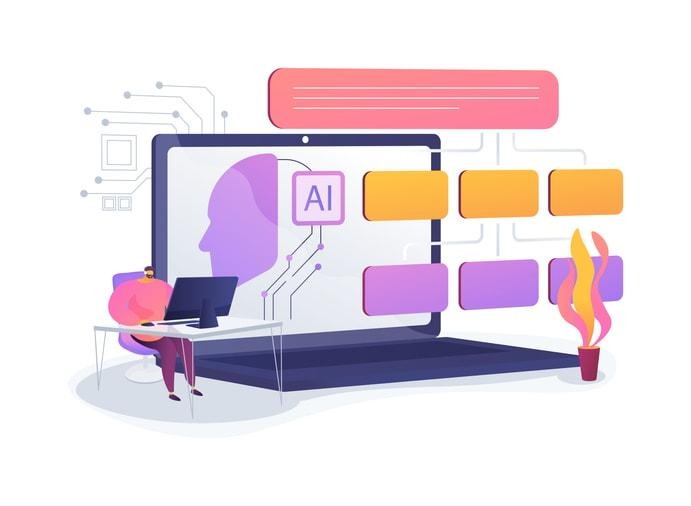
Modern conversational AI operates as a pipeline with interconnected stages: input capture, understanding, reasoning and tool use, response generation, and continuous learning from interactions.
At a high level, the system takes user input (voice or text), processes it through NLP and NLU layers to extract meaning, determines the appropriate action using dialogue management and potentially external tools, generates a natural language response via NLG, and delivers it back to the user, often in under a second.
For real products, engineers handle far more than just model inference. Latency optimization, reliability engineering, evaluation pipelines, privacy controls, and compliance with regulations like GDPR all require dedicated attention. The sophistication of production systems far exceeds what demos typically show.
Natural Language Processing (NLP) and Understanding (NLU)
Natural language processing serves as the foundation for interpreting human language. NLP tokenizes and parses text, breaking it into components the system can analyze.
Natural language understanding builds on this foundation by identifying three critical elements:
User intent, e.g., “reset password” or “cancel subscription”
Entities, e.g., “invoice #1234,” “John Smith,” or “next Tuesday”
Sentiment, the emotional tone underlying the message
Production-grade NLU often combines pre-trained models like BERT-style encoders with task-specific fine-tuning and custom taxonomies that reflect a company’s unique products and terminology. Misconfigured NLU creates immediate problems which is why companies increasingly hire specialists rather than expecting generalist developers to configure these systems correctly.
Natural Language Generation (NLG) and Large Language Models
Natural language generation handles the other side of the conversation, converting structured decisions into natural-sounding responses. Traditional NLG relied on templates and slot-filling, while modern systems leverage large language models like GPT-4o, Claude 3.5 Sonnet, or Llama 3.1 for open-ended, context-aware replies.
Raw LLM output requires constraints. Founders and CTOs typically care about hallucinations, controllability, tone consistency, and policy compliance. Expert conversational AI engineers address these concerns through evaluation pipelines, A/B testing, human review, retrieval augmentation, prompt engineering, and output validation to create reliable, on-brand responses.
Orchestration, Tools, and Back-End Integration
In 2026, smart conversational AI is defined not just by the language model, but by the orchestration layer that connects it to business systems and data sources.
Typical integrations include CRM systems like Salesforce and HubSpot, ticketing platforms such as Zendesk and Jira Service Management, payment processors, internal APIs and databases, and knowledge bases or documentation.
The emerging pattern involves tool-using AI agents: the model decides when to call an API, processes the results, and responds to the user. This requires robust engineering and careful guardrails, since unbounded tool use or insecure API access can cause downtime, security breaches, or compliance violations.
Enterprises need senior AI and platform engineers who understand these patterns, and Fonzi specializes in sourcing engineers who have implemented tool-using agents at scale, reducing risk and ramp-up time for complex integrations.
Core Components of a Modern Conversational AI System
Understanding the technical architecture helps you identify where you need the strongest engineering talent. The following table breaks down the key components of production conversational AI systems:
Component | Typical Technologies (2024-2026) | Key Responsibilities | Engineering Skill Sets Needed |
Automatic Speech Recognition (ASR) | Azure Speech, Google Cloud Speech, Amazon Transcribe, Whisper | Converting voice input to text accurately across accents and noise conditions | Speech ML engineers, audio processing specialists |
Natural Language Understanding (NLU) | BERT-based models, custom intent classifiers, entity extractors | Parsing user intent, extracting entities, detecting sentiment | NLP/NLU engineers, ML engineers with classification experience |
Dialogue Management | LangChain, custom orchestration frameworks, state machines | Tracking conversation state, managing context, deciding next actions | Conversational AI engineers, backend engineers |
Knowledge Retrieval (RAG) | Pinecone, Weaviate, Elasticsearch, pgvector | Fetching relevant information from knowledge bases to ground responses | ML engineers with retrieval experience, search engineers |
Large Language Models | GPT-4o, Claude 3.5, Llama 3.1, Gemini | Generating natural, contextual responses | LLM engineers, prompt engineers |
Tool/API Integration | Custom connectors, function calling, API gateways | Connecting to CRMs, ticketing systems, payment processors | Platform engineers, full-stack engineers |
Text-to-Speech (TTS) | Azure TTS, Google Cloud TTS, ElevenLabs | Converting text responses to natural-sounding speech | Speech ML engineers |
Evaluation & Monitoring | Custom evaluation pipelines, LangSmith, Weights & Biases | Measuring accuracy, detecting failures, continuous improvement | ML engineers, data scientists |
Fonzi can help fill each critical skill set in this table with pre-vetted senior candidates who have production experience with these technologies.
Conversational AI Use Cases Across the Business
Conversational AI applications span customer-facing, employee-facing, and product-embedded assistants. The technology has moved well beyond simple chatbots into sophisticated systems that handle complex interactions across the entire business.
Each subsequent section dives into specific use case clusters. The right mix depends on your business stage: early-stage startups typically start with customer support automation, while large enterprises often pursue HR, IT, and finance assistants in parallel with customer-facing initiatives.
Customer Support & Service Automation
Customer support represents the most mature and widely deployed use case for conversational AI. AI chatbots now provide 24/7 support across chat, email, and voice channels—meeting consumer expectations for instant responses that have become standard.
Key capabilities include:
Deflecting frequently asked questions automatically
Triaging complex tickets and routing to appropriate human agents
Collecting context before handoff to reduce handle time
Sending proactive notifications about order status, outages, or SLA updates
Vertical-specific examples demonstrate the breadth of applications:
E-commerce: Processing returns, tracking orders, handling product questions
Fintech: Answering KYC questions, explaining transaction details, managing disputes
SaaS: Guiding new user onboarding, troubleshooting common issues
Telecom: Handling plan changes, explaining billing, scheduling technician visits
Implementing robust support automation often requires a dedicated AI team. Fonzi can source specialists in conversational design, ML engineering, and platform integration who understand how to handle complex customer inquiries while maintaining high customer satisfaction.
Sales, Marketing, and Conversational Commerce
Conversational AI now powers lead qualification, product discovery, and guided purchase flows on websites and messaging apps. This represents a shift toward context-aware interactions that guide buyers rather than just answering questions.
Features driving adoption include:
Dynamic product recommendations based on browsing behavior and stated preferences
Cart recovery nudges through messaging channels
Personalized offers based on customer history
In-chat checkout for platforms like WhatsApp and Instagram
B2B applications are equally powerful. AI SDR assistants can schedule demos, answer technical questions, and route high-intent leads directly to account executives.
The metrics that matter to founders and CMOs:
Conversion rate improvements of 10–25% in assisted flows
Shortened sales cycles through faster response times
Higher average order value through intelligent upselling
However, misaligned or overly aggressive bots can damage brand trust. Companies need engineers and product owners who understand both the AI technologies and go-to-market dynamics to build systems that enhance user experiences rather than frustrating potential customers.
Internal Assistants for HR, IT, and Operations

Since 2023, there’s been a significant shift toward internal-facing AI assistants designed to reduce ticket volumes and improve employee experience. These employee support systems handle the repetitive questions that otherwise consume specialist time.
Representative HR use cases:
Answering benefits and compensation questions
Looking up PTO policies and balances
Guiding new hires through onboarding checklists
Handling basic compliance training queries
IT and operations use cases:
Password resets and account unlocks
VPN access troubleshooting
Device provisioning requests
How-to guidance for core tools like Jira, Salesforce, or Notion
The benefits extend beyond cost savings. Employees get faster answers, specialists focus on complex problems, and the organization generates data about common friction points. Companies report significant improvements in internal ticket resolution times.
Enterprises often need strong security and data governance expertise for these assistants, given the sensitive nature of HR and IT systems. These capabilities are commonly found in Fonzi’s senior AI talent pool.
In-Product Copilots and Developer Tools
Products are increasingly embedding conversational copilots directly into user interfaces—dashboards, IDEs, design tools, and analytics platforms. This trend accelerated dramatically in 2023-2024 and shows no signs of slowing.
Concrete examples include:
A SaaS analytics platform where users ask “Why did revenue drop in Q3 2024?” and receive analysis with visualizations
Developer tools that generate code snippets, write test cases, and explain error messages conversationally
Design tools that allow natural language commands for complex operations
Design considerations for in-product copilots differ from standalone chatbots:
Latency constraints: Users expect near-instant responses within the product flow
Context windows: Managing relevant context from the user’s current session and history
Multi-tenant data isolation: Ensuring one customer’s data never leaks to another
User education: Setting appropriate expectations about capabilities and limitations
Building in-product copilots demands deeper engineering than basic chatbots, particularly in retrieval strategies, embedding approaches, and evaluation frameworks. Fonzi specializes in sourcing engineers who have already shipped such copilots at high-growth startups or major tech companies.
Conversational AI Platforms in 2026: What to Look For
Platforms range from turnkey SaaS solutions to fully custom stacks built on AWS, Azure, or GCP. There’s no single “best” option; the right choice depends on company size, regulatory requirements, and available engineering resources.
The following sections help you decide between build, buy, or hybrid approaches, and how to match platform choices with your hiring strategy. Understanding platform categories is essential before evaluating specific vendors.
Core Capabilities of Strong Conversational AI Platforms
When evaluating conversational ai platform options, look for these critical features:
Technical capabilities:
Robust NLU with customizable intent classification
Multi-channel support (web, mobile, voice, messaging apps)
RAG and knowledge base integration for grounded responses
Analytics, A/B testing, and conversation insights
Role-based access control and audit logging
Version control for prompts, flows, and model configurations
Language and regional support:
Multiple languages with quality NLU for each
Regional deployment options important for companies operating across North America, Europe, and APAC
Security and compliance:
Enterprise-grade certifications (SOC 2, ISO 27001)
Data residency options for regulated industries
HIPAA and GDPR compliance where needed
Many top conversational AI platforms are converging on similar feature sets. This makes quality of implementation and ongoing tuning the key differentiator, which is why having strong in-house or contracted AI engineers, sourced via Fonzi, can unlock the full value of whichever platform you choose.
Best Conversational AI Platform Categories in 2026
Rather than ranking specific vendors (which creates outdated listicles), it’s more useful to understand platform categories and their trade-offs:
CX-focused platforms:
Designed specifically for customer service and helpdesk automation
Strengths: Quick deployment, built-in ticketing integration, support-specific analytics
Trade-offs: Less flexible for non-support use cases, may lack deep customization
Horizontal enterprise AI platforms:
Broad capabilities across customer, employee, and product use cases
Strengths: Unified approach, enterprise security, multi-use case support
Trade-offs: May require more configuration, higher complexity
Cloud-native APIs and model providers:
Building blocks from AWS, Azure, GCP, OpenAI, Anthropic
Strengths: Maximum flexibility, access to latest models, scalable infrastructure
Trade-offs: Requires significant engineering investment, more responsibility for orchestration
Open-source and self-hosted stacks:
Options like Rasa, Hugging Face models, custom orchestration
Strengths: Full control, no vendor lock-in, potentially lower variable costs at scale
Trade-offs: Requires deep expertise, full responsibility for maintenance and updates
Real-world selection patterns emerge from these categories. Early-stage startups often gravitate toward CX platforms for speed to value. Banks and healthcare systems favor more controlled, cloud-native or self-hosted setups to meet compliance requirements.
Whatever category your company chooses, you still need engineers who can design intents, evaluate performance, and manage integrations, which are skills that Fonzi specializes in sourcing.
Build vs. Buy vs. Hybrid: Matching Platforms to Your Team
The strategic decision comes down to three paths: fully managed SaaS, in-house custom builds, or hybrids that combine third-party models with custom orchestration.
Advantages of buying (SaaS platforms):
Lower initial cost and faster time-to-value
Less need for a large internal ML team
Vendor handles infrastructure, updates, and baseline maintenance
Ideal for many Series A-B startups with limited AI headcount
Advantages of building custom:
Greater control over every aspect of behavior
Deeper integration with proprietary systems and data
Potentially lower variable costs at massive scale
Better alignment with strict or unusual compliance requirements
The hybrid approach (increasingly common in 2024-2026):
Use vendor models and infrastructure
Maintain custom orchestration, prompt engineering, and evaluation layers
Balance speed with control
Allows gradual migration to more custom solutions as needs evolve
Fonzi supports each path by matching companies with the right engineering profile, from founding AI engineers for greenfield builds to platform integrators who can maximize value from SaaS deployments.
Why Hiring the Right Conversational AI Engineers Is So Hard
While platforms are increasingly powerful, the biggest constraint most startups and enterprises report in 2024-2026 is talent. There simply are not enough engineers with deep conversational AI expertise to meet demand.
Truly elite hires combine multiple skills that rarely overlap:
Machine learning and statistical modeling foundations
NLP and LLM expertise, including modern transformer architectures
Strong software engineering for production systems
Product sense and understanding of user experience
Security and compliance awareness
Common failure modes plague hiring through generic channels. Resumes often inflate LLM experience that is actually limited to API calls. Research backgrounds do not always translate to production reliability. Technical screening varies widely in quality and relevance.
A specialized hiring platform like Fonzi overcomes these issues at scale by focusing exclusively on AI and LLM talent, with assessment processes designed specifically for this domain.
What Makes an Elite Conversational AI Engineer in 2026
Concrete capabilities distinguish elite engineers from those with surface-level experience:
Technical skills:
Designing intent taxonomies that scale with business complexity
Building RAG systems that retrieve relevant information reliably
Evaluating LLM behavior systematically with offline and online metrics
Implementing tool-using conversational ai agents with proper guardrails
Optimizing latency and cost trade-offs for production workloads
Experience markers:
Contributions to production systems used by thousands or millions of users
Familiarity with at least one major cloud platform (AWS, Azure, GCP)
Prior work with popular frameworks (LangChain, LlamaIndex, or custom orchestration)
Track record of shipping iteratively and improving based on data
Cross-functional collaboration:
Working effectively with PMs, designers, and support leaders
Aligning AI behavior with brand voice and user experience expectations
Communicating technical constraints and trade-offs to non-technical stakeholders
Mentoring junior engineers and building team capabilities
Soft skills often differentiate an average ML engineer from a true tech lead for AI initiatives. Fonzi’s vetting process identifies engineers with this combination of deep technical skill and strong product mindset.
How Fonzi Makes Hiring Conversational AI Talent Fast and Reliable
Fonzi is a specialized hiring platform for top-tier AI and LLM engineers, serving both startups making their first AI hire and large enterprises scaling teams across multiple product lines.
The multi-step vetting process ensures quality:
CV and background screening for relevant experience
Hands-on technical assessments focused specifically on LLMs and conversational AI
System design interviews testing architectural thinking
Behavioral evaluation for communication skills
The outcomes speak for themselves:
First qualified candidates typically presented within days
Median time-to-hire of approximately three weeks
High match rate between submitted candidates and actual offers
Fonzi preserves and elevates the candidate experience through clear communication, structured interviews, and matching engineers with roles aligned to their interests and career goals. This approach ensures you attract top talent who might otherwise be turned off by chaotic or impersonal hiring processes.
For scaling organizations, Fonzi supports everything from a startup’s first AI hire to onboarding dozens of engineers across multiple teams. The process remains consistent whether you are hiring one engineer or building an entire AI organization.
Implementing Conversational AI in Your Business: A Practical Roadmap
Successful deployments require both the right platform and the right people. Sequencing matters. Hiring decisions made early can dramatically accelerate everything that follows.
The following roadmap provides a pragmatic, founder and CTO-friendly path from initial scoping to post-launch optimization. At each stage, we’ll identify where Fonzi can help accelerate progress.
1. Define Business Goals, Success Metrics, and Constraints
Start with specific, measurable goals rather than vague aspirations about “implementing AI.” Examples of well-defined objectives:
Reduce support ticket volume by 30% within 12 months
Shorten sales response times from 4 hours to under 5 minutes
Improve NPS for support interactions by 15 points
Enable 24/7 coverage without adding headcount
Identify constraints early:
Budget for both technology and talent
Regulatory environment (GDPR, HIPAA, financial services requirements)
Acceptable response latency for different use cases
Data sovereignty requirements for different regions
Ensure alignment with executive sponsors. Whether that’s the CTO, CPO, COO, or Head of Customer Experience depends on where conversational AI will be anchored in your organization.
Experienced AI leads, often hired via Fonzi, can translate high-level commercial goals into realistic technical roadmaps and measurable KPIs. This translation step often determines whether projects succeed or stall.
2. Choose Your Platform and Architecture
With goals defined, key decisions emerge:
SaaS vs. cloud-native vs. hybrid architecture
Single vendor vs. modular multi-vendor stack
Hosted models vs. self-managed model infrastructure
Prioritize platforms that integrate with your existing stack. Conversational AI siloed from your CRM, helpdesk, and data warehouse creates friction and limits value. Look for pre-built connectors and robust API capabilities.
Before committing fully, run small proof-of-concept projects on one or two short-listed platforms. This reveals real capabilities beyond marketing claims and helps you understand implementation complexity.
Senior conversational AI engineers can evaluate vendor claims more critically than generalist developers. They can also design architecture that will scale over the next two to three years rather than requiring painful rewrites as you grow.
3. Assemble the Right Team (with Fonzi’s Help)

Team composition varies by stage.
Early-stage (seed to Series A):
1-2 AI engineers plus a product owner
Focus on engineers who can handle NLU, integration, and evaluation
Growth stage (Series B-C):
Dedicated AI squad of 3-6 people
Increasing specialization in ML, platform, and prompt engineering
Enterprise:
Multiple cross-functional pods
Specialists for different use cases and regions
Common roles in conversational AI teams:
Conversational AI/LLM engineer (core)
ML engineer for model training and evaluation
Full-stack or platform engineer for integrations
Prompt/knowledge engineer for content and retrieval
Data engineer for analytics pipelines
Fonzi works with hiring managers to define role requirements, seniority levels, and ideal backgrounds for each position. Using Fonzi reduces the risk of mis-hires, shortens the hiring cycle to around three weeks, and allows internal teams to stay focused on shipping product rather than spending months on recruiting.
4. Start with High-Impact, Low-Risk Use Cases
Launch with well-bounded use cases that build organizational confidence:
Handling the top 20 most frequent customer questions
Simple transactional flows like order status lookups
Internal IT helpdesk queries for common issues
This approach generates quick wins and real data for improving models. It also builds trust in AI capabilities across the organization before tackling more complex applications.
Critical implementation details:
Clear escalation paths to human agents when AI can’t resolve issues
Obvious UX indicators when users are talking to AI vs. a human
Fallback logic and safety nets that prevent embarrassing failures
Experienced engineers design these safeguards from day one. They ensure early pilots never jeopardize customer trust or compliance, even when edge cases inevitably arise.
5. Measure, Iterate, and Scale
Establish KPIs and tracking from launch:
Resolution rate: Percentage of conversations fully resolved by AI
Deflection rate: Tickets or calls avoided through self-service
CSAT: Customer satisfaction for AI-handled interactions
Time-to-resolution: Speed improvement vs. previous baselines
Containment rate: Conversations that stay with AI without escalation
Revenue metrics: Conversion rates and AOV for commercial use cases
Set up analytics dashboards and feedback loops such as thumbs up/down buttons, quick surveys, and agent feedback on escalated conversations. This data feeds continuous improvement of models and conversation flows.
Progressive expansion follows initial success:
New languages and regions
Additional product lines and use cases
Deeper integration with business processes and back-end systems
Hiring strong AI talent via Fonzi turns this into a sustainable continuous improvement process rather than a one-off launch that stagnates after initial deployment.
Conclusion
Conversational AI is now a core business capability, driving customer experience, revenue, and operational efficiency. Companies that leverage it effectively outpace those relying on legacy approaches.
Success depends on three pillars: clear business goals, the right platforms and architecture, and world-class AI engineering talent. Fonzi addresses the talent pillar by hiring elite conversational AI and LLM engineers quickly and consistently, with most hires completed in about three weeks.
Whether building your first AI support agent or scaling a global platform, early, strategic hiring of the right engineers dramatically improves outcomes. Book a conversation with Fonzi to scope your next AI hire or full team build-out and access the talent that makes conversational AI work.
FAQ
What is conversational AI and how does it work?
What are the best conversational AI platforms in 2026?
How is conversational artificial intelligence different from regular chatbots?
What are real-world use cases for conversational AI?
How do businesses implement conversational AI platforms effectively?