OpenAI has transformed from a nonprofit AI research organization into one of the world’s most valuable private companies in less than a decade. With a staggering $300 billion valuation and millions of users worldwide, this San Francisco-based company represents the cutting edge of artificial intelligence development under the leadership of CEO Sam Altman.
OpenAI has become a defining force in today’s AI landscape, evolving from the breakthrough success of ChatGPT to developing advanced models that continue to reshape how businesses operate and innovate. Whether you’re a recruiter trying to understand where AI talent is headed, an engineer tracking the latest technical leaps, or a business leader planning your next AI initiative, OpenAI’s direction, leadership, and product ecosystem offer valuable insight into where the industry is moving. And as the demand for top-tier AI talent accelerates alongside this growth, platforms like Fonzi AI play a crucial role, connecting AI engineers with forward-thinking companies that need the expertise to navigate an increasingly competitive, AI-driven market.
OpenAI Quick Overview
Founded in December 2015 as a nonprofit organization, OpenAI emerged from the vision of leading technology entrepreneurs and AI research experts who were both excited about AI’s potential and concerned about its risks. The organization began with an ambitious mission to develop artificial general intelligence (AGI) that benefits all humanity, unconstrained by traditional profit motives.
Today, OpenAI operates as a hybrid structure combining its nonprofit foundation with a for-profit entity, enabling the company to attract the massive investment required for cutting-edge AI systems development. The organization has evolved far beyond its research origins to become a technology powerhouse valued at $300 billion as of 2025.
Key facts about OpenAI:
Headquarters: San Francisco, California
Founded: December 2015
Current Valuation: $300 billion (2025)
Annual Revenue: $12 billion (2025)
CEO: Sam Altman
Employees: Thousands of researchers, engineers, and business professionals
Primary Products: ChatGPT, GPT models, DALL-E, Sora, OpenAI API
The company’s best-known product, ChatGPT, launched in November 2022 and became the fastest-growing consumer application in history, reaching 100 million users in just two months. This breakthrough language model, trained on vast amounts of text data, demonstrated conversational AI capabilities that captured global attention and sparked widespread adoption across industries.
OpenAI’s mission remains focused on ensuring that artificial general intelligence benefits all humanity. However, the organization has faced scrutiny over how its hybrid corporate structure and massive funding requirements from investors might influence this humanitarian goal.
Sam Altman - OpenAI CEO Profile
Sam Altman serves as the public face and driving force behind OpenAI’s transformation into a global AI leader. As co-founder and CEO, Altman brings a unique combination of entrepreneurial experience, technology vision, and leadership skills to one of the world’s most consequential companies.

Background and Career History
Before joining OpenAI, Altman built his reputation as one of Silicon Valley’s most influential figures in technology and venture capital. He served as president of Y Combinator, the prestigious startup accelerator that launched companies like Airbnb, Dropbox, and Reddit. During his tenure from 2014 to 2019, Altman helped shape the next generation of technology entrepreneurs and companies.
Altman’s background spans computer science, entrepreneurship, and investment. He co-founded Loopt, a location-based social networking app, while still in college. His experience building and scaling technology companies provided crucial insights that would later prove invaluable in navigating OpenAI’s rapid growth and complex business challenges.
Leadership During Crisis
Altman’s leadership faced its ultimate test in November 2023, when OpenAI’s board unexpectedly fired him amid internal disagreements about the company’s direction and safety priorities. The decision triggered immediate backlash from employees, investors, and partners, with Microsoft and other stakeholders rallying to support Altman’s reinstatement.
Within just days, massive pressure from the organization’s workforce, who threatened mass departures, and key investors forced the board to reverse course. Altman returned as CEO with an entirely new board structure, demonstrating his central role in OpenAI’s success and the confidence that employees and partners place in his leadership.
This crisis revealed both the tensions inherent in OpenAI’s hybrid structure and Altman’s ability to maintain support across diverse stakeholder groups. The episode ultimately strengthened his position while highlighting the ongoing challenges of balancing rapid commercialization with the company’s safety-focused mission.
Vision for AI Development
Altman consistently emphasizes the transformative potential of AI while acknowledging its risks. He advocates for the gradual deployment of increasingly capable AI systems, allowing society time to adapt while maintaining safety as a core priority. His approach focuses on building public trust through transparency and responsible development practices.
Under Altman’s leadership, OpenAI has pursued partnerships with governments and organizations worldwide to shape AI policy and ensure broad access to AI benefits. He regularly engages with world leaders, regulatory bodies, and academic institutions to discuss AI governance and safety standards.
ChatGPT: OpenAI’s Revolutionary AI Assistant
ChatGPT represents OpenAI’s most significant commercial breakthrough and the catalyst for mainstream AI adoption worldwide. Launched in November 2022, this conversational artificial intelligence system demonstrated capabilities that seemed almost magical to millions of first-time users, fundamentally changing public perceptions of what AI could accomplish.
The product’s rapid growth exceeded all expectations. Within two months of launch, ChatGPT reached 100 million active users, making it the fastest-growing consumer application in history. This unprecedented adoption rate demonstrated massive pent-up demand for accessible AI tools that could understand natural language and provide helpful, human-like responses.
Technical Foundation and Training
ChatGPT builds on OpenAI’s groundbreaking GPT (Generative Pre-trained Transformer) architecture, specifically GPT-3.5 and later GPT-4. These language model-trained systems represent years of research into transformer-based neural networks capable of processing and generating human-like text.
The training process involves two key phases:
Pre-training: The language model learns from massive datasets containing trillions of words from books, articles, websites, and other text sources, developing broad knowledge about language patterns, facts, and reasoning.
Reinforcement Learning from Human Feedback (RLHF): Human trainers provide feedback on model outputs, teaching the system to generate more helpful, accurate, and safe responses. This reinforcement learning approach helps align the model with human values and preferences.
This training methodology enables ChatGPT to engage in natural conversations, answer questions across diverse topics, assist with writing and analysis, and even generate code for software development projects.
Free vs. Paid Subscription Tiers
OpenAI offers ChatGPT through multiple access models to serve different user needs and budgets:
ChatGPT Free Tier:
Access to GPT-3.5 model
Standard response times
Limited usage during peak periods
Basic web interface and mobile app access
ChatGPT Plus ($20/month):
Priority access to GPT-4 and GPT-4o models
Faster response times
Access during high-demand periods
Custom GPT creation capabilities
Advanced features like image analysis and voice interaction
ChatGPT enterprise:
Enhanced security and privacy controls
Administrative dashboard and user management
Higher usage limits
Custom model fine-tuning options
Dedicated support and training
ChatGPT Capabilities and Features
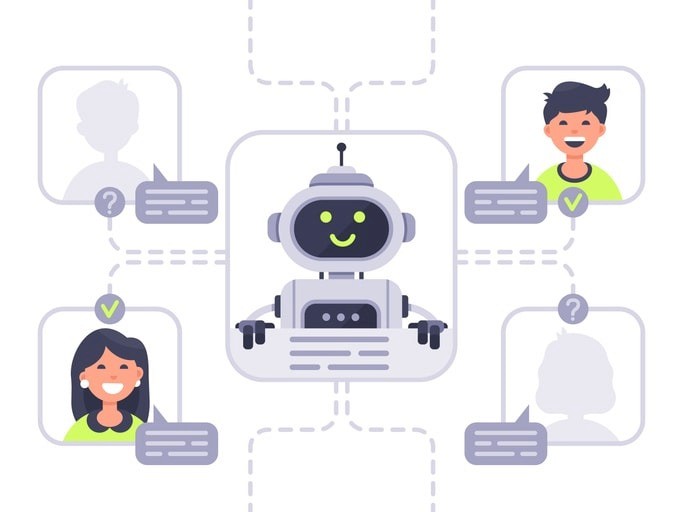
The platform’s versatility has made it valuable across numerous use cases:
Conversational AI and Text Generation: ChatGPT excels at natural dialogue, creative writing, content creation, and communication assistance. Users leverage these capabilities for everything from drafting emails to writing marketing copy and generating ideas.
Code Writing and Programming: The system can write, debug, and explain code in multiple programming languages, making it a valuable tool for developers and those learning computer science fundamentals.
Voice Interaction: Recent updates include voice capabilities, allowing users to have spoken conversations with the AI assistant through mobile apps and supported devices.
Custom GPTs: Paid subscribers can create specialized versions tailored for specific tasks, industries, or workflows, extending ChatGPT’s utility for business and professional applications.
Enterprise Applications: Organizations use ChatGPT to enhance productivity, automate routine tasks, provide customer support, and augment human capabilities across departments.
Safety Measures and Content Filtering
OpenAI has implemented multiple safety mechanisms to prevent harmful outputs:
Content filters that block inappropriate requests
Regular model updates based on user feedback
Continuous monitoring for potential misuse
Transparency about limitations and potential biases
Clear usage policies and guidelines
These safeguards reflect OpenAI’s commitment to responsible AI deployment while maintaining the system’s usefulness for legitimate applications.
OpenAI Stock Information and Valuation
OpenAI remains a private company with no publicly traded stock, making direct investment opportunities limited to accredited investors and secondary market transactions. However, the company’s extraordinary valuation growth and revenue trajectory have made it one of the most watched potential public offerings in the technology sector.
Current Valuation and Financial Performance
As of 2025, OpenAI achieved a remarkable $300 billion valuation through its latest funding round, representing a 91% increase from its $157 billion valuation in 2024. This meteoric rise reflects both the company’s rapid revenue growth and investor confidence in the long-term ai market opportunity.
Key financial metrics:
Metric | 2024 | 2025 | Growth |
Valuation | $157 billion | $300 billion | 91% |
Annual Revenue | $8 billion | $12 billion | 50% |
Monthly Revenue Run Rate | $667 million | $1 billion | 50% |
The company’s revenue growth stems primarily from ChatGPT subscriptions, API usage from developers and businesses, and enterprise partnerships. OpenAI has demonstrated the ability to monetize its AI technology effectively while maintaining rapid user growth.
Investment and Funding Details
OpenAI’s funding history reflects the enormous capital requirements for developing state-of-the-art AI systems:
Microsoft Partnership: Microsoft represents OpenAI’s largest external investor, with approximately $10 billion invested since 2019. This partnership grants Microsoft a 27% ownership stake and preferred access to OpenAI’s technology for integration into Microsoft products like Office 365, Azure, and Bing.
Other Major Investors: The company has attracted investment from leading venture capital firms and strategic investors, including:
Thrive Capital
Khosla Ventures
Reid Hoffman (LinkedIn co-founder)
Peter Thiel
Cash Flow and Burn Rates: Despite significant revenue, OpenAI maintains high operational costs due to:
Massive computing infrastructure requirements
Top-tier talent acquisition and retention
Research and development investments
Infrastructure scaling to support millions of users
IPO Timeline and Restructuring Plans
OpenAI has announced plans to restructure from its current hybrid nonprofit/for-profit model to a public benefit corporation, potentially paving the way for an initial public offering. This restructuring aims to:
Simplify the corporate structure for public investors
Maintain alignment with the company’s mission
Enable access to public capital markets
Provide liquidity for employees and early investors
While no specific IPO timeline has been announced, industry experts expect OpenAI could go public within the next 2-3 years, potentially making it one of the largest technology IPOs in history.
Future Revenue Projections: OpenAI executives have indicated ambitious growth targets, with some projections suggesting the company could reach $200 billion in annual revenue by 2030, driven by expanding enterprise adoption and new product categories.

Company Structure and Partnerships
OpenAI operates through a complex organizational structure designed to balance its mission-driven goals with the practical requirements of building advanced AI systems. This hybrid approach has evolved significantly since the company’s founding and continues to adapt as the organization scales.
Hybrid Structure: Nonprofit Foundation vs. For-Profit Entity
The current structure combines OpenAI Inc. (the original nonprofit foundation) with OpenAI LP (a “capped-profit” subsidiary). This arrangement allows the organization to:
Attract substantial private investment while maintaining mission alignment
Access talent and resources typically unavailable to traditional nonprofits
Limit investor returns to predetermined multiples, ensuring profits don’t override safety considerations
Preserve the nonprofit’s ultimate control over key decisions regarding AI development and deployment
The nonprofit OpenAI Foundation oversees the for-profit operations and retains authority over major strategic decisions. This governance model aims to ensure that commercial pressures don’t compromise safety research or the goal of developing AGI that benefits humanity.
Microsoft Partnership and Strategic Integration
The Microsoft partnership extends far beyond traditional investment relationships. Key aspects include:
Technology Integration: OpenAI’s AI models power Microsoft products, including:
Bing Chat and search enhancements
Microsoft 365 Copilot across Office applications
Azure OpenAI Service for enterprise customers
GitHub Copilot for code generation
Infrastructure Partnership: Microsoft provides OpenAI with access to Azure’s cloud computing infrastructure, including specialized hardware optimized for AI training and deployment. This partnership enables OpenAI to scale its operations without building an independent data center infrastructure.
Go-to-Market Collaboration: Microsoft’s global enterprise sales organization helps distribute OpenAI’s technology to business customers worldwide, significantly expanding the company’s market reach beyond direct consumer applications.
Recent Acquisitions and Strategic Expansions
OpenAI has pursued targeted acquisitions to strengthen its capabilities:
Global Illumination: Acquired to enhance ChatGPT’s user experience and interface design, bringing gaming and digital experience expertise to AI product development.
Multi: A startup focused on collaborative tools, adding capabilities for team-based AI workflows and enterprise productivity features.
Statsig: Provides experimentation and feature management tools, enhancing OpenAI’s ability to test and deploy new features safely and effectively.
These acquisitions reflect OpenAI’s strategy of building comprehensive AI capabilities while enhancing product development and deployment processes.
Government Contracts and Defense Partnerships
OpenAI has begun engaging with government agencies and defense organizations, marking a significant expansion beyond commercial markets. These partnerships focus on:
National security applications of AI technology
Cybersecurity and threat detection systems
Research collaboration on AI safety and governance
Supporting government digital transformation initiatives
This government engagement represents both opportunity and controversy, as some stakeholders question whether defense applications align with OpenAI’s humanitarian mission.
OpenAI’s Product Portfolio
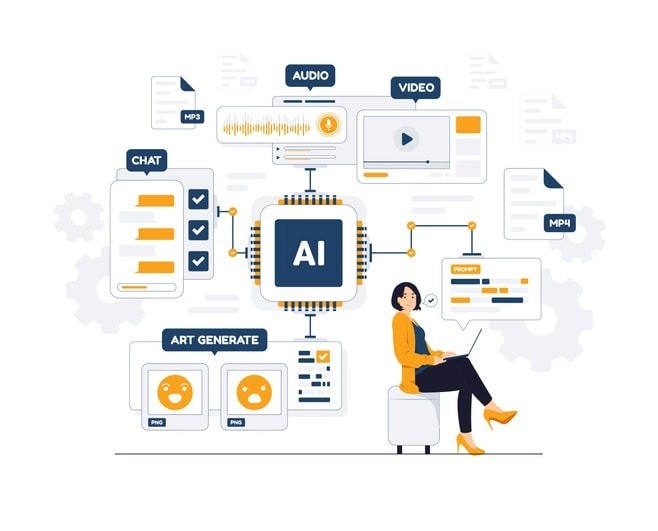
OpenAI has developed a comprehensive suite of AI models and tools that serve different markets and use cases. The company’s product strategy focuses on building foundational AI systems that can be applied across diverse applications while maintaining safety and reliability standards.
GPT Model Evolution and Capabilities
The GPT (Generative Pre-trained Transformer) family represents OpenAI’s core language model technology:
GPT-2 (2019): Initially considered too powerful to release publicly, GPT-2 demonstrated the potential for large language models to generate coherent, human-like text across diverse topics.
GPT-3 (2020): With 175 billion parameters, GPT-3 marked a breakthrough in language model capabilities, enabling applications from creative writing to code generation. The model’s API became OpenAI’s first major commercial offering.
GPT-4 (2023): A multimodal language model capable of processing both text and images, GPT-4 significantly improved reasoning, accuracy, and safety compared to previous versions. This model powers ChatGPT Plus and many enterprise applications.
GPT-4o (2024): An optimized version designed for faster performance and lower computational costs while maintaining GPT-4’s capabilities, enabling broader deployment across applications and price points.
DALL-E Text-to-Image Generation
DALL-E revolutionized creative AI by enabling users to generate high-quality images from natural language descriptions. Key capabilities include:
Photorealistic image generation
Artistic style adaptation and creative interpretation
Image editing and modification tools
Commercial licensing options for generated content
The technology has found applications in marketing, design, education, and entertainment, demonstrating AI’s potential to augment human creativity rather than simply replacing it.
Sora Video Generation Model
Announced as a major breakthrough in video AI, Sora represents OpenAI’s entry into video content generation. The model can:
Create video clips up to one minute long from text prompts
Generate realistic motion and scene progression
Maintain visual consistency across frames
Handle complex scenes with multiple characters and elements
While still in limited testing, Sora signals OpenAI’s expansion into multimedia AI applications beyond text and static images.
OpenAI o1 Reasoning Models
The o1 series focuses on enhanced reasoning capabilities, particularly for complex problem-solving scenarios:
Advanced mathematical and scientific reasoning
Multi-step logical analysis
Code debugging and optimization
Research and analysis tasks requiring sustained attention
These models represent progress toward more general AI capabilities that can handle complex, multifaceted challenges requiring sustained reasoning rather than just pattern recognition.
API and Developer Tools
OpenAI’s API platform enables developers and companies to integrate AI capabilities into their own applications:
Key Features:
Multiple model access (GPT-3.5, GPT-4, DALL-E, Whisper)
Flexible pricing based on usage
Rate limiting and safety controls
Documentation and developer support
Use Cases:
Customer service automation
Content generation and optimization
Data analysis and insights
Educational and training applications
The API has become a significant revenue driver while enabling thousands of companies to build AI-powered features into their products and services.
Recent Developments and Controversies
As OpenAI has grown into a global technology leader, the company has faced increasing scrutiny regarding its business practices, safety protocols, and alignment with its stated mission. Several high-profile controversies and challenges have emerged that could significantly impact the company’s future trajectory.
Leadership Changes and Executive Departures
Beyond Sam Altman’s temporary removal and reinstatement, OpenAI has experienced notable departures among key personnel:
Kevin Weil, former head of product, joined from Twitter/X to help scale OpenAI’s product organization. His appointment reflects the company’s focus on expanding beyond research into mainstream consumer and enterprise products.
Brad Lightcap serves as chief operating officer, bringing business development and strategic partnership expertise as OpenAI navigates rapid commercial growth and complex investor relationships.
Several prominent researchers and safety experts have left the organization, raising questions about internal disagreements over development pace and safety priorities. These departures have sparked debate about whether commercial pressures might compromise OpenAI’s commitment to responsible AI development.
Copyright and Legal Challenges
OpenAI faces multiple lawsuits from authors, publishers, and media companies alleging copyright infringement in training data collection:
Author Lawsuits: Prominent writers have filed class-action suits claiming their copyrighted works were used without permission to train OpenAI’s models, seeking damages and restrictions on model training.
Media Company Disputes: News organizations have raised concerns about AI systems being trained on their content without compensation, potentially undermining their business models and intellectual property rights.
Fair Use Questions: These legal challenges will likely establish important precedents for how copyright law applies to AI training data, with implications for the entire industry’s training methodologies.
Safety Concerns and Researcher Departures
Former employees and safety researchers have raised concerns about OpenAI’s approach to AI safety:
Allegations that commercial pressures may compromise safety research
Questions about the adequacy of safety testing for new model releases
Debates over the timeline for developing artificial general intelligence
Concerns about the effectiveness of current safety mechanisms
These issues reflect broader tensions in the AI industry between rapid innovation and careful safety validation, particularly as AI systems become more powerful and widely deployed.
Privacy and Data Security Issues
In 2025, OpenAI experienced a significant data breach that exposed portions of user conversations, raising important privacy concerns:
Incident Details: Leaked conversations revealed that private ChatGPT interactions were potentially accessible to unauthorized parties, highlighting vulnerabilities in data handling processes.
Response Measures: The company implemented enhanced security protocols and provided affected users with detailed information about potential exposure and mitigation steps.
Trust Impact: This incident underscored the challenges of maintaining user privacy while operating large-scale AI systems that process vast amounts of personal and sensitive information.
Wrongful Death Lawsuits
OpenAI has faced legal challenges related to AI-generated content that allegedly contributed to harmful outcomes. These cases raise complex questions about liability and responsibility when AI systems provide information or advice that leads to negative consequences.
The legal and ethical frameworks for addressing such situations remain underdeveloped, making these cases potentially precedent-setting for the industry’s responsibility standards.
Future Outlook and Industry Impact
OpenAI’s trajectory will significantly influence the broader artificial intelligence landscape, economic transformation, and societal adaptation to increasingly capable AI systems. Understanding the company’s future directions and potential challenges provides crucial insights for investors, policymakers, and business leaders planning for an AI-driven world.
AGI Development Timeline and Safety Research
OpenAI’s ultimate goal remains to develop artificial general intelligence that matches or exceeds human cognitive capabilities across all domains. Current projections suggest this milestone could occur within the next 5-10 years, though significant technical and safety challenges remain.
Key Development Areas:
Reasoning and problem-solving capabilities
Multimodal understanding (text, images, audio, video)
Long-term memory and learning systems
Safety alignment and human value integration
The organization continues investing heavily in safety research to ensure AGI development occurs responsibly. This includes developing methods to test, monitor, and control increasingly powerful AI systems before deployment.
Infrastructure Investment Plans
OpenAI has announced ambitious infrastructure expansion plans, committing $115 billion through 2029 for:
Computing Infrastructure: Massive supercomputing facilities to train next-generation models
Research Facilities: Expanded research centers to attract top AI talent worldwide
Safety Infrastructure: Dedicated facilities for testing and validating AI safety measures
Global Expansion: International presence to serve diverse markets and comply with regional regulations
These investments demonstrate the enormous scale required to maintain leadership in AI development while meeting growing global demand for AI services.
Competition and Market Dynamics
OpenAI operates in an increasingly competitive landscape with major technology companies investing billions in AI research:
Google/Alphabet: Competing with Bard, Gemini models, and integrated search applications
Anthropic: Focus on safety-first AI development with the Claude assistant
Meta: Open-source approach with Llama models and social media integration
Amazon: Enterprise-focused AI services through AWS
Microsoft: Both partner and potential competitor through direct AI investments
This competitive environment drives rapid innovation while potentially pressuring companies to prioritize speed over safety considerations.
Regulatory Landscape and Government Relations
As AI capabilities expand, governments worldwide are developing regulatory frameworks that will shape OpenAI’s operations:
United States: Executive orders and congressional hearings on AI governance, safety standards, and national security implications
European Union: Comprehensive AI Act setting safety requirements and usage restrictions
China: National AI strategy balancing innovation promotion with social control
Other Countries: Diverse approaches ranging from innovation-friendly to restrictive
OpenAI’s ability to navigate this complex regulatory environment while maintaining technological leadership will significantly impact its global expansion and product development strategies.
Economic and Labor Market Impact
OpenAI’s technology is already transforming numerous industries and job categories:
Productivity Enhancement: AI tools augment human capabilities in writing, analysis, programming, and creative tasks
Job Displacement: Certain roles may become automated, requiring workforce retraining and adaptation
New Job Creation: Emerging roles in ai management, prompt engineering, and human-AI collaboration
Economic Growth: Potential for significant productivity gains and new business model creation
The company’s success in managing this transformation responsibly will influence public acceptance and regulatory approaches to AI deployment.
Revenue and Market Expansion Projections
Industry analysts project dramatic growth potential for OpenAI’s business:
2030 Revenue Target: Potential $200 billion annual revenue through expanded enterprise adoption
Market Size Growth: Global AI market expected to reach $1.8 trillion by 2030
New Product Categories: Expansion into robotics, autonomous systems, and specialized industry applications
Global Market Penetration: International expansion beyond current English-speaking markets

Conclusion
OpenAI has become one of the most influential forces in modern technology, evolving from a nonprofit research lab in 2015 to a $300B industry leader that’s reshaping how businesses think about automation, productivity, and AI strategy. Under Sam Altman’s leadership, the company has navigated rapid growth, major public scrutiny, and the global impact sparked by ChatGPT, proving that advanced AI can be both commercially viable and accessible at scale. Its hybrid structure, partnership with Microsoft, and expanding product ecosystem keep OpenAI at the center of the AI race, even as it faces ongoing questions around safety, IP, and long-term governance.
For recruiters and AI engineers, OpenAI’s trajectory matters because its breakthroughs ripple across hiring needs, skill requirements, and the competitive landscape for technical talent. And that’s where platforms like Fonzi AI come in, connecting companies with top AI engineers who understand these rapidly evolving tools and helping businesses stay ahead as the market transforms. As OpenAI continues pushing the boundaries of what’s possible, organizations that can attract the right AI talent will be the ones best positioned to capitalize on the next wave of innovation.
FAQ
Can you buy OpenAI stock?
How much is Sam Altman worth from OpenAI?
When will OpenAI go public?
Is ChatGPT still free to use?
Who are OpenAI’s biggest competitors?