
In early 2025, a Series C fintech learned the hard way that slow hiring is expensive. A lead ML engineer role stayed open for months, product timelines slipped, and the cost showed up not just in recruiter fees, but in missed features and burned-out teams. For fast-growing companies, this is a common failure point when highly technical roles are handled like generic openings.
That’s why software engineering recruiters matter. Unlike generalists, they understand code, architecture, and modern development workflows well enough to evaluate real skill, not just keywords. When the cost of a bad or delayed hire compounds across critical roles, precision becomes essential. Platforms like Fonzi extend that precision by pairing specialized recruiting with AI-driven evaluation, helping teams fill high-impact engineering roles faster without sacrificing quality or human judgment.
Key Takeaways
The right software recruiter combines deep technical fluency, a structured process, and smart use of AI, not just a big candidate database. Look for recruiters who can discuss microservices, CI/CD, and AI toolchains without relying on buzzwords.
Current 2024–2026 hiring realities include intense competition for AI and senior engineers, shrinking budgets, and pressure to ship faster with leaner teams. Average time-to-hire for senior roles now stretches 60–90 days.
Recruiting is now a human-plus-AI discipline. Software recruiters who leverage tools like Fonzi’s multi-agent AI can screen faster, detect fraud, and still leave final decisions to hiring managers.
You’ll leave this article knowing how to evaluate software engineering recruiters, what questions to ask, and when to consider a specialized software job board platform like Fonzi.
Key Challenges in Software Engineering Hiring Today

The hiring landscape combines three forces: the AI boom driving demand for specialized skills, remote-first expectations reshaping candidate pools, and tighter funding pushing companies to hire fewer but stronger engineers. These forces create specific, measurable problems for hiring teams.
Slow Hiring Cycles
Multiple interview rounds stretch across weeks. Overloaded engineers spend 5–10 hours weekly doing technical screens and onsite interviews instead of shipping code. Offers get delayed by 2–3 weeks for approvals, and top developers accept competitor offers while you’re still scheduling final rounds. A process that should take 30 days stretches to 60, then 90.
Recruiter Bandwidth Issues
Internal TA teams juggle 20–40 requisitions simultaneously. There’s limited time for deep technical vetting, so recruiters default to resume scanning and LinkedIn keyword searches. Without expertise to evaluate technical skills properly, they pass along unqualified candidates who waste engineering time in interviews.
Inconsistent Candidate Quality
Resumes now include AI-generated content that inflates experience. Portfolio projects are harder to verify, did the candidate build that project, or did they fork someone else’s code? Copy-pasted GitHub repositories create noise in pipelines. Teams interview 10 candidates to find one who can actually do the job.
Fraud and Misrepresentation
Ghost developers in offshore firms submit applications on behalf of other people. Candidates use covert live coding assistance tools during technical screens. Fake experience proliferated during the 2023–2026 remote-hiring surge when video interviews became the norm and in-person verification disappeared.
Market Shifts
Since the mid-2023 layoffs, more candidates apply to every opening. But volume doesn’t mean quality. Far fewer applicants are truly senior or hands-on with modern stacks like Rust, Go, TypeScript, or production LLMs. The signal-to-noise ratio has collapsed.
What a High-Performing Software Engineering Recruiter Actually Does
Top tech recruiters operate more like project managers than traditional HR professionals. They understand technical requirements, prioritize based on business impact, experiment with sourcing channels, and iterate on talent pipelines based on feedback.
Structured Intake for Roles
A strong recruiter runs a 30–60 minute scoping session with the hiring manager. They capture tech stack details, architecture patterns, must-haves versus nice-to-haves, and output metrics for the role. For a backend engineer, that might mean: “We need someone who can reduce p95 latency by 40% and ship 2–3 features per quarter in Go with Kubernetes experience.”
Evaluation Beyond Resumes
Experienced recruiters evaluate software developers through technical screen design, code sample review, and GitHub walkthroughs. They ask scenario-based questions about incidents, migrations, and refactors. Instead of asking “Do you know Python?”, they ask “Walk me through how you’d debug a memory leak in a production Django application.”
Stakeholder Management
High-performing recruiters keep hiring managers updated weekly. They calibrate on candidate examples early, showing two or three profiles and asking, “Is this closer to what you need?”, then adjust search criteria quickly when feedback reveals misalignment. This prevents the common failure mode where a recruiter spends three weeks sourcing the wrong profile.
Partnership with AI Tools
Top software recruiters now partner with AI recruiting tools to handle repeatable tasks. Sourcing, first-pass screening, and fraud checks get automated. The recruiter focuses on strategic work: building relationships with passive tech talent, negotiating offers, and advising hiring managers on salary range benchmarks and market conditions.
How AI Is Changing Software Engineering Recruitment
AI in hiring has become table stakes for engineering and AI roles as manual recruiting simply can’t scale without sacrificing quality. Modern recruiting platforms now use multi-agent AI, specialized agents that work together across sourcing, technical screening, fraud detection, and feedback synthesis, rather than relying on a single generic model. These agents parse GitHub repos, technical blogs, and project histories to distinguish real expertise from resume keywords, while also flagging inconsistencies like inflated titles, copied portfolios, or suspicious timelines. Crucially, AI doesn’t replace human judgment; it sharpens it.
At Fonzi, AI handles the heavy lifting of signal extraction and risk detection, while recruiters and hiring managers make final decisions on fit, culture, and offers. The result is faster, fairer, and more reliable hiring, surfacing strong candidates teams would otherwise miss and filtering out noise before it wastes human time.
How Fonzi’s Software Recruiter + Multi-Agent AI Model Works
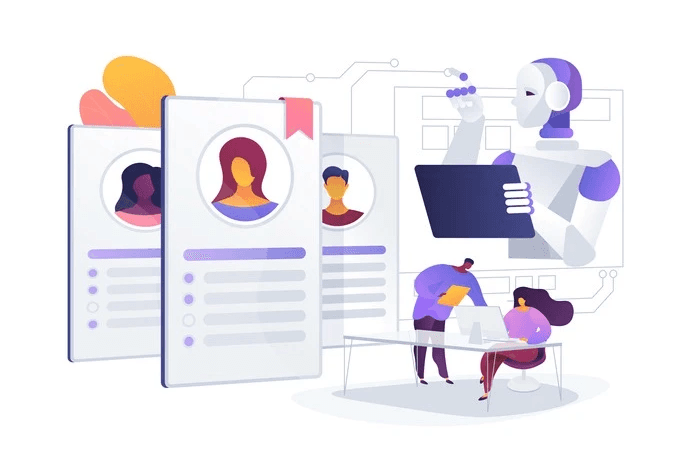
Fonzi is a purpose-built marketplace for AI, ML, and software engineering talent. High-growth tech companies use Fonzi to hire top engineers faster, without the cost, delays, or guesswork of traditional recruiting agencies.
Fonzi combines human judgment with multi-agent AI. Your team defines success for the role. AI handles sourcing, screening, skill validation, and fraud detection at scale. Recruiters stay in control while hiring moves faster and with higher confidence.
From role kickoff to shortlist in 48–72 hours, Fonzi delivers 3–5 fully vetted, role-ready candidates, no resume dumps, no wasted interviews. With Match Day, hiring is concentrated into a focused window where companies meet only pre-qualified candidates who already meet the role’s technical bar. The result is higher interview-to-offer ratios, faster decisions, and far less engineering time spent on unqualified interviews.
Fonzi isn’t a generic staffing agency. It’s built specifically for AI and engineering hiring, with structured, fair evaluations and humans making the final call. The result: better hires, made faster.
Traditional Software Recruiters vs. Fonzi’s AI-Enhanced Approach
A side-by-side comparison helps hiring leaders understand where value comes from: speed, quality, fraud resistance, and fairness.
Dimension | Traditional Software Engineering Recruiter / Agency | Recruiter Using Fonzi’s Multi-Agent AI |
Time from intake to first qualified shortlist | Typically 7–21 days, depending on role complexity and recruiter bandwidth. Delays compound when recruiters manage 20+ requisitions. | 24–72 hours for initial shortlist. AI handles volume sourcing and first-pass screening in parallel across multiple channels. |
Technical vetting depth | Varies widely by recruiter expertise. Many rely on resume keywords and brief phone screens without a structured technical assessment. | Consistent technical evaluation, including GitHub analysis, skills assessments, and system design scenario scoring, delivered to hiring managers. |
Fraud and misrepresentation detection | Manual resume review catches obvious issues but misses sophisticated fraud like ghost developers or AI-generated experience descriptions. | Cross-source verification across GitHub, LinkedIn, and project history. Pattern detection flags repeated portfolio content and timeline inconsistencies. |
Candidate evaluation format | Unstructured notes and subjective impressions. Different recruiters provide different levels of detail, making comparison difficult. | Standardized scorecards covering coding ability, system design, communication, and AI fluency. Hiring managers can compare candidates quickly. |
Fairness and bias controls | Depends on the individual recruiter's training and awareness. No systematic enforcement of consistent evaluation criteria. | Structured evaluation rubrics reduce bias from unstructured interviews. Consistent criteria applied across all candidates regardless of background. |
Human decision control | Hiring managers make final decisions, but often receive incomplete information due to recruiter bandwidth constraints. | Hiring managers retain full control of decisions with better information. AI augments rather than replaces human judgment. |
How to Choose a Software Engineering Recruiter That Actually Gets Results

Most hiring failures happen when teams choose the wrong recruiting partner or fail to align expectations early. A strong partner should demonstrate real technical fluency, comfortably discussing topics like microservices vs. monoliths, CI/CD pipelines, testing strategies, and modern AI stacks, so they can accurately assess candidates beyond resumes. You should pressure-test them with specific questions about how they evaluate coding ability, distinguish seniority, detect resume inflation or AI-assisted cheating, and balance technical skills with soft skills. Verify their track record with recent, comparable placements and concrete metrics like time-to-fill and retention, not vague success stories.
Ask exactly how they use AI, how bias is managed, and where human judgment remains central. Finally, pilot with one or two hard-to-fill roles and set clear success criteria before committing long term, results, not promises, should earn your partnership.
Integrating AI-Powered Recruiting Into Your Existing Hiring Stack
Many companies already use ATS systems, job boards, and internal recruiters. Adding Fonzi doesn’t require rebuilding everything, it layers on top of your existing workflow.
Plugging Into Existing Systems
Fonzi handles sourcing and vetting externally, then delivers shortlists and structured scorecards that can be imported into your ATS, whether you use Greenhouse, Lever, Ashby, or enterprise systems like Workday. Your team continues using familiar tools while getting better candidates faster.
Structured Evaluation Data
Every candidate comes with consistent scoring rubrics covering coding ability, system design, communication, ownership, and AI fluency. This structured format lets hiring managers compare the top candidate against alternatives quickly, without digging through unstructured recruiter notes.
Example Adoption Paths
A Series B startup replaced its traditional staffing agency with Fonzi for senior roles, cutting time-to-hire by 40% while improving quality assurance on candidate vetting. A larger scale-up uses Fonzi specifically for AI/ML positions and project managers with technical backgrounds, while keeping internal recruiters focused on entry-level and general software applications roles. Both approaches work, the key is matching the tool to your specific needs.
Summary
Hiring great software and AI engineers is no longer a volume problem. It is a precision challenge that requires specialized recruiters supported by AI. The companies winning in 2026 and beyond are those that match their recruiting capability to the technical complexity of the roles they are filling.
The right recruiter understands your tech stack, runs a structured evaluation process, and uses AI for repeatable tasks like screening and fraud detection while keeping decisions human. Fonzi helps teams upgrade their hiring process quickly by combining experienced recruiters with multi agent AI purpose built for engineering and AI roles.
Start with a pilot search for one critical role and benchmark the results. Measure time to shortlist, candidate quality, and engineering hours saved. The results will be clear.
FAQ
What does a software engineering recruiter do differently from a general recruiter?
How do I find a good recruiter who specializes in software engineering roles?
What’s the difference between a software staffing agency and a recruiting firm?
How much do software engineering recruiters charge companies to fill a role?
Are developer staffing agencies worth it, or should I hire engineers directly?


