Picture a recent Champions League knockout match. Semi-automated offside technology tracks players’ limbs across 29 data points at 50 frames per second while cameras send real-time analytics to coaching tablets and AI systems generate highlight clips before the final whistle. Fans in the stadium never see this layer of technology, it simply works.
This is very different from older sports analytics built on manual video review and coach intuition. Today’s systems combine computer vision, deep learning, natural language processing, and machine learning to process massive amounts of tracking and biometric data.
AI in sports is changing how games are analyzed and experienced, while also creating strong demand for specialized AI engineers. This article reviews key sports AI use cases and shows how Fonzi helps organizations hire the teams that build these systems.
Key Takeaways
AI is becoming core infrastructure in sports, with systems like FIFA’s Semi-Automated Offside Technology debuting at the 2022 World Cup and the global AI in sports market valued at about $8.9 billion in 2024 with projections near $60 billion by 2034.
Performance analysis and media production are increasingly automated, as Zone7 reports its models flagged elevated injury risk before about 72% of injuries across 11 soccer teams and WSC Sports reports generating more than 10 million highlight clips per year using AI.
Hiring specialized AI talent is a growing bottleneck, as teams and sports tech companies struggle to recruit experienced engineers quickly, which is why platforms like Fonzi focus on evaluating and placing vetted AI engineers in about three weeks.
Core Applications of AI in Sports Today
AI technologies have moved from experimental projects to production systems across nearly every major league. Here are the primary application domains reshaping the sports industry:
Performance analytics and tactics: Second Spectrum provides optical tracking and tactical analysis for the NBA and Premier League, generating expected threat maps and pressing intensity metrics. LaLiga’s partnership with Microsoft integrates fan analytics, broadcast content, and match-day stats into unified data pipelines. Formula 1 teams such as Red Bull Racing use Oracle Cloud for race strategy simulation and telemetry modeling.
Officiating and rules enforcement: FIFA’s Semi-Automated Offside Technology at Qatar 2022 used 12 dedicated tracking cameras and ball IMU sensors transmitting data 500 times per second. The Premier League introduced SAOT in April 2025, reducing offside decision time from about 70 seconds to around 25 seconds. Hawk-Eye handles line calls in tennis and supports VAR in soccer, while Major League Baseball has experimented with automated strike zones in minor league play.
Injury prediction and load management: Zone7 uses historical workload, match data, and medical records to forecast soft-tissue injury risk. Catapult wearables are deployed across thousands of professional teams in soccer, AFL, NFL, and rugby. The NFL’s Digital Athlete program combines optical tracking with medical data to model injury risk and recovery timelines.
Media, highlights and broadcasting: WSC Sports reports generating over 10 million highlight clips in 2024 for clients including LaLiga, FIBA, and NASCAR. Pixellot automates filming for lower leagues using fixed camera rigs and AI selected replays. The Bundesliga has piloted AI multilingual commentary and auto translation for global audiences.
Fan experience, betting and business operations: AI systems power personalized content recommendations in league apps, dynamic ticket pricing based on demand and opponent quality, and smart stadium operations. Sportradar and Stats Perform use machine learning models to set live odds and detect suspicious betting patterns, supporting integrity monitoring for leagues including MLB.
How AI Is Reshaping the On-Field Game
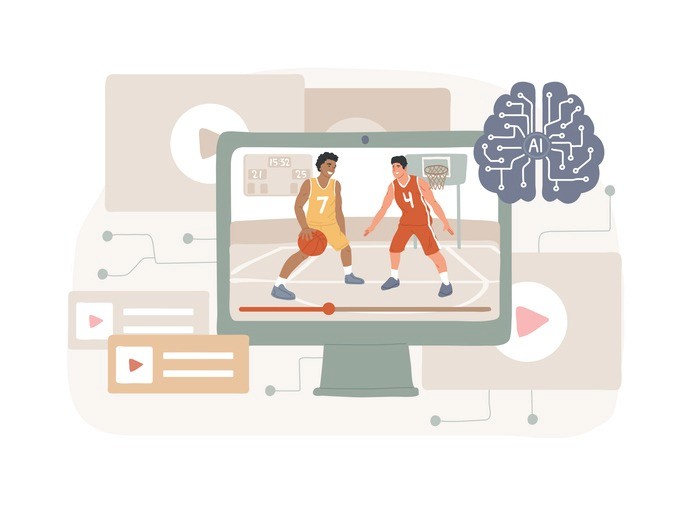
Elite teams now treat data pipelines and predictive models as core infrastructure, as essential as gyms and training grounds. The transformation affects every aspect of how athletes train, compete, and recover.
Performance Tracking
Optical tracking systems in NBA arenas and Premier League stadiums capture player movement at 25–50+ frames per second, creating millions of data points per match. These feed models that rate spacing, pressing intensity, shot quality, and off-ball movement. Every pass, run, and tactical adjustment becomes quantifiable. Coaches and analysts can now answer questions that were previously impossible to analyze at scale, such as how a team’s defensive shape changes when protecting a one-goal lead in the final 15 minutes.
Tactical Decision-Making
Real-time dashboards suggest substitutions, formation tweaks, and tactical adjustments based on live game state. The Bundesliga provides coaches with live tactical feeds during matches, while Oracle Red Bull Racing runs race-strategy simulations in Formula 1 that model pit timing, tire degradation, and traffic scenarios by processing telemetry from hundreds of sensors in real time.
Personalized Training & Coaching
Tools like Whoop collect HRV, sleep patterns, and strain data, while AI algorithms adapt training intensity, drills, and recovery protocols to each athlete’s responses. NFL quarterbacks use AI-guided VR systems to rehearse coverages and read defenses before stepping on the practice field. These personalized programs optimize training while reducing overuse risk.
Equipment-Embedded Intelligence
The Adidas Connected Ball at Euro 2024 transmitted 500 data points per second to detect the exact kick point for offside decisions. Smart mouthguards in rugby measure impact forces for player safety, and TrackMan radar tracks every golf shot and baseball pitch, measuring trajectory, spin, and speed to provide real-time feedback that coaches use to refine technique immediately.
AI Beyond the Field: Media, Fans, and Integrity
For most sports fans and rights holders, AI’s biggest visible impact is off the field, in how sports are consumed, personalized, and monetized.
Generative Media Workflows
LLMs and video models create tailored highlight reels, auto-generate match reports for thousands of games, and localize commentary into dozens of languages in near real time. A single match can produce hundreds of content variations for different platforms, regions, and fan preferences without human editors touching most of the output.
Personalized Fan Journeys
Recommendation systems suggest specific clips, camera angles, merchandise, or future game tickets based on watch history and stadium behavior. FOX Sports, NBA, and Bundesliga have experimented with personalized sports feeds that adapt to how fans engage with their favorite teams, making every fan feel like the broadcast was built for them.
Smart Stadiums & Security
AI-based crowd flow optimization predicts bottlenecks before they form, and concession staffing models adjust based on expected demand. The Cleveland Browns deployed facial recognition entry systems that reduce wait times while enhancing security, running with minimal human intervention using data from cameras, sensors, and ticket systems.
Betting and Integrity
Machine learning models power live odds calculation and detect suspicious betting patterns in real time. MLB’s partnership with Sportradar includes integrity monitoring that flags anomalies for investigation. Growth in sports betting creates new revenue streams, while regulatory frameworks are still catching up with the technology.
Ethics, Privacy, and Regulation in AI-Driven Sports
Elite sports are a testing ground for workplace AI surveillance, with athlete unions often ahead of other industries in negotiating rules around data use.
Biometric and Health Data Concerns
GPS trackers, heart-rate monitors, force plates, and brain-impact sensors generate sensitive player data that can influence contracts, insurance, and career decisions. The NBPA restricted how NBA teams use biometric data following negotiations in the late 2010s. Questions around ownership of sleep patterns, stress levels, and injury history remain unresolved, and biases in data collection can worsen the problem.
Fairness and Bias in Scouting
AI algorithms trained on data from established leagues may undervalue players from smaller leagues, women’s sports, or youth academies. Models predicting player performance can inherit biases from historical scouting decisions, making audits, explainability, and aligned incentives essential safeguards.
Governance and Standards
Frameworks like ISO 42001:2023 for AI management has gained traction, and league-level data governance committees are forming. Pushes for explainable AI in officiating aim to maintain fan trust, since fans are unlikely to accept calls they cannot understand.
Lessons for Other Industries
Negotiations in sports over data ownership, consent, and algorithmic transparency foreshadow similar debates in workplaces and other high-surveillance environments. How athlete data is used today will influence broader societal norms around AI tomorrow.
Why Sports AI Depends on Elite AI Talent
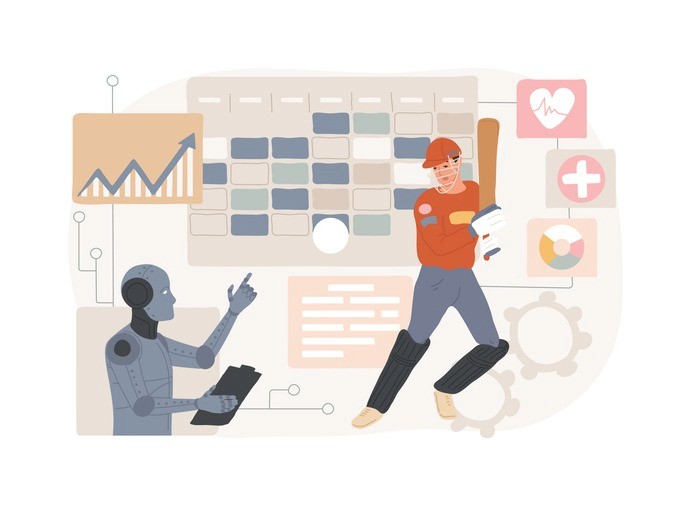
Behind every tracking system, offside model, or highlight engine is a complex AI stack requiring scarce expertise in computer vision, sequence modeling, generative AI, and large-scale data engineering. The technology only works if you have people who can build and maintain it.
Technical Complexity
Sports AI demands specific skills, including transformer-based sequence models for play prediction, multimodal models combining video footage, sensor data, and text, reinforcement learning experiments for tactical simulation, and low-latency inference for live broadcasts. These are not generic software engineering problems and require deep ML expertise.
Reliability and Latency Constraints
Referee-assist models, betting odds engines, and stadium control systems must run with millisecond-level latency and near-zero downtime. A system that is 99% accurate but fails during a World Cup final is a disaster. This requires engineers experienced with distributed systems, MLOps, and production-grade monitoring.
Domain Integration
The best sports AI engineers can translate between coaching language such as “cover 2,” “high press,” or “expected threat” and technical architecture. This cross-disciplinary skill of understanding both game strategy optimization and neural network design is rarely found through generic software hiring channels.
Hiring Bottlenecks
CTOs and sports-tech founders face common pain points:
Months-long searches that drain resources
Inconsistent candidate quality across interviews
Assessment processes that fail to test real-world modeling ability
Scaling challenges once a product gains traction
Traditional recruiting methods weren’t built for this kind of specialized, high-stakes hiring.
Introducing Fonzi: The Fastest Way to Build Elite AI Teams for Sports and Beyond
Fonzi is a specialized hiring platform focused on AI and machine learning engineers, designed for startups and enterprises building mission-critical AI systems, including sports analytics, media, and performance technology.
How Fonzi Works
Fonzi’s pipeline is built for speed and precision:
Sourcing: Access to top global AI talent, including competition-tested engineers with real modeling experience
Rigorous evaluation: Live coding, model-building, and system design tasks that actually test what matters
Structured matching: Candidates matched based on company stage, tech stack (Python, PyTorch, TensorFlow, Ray), and domain expertise (computer vision, NLP, sports analytics)
Speed and Consistency
Most Fonzi clients make successful AI hires in around three weeks. The process is repeatable and scales from a first ML engineer to AI teams of dozens or hundreds.
Candidate Experience
Fonzi standardizes assessments, reduces repetitive interviews, provides clear feedback, and keeps candidates engaged. In a market where top AI engineers have multiple offers, candidate experience directly affects hiring success.
Fit for Sports Organizations
Sports-related companies can fill critical roles through Fonzi:
Computer vision engineers for tracking systems
MLOps engineers for streaming pipelines
Applied scientists for injury prediction models
LLM engineers for content generation and fan tools
Data engineers for processing vast amounts of match and sensor data
How Fonzi Helps Different Types of Organizations
Different organizations have different AI needs and different hiring challenges. Here’s how Fonzi delivers value across the spectrum:
Organization Type | AI Needs in Sports | Hiring Challenges | How Fonzi Helps |
Early-Stage Startup (5–20 people) | First AI product; youth video analytics, fantasy sports tools, or amateur league tracking | Finding a senior ML engineer who can own the entire stack; limited employer brand; no in-house AI expertise to evaluate candidates | Pre-vetted senior candidates; fast turnaround (~3 weeks); technical evaluation built-in so founders can trust the hire |
Growth-Stage Company (50–200 people) | Scaling from 3–4 data scientists to 15–25 engineers; adding CV, NLP, or MLOps specialists | Maintaining quality while scaling; interview bandwidth constraints; competing with larger companies for talent | Consistent evaluation standards; pipeline of specialists ready to interview; support for multiple parallel hires |
Large Enterprise (league, broadcaster, global vendor) | Hiring dozens or hundreds of AI engineers over multiple years for tracking, media personalization, and real time insights | Long procurement cycles; global hiring across jurisdictions; maintaining consistent bar across hundreds of hires | Enterprise-scale support; compliance and global reach; repeatable process that doesn’t degrade at volume |
Non-Sports Tech Company (using sports-like AI workloads) | Real-time video analysis, sensor fusion, or high-stakes predictive models in other verticals | Cross-training from sports AI talent pool; finding engineers who understand latency and reliability constraints | Access to engineers with sports AI backgrounds who transfer skills to adjacent industries |
Conclusion
AI has already transformed sports. Semi-automated refereeing, predictive injury analytics, generative media workflows, and smart venues are now expected.
The main challenge is no longer ideas or data, but hiring and organizing world-class AI engineers who can deliver reliable systems under high-stakes, real-time conditions. Sports organizations that secure top talent will shape the next decade of fan experience, team performance, and competitive advantage.
Fonzi provides what sports AI teams need: fast hiring in around three weeks, consistent quality through rigorous evaluation, and a scalable process from the first AI hire to the 10,000th, while keeping candidates engaged.
If you are building the next generation of sports AI, from tracking systems to fan engagement platforms, Fonzi can help you build the team to deliver it.
FAQ
How is artificial intelligence being used in sports today?
What are examples of AI tools and platforms used by professional sports teams?
Can AI predict injuries, and how accurate is it?
What careers exist at the intersection of AI and sports?
How is AI changing sports broadcasting, fan engagement, and scouting?