Picture this: a high school student snaps a photo of a calculus problem and gets a step-by-step solution in seconds, a computer science major debugs code with an AI pair programmer, and a startup founder uses an AI system to evaluate whether a machine learning candidate can ship production-ready models.
For startup founders and AI team leads, the most impactful AI tutor may be the one that helps evaluate and hire elite engineers. Platforms like Fonzi use adaptive questioning, detailed feedback, and scenario-based practice to bring AI tutoring techniques into technical hiring.
This article defines AI tutors, reviews the best learning tools in 2026, and shows how Fonzi applies tutoring principles to improve hiring outcomes.
Key Takeaways
Fonzi acts as an “AI tutor for hiring,” using adaptive assessments and scenario-based tasks to evaluate senior AI engineers, with most hires completed in about three weeks.
Traditional AI tutor apps like TutorAI, Khanmigo, and Photomath focus on K–12 and college learning, offering personalized paths and instant answers at a fraction of human tutoring costs.
Founders and AI team leads can apply AI tutoring concepts such as structured evaluation, real-time feedback, and adaptive difficulty to build stronger engineering teams faster and more consistently.
What Is an AI Tutor in 2026?
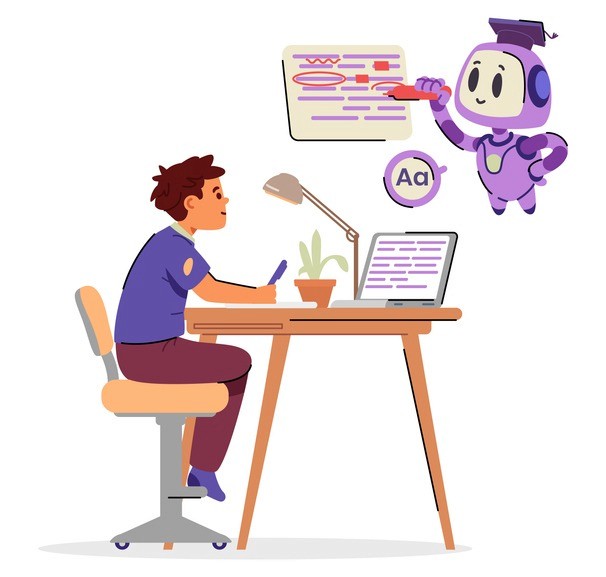
An AI tutor in 2026 is a software system built on large language models, multimodal AI, and adaptive learning algorithms designed to explain concepts, quiz learners, and guide them through subjects ranging from elementary math to advanced computer science. These systems observe user responses, identify knowledge gaps, and adjust difficulty to keep learners progressing at their own pace.
Core capabilities include conversational Q&A, step-by-step problem solving, personalized learning paths, and instant content generation. Need a course on machine learning fundamentals? An AI tutor offers one in minutes. Want practice tests for an upcoming exam? Generated instantly. Looking for homework help on a specific homework question? Quick answers arrive with full explanations.
The modalities have expanded significantly. Chat-based interfaces remain popular, but camera-based math solvers now recognize handwritten work with impressive accuracy. Code sandboxes let learners experiment with real programming environments while receiving AI-guided feedback. Structured lesson plans integrate AI coaches that adapt to each student’s progress.
There’s also a critical distinction between “tutoring for grades” and “tutoring for skills.” Most student apps focus on helping learners pass exams, complete assignments, and improve academic performance. But for hiring technical roles, the focus shifts to evaluating depth of thinking, ability to design systems, production-level coding, and trade-off reasoning. Fonzi adopts the same AI tutoring techniques but applies them to assess real-world AI engineering skills rather than teach introductory concepts.
Best AI Tutor Apps for Students in 2026
Before diving into individual platforms, here’s a comparison of the leading AI tutor apps students and parents recognize today. Each tool has distinct strengths depending on whether you need help with math or science problems, essay writing, or structured curriculum support.
Tool | Subjects/Focus | Key Strengths | Pricing |
TutorAI | Broad academic coverage (math, science, humanities, coding) | Personalized learning paths, instant course generation, progress tracking, Feynman-style explanations | Free plan available; paid tiers $16–$21/month |
Khanmigo (Khan Academy) | Standards-aligned curriculum across math, science, humanities | Structured lessons, teacher tools, multilingual support, image uploads for problem solving | $4/month or $44/year |
Photomath | Math (algebra, geometry, calculus, statistics) | Camera-based problem recognition, multiple solving methods, visual step-by-step walkthroughs | Free tier; Photomath Plus $9.99/month or $69.99/year |
Brainly | Homework help across different subjects | Community + AI hybrid answers, quick responses, collaborative learning | Free with ads; paid plans for priority support |
Smodin | Writing, research, essay drafting | AI-powered summarization, idea generation, citation assistance | Free tier; premium plans for heavy users |
Tutoria | Language learning and speaking practice | Conversational role-plays, grammar feedback, fluency building | Free limited; Premium $19.99/month |
These tools excel at helping students learn faster and close knowledge gaps. However, they are not designed to rigorously evaluate senior AI engineers or run consistent hiring loops. That’s where the concept of an AI tutor adapts to serve a different purpose entirely.
Notable AI Tutors for Students (Math, Writing, and Test Prep)
Khan Academy’s Khanmigo remains the gold standard for structured curriculum and standards-aligned learning, expanding in 2026 to multiple languages and supporting image uploads for diagrams and handwritten work, making it powerful for math and science problems.
Smodin focuses on writing and research tasks, helping students with essay writing, summarization, and idea generation while teaching fundamentals of clear communication.
Photomath dominates camera-based math solving, providing instant answers and step-by-step explanations for algebra, geometry, trigonometry, and calculus, with a Plus tier at about $10 per month.
Brainly combines AI-generated answers with human community responses, offering fast help across diverse subjects though with less depth than full tutoring platforms.
From Learning to Hiring: Applying AI Tutoring to Technical Talent
For startup founders, CTOs, and AI team leads, the challenge in 2026 is not finding learning resources but finding and evaluating people who have already learned. When hiring elite AI engineers who can ship production systems, traditional interviewing methods often fail.
The same capabilities that make AI tutors effective for students can be used to evaluate job candidates fairly and consistently. An AI tutor assesses a student’s current knowledge and adjusts accordingly. Similarly, an AI-driven hiring system presents realistic tasks, observes candidate approaches, and evaluates depth of reasoning.
Real hiring pain points include inconsistent results from live interviews, bias toward resumes and pedigree over skill, difficulty scaling structured evaluation across many applicants, and candidates facing repetitive interviews disconnected from actual work.
Fonzi addresses these problems by functioning as an “AI tutor for hiring,” acting like a rigorous, always-on senior engineer that designs, administers, and scores realistic AI and software engineering assessments. This standardizes evaluation while leaving final human judgment to founders and hiring managers.
Meet Fonzi: Your AI Tutor for Hiring Elite AI Engineers

Fonzi is a curated talent marketplace and technical evaluation platform built to help companies hire elite AI, ML, and software engineers faster and more fairly. Using advanced AI to design, run, and evaluate assessments, Fonzi applies tutoring principles to technical hiring with measurable results.
Most Fonzi-driven hires close in about three weeks, compared to 8 to 12 weeks for traditional full-stack hiring processes. This speed is critical for startups burning runway and enterprises competing for scarce AI talent.
Fonzi scales from early-stage startups hiring their first AI engineer to large enterprises building teams of thousands. The workflows adapt whether filling a few roles or managing global intake across multiple regions, making the platform suitable for seed-stage companies and Fortune 500 organizations alike.
Critically, Fonzi preserves and elevates candidate experience by providing clear expectations, immediate feedback, realistic tasks, and fewer repetitive interviews. Technical leaders use Fonzi to evaluate coding ability, model design, data handling, productionization skills, and communication needed for real-world AI teams.
Why Fonzi Is the Most Effective Way to Hire AI Engineers in 2026
Fonzi delivers outcomes that traditional interview-only processes struggle to match, including faster time-to-hire, more consistent evaluation, and higher-quality technical matches.
Speed: Candidates move from application to calibrated technical assessment within days. Assessments are auto-scored, top performers surface quickly, and offers can go out in about three weeks, keeping companies competitive for in-demand talent.
Consistency: Every candidate for a role experiences identical rigor and structure. This reduces bias and noise from interviewer variation, time pressure, or differing expectations. Structured evaluations produce comparable data across candidates, making decisions clearer.
Scalability: The same assessment framework and AI evaluation engine handles 10 or 10,000 candidates with minimal additional load on internal engineering teams. Companies don’t need to multiply interview hours as applicant volume grows.
Candidate Experience: Fewer fragmented interviews, more meaningful tasks that resemble real work, immediate engagement with the problem space, and a fair, skills-based process. Candidates often come away understanding the company’s stack and expectations better, improving offer acceptance rates.
Generic coding-test platforms focus on algorithm puzzles with little connection to actual job performance. Fonzi is built for modern AI and software engineering roles, evaluating complex topics that require real expertise rather than memorized solutions.
Fonzi for Early-Stage Startups vs Large Enterprises
Fonzi adapts to vastly different hiring environments without sacrificing quality or consistency.
For Early-Stage Startups:
No need to burn limited engineering time on repetitive screening calls
Small candidate batches with deep scenario-based assessments
Flexible scheduling and rapid decision cycles that align with short runways and product timelines
Support for making that critical first AI hire without an established recruiting infrastructure
For Large Enterprises:
Standardized role templates ensure consistency across regions and teams
Calibrated scoring rubrics make pipeline quality measurable at scale
Integration with existing ATS systems streamlines workflow
Dashboards let HR and engineering leadership track hiring metrics across thousands of roles
Brand quality and fairness maintained regardless of location or hiring volume
In both cases, each candidate interacts with a consistently high bar. Whether you’re hiring your first AI engineer or your 10,000th, the evaluation standards remain reliable.
How Fonzi Protects and Elevates Candidate Experience
High-signal technical evaluation often frustrates candidates with arbitrary challenges and unclear expectations. Fonzi intentionally avoids that trap.
Fonzi reduces redundant interviews. Because much of the technical signal is captured in one high-quality evaluation, candidates avoid repeating the same challenges with multiple interviewers. This respects their time and reduces the burden of extended hiring processes.
Many candidates complete Fonzi assessments with a better understanding of the company’s stack, expectations, and problem space. This knowledge improves long-term fit and increases the likelihood that offers are accepted by candidates who genuinely want the role.
AI Tutors vs AI Hiring Platforms: How They Compare
Understanding when to use learning-focused AI tutor apps versus hiring-focused systems like Fonzi helps organizations make smarter decisions.
Dimension | AI Tutors (Students) | Fonzi (Hiring) |
Primary Goal | Close knowledge gaps, improve grades, learn new skills | Evaluate and select candidates with proven skills |
Target Users | Students, parents, educators | Founders, CTOs, hiring managers, AI team leads |
Content Types | Courses, quizzes, homework help, flashcards | Realistic engineering tasks, system design, model evaluation |
Evaluation Methods | Continuous feedback, hints, scaffolding, progress tracking | Structured assessments, AI scoring, ranked shortlists |
Outcomes | Learning progression, exam readiness | Faster hires, consistent evaluation, reduced bias |
Pricing Model | Monthly subscriptions ($10–$20/month) | Success fee (~12% of first-year salary for employers; free for candidates) |
Conclusion
AI tutors have transformed how students learn, providing instant math help and adaptive coding instruction that make education more accessible and personalized.
Standard AI tutor apps excel at academic goals but cannot evaluate whether a senior engineer can ship production ML systems, which requires specialized tools.
For founders, CTOs, and AI team leads, Fonzi brings AI tutoring principles to technical hiring, making the process adaptive, consistent, and fast.
Sign up for a demo, start a pilot for your next AI role, or integrate Fonzi into your 2026 hiring plan to transform how you hire AI engineers.
FAQ
What is an AI tutor and how does it work?
What are the best AI tutor apps for students in 2026?
Can an AI tutor actually replace a human tutor for subjects like math or coding?
Are AI tutors effective for learning programming and technical skills?
How much do AI tutor apps cost compared to hiring a real tutor?