Need Help Finding a Job? Free Resources & Where to Get Assistance
By
Ethan Fahey
•
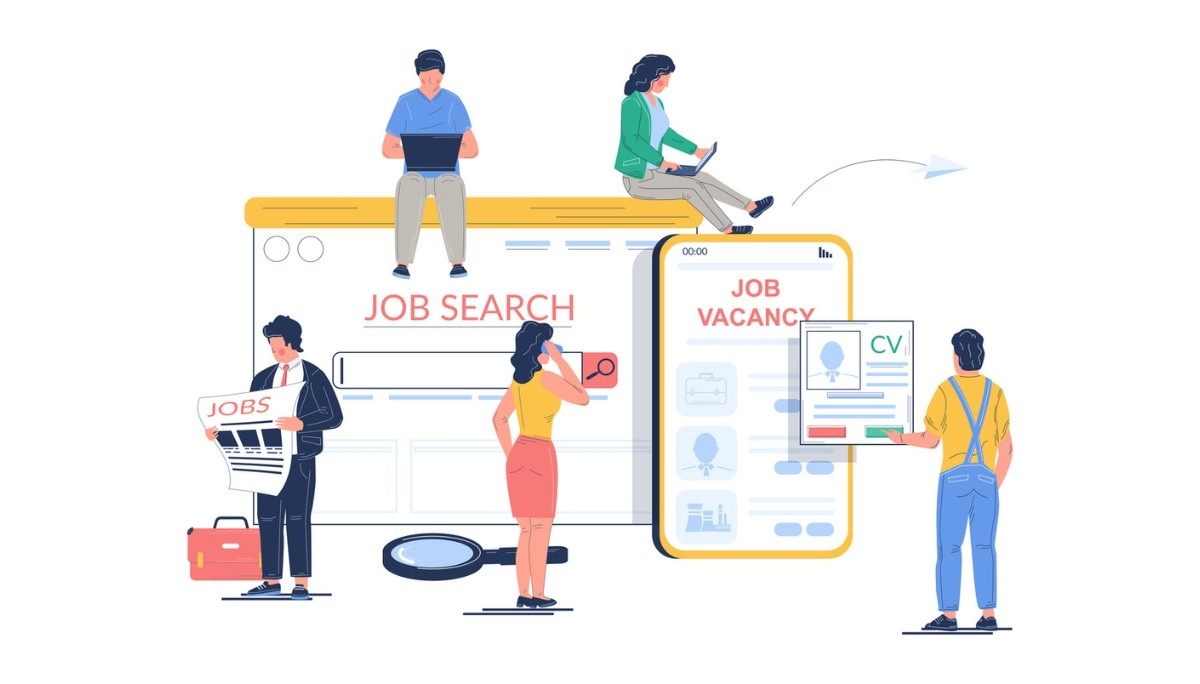
The AI job market in 2026 will get a lot noisier. Companies hiring AI engineers, ML researchers, infra engineers, and LLM specialists are flooded with applicants, yet still struggle to identify the right people. That pressure has pushed many teams toward automated screeners, structured assessments, and skills-first filtering, which can feel frustratingly opaque from the candidate's side. If you’re searching right now, you’ve probably felt it: applications disappear into ATS black holes, role titles like “AI Engineer” are vague at best, feedback cycles drag on for months, and take-home projects often come with unclear expectations.
The upside is that there are more ways than ever to cut through the noise if you know where to look. Beyond government programs and community networks, platforms built specifically for AI talent are changing how matching works. Fonzi is one example, a curated marketplace designed for AI and ML professionals that prioritizes skills, real project experience, and transparency over keyword stuffing. By focusing on high-signal matches with vetted companies and keeping humans in the loop, Fonzi helps candidates avoid generic pipelines and connect directly with teams that actually understand what they’re hiring for.
Key Takeaways
AI is reshaping hiring: 85% of companies now use automated screening, skills-based matching, and AI-driven assessments, understanding how these systems work gives you a competitive edge.
Free resources abound: From American Job Centers to state workforce portals, government programs offer no-cost resume help, interview workshops, and local employer connections for all job seekers.
Fonzi is purpose-built for AI talent: A curated, free-to-candidates marketplace specifically for AI engineers, ML researchers, infra engineers, and LLM specialists, focused on high-signal matches and reduced bias.
Responsible AI augments, not replaces: Modern platforms like Fonzi use AI to surface patterns and reduce friction while keeping human talent partners in control of final decisions.
How AI Is Changing the Hiring Process (And What It Means for You)

The hiring process you knew five years ago barely resembles what companies use today. Understanding these changes isn’t optional; it’s essential for anyone serious about finding employment in competitive technical fields.
Companies now deploy a range of AI-powered tools throughout the hiring funnel. Resume parsers scan for keywords and structure. LinkedIn Recruiter surfaces candidates based on algorithmic recommendations. Coding challenge platforms like HackerRank and Codility provide automated scoring. ML-driven skills assessments attempt to predict job performance before you ever speak to a human.
Each stage of hiring has been transformed. Sourcing now involves profile scraping and automated outreach at scale. Screening uses keyword and skills filters that can reject qualified candidates for superficial mismatches. Interviewing increasingly relies on structured questions with standardized scoring rubrics. Even offers decisions reference compensation bands and market benchmarks generated by data models.
Old Hiring vs. AI-Era Hiring
Aspect | Traditional Hiring | AI-Era Hiring |
Resume Review | Manual recruiter review, 6-10 seconds per resume | Automated parsing with keyword matching, 75% filtered before human eyes |
Role Definition | Vague job descriptions, negotiated scope | Structured skills matrices, competency frameworks |
Candidate Feedback | Minimal or no feedback | Data-backed feedback possible (though rarely provided) |
Timeline | Weeks to months of uncertainty | Faster screening, but can still stall in later stages |
What this means for your job search:
Resumes without exact keyword matches get filtered 75% of the time by ATS systems
Non-traditional backgrounds face algorithmic bias, as models trained on historical data perpetuate past patterns
Research-oriented or infra-heavy roles often lose nuance when reduced to keyword lists
Networking remains 60-65% effective for landing roles, far outperforming cold applications at 20-30%
Your online presence, including platforms like GitHub, ArXiv, and LinkedIn, functions as a second resume that both algorithms and humans evaluate
Practical adjustments you can make:
Align resume keywords to actual skills you possess, using the exact terminology from job postings
Quantify impact on real projects (e.g., “optimized ML models reducing inference time by 40%”)
Curate your GitHub, ArXiv, or portfolio links so they’re scannable by both algorithms and hiring managers
What Makes Fonzi Different: A Curated Marketplace for AI, ML & LLM Talent
Generic job boards treat all candidates the same, whether you’re applying for customer service or training foundation models. Standard recruiting agencies often lack the technical depth to understand what distinguishes a strong ML researcher from a mediocre one. Fonzi takes a fundamentally different approach.
Fonzi works exclusively with AI-focused roles. This means applied AI engineers, ML researchers, foundation-model and LLM specialists, infra and platform engineers building AI tooling, and related staff positions. If your work doesn’t touch machine learning, AI infrastructure, or language models, Fonzi isn’t the right fit, and that’s the point.
The curation process starts with a single application. You share your background: your experience with frameworks like PyTorch or JAX, your work on distributed training, RLHF implementations, retrieval systems, or data engineering pipelines. Fonzi’s team reviews profiles for signal before introducing candidates to companies, ensuring both sides invest time only in high-potential matches.
Fonzi uses AI internally to summarize profiles, surface best-fit roles, and reduce noise. But pairing decisions are overseen by human talent partners who understand the AI/ML landscape deeply enough to catch what algorithms miss.
Concrete benefits for candidates:
Fewer but higher-quality introductions to companies that match your skills and interests
Role clarity upfront: you’ll understand the problem space, tech stack, team maturity, and expectations for your first 6-12 months
Faster timelines from first contact to final decision compared to traditional application processes
Access to job opportunities at companies actively hiring AI talent, not just collecting resumes
Reduced exposure to recruiter spam and irrelevant outreach
Pricing transparency: Fonzi is free for job seekers. Companies pay to access curated AI talent and participate in Match Day events. You never pay to apply, match, or interview.
Inside Fonzi Match Day: High-Signal Intros in a Single Batch
Match Day is Fonzi’s signature mechanism for connecting candidates with employers. Rather than the endless drip of one-off applications and scattered interview processes, Match Day creates a structured, efficient approach to hiring events that benefits everyone involved.
Think of Match Day as a periodic event, typically once or twice per month, where approved candidates are introduced to multiple vetted employers simultaneously. The matching is based on skills, interests, and preferences, like location or remote work. It’s not a job fair or a cattle call. It’s a curated introduction session designed for people at your level.
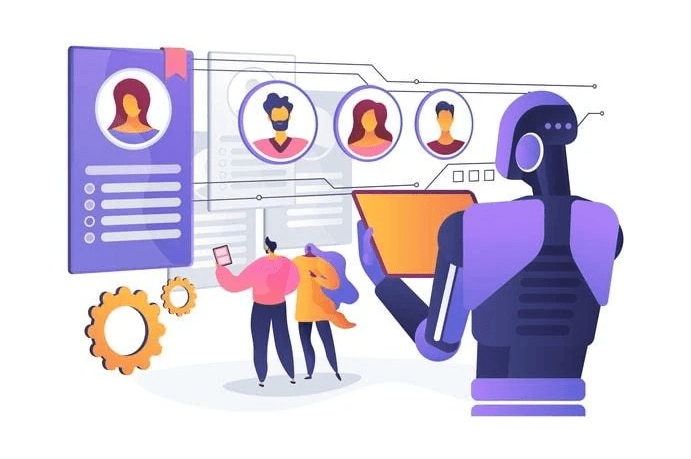
How Match Day works:
Join Fonzi and complete your profile: Share your technical background, experience, and what you’re looking for in your next role
Indicate your preferences: Research vs. product roles, startup vs. scaled company, remote vs. hybrid in specific cities like SF, NYC, London, or Berlin
Get included in a Match Day cohort: Based on your profile and preferences, you’re grouped with candidates seeking similar opportunities
Companies receive candidate cards: On Match Day, employers see anonymized or semi-anonymized summaries of your skills (e.g., “LLM engineer with experience fine-tuning Mistral and Llama, production experience with vector DBs like Pinecone and Weaviate”)
Companies signal interest within a fixed window: Typically 3-5 business days to review and respond
Fonzi coordinates introductions: You see only serious opportunities, not casual recruiter spam
The design minimizes ghosting, compresses decision timelines, and gives you visibility into multiple offers or processes at once. Most intros and declines are communicated within 1-2 weeks of Match Day, making it easier to prepare for interviews, compare opportunities, and negotiate effectively.
This structure means you can land your next job in weeks rather than the typical 3-6 month search duration that many candidates experience when figuring out their path through traditional channels.
Responsible AI in Hiring: Reducing Bias, Not Replacing People
AI in hiring carries real risks. Algorithms trained on historical data can perpetuate biases against candidates from certain schools, geographic locations, or non-traditional career paths. Without proper oversight, automated systems can filter out qualified candidates for arbitrary reasons, like using “machine learning” instead of “ML” in a resume.
Responsible platforms and employers treat AI as a support tool, not a replacement for human judgment. AI can surface patterns, automate scheduling, and summarize interview notes efficiently. But final evaluations should always involve human hiring managers and recruiters who can assess potential, cultural fit, and the nuanced qualities that don’t reduce to keyword counts.
Fonzi’s philosophy centers on using AI to structure information, skills graphs, project summaries, and experience timelines while increasing fairness through human oversight. The technology helps identify potential matches faster, but human talent partners make the decisions about who to connect with whom.
Signs a company is using AI responsibly:
Clear explanation of any assessments and how they’ll be evaluated
Opt-in policies for recorded interviews with transparency about data usage
The ability to request human review of automated decisions
Disclosure of how long candidate data is stored and who can access it
What you can do:
Ask potential employers how AI is used in their hiring process
Inquire whether AI-assisted evaluations are audited for fairness and bias
Request information about data retention and privacy policies
Feel empowered to push back on opaque processes that don’t respect candidate experience
Platforms that use AI responsibly, like Fonzi, aim to reduce bias by focusing on demonstrated skills rather than pedigree, and by ensuring that humans remain at the center of hiring decisions.
Free Resources to Help You Find Work in AI, ML & Engineering
Beyond specialized platforms, a robust network of free services exists to assist job seekers at every career stage. Whether you’re transitioning from academia to industry, moving between sectors, or returning to work after a gap, these resources can help.
Government Programs and American Job Centers
The U.S. Department of Labor funds nearly 2,300 American Job Centers across the country, providing free assistance, including:
One-on-one career counseling and job matching services
Resume writing workshops and cover letters review
Interview preparation and salary negotiation coaching
Access to job openings from local employers
Training referrals for in-demand skills
State workforce portals extend these services online. NCWorks (North Carolina), IowaWORKS, and NYSDOL (New York) offer virtual job fairs, skills assessments, and connections to regional employers. For federal job seekers, USAJOBS centralizes opportunities with built-in resume builders.
The Workforce Innovation and Opportunity Act (WIOA) funds training for in-demand fields, serving over 1 million participants annually with priority for veterans and underserved groups. If you’re eligible for financial assistance, these programs can cover education and certification costs while you search.
Resources for Service Members and Veterans
Transitioning to civilian life presents unique challenges. Programs like the Transition Assistance Program (TAP) help service members and their spouses research careers, translate military experience into civilian terms, and connect with employers who value their background. Many American Job Centers have dedicated staff for veterans.
Nonprofit and Community Resources
University career centers: Available to students and alumni, offering resume reviews, mock interviews, and employer connections
Professional associations: Groups focused on AI/ML often host networking events, job boards, and mentorship programs
Women-in-tech and underrepresented-in-tech organizations: Provide community support, job listings, and career exploration opportunities
Local meetups: MLOps groups, LLM user communities, and AI-focused Slack channels offer informal networking and job leads
Online Learning and Portfolio Building
For technical candidates, demonstrating skills often matters more than listing credentials:
Free courses: Coursera, edX, Fast.ai, and Hugging Face tutorials offer training on cutting-edge techniques
Open-source contributions: GitHub repositories showcasing real-world signal competence to employers
Research visibility: ArXiv preprints and Papers With Code entries establish credibility for ML researchers
Kaggle competitions: Demonstrate practical problem-solving abilities with public leaderboard rankings
Where Fonzi Fits
Fonzi complements these resources as a no-cost, specialized matching layer for AI/ML roles. While government programs provide broad career support and training, Fonzi focuses specifically on connecting AI engineers, ML researchers, and LLM specialists with companies actively hiring for their skills. It’s not a replacement for foundational services; it’s an accelerator for candidates ready to interview.
Practical Steps to Get Ready for AI & ML Job Searches
Preparation separates candidates who land roles from those stuck in application loops. Here’s how to position yourself for success across every dimension employers evaluate.
Resume & Profile Optimization
Your resume is often the first thing both algorithms and humans see. Make it count.
Keep it to 1-2 pages, focusing on relevant experience for the roles you’re targeting
Align keywords with actual skills using exact terminology from job postings (PyTorch, TensorFlow, LangChain, Ray, Kubernetes)
Quantify impacts wherever possible: latency improvements, cost reductions, model performance gains, scale of systems you’ve built
Include a LinkedIn profile with a professional photo, custom URL, and regular engagement to boost visibility
Remove or minimize outdated technologies unless they’re specifically relevant
Portfolio & Research Visibility
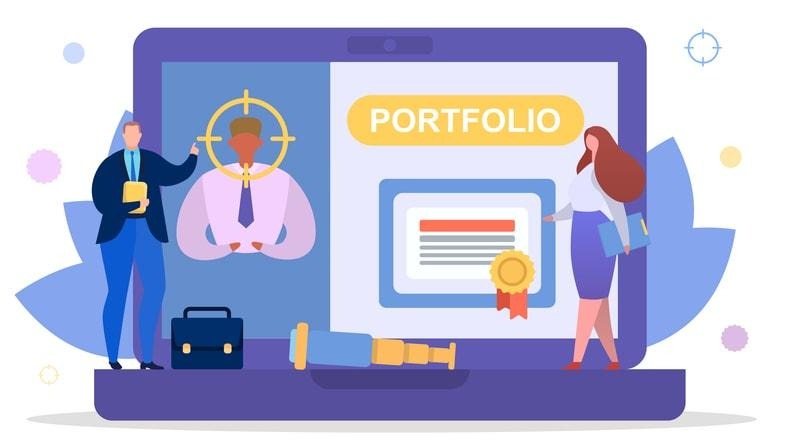
For technical roles, what you’ve built matters as much as where you’ve worked.
Maintain 2-3 flagship GitHub repositories with clean documentation and reproducible results
Highlight specific projects: LLM fine-tuning, retrieval-augmented generation systems, distributed training pipelines
Contribute to Hugging Face Spaces or open-source projects that potential employers might recognize
For researchers: keep ArXiv preprints accessible and list publications prominently
Create a personal site that aggregates your work and makes it easy for hiring managers to assess your abilities
Interview Preparation
Technical interviews for AI roles demand both depth and breadth.
Practice coding problems on LeetCode or similar platforms, focusing on data structures and algorithms commonly tested
Study system design for ML infrastructure: how to scale training, serve models efficiently, and handle failure modes
Read recent AI papers, especially for research-oriented roles, as interviewers often ask about current developments
Prepare behavioral answers using the STAR method (Situation, Task, Action, Result) for questions about teamwork, conflict, and leadership
Schedule mock interviews with peers, mentors, or through services that specialize in technical interview coaching
Networking & Visibility
Despite all the technology, networking still accounts for 60-65% of successful job placements.
Attend AI-focused meetups, conferences (NeurIPS, ICML, local ML communities), and industry workshops
Engage on LinkedIn and Twitter/X by sharing insights, commenting on relevant posts, and building genuine connections
Request informational interviews with people whose roles interest you, and ask prepared questions about their work and team
Join AI-focused Slack communities and Discord servers where job openings are often shared informally
Contribute thoughtfully to discussions rather than just lurking
Connection to Fonzi: A well-prepared resume, portfolio, and profile increase your chances of being selected into Fonzi’s curated pool. When you’re invited to Match Day, strong preparation means you’ll perform well in interviews and have multiple companies competing for your attention. Here are some questions you should ask at a career fair.
Use AI Tools, But Keep People at the Center
The way AI talent gets hired has changed fast. Automated screening, skills-based matching, and AI-driven assessments are now table stakes, and understanding how these systems work gives candidates and recruiters a real edge. That said, tools alone won’t do the heavy lifting. The strongest outcomes still come from pairing modern hiring tech with fundamentals that never go out of style: clearly communicating your skills, showing real work, and building authentic relationships with the people behind the process.
This is where curated platforms like Fonzi fit best. Fonzi cuts through the noise by focusing on skills-first profiles, transparent matching, and human-in-the-loop evaluation, so strong candidates don’t get lost in ATS black holes, and recruiters spend more time on meaningful conversations. Pair that with practical steps like keeping a tight portfolio, tapping into workforce resources for interview prep, and networking early, and you get a job search (or hiring strategy) that’s both modern and resilient. Whether you’re hiring AI talent or navigating your next role, combining smart tools like Fonzi with thoughtful preparation is how you stay ahead in today’s market.
Ready to get in front of multiple vetted companies in a single batch? Create your Fonzi profile today and join the next Match Day.
FAQ
Where can I get free help finding a job?
What government programs offer assistance in finding employment?
What resources are available for help looking for work?
How can career counselors help with finding a job?
What free services help with job search and employment assistance?


