Top Internet of Things Companies and IoT Manufacturers in 2026
By
Ethan Fahey
•
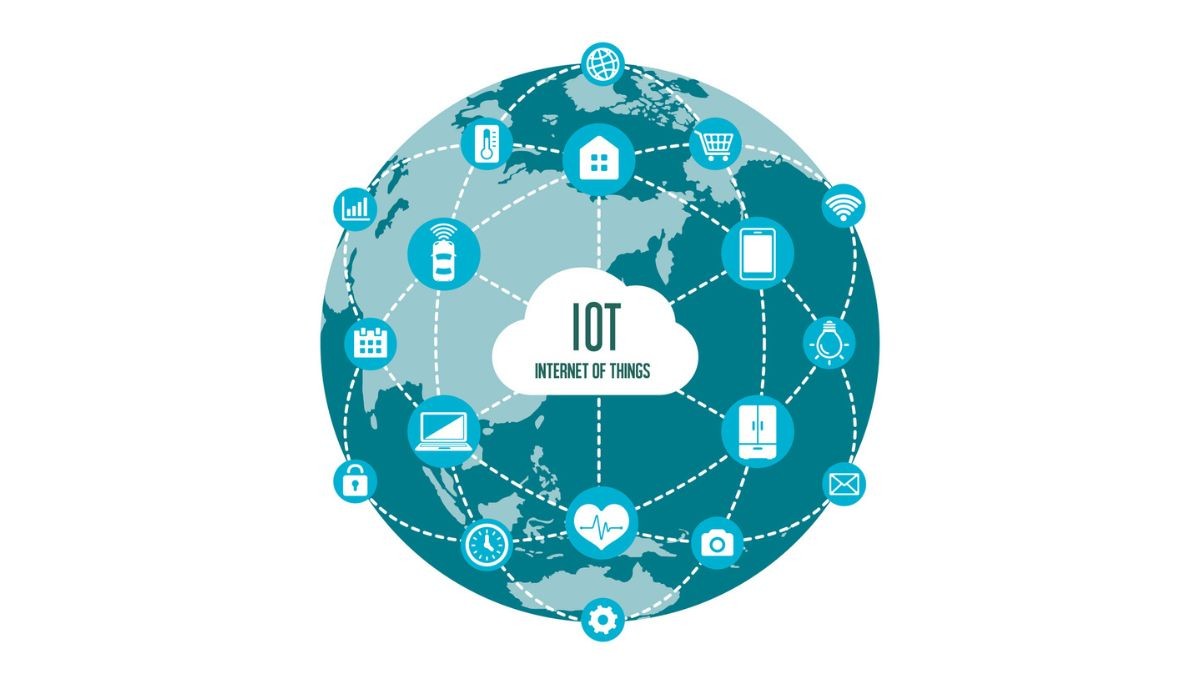
The Internet of Things has moved well beyond buzzword status, and it’s now a core layer of modern operations. In 2026, large-scale connected assets aren’t a “nice to have”; they’re how competitive companies run. Cat Digital manages more than 1.5 million connected machines across Caterpillar’s iconic yellow iron fleet, while Aeris processes data from over 80 million IoT devices worldwide. Meanwhile, Johnson Controls and 75F are turning commercial buildings into intelligent, self-optimizing environments. In this article, we’ll break down what IoT development companies actually do, who the leading players and manufacturers are in 2026, how much IoT development typically costs, how long projects take, and what kinds of engineering teams are required to bring these systems to life.
For most organizations building IoT products, the biggest challenge isn’t the technology, it’s the talent. Even as IoT platforms, connectivity infrastructure, and edge computing continue to mature, hiring engineers who understand embedded systems, cloud architecture, and AI capabilities at the same time remains exceptionally difficult. This is where Fonzi AI becomes valuable. Fonzi helps startups and enterprises quickly assemble the specialized AI and IoT engineering teams required to design, deploy, and scale complex connected systems, often closing hires in under three weeks. For recruiters and engineering leaders navigating the growing demand for IoT expertise, platforms like Fonzi are becoming a critical part of the hiring toolkit.
Key Takeaways
Internet of things development companies fall into two main categories: end-to-end IoT software development partners that build custom solutions and hardware-focused IoT manufacturers that produce devices, gateways, and sensors.
Leading IoT players in 2026 include industrial platforms (GE Vernova, PTC, Samsara), connectivity providers (Cisco, Verizon, Intelsat–SES), and specialized development firms (SumatoSoft, Azilen, Innowise).
Building IoT products at scale requires multidisciplinary teams spanning embedded systems, cloud architecture, AI and machine learning, security, and UX, and this is exactly where hiring bottlenecks appear for most companies.
Talent is the limiting factor: Even with mature platforms and proven architectures, most IoT initiatives stall because organizations can’t hire and onboard the right engineers fast enough.
Fonzi is an AI-native hiring platform that helps startups and enterprises rapidly hire elite AI and IoT engineers in under 3 weeks, while preserving a high-quality candidate experience.
Key Functions of Internet of Things Development Companies
An IoT development company is a partner that designs, builds, and maintains end-to-end IoT solutions spanning hardware, firmware, cloud platforms, and user-facing applications. These firms handle the full development process, from initial concept through production deployment and ongoing support.
Core Capabilities
Device and Sensor Design Development companies work with embedded systems engineers to design the physical devices that collect data. This includes selecting components, designing PCBs, and optimizing for power consumption and durability across various industries.
Embedded Software Development Firmware is the bridge between hardware and the cloud. IoT development firms write the low-level code that runs on devices, handling data collection, local processing, and secure connectivity to backend systems.
Connectivity and Networking Whether it’s cellular, Wi-Fi, LoRa, or satellite, development companies implement the networking protocols that keep devices connected. This includes MQTT for lightweight messaging, CoAP for constrained environments, and integration with platforms like AWS IoT or Azure.
Cloud Platforms and Data Pipelines Most IoT systems require robust cloud infrastructure to ingest, process, and store data from thousands or millions of devices. Development companies build these pipelines using modern software development services and cloud-native architectures.
Analytics and AI The real value of IoT comes from turning data into insights. Development firms implement advanced analytics, predictive maintenance platforms, anomaly detection, and optimization algorithms using artificial intelligence and machine learning.
UX and Mobile/Web Apps End users interact with IoT systems through dashboards, mobile apps, and web interfaces. Development companies handle mobile app development and web development to create intuitive experiences that deliver amazing experiences for operators and consumers alike.
Long-Term Maintenance IoT systems require ongoing updates, security patches, and performance optimization. A reliable partner provides implementation services and support throughout the product lifecycle.

How These Companies Work
The typical engagement follows a structured pattern:
Discovery and Architecture Phase: Understanding business requirements, mapping data flows, and designing system architecture
Proof-of-Concept: Building a working prototype to validate technical assumptions
Pilot Deployment: Rolling out to a limited set of devices or locations
Phased Scale-Up: Expanding to full production with monitoring and security hardening
Industry Examples
Consider an industrial IoT deployment for predictive maintenance in manufacturing. The development company integrates sensors on production equipment, builds data pipelines to the cloud, trains ML models to detect early signs of failure, and creates dashboards for maintenance teams to streamline operations and automate tasks.
In smart agriculture, IoT development firms deploy remote sensing networks that monitor soil conditions, weather, and crop health, enabling farmers to optimize irrigation and reduce waste while contributing to a more sustainable world.
Fleet telematics projects connect vehicles with GPS, cameras, and diagnostic sensors, providing real-time visibility into fleet management across diverse sectors.
Because IoT projects cut across so many technical domains, top development companies maintain cross-functional squads with embedded engineers, cloud architects, data and ML engineers, and product designers working in a collaborative approach.
IoT Manufacturers vs. IoT Development Companies
Understanding the distinction between these two types of companies is essential for making the right partnership decisions.
An IoT manufacturer designs and fabricates physical hardware: devices, gateways, sensors, and modules. Their primary focus is on production scalability, component sourcing, and hardware reliability.
An IoT development company is a services firm that builds custom solutions on top of hardware and connectivity components. They deliver software development, system integration, and end-to-end platforms.
Examples of IoT Manufacturers in 2026
Oura: Produces biometric smart rings that track sleep, activity, and health metrics
Doodle Labs: Manufactures industrial-grade mesh radios and IIoT networking equipment, selected for the Blue UAS program
Arm: Designs embedded chips and architectures that power billions of IoT devices
Semtech: Produces LoRa modules and connectivity solutions for long-range, low-power IoT applications
Luminar Technologies: Builds lidar sensors for autonomous vehicles, having raised $995.5 million across nine funding rounds
Examples of IoT Development Companies in 2026
SumatoSoft: End-to-end custom software development since 2012, covering healthcare, retail, and smart homes
Azilen Technologies: Global AI and product engineering firm building intelligent ecosystems
Innowise: Full-cycle IoT solutions with modern sensors and secure connectivity
PTC (ThingWorx): Industrial IoT platform with extensive integration capabilities
GE Vernova (Predix): Enterprise-grade platform for industrial operations
MobiDev: Custom IoT solutions across industries since 2009
Comparison Table
Attribute | IoT Manufacturers | IoT Development Companies |
Primary Focus | Hardware design and production | Software, integration, and custom solutions |
Typical Deliverables | Devices, sensors, modules, gateways | Platforms, apps, analytics, integrations |
Revenue Model | Hardware sales, licensing | Project fees, retainers, licensing |
Examples | Luminar, Oura, Doodle Labs, Semtech | SumatoSoft, Azilen, Innowise, PTC |
Many enterprises work with both: procuring hardware from specialized manufacturers while engaging expert IoT development partners for integration, software development, and ongoing platform evolution. This approach leverages deep industry expertise from each type of partner.
Top Internet of Things Companies and IoT Manufacturers in 2026
We’ll quickly examine a curated snapshot of influential IoT companies across industrial, connectivity, consumer, and development services segments in 2026. It’s not an exhaustive ranking but rather a practical guide to the players shaping the industry.
The companies are grouped by focus area: industrial IoT and platforms, connectivity and networking, smart home and consumer IoT, and specialist IoT development partners.
Industrial IoT and Enterprise Platforms
These companies build large-scale industrial platforms that orchestrate thousands to millions of connected assets, driving digital transformation across manufacturing, energy, and logistics.
GE Vernova (Predix) GE Vernova’s Predix platform powers industrial operations across energy, aviation, and manufacturing. The platform handles massive data volumes from turbines, jet engines, and factory equipment, enabling predictive maintenance and operational optimization at enterprise scale.
PTC (ThingWorx): ThingWorx is a leading industrial IoT platform that connects devices, sensors, and enterprise systems. PTC’s strong expertise in augmented reality and digital twins makes it a preferred choice for manufacturers seeking to bridge physical and digital operations.
Cat Digital: Caterpillar’s digital and technology arm manages connectivity for over 1.5 million machines globally. Cat Digital provides fleet owners with real-time insights into equipment health, utilization, and maintenance needs across their world-famous yellow iron assets.
Samsara: Samsara delivers connected operations solutions for fleet management, equipment monitoring, and site visibility. Their platform combines hardware, software, and AI to help customers build high-performing solutions for logistics and industrial applications.
Aeris: With over 80 million devices under management, Aeris provides IoT connectivity and platform services for automotive, energy, and enterprise customers. Their technology arm supports mission-critical deployments requiring reliable, scalable connectivity.
Augury: Augury specializes in machine health monitoring using AI and sensor data. Their predictive maintenance platforms help manufacturers detect equipment issues before failures occur, reducing downtime and maintenance costs across industrial operations.
These platforms typically require heavy integration work and advanced data pipelines, making them major consumers of AI and IoT engineering talent.
Connectivity and Networking Specialists
These companies provide the connectivity infrastructure that makes IoT possible: satellite, cellular, fiber, mesh networking, and secure industrial networking.
Intelsat–SES: The newly combined company operates a powerful multi-orbit fleet of satellites with an expansive ground network. They deliver integrated satellite connectivity solutions for aviation, maritime, government, and enterprise IoT applications in remote regions where terrestrial infrastructure doesn’t reach.
Verizon: Verizon’s IoT division provides cellular connectivity, fleet management, and intelligent lighting solutions for municipalities and enterprises. Their network supports millions of connected devices across diverse sectors with carrier-grade reliability.
Cisco: Cisco’s industrial networking portfolio includes ruggedized switches, routers, and edge compute platforms designed for harsh environments. Their IoT security solutions address the unique challenges of protecting connected operational technology.
Doodle Labs: Specializing in industrial-grade mesh networking, Doodle Labs builds radios for robotics, UAVs, and autonomous systems. Their Helix Mesh Rider Radio was selected for the Blue UAS program, demonstrating performance in mission-critical applications for first responders and public safety.
Spectrum and Vero Fiber Networks: These providers deliver fiber-based backbones that support high-bandwidth IoT deployments in smart cities and enterprise campuses. Their infrastructure enables real-time video analytics, autonomous systems, and other bandwidth-intensive applications.
Development companies often build applications on top of these connectivity layers, orchestrating IoT devices via APIs and management platforms.
Smart Home, Wearables, and Consumer IoT
Consumer-facing IoT brands build connected home systems, security solutions, and wearable devices that bring digital technologies into daily life.
Vivint: Vivint delivers whole-home smart security and automation systems professionally installed and monitored. Their platform integrates cameras, sensors, locks, and smart home devices into a unified experience.
Alarm.com: Serving both residential and commercial markets, Alarm.com provides security monitoring plus energy management through a cloud platform used by thousands of service providers. Their professional services support a network of installers and monitoring centers.
SimpliSafe: SimpliSafe pioneered DIY home security with easy-to-install wireless sensors and monitoring. Their approach makes smart home technology accessible without complex installation or long-term contracts.
Chamberlain Group (myQ): myQ transforms garage doors and gates into smart access points. The platform enables remote monitoring and control, integrating with smart home ecosystems and delivery services for bringing digital capabilities to everyday infrastructure.
Oura: Oura’s biometric smart rings track sleep, activity, and health metrics using advanced sensors. The company represents the convergence of IoT, AI, and health technology in a consumer-friendly form factor.
Meta Wearables: Meta’s AI-enabled AR/VR headsets and smart glasses represent how IoT, AI, and ambient computing are converging. These devices combine computer vision, spatial computing, and connectivity to create new interaction paradigms.
The data volume and privacy considerations in consumer IoT increase demand for security-minded software, firmware, and AI engineers who can build trustworthy systems.
Specialized IoT Development Partners
These pure development and consulting firms help clients design, prototype, and ship IoT products across industries.
SumatoSoft: Founded in 2012, SumatoSoft has earned 100% positive Clutch reviews for complex IoT integrations. They specialize in healthcare, retail, manufacturing, and automotive, offering end-to-end custom software development from MVP to enterprise deployment. Typical project rates range from $50-$99/hour.
Azilen Technologies: A global AI and product engineering firm, Azilen crafts IoT solutions for startups, ISVs, and enterprises across manufacturing, healthcare, logistics, and smart cities. Their focus on intelligent ecosystems combines IoT with AI capabilities for better solutions.
Innowise: Innowise delivers end-to-end IoT solutions, driving digital transformation across industries. They employ modern sensors, secure connectivity, and cloud platforms to streamline operations for enterprise clients.
Relevant Software: With senior teams in software, AI, and data engineering, Relevant Software provides strategic IoT development services beyond basic coding. Their strength in advanced analytics and data pipelines makes them valuable for complex deployments.
Very LLC: Very LLC blends engineering excellence with design thinking to build sophisticated IoT systems focused on business growth. They’re known for bringing digital capabilities to products that require both technical depth and user-centered design.
Infinum: Based in Europe with global reach, Infinum creates innovative digital experiences in finance, healthcare, and automotive. Their cross-functional teams handle mobile app development, embedded software, and backend systems.
MobiDev: Established in 2009, MobiDev delivers industry-spanning custom solutions with strong expertise in healthcare and logistics. They emphasize seamless user experiences and have adapted to emerging demands for 5G-enabled, low-latency systems.
Dogtown Media: Dogtown Media applies design thinking to IoT projects in environmental monitoring and public safety. Their work demonstrates how IoT technology can serve the innovative community focused on making a better world.
Concepter: Specializing in market-ready smart devices, Concepter blends product design, hardware engineering, and software development services for consumer electronics. They’re ideal for startups seeking a rapidly growing company supporting hardware-software integration.
Integra Sources: Integra Sources delivers tailored cutting-edge applications for industrial and consumer IoT. Their technical expertise spans embedded systems, connectivity, and cloud integration for project requirements across diverse sectors.
Many of these firms’ flagship projects, like predictive maintenance platforms and computer-vision-enabled monitoring, depend on sophisticated AI engineering talent that’s difficult to hire through traditional recruiting channels.
IoT Development Costs and Timelines in 2026
IoT project costs and timelines vary dramatically based on scope, ranging from small proofs-of-concept to full industrial rollouts spanning multiple countries and involving warehouse automation, supply chain optimization, and real-time analytics.
Cost Ranges
Based on 2024-2025 market data from leading IoT development firms:
Hourly rates: $25 to $300+, depending on location and expertise level
Small MVPs: $10,000–$25,000 for basic connected device prototypes
Typical PoCs: Around $35,000 for proof-of-concept with limited scope
Full-scale platforms: $250,000–$500,000 or more for production-ready systems with enterprise integrations
Timeline Expectations
Simple solutions (single device type, basic connectivity, minimal analytics): 3–6 months
Medium complexity (multiple device types, cloud platform, dashboards): 6–12 months
Complex industrial IoT (multi-site deployment, compliance requirements, deep integrations): 12–18 months
Project Tier Comparison
Project Tier | Estimated Cost | Typical Duration | Team Composition | Example Use Case |
Proof of Concept | $25,000–$50,000 | 2–3 months | 2–3 engineers, 1 PM | Sensor prototype for equipment monitoring |
MVP | $75,000–$150,000 | 4–6 months | 4–6 engineers, designer, PM | Connected product with mobile app and basic analytics |
Full Production | $250,000–$500,000+ | 9–18 months | 8–15 people across roles | Enterprise IoT platform with AI, integrations, compliance |
One of the biggest drivers of both cost and schedule slippage is the slow hiring and onboarding of the right engineers. Finding embedded specialists, cloud architects, and ML engineers can add months to project timelines before development even begins.
Solving the talent bottleneck can compress these timelines significantly, which is why organizations are increasingly turning to specialized hiring solutions.
What a Modern IoT Team Looks Like (and Why Hiring Is So Hard)
A mature IoT company requires a mix of skills that rarely exists in a single person: hardware, firmware, networking, cloud, data and ML, mobile and web, product, and security. Building this team is one of the hardest challenges in the IoT industry.
Key Roles
Embedded/Firmware Engineers: Write the low-level code running on devices. They understand microcontrollers, real-time operating systems, and hardware interfaces. Demand far exceeds supply.
Hardware Engineers: Design circuits, select components, and manage manufacturing relationships. Critical for any company building physical IoT devices.
DevOps and SRE for IoT: Manage infrastructure that handles millions of device connections. They implement virtualization technologies, container orchestration, and monitoring at scale.
Backend and API Engineers: Build the services that ingest device data, process events, and serve applications. They work with information technology teams to ensure reliability and performance.
Data and ML Engineers: Create the analytics and AI models that extract value from IoT data. They build pipelines for data collection, train models for predictive maintenance, and deploy inference at the edge.
Mobile Developers: Build the apps that operators and consumers use to interact with IoT systems. Cross-platform expertise is increasingly valuable.
UX Designers: Design interfaces for dashboards, mobile apps, and embedded displays. Good UX is essential for adoption and satisfaction.
Security Engineers: Implement secure connectivity, encryption, authentication, and vulnerability management. IoT security is non-negotiable given the risks of connected systems.
Why Assembly Is Hard
The scarcity of senior IoT and AI talent creates brutal competition for engineers. Interview cycles stretch to weeks or months. Inconsistent hiring processes across teams and geographies make scaling nearly impossible.
Consider a fleet management company that needs AI engineers for dash-cam video analysis. Or a manufacturing firm seeking ML engineers for anomaly detection in industrial operations. These aren’t generic software roles; they require specific combinations of skills that are rare in the market.
Traditional recruiting approaches, manual sourcing, generalist recruiters, and unstructured interviews don’t scale when a company needs to hire dozens or hundreds of specialized engineers in a year. The automotive industry, healthcare, and every sector leveraging iot faces this same challenge.
How Fonzi Helps IoT Companies Hire Elite AI Engineers

Fonzi is an AI-native hiring platform built to help startups and enterprises source, evaluate, and hire top-tier AI and software engineers, including the talent needed for advanced IoT initiatives.
How Fonzi Works
Continuous Global Sourcing Fonzi maintains a pipeline of pre-vetted engineers with deep expertise in AI, embedded systems, cloud architecture, and related domains. This eliminates the months typically spent filling the top-of-funnel.
AI-Driven Matching Rather than keyword matching, Fonzi understands each company’s stack, problem domain, and culture to identify engineers who will actually succeed in the role. This goes beyond traditional methods to find better technology talent.
Structured Technical Assessments Calibrated evaluations tailored to AI and systems work ensure consistent, fair hiring decisions. Every candidate goes through the same rigorous process, eliminating the inconsistency that plagues most technical hiring.
Concrete Outcomes
Most hires close within 3 weeks from the first conversation, not months
Scale from your first AI hire to your 10,000th with consistent quality and process
Candidates experience a clear, fair, skills-focused interview flow that helps IoT companies stand out in a competitive talent market
Why This Matters for IoT
Internet of Things companies increasingly need AI engineers for tasks like:
Edge inference on constrained devices
Predictive maintenance models for industrial equipment
Computer vision for cameras, robots, and quality inspection
Anomaly detection in sensor data streams
Optimization of networks, revenue streams, and supply chain operations
Fonzi supports both early-stage startups building their first connected product and large enterprises modernizing legacy fleets with strong financial backing. Flexible engagement models, single hires, pods, or whole teams, adapt to each company’s needs.
The candidate experience matters too. Fonzi’s structured process means candidates receive prompt feedback, role-relevant challenges, and clear expectations. In a market where top engineers have multiple offers, this helps IoT companies attract and close the best talent.
Conclusion
By 2026, IoT is firmly woven into the fabric of industry, cities, and everyday life. From industrial systems to smart buildings and connected homes, successful deployments depend on choosing the right combination of IoT manufacturers, development partners, and internal engineering teams working toward a shared innovation roadmap. For organizations building in this space, the fundamentals are clear: understand the difference between hardware manufacturers and software development firms, plan realistically for IoT costs and timelines, and recognize that specialized engineering talent is often the biggest constraint on progress.
The market offers a wide range of capable partners, from large technology providers like GE Vernova and PTC to specialist development firms such as SumatoSoft and Innowise. But partnerships alone don’t drive outcomes; companies still need high-caliber engineers who can design, deploy, and scale complex IoT systems. Traditional recruiting channels like job boards, agencies, and conferences often struggle to deliver the speed and quality these initiatives demand. That’s where Fonzi AI comes in. Fonzi helps startups and enterprises quickly assemble elite AI and IoT engineering teams, often in weeks instead of months, giving recruiters and technical leaders a faster path to building the talent infrastructure required to succeed in the IoT era.
FAQ
What are the biggest Internet of Things companies in 2026?
What’s the difference between an IoT manufacturer and an IoT development company?
Which IoT companies are hiring the most engineers right now?
What do Internet of Things companies actually build?
How do I get a job at a top IoT company as a developer or engineer?


