5 Best Internship Email Templates & Examples for 2026
By
Liz Fujiwara
•

So, how do you inquire about an internship? The process is straightforward: identify the right contact person, send a concise and tailored email, attach your resume or portfolio, and follow up in seven to ten days if you haven’t heard back. This approach consistently works.
In 2026, AI, ML, and software internships at early-stage startups, AI labs, and infrastructure teams are more competitive than ever. Many of these roles are not formally posted online, and some paid internships can take months to secure, making early outreach and relationship-building strategically important.
Emailing an engineering manager, research lead, or founder directly is often the most effective way to uncover unlisted or custom internship opportunities. This proactive outreach also signals initiative, which employers value highly in the fast-moving AI landscape.
Key Takeaways
You can successfully inquire about unlisted internships by sending targeted emails directly to engineering managers, founders, and research leads, particularly in AI, ML, and software engineering where many roles are never formally posted.
Personalization, clear subject lines, and concise messages under 250 to 300 words significantly increase response rates. This article includes five concrete email templates for 2026 targeting startups, professors, recruiters, alumni, and CTOs or heads of engineering.
Fonzi AI complements cold outreach by connecting experienced engineers with hiring managers during a 48-hour Match Day, using AI-driven tools to reduce bias and accelerate offers while preserving human judgment.
What Is an Internship Inquiry Email (and When Should You Send One)?
An internship inquiry email is a professional message asking about internship opportunities, whether or not a role is currently advertised. It is proactive outreach, not simply applying through a careers page.
This type of email can create opportunities with AI and ML teams, infrastructure groups, and research labs that do not have formal recruiting processes. It is especially useful in the fast-moving AI space, where headcount plans can change quickly.
When should you send one?
The company has no internship listing on its careers page
A posting exists but is vague, and you want more detail about the role
You heard about a potential opportunity informally at a meetup or conference
You want to propose a scoped AI or data project for the summer, such as evaluating model performance or benchmarking LLM prompts
For AI engineers and ML students, inquiry emails are particularly effective at small startups that lack formal internship programs but need help with prototyping, data preparation, or model evaluation. Many startups that now use Fonzi for full-time hiring began their internship programs through direct outreach from motivated candidates and later scaled into more structured hiring through Match Day events.
Step-by-Step: How to Inquire About an Internship via Email

These steps apply whether you’re contacting a recruiter, professor, founder, or alumni working in AI, ML, or software engineering. The principles stay consistent across contexts.
Your email should usually be under 250 to 300 words and focused on one clear ask, such as a 15-minute call or consideration for a specific internship window. Be specific, for example “Summer 2026 MLOps internship” or “June to August 2026 availability for LLM evaluation tooling.”
1. Research the Company, Team, and Contact Person
Before writing, invest time in research. Understanding the company and team strongly affects how your message is received.
Where to research:
Company website and blog for recent announcements
LinkedIn for team structure and individual roles
GitHub organization for open-source projects and technical focus
Recent conference talks (NeurIPS 2025, ICML 2025) for research direction
Product Hunt or tech news for recent launches
Who to target:
Rather than emailing a generic inbox like jobs@company.com, identify a specific person tied to the work you’re interested in. Look for titles such as Head of Machine Learning, Staff Backend Engineer, or Director of Data Science. Verify email formats using the company’s standard pattern, commonly first.last@company.com or first@company.com. Tools like Hunter.io or RocketReach can help confirm addresses.
Include one concrete detail per email. Reference an open-source repository, a recent feature launch, or a technical blog post. This signals genuine interest rather than mass outreach.
2. Write a Clear, Specific Subject Line
Your subject line determines whether your email gets opened. A vague subject like “Opportunity” or “Hello” will likely get ignored.
Best practices:
Keep it to 6–10 words
Include your intent plus timeline
Add one credibility marker where possible
Be specific enough to be forwarded internally
Strong subject line examples:
“Summer 2026 ML Internship Inquiry – UC Berkeley CS”
“Internship Inquiry – LLM Infra, June–Aug 2026”
“Data Engineering Internship Interest – Referral from Dr. Lee”
“Exploring AI Research Internship – Stanford MS Student”
Avoid generic subject lines that don’t clearly signal your purpose. Concise, descriptive subjects also help when recruiters forward your email to engineering managers, allowing them to quickly understand what you are asking for.
3. Open with a Professional Greeting
Your professional greeting sets the tone for everything that follows. The right choice depends on context and relationship.
For professors and formal contexts:
“Dear Dr. [Last Name],” or “Dear Professor [Last Name],”
For recruiters:
“Dear Ms. [Last Name],” or “Dear Mr. [Last Name],”
For startup founders and engineering leaders:
“Hi [First Name],” is often acceptable and feels less stiff
Research pronouns and titles on LinkedIn or the company website when possible. Avoid “To Whom It May Concern” unless absolutely no other option exists.
4. Introduce Yourself and Your Focus Area
Keep your brief introduction to 2–3 sentences. Cover who you are, what you study, and what you specialize in.
Include:
Your year and institution (“third-year Computer Science student at ETH Zurich”)
1–2 relevant achievements or project highlights
Any mutual connection (referenced early)
Example opening: “I’m a second-year CS student at Carnegie Mellon focusing on LLM infrastructure and retrieval systems. Last semester, I built a retrieval-augmented chatbot using the OpenAI API and Postgres that handles 500+ queries daily for my university’s career center.”
If a friend, family member, professor, or conference contact referred you, mention it immediately. For example: “Dr. Park suggested I reach out to you regarding AI research internships this summer.”
Explain why you are emailing them specifically by referencing their work on vision-language models or a recent blog post on GPU inference optimization. This helps build rapport and signals genuine interest.
5. Show Why You’re a Fit: Skills, Projects, and Impact
Don’t turn your email into a full resume. Instead, provide 2–3 specific examples that align with the team’s work.
Focus on outcomes and technologies:
“Implemented a transformer-based classifier in PyTorch with 94% accuracy on a custom dataset”
“Deployed a Flask API to AWS handling 10K+ requests daily”
“Reduced inference latency by 20% using ONNX optimization”
“Built internal tooling for data labeling that achieved 95%+ annotation accuracy”
Include one clear link to your GitHub, portfolio, Kaggle, or personal site and label it clearly, for example: “View my ML projects here: github.com/yourname.” Avoid vague descriptors like “hardworking” or “passionate about AI.” Focus on showing, not telling. Fonzi’s candidate profiles for experienced engineers follow the same pattern: concise impact bullets paired with links to actual work, which is what hiring managers expect, even from interns.
6. Be Specific About the Internship You’re Seeking
Clarity about timing helps recipients quickly decide if a fit exists. Don’t make them guess.
State clearly:
Exact availability: “May 25–August 30, 2026, full-time”
Work arrangement preferences: “remote, 15–20 hours/week during Fall 2026 semester”
Location constraints: “on-site in New York,” “remote-only,” or “hybrid in London”
Work authorization if relevant
If no formal internship program exists, propose a specific project, for example: “I’d be interested in helping instrument evaluation pipelines, build internal dashboards, or benchmark LLM prompts for support ticket classification.”
7. Make a Direct, Low-Friction Ask
Your email should build toward one clear, reasonable next step.
Good asks:
“Would you be open to a 15-minute call next week to discuss whether a Summer 2026 ML internship on your team could be a fit?”
“If your team has openings for Summer 2026 interns, I’d love to be considered.”
“I’d welcome a quick phone call at your convenience to learn more about potential opportunities.”
A quick call request is more likely to be accepted than asking for an immediate offer decision. Low-friction asks get higher response rates.
Avoid stacking multiple requests in one email. One ask per message keeps things clear.
8. Attach Your Resume and Add Links Thoughtfully
Always attach a short, tailored resume (1 page) for technical roles, along with relevant links.
Best practices:
Name files clearly: “Lena_Kim_Resume_2026.pdf”
Mention the attachment in the email body
Include 1–2 key links: GitHub, LinkedIn, personal portfolio
For AI/ML interns, mention public notebooks or repos with models and experiments
Many companies use applicant tracking systems and AI screeners. Clean formatting and descriptive filenames help reduce parsing errors and ensure your materials are reviewed correctly.
Include in your email signature your full name, school, expected graduation, and one or two relevant links.
9. Proofread, Send, and Follow Up Professionally
A final review can significantly improve your response rate and help you avoid careless mistakes.
Before sending:
Read the email aloud for flow and clarity
Use tools like Grammarly for grammar checks
Double-check the recipient’s name, company name, and any pasted URLs
Verify your attachment is actually attached
Following up:
Send a polite follow-up email after about a week (7–10 days) if you haven’t heard back. Keep it to 3–4 sentences:
“Hi [Name], I wanted to follow up on my email from last week regarding Summer 2026 internship opportunities with your ML team. I remain very interested in contributing to [specific project/area]. Please let me know if you’d be open to a quick phone call at your convenience. Thank you for your time.”
Limit follow-ups to two attempts per contact. If there is no reply, move on to other teams or companies. Persistence with professionalism is key, similar to how candidates engage with multiple high-signal interactions during Fonzi’s Match Day without over-messaging any single employer.
5 Best Internship Inquiry Email Templates & Examples for 2026

The following templates cover the most common scenarios: cold emailing a startup, reaching out to professors, contacting recruiters, networking with alumni, and approaching senior technical leaders.
Each template is a complete, polished message with subject line, body, and sign-off, tailored for AI, ML, data, or engineering internships for Summer 2026. Customize details such as names, dates, projects, and technologies to reflect your actual experience and target companies.
Template 1: Cold Email to an AI Startup (No Posted Internships)
Subject: Summer 2026 ML Internship Inquiry – Interest in AgentStack’s LLM Agents
Hi Sarah,
I’m a third-year Computer Science student at UC San Diego, and I’ve been following AgentStack’s work on autonomous LLM agents since you open-sourced your orchestration framework last fall. The architecture decisions in your agent-memory module particularly caught my attention.
I’m reaching out to explore whether you would consider hosting an ML intern for Summer 2026 (June 2–August 22). Here’s what I could contribute:
Built a RAG pipeline using LangChain and Pinecone that handles 2,000+ daily queries for a campus research portal
Fine-tuned Llama 2 models for domain-specific summarization, improving ROUGE scores by 15%
Contributed documentation improvements to two popular vector database libraries
I’d love to work on a scoped project, whether that is improving your agent evaluation framework, building internal tooling, or supporting production deployments.
Would you be open to a 15-minute call to discuss whether there might be a fit? I’ve attached my resume, and you can view my projects at github.com/alexchen-ml.
Best regards,
Alex Chen
UC San Diego, Computer Science ‘26
github.com/alexchen-ml | linkedin.com/in/alexchen-ml
Template 2: Email to a Professor or Research Lab
Subject: Inquiry: Summer 2026 Undergraduate Research Internship in Vision-Language Models Lab
Dear Professor Martinez,
I’m a second-year Computer Science student at Georgia Tech, and I recently read your CVPR 2025 paper on compositional reasoning in vision-language models. Your approach to disentangling visual and linguistic representations aligns closely with the research direction I’m pursuing in my coursework.
I’m writing to inquire about potential summer research internship opportunities in your lab for 2026. I would be available full-time from May 20 to August 31.
My relevant experience includes:
Implementing CLIP fine-tuning experiments for a class project, achieving an 8% improvement on a custom image classification benchmark
Building a multimodal search engine prototype using OpenAI embeddings and FAISS
Completing a previous internship at a computer vision startup, working on data augmentation pipelines
I’m particularly interested in contributing to experiments, building data pipelines, or implementing baseline models for your ongoing projects, and I would also be happy to assist with literature reviews or code documentation.
Would you have any openings for undergraduate researchers this summer, or could you point me toward other labs doing related work? I’ve attached my resume and unofficial transcript for your reference.
Thank you for your time and consideration.
Sincerely,
Jordan Williams
Georgia Institute of Technology, CS ‘27
jwilliams@gatech.edu | github.com/jordanwilliams
Template 3: Email to a Recruiter at a Large Tech or AI Company
Subject: Application Question: Summer 2026 ML Engineering Internship – Maya Patel (Job ID: ML-INT-2026)
Dear Ms. Rodriguez,
I’m writing regarding the Summer 2026 Machine Learning Engineering Internship posted on your careers page (Job ID: ML-INT-2026). I’m a senior-year Computer Science student at the University of Michigan, graduating in December 2026.
I submitted my application through the portal last week and had one question: does this internship support candidates on F-1 OPT status? I am an international student with work authorization through my university’s CPT program for the summer.
Here’s a brief overview of my background:
Previous internship at a Series B fintech company building fraud detection models in Python and Scikit-learn
Won second place at TreeHacks 2025 for an ML-powered accessibility tool
Contributed three merged PRs to TensorFlow’s data validation library
I’ve attached my resume for additional context. Your team’s work on responsible AI development and bias mitigation strongly resonates with me, and I believe companies that use AI responsibly in hiring create better candidate experiences for everyone.
Thank you for your time, and I look forward to any guidance you can provide.
Best regards,
Maya Patel
University of Michigan, CS ‘26
mayapatel@umich.edu | linkedin.com/in/mayapatel
Template 4: Email to an Alum Working in Your Target Team
Subject: Fellow Stanford CS Student Seeking Advice on Summer 2026 AI Internships
Hi David,
I hope this message finds you well. I’m a second-year CS student at Stanford and found your profile through our alumni network. I noticed you’re currently a Senior ML Engineer at Anthropic. Congratulations on the role!
I’m reaching out to ask for your advice on pursuing AI internships for Summer 2026. I’m particularly interested in teams focused on LLM evaluation, safety research, or infrastructure.
A bit about my background:
Currently working on a research project with Professor Chen on prompt injection detection
Built side projects, including an LLM-powered code review bot that has gained some traction on GitHub
Strong foundation in Python, PyTorch, and distributed systems through coursework
I understand your time is valuable, so I’m not directly asking for a referral. I would simply appreciate any advice on positioning myself for roles at companies like yours, and if you’re open to it, I would love a 15–20 minute call to learn from your experience.
I’ve attached my resume for context, but please don’t feel obligated to review it. Any guidance you can share, even just pointing me toward resources or people to follow, would be greatly appreciated.
Thank you for considering this. I’m grateful regardless of whether you’re able to provide a referral.
Best,
Kevin Liu
Stanford University, CS ‘27
kevinliu@stanford.edu | github.com/kevinliu-ml
Template 5: Email to a CTO or Head of Engineering Asking About Unlisted Internships
Subject: Exploring Summer 2026 Data/ML Internship Opportunities – Rachel Torres, MIT
Hi Marcus,
I know your inbox is busy, so I’ll keep this brief.
I’m a junior at MIT studying Computer Science with a focus on machine learning systems. I’ve been following Nexus AI’s work on production ML infrastructure, particularly your recent blog post on reducing model serving costs at scale.
I’m exploring Summer 2026 internship opportunities and wanted to ask whether Nexus has historically hosted interns or if you would consider a scoped project for the summer.
Relevant experience:
Built and deployed an ML recommendation system that reached 1,200+ monthly active users
Contributed to MLflow’s model registry module with two merged PRs
Designed CI/CD pipelines for ML model validation at a previous startup internship
I’m available June 1 to August 25, 2026, and open to on-site work in San Francisco or remote work. If there is even a small project where an intern could add value, such as building internal tooling, benchmarking inference performance, or supporting data pipeline work, I would be excited to discuss it.
Would you have 15 minutes for a quick call at your convenience?
Thank you for your time.
Rachel Torres
MIT, Computer Science ‘26
rtorres@mit.edu | github.com/racheltorres | racheltorres.dev
How AI Is Changing Internship and Early-Career Hiring
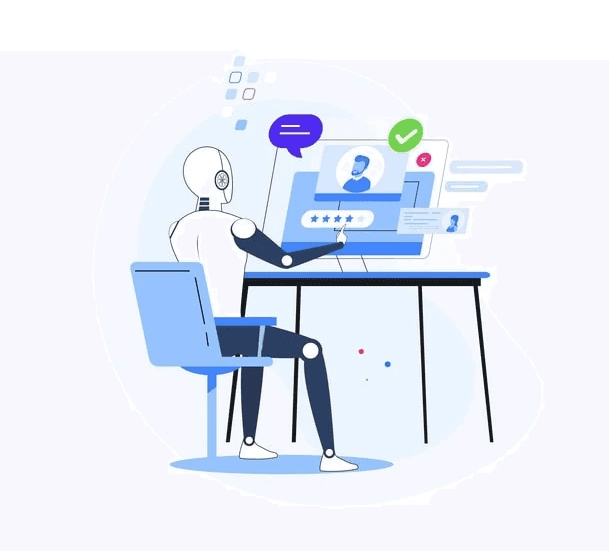
AI tools are now deeply embedded in resume screening, job matching, and interview scheduling for internships and junior roles. Understanding how these systems work can help you position yourself effectively.
The upside: AI enables faster review times and matching based on actual skills and portfolios rather than just credentials. Well-structured resumes with clear keywords and quantifiable achievements are more likely to be seen by human reviewers.
The risk: Poorly tuned filters can overlook non-traditional candidates, those from less well-known schools, or people with unconventional career paths. Generic applications may be filtered out before a human ever sees them.
To optimize for AI screening, include keywords that match the skills listed in job descriptions, such as Python, PyTorch, Kubernetes, and React, along with quantifiable impact statements and portfolio links. Clean formatting matters, so avoid complex layouts that confuse resume parsers.
How Fonzi AI Works (and Why It Matters Once You Move Beyond Internships)
Fonzi AI is a curated marketplace for experienced engineers, including AI, ML, full-stack, backend, frontend, and data specialists, rather than a generic job board. While you may currently be focused on internships, the same companies that host interns often later use Fonzi to hire full-time ML engineers, infrastructure specialists, and LLM experts.
How Fonzi works:
Pre-vets candidates and collects structured skill data
Runs “Match Day” hiring events where candidates and companies connect in a 48-hour window
Requires salary transparency from day one; companies commit to compensation upfront
Provides concierge recruiter support and handles interview logistics
Uses bias-audited AI for fraud detection and evaluation standardization
The AI tools Fonzi employs allow recruiters and hiring managers to focus on real conversations rather than administrative tasks. Human judgment remains central to hiring decisions.
Think of internships as the first chapter in a longer technical career. Being on platforms like Fonzi later can dramatically accelerate full-time job searches once you have three or more years of experience and a portfolio of shipped work.
Comparing Your Options: Cold Emails, Job Boards, and Fonzi
Different approaches work better at different career stages. Here’s how the main options compare:
Path | Best For | Pros | Limitations |
Cold Internship Emails | Interns, students, early-career | Creates opportunities at unlisted roles; shows initiative; highly personalized | Time-intensive; variable response rates; requires research |
Generic Job Boards | All experience levels | Wide selection; easy to apply | Low signal; high competition; limited transparency |
Fonzi AI (Match Day) | Engineers with 3+ years experience | Pre-vetted matches; salary transparency; 48-hour decision cycles | Requires demonstrated experience; focused on full-time roles |
For internships, cold emailing remains one of the most effective tools. It allows you to build relationships and demonstrate initiative in ways that job boards cannot replicate. As you gain experience and expand your portfolio, structured platforms like Fonzi become increasingly valuable. Match Day typically results in interview requests or offers within 48 hours for senior candidates.
The most effective approach is to combine cold email outreach for internships now and then transition to high-signal platforms like Fonzi for full-time searches once you have accumulated relevant experience.
Preparing Before You Hit Send: Resume, Portfolio, and Online Presence

Before you send any internship inquiry email, make sure your materials are ready for review.
Your resume should:
Be one page, clearly formatted, with no fancy graphics that break ATS parsing
Prioritize 2–3 projects that align with the internships you’re seeking (NLP, recommender systems, distributed systems, or frontend apps)
Include quantifiable impact wherever possible: “reduced response latency by 30%,” “reached 500 monthly active users,” “achieved 0.90+ F1 on classification task”
Your online presence should include:
A clean GitHub profile with pinned repositories showcasing your best work
A LinkedIn profile with a professional photo and complete experience section
Optionally, a personal portfolio site with project descriptions and demos
Include volunteer work, course projects, or personal experiments if you lack formal internship experience. The key is showing that you can build real projects.
These same principles guide Fonzi’s candidate profiles: clear skills, impact bullets, and verifiable links. This is what hiring managers expect, even from interns seeking their first internship.
Following Up and Managing Responses
Tracking your outreach helps you stay organized and professional as you scale your internship search.
Create a simple tracking system with columns for:
Company name
Contact person
Date sent
Follow-up date
Response status
Next steps
How to handle common responses:
Response Type | What to Do |
Interest but no current headcount | Thank them, ask to stay in touch, follow up in 3-4 months |
Request to apply via portal | Apply promptly, reference your email conversation in the application |
Delayed timelines | Express continued interest, set a reminder to check back |
Initial enthusiasm then silence | Send one gentle follow-up, then move on |
Direct rejection | Thank them graciously, ask if they know other teams hiring |
Stay polite in all communication. Thank people even when they decline. Relationships can later turn into full-time opportunities, referrals, or introductions to curated platforms like Fonzi.
Conclusion
A well-crafted internship inquiry email can open doors that never appear on job boards. In the competitive AI, ML, data, and engineering landscape of 2026, proactive outreach sets candidates apart.
Use a clear subject line, concise intro, proof of skills, specific availability, a direct ask, and a polite follow-up. Each part shows initiative that hiring managers value.
Even a “no” can lead to mentorship, advice, or future opportunities. Draft one personalized message today, research a company that excites you, and use the templates above. As you gain experience, consider a Fonzi profile to reach AI-first companies through Match Day events.
FAQ
How do I write a professional email to inquire about an internship that isn’t listed online?
What should I include in the subject line of an internship inquiry email to increase open rates?
Is it better to email a recruiter or a specific department manager when asking about internship opportunities?
How long should an internship interest email be, and should I attach my resume or a link to my portfolio?
How do I follow up on an internship inquiry email without sounding unprofessional or pushy?


