New Product Development Process: 7 Stages From Idea to Launch
By
Ethan Fahey
•

Picture this: it’s Q1 2025 and a well-funded AI fintech startup just missed its launch window again. They had capital, vision, and momentum, but skipped early validation and spent months building features customers didn’t want. When they finally realized they needed senior ML engineers to course-correct, traditional recruiting dragged on for another four months. By the time the right talent was in place, faster competitors had already captured the market. This scenario is increasingly common as product cycles compress and AI raises both the stakes and the complexity of building something new.
That’s why modern new product development relies on a structured, seven-stage process that validates desirability, feasibility, and viability before teams overinvest. The real bottleneck today isn’t ideas or funding, it’s assembling elite AI engineering teams fast enough to keep up. Traditional hiring simply isn’t built for that reality. Fonzi changes the equation by helping companies hire top-tier AI engineers in weeks, not months, without sacrificing quality or candidate experience. For recruiters and AI leaders, that turns talent from the biggest risk in NPD into a repeatable competitive advantage.
Key Takeaways
Modern product development follows a seven-stage, research-driven path from idea to launch, typically taking 3–18 months depending on product complexity.
Each stage validates desirability, feasibility, and viability early, reducing the risk of investing in products users don’t want.
Fonzi helps teams move faster by connecting them with elite AI engineers, often shortening hiring timelines to under 3 weeks instead of the usual 3–6 months.
The platform supports both startups and large enterprises, balancing speed with a strong candidate experience and consistent quality.
New Product Development vs. Product Management vs. Hiring AI Talent

New product development (NPD) represents the end-to-end process of turning a validated idea into a launched product, encompassing research, design, engineering, testing, and market introduction. Product management is the discipline that owns and orchestrates this process, focusing on strategy, prioritization, roadmap planning, and cross-functional leadership.
Key distinctions include:
NPD activities: Market research, concept testing, prototyping, development, validation, launch execution
Product management functions: Strategic vision, feature prioritization, stakeholder alignment, roadmap communication, success measurement
In AI-heavy products, the hiring process for data scientists, ML engineers, and LLM specialists becomes a critical dependency in NPD timelines. Unlike traditional software development, where engineering roles are relatively standardized, AI positions require highly specialized skills that vary significantly by use case, from computer vision experts to prompt engineering specialists to MLOps infrastructure engineers.
Fonzi addresses this complexity as an assessment-led AI hiring platform that pre-vets candidates through real-world projects, enabling founders, CTOs, and hiring managers to plug elite AI talent into the NPD process without running months-long recruitment marathons. Instead of posting generic job descriptions and hoping for the best, teams can define specific AI role requirements and receive pre-evaluated candidates who’ve already demonstrated relevant capabilities.
The remainder of this article assumes a cross-functional NPD team spanning product, design, engineering, AI/ML, and marketing functions, with Fonzi serving as the engine to consistently staff the AI components at scale.
The 7 Stages of the New Product Development Process
This article follows a proven seven-stage NPD model: idea generation, idea screening, concept development and testing, marketing strategy and business analysis, product development, test marketing, and product launch. While real teams often iterate between stages, especially in agile environments, treating them as distinct checkpoints helps manage risk and align stakeholders around clear objectives.
AI products, from recommendation engines to generative assistants to fraud detection systems, follow these same fundamental stages but require specialized expertise throughout. A consumer chatbot needs NLP engineers during development, while a computer vision startup requires different specialists entirely. The challenge isn’t just finding AI talent, it’s finding the right AI talent fast enough to maintain NPD momentum.
Successful NPD depends as much on assembling the right capabilities as on following the right process. Teams that treat AI hiring as an afterthought consistently miss launch windows and compromise on technical quality.
Stage 1: Idea Generation – Finding Problems Worth Solving
Idea generation in 2025 is driven by systematic customer research, market data analysis, and technology trend monitoring rather than isolated brainstorming sessions. Successful product ideas emerge from the intersection of real user problems, technological feasibility, and business opportunity.
Primary inputs for systematic ideation include:
Customer research: Direct interviews, support ticket analysis, user behavior analytics from tools like Mixpanel or Amplitude
Market intelligence: Competitor feature audits, industry reports, regulatory trend analysis
Technology monitoring: AI capability advances, API releases, open-source model developments
Internal insights: Sales team feedback, customer success patterns, engineering bottleneck identification
AI itself creates unique ideation opportunities by identifying processes ripe for automation or personalization. For example, analyzing customer service transcripts might reveal common questions that could be handled by an intelligent assistant, or reviewing sales data might uncover patterns suitable for predictive modeling.
Consider this scenario: A European e-commerce startup in 2024 analyzed cart abandonment data and discovered that 40% of customers abandoned purchases when uncertain about sizing. Customer interviews revealed frustration with inconsistent size charts across brands. This insight sparked the idea for an AI sizing assistant that would analyze product photos, customer measurements, and historical fit data to provide personalized size recommendations.
During idea generation, founders often realize they’ll need specialized AI expertise to validate technical feasibility quickly. Traditional recruiting processes would mean waiting 6-12 weeks just to start exploring whether an idea is technically sound. Fonzi enables teams to surface pre-vetted AI engineers within days, allowing rapid feasibility assessment during the crucial early stages when direction can still be easily adjusted.
Key outputs from Stage 1:
Validated problem statements tied to quantified customer pain
Technology trend analysis relevant to potential solutions
Initial AI capability requirements and feasibility assessment
Prioritized idea backlog ready for systematic screening
Stage 2: Idea Screening – Selecting the Opportunities That Deserve Investment
Idea screening filters numerous raw ideas down to a focused shortlist using structured criteria, preventing teams from chasing every interesting possibility. This stage requires disciplined evaluation to avoid the “shiny object syndrome” that derails many product initiatives.
Effective screening frameworks include:
RICE scoring: Reach (how many users), Impact (effect on key metrics), Confidence (evidence quality), Effort (development cost)
Feasibility matrices: Technical complexity vs. market opportunity, with explicit AI readiness assessment
Strategic fit analysis: Alignment with company vision, available resources, and competitive positioning
For AI products, screening must explicitly evaluate data availability, model feasibility, safety considerations, and required skill sets. A chatbot concept might score high on market opportunity, but require extensive NLP expertise that’s difficult to hire. Conversely, a recommendation engine might leverage readily available collaborative filtering techniques with standard ML engineering capabilities.
Example evaluation: A 2025 customer support chatbot concept scores well across multiple dimensions—large addressable market, clear value proposition, growing demand. However, screening reveals significant complexity around multi-language support, integration with existing ticketing systems, and the need for specialized conversational AI expertise. The team estimates requiring 2-3 senior NLP engineers plus MLOps infrastructure specialists.
This is where Fonzi’s value becomes apparent during the screening itself. Rather than making hiring assumptions, teams can engage Fonzi to understand what AI talent is realistically available, at what cost, and within what timeframe. These insights feed directly into the screening criteria, ensuring technical feasibility considers actual talent market conditions rather than wishful thinking.
Critical screening questions for AI products
What data exists to train/validate the proposed models?
Which AI capabilities are needed vs. available in the current team?
What are the ongoing operational costs (compute, monitoring, retraining)?
How quickly can we acquire necessary AI expertise through Fonzi’s network?
Teams that screen rigorously at this stage avoid the common trap of committing to concepts that sound great but prove impossible to staff or execute within realistic constraints.
Stage 3: Concept Development and Testing – Turning Ideas into Testable Propositions
Concept development transforms promising screened ideas into concrete value propositions, feature specifications, and user experiences that can be tested with real people. This stage bridges the gap between abstract opportunity and specific product vision.

Core concept development activities
Product definition: Clear value proposition, target user personas, core feature set, and user journey mapping
Technical architecture: Basic system design, AI model selection, data pipeline requirements, infrastructure needs
Experience design: Wireframes, user flows, interaction patterns, and early visual concepts
Resource estimation: Development timeline, team requirements, technology costs, including AI infrastructure
For AI-powered products, concept development requires balancing user needs with technical constraints. A personalized learning platform concept might envision sophisticated adaptive algorithms, but initial research might reveal that simpler collaborative filtering provides 80% of the value with 20% of the complexity.
Real-world example: A B2B SaaS startup developing an AI code review assistant spent Stage 3 defining their concept with 15 CTOs across New York, London, and Berlin in Q1 2025. Initial interviews revealed that while comprehensive bug detection was desirable, teams were most frustrated with inconsistent style enforcement and security vulnerability detection. This insight focused the concept on specific, high-value use cases rather than attempting to replicate human code review entirely.
The concept testing process involved creating interactive Figma prototypes showing the AI assistant integrated into popular IDEs, with mock suggestions and explanations. CTOs could click through realistic scenarios, providing feedback on workflow integration, alert prioritization, and explanation clarity.
This stage often reveals the need for senior AI engineers who can validate architectural decisions and model choices before significant development investment. Fonzi’s project-based assessment approach means teams can quickly identify candidates who understand both the technical implementation details and the user experience implications of AI system design.
Key concept development outputs
Detailed product requirements document (PRD) with AI-specific considerations
Interactive prototypes demonstrating core user experiences
Technical architecture overview, including AI model selection rationale
Validated concept ready for business case development
Teams that invest properly in concept development and testing consistently build products users actually want, while those that skip this validation often discover fundamental misalignment after expensive development cycles.
Stage 4: Marketing Strategy and Business Analysis – Proving It Can Be a Business
Even brilliant concepts fail without viable paths to revenue, growth, and sustainability. Marketing strategy and business analysis validate that a technically feasible, user-desired product can also become a profitable business within realistic constraints.
Essential business analysis components
Market segmentation: Defining ideal customer profiles (ICPs), addressable market sizing, and competitive positioning
Revenue model design: Pricing strategy (subscription, usage-based, freemium), unit economics, and growth projections
Go-to-market strategy: Distribution channels, customer acquisition approach, sales vs. product-led growth
Financial modeling: 12-24 month projections including hiring costs, AI infrastructure expenses, and break-even analysis
AI products introduce unique cost structures that must be carefully modeled. Large language model APIs can cost $0.001-$0.10+ per request, depending on complexity, while custom model training might require $10,000-$100,000+ in GPU compute. Ongoing costs for model monitoring, retraining, and infrastructure scaling can significantly impact unit economics.
Consider the hiring timeline impact: Traditional AI recruiting, averaging 3-6 months, means delayed launches and extended burn rates. If a product concept depends on hiring 3 AI engineers at $200K average compensation, slow hiring could cost an additional $150K-$300K in delayed revenue opportunity, not counting extended operational costs.
Fonzi’s typical 3-week hiring timeline can accelerate launch schedules by 1-3 months compared to traditional recruiting, which should be reflected in business analysis projections. Earlier revenue realization and reduced hiring friction create compound benefits in the financial model.
Financial modeling for AI products should include:
Inference costs per user/transaction with usage scaling projections
Model development and retraining expenses (data, compute, talent)
Monitoring and observability infrastructure costs
AI talent acquisition costs and timeline impacts
Teams conducting thorough business analysis at this stage avoid the common trap of building technically impressive products that can’t sustain viable unit economics or achieve reasonable customer acquisition costs.
Stage 5: Product Development – Designing, Building, and Validating the MVP
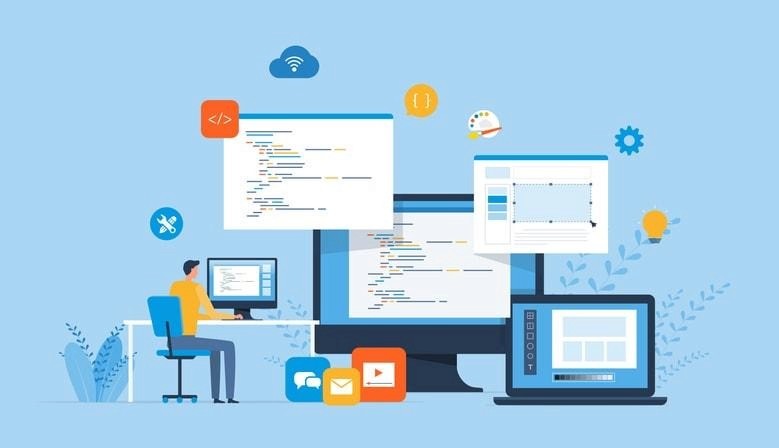
Product development transforms validated concepts into working minimum viable products through collaborative design, engineering, and iteration. Rather than building comprehensive v1 releases, successful teams focus on core value moments that can be quickly validated with real users.
Key development activities
Detailed design: High-fidelity UI/UX, interaction specifications, design system establishment
Technical implementation: Code development, AI model integration, data pipeline construction
MLOps infrastructure: Model deployment, monitoring, evaluation frameworks, and retraining pipelines
Quality assurance: Testing protocols, performance benchmarks, security reviews
The MVP philosophy becomes crucial for AI products where perfect accuracy isn’t immediately achievable. Rather than attempting to solve every edge case, successful teams identify the 80/20 scenarios where their AI provides clear value and iterate from there.
Development considerations for AI products
Model selection: Choosing between off-the-shelf APIs (OpenAI, Anthropic) vs. fine-tuned custom models vs. open-source alternatives
Data strategy: Collection, labeling, privacy compliance, and ongoing quality management
Evaluation frameworks: Defining success metrics, automated testing, human evaluation protocols
Integration patterns: How AI capabilities connect with existing user workflows and business systems
This stage typically requires the most diverse AI expertise, from research scientists who can evaluate model options to MLOps engineers who can build production-ready pipelines. Traditional hiring at this stage creates maximum risk: wrong technical decisions made early become expensive to reverse later.
Fonzi’s assessment approach evaluates candidates using built tasks similar to actual development requirements. Instead of theoretical algorithm questions, candidates might implement retrieval-augmented generation systems, build evaluation harnesses, or design data pipelines, ensuring hired engineers can contribute meaningfully from week one.
Common development stage challenges
Models that perform well in lab environments but fail in production
Underestimating data quality requirements and labeling costs
Inadequate monitoring leading to silent model degradation
Integration complexity between AI components and existing systems
Teams that successfully navigate product development typically emerge with MVPs that demonstrate clear value in constrained scenarios, providing solid foundations for subsequent scaling and enhancement.
Stage 6: Test Marketing – Validating in the Real World Before a Full Launch
Test marketing validates product-market fit, messaging effectiveness, and operational readiness by releasing MVPs to limited audiences before full-scale launch. This stage provides crucial learning opportunities while minimizing exposure if major issues emerge.
Effective test marketing approaches
Closed beta programs: Invite-only access for design partners and early adopters
Geographic limitations: Rolling out to specific regions or markets first
Segment targeting: Focus on particular customer types or use cases initially
Pilot partnerships: Collaborating with select customers for extended evaluation periods
For AI products, test marketing often reveals performance gaps that weren’t apparent during internal development. Real user data distributions differ from training sets, edge cases emerge at scale, and user behavior patterns impact model effectiveness in unexpected ways.
Detailed example: A health-tech startup limited their AI triage tool to three UK hospitals for a 4-month pilot starting in late 2024. The system analyzed patient symptoms and medical history to prioritize emergency department visits. During the pilot, clinicians provided weekly feedback sessions, revealing that while the AI’s medical accuracy was strong, the interface interrupted established workflows and created documentation burdens.
The test marketing period enabled iterative improvements: simplified data entry, better integration with existing hospital systems, and refined alert prioritization. By pilot conclusion, patient wait times had decreased by 23% and clinician satisfaction scores improved significantly.
Critical test marketing metrics for AI products
Functional performance: Model accuracy, response time, system reliability
User experience: Task completion rates, workflow integration, satisfaction scores
Operational metrics: Support ticket volume, error rates, infrastructure stability
Business indicators: Retention, engagement, early revenue signals
Test marketing frequently reveals the need for additional engineering capacity to address performance issues or enhance key features discovered through user feedback. Traditional hiring at this stage creates urgency, and risk teams need specific expertise quickly to capitalize on learning momentum.
Fonzi’s vetted network enables rapid team scaling during test marketing. Whether teams need evaluation specialists to improve model performance or infrastructure engineers to handle scaling challenges, pre-assessed candidates can be engaged within weeks rather than restarting lengthy hiring processes.
Test marketing success indicators
Users voluntarily adopting the product into regular workflows
Positive feedback themes outweighing negative concerns
Clear paths to addressing identified improvement areas
Sustainable unit economics at pilot scale
Stage 7: Product Launch – Scaling From Pilot to Market
Product launch represents coordinated execution across all functions, not merely deploying code to production. Successful launches require careful orchestration of product, engineering, marketing, sales, and customer support teams around shared objectives and success metrics.
Comprehensive launch preparation
Infrastructure hardening: Performance optimization, security reviews, monitoring enhancement, capacity planning
Support readiness: Documentation, training materials, escalation procedures, FAQ development
Marketing coordination: Campaign launches, PR coordination, analyst briefings, content publication
Sales enablement: Pitch deck updates, demo environments, pricing finalization, objection handling prep
AI products require additional launch considerations around model reliability, response quality monitoring, and graceful degradation when systems experience high load or unexpected inputs.
Launch example: A June 2025 launch of an AI sales assistant targeting global SMB markets implemented phased regional rollouts coordinated with marketing campaigns. The team used feature flags to gradually increase user access while monitoring model performance and system reliability. Customer support received specialized training on AI explanation techniques, helping users understand and trust the assistant’s recommendations.
The launch timeline included:
Week 1: North American early access (1,000 users)
Week 2: European expansion (5,000 users)
Week 3: APAC rollout (3,000 users)
Week 4: Global availability with automated scaling
AI-specific launch considerations
Model drift detection and alerting systems
Response quality monitoring with human evaluation loops
Explanation and transparency features for user trust
Graceful degradation when AI systems are unavailable
Post-launch often reveals scaling challenges that require rapid team expansion. Success creates demand for new features, additional market segments, or geographic expansion, all requiring specialized AI expertise. Fonzi’s ongoing network access helps teams scale engineering capacity quickly to capitalize on launch momentum without lengthy hiring delays.
Launch success metrics
User acquisition and activation rates meeting projections
System reliability and performance under real-world load
Customer satisfaction and support ticket trends
Revenue realization aligned with business model assumptions
Teams that execute launches well position themselves for sustained growth, while those that stumble often struggle to recover momentum in competitive markets.
Comparison Table: Ad-Hoc vs. Structured NPD (and Where Fonzi Changes the Hiring Curve)
The following table illustrates the compound benefits of combining structured NPD processes with modern AI hiring platforms like Fonzi, compared to traditional ad-hoc approaches.
Dimension | Ad-Hoc NPD & Traditional Hiring | Structured 7-Stage NPD & Traditional Hiring | Structured 7-Stage NPD & Fonzi |
Time-to-hire senior AI engineer | 8-12 weeks | 6-10 weeks | 2-3 weeks |
Time from idea to launch | 12-24 months | 6-12 months | 4-9 months |
Risk of mis-hire | 40-60% | 25-35% | 10-15% |
Candidate experience quality | Poor/inconsistent | Good | Excellent |
Predictability of roadmap | Low | Medium-High | High |
Scalability for multiple teams | Very difficult | Moderate | Easy |
Cost of talent acquisition | High + hidden costs | Medium | Transparent/efficient |
Quality of technical decisions | Variable | Good | Consistently high |
Key insights from the comparison
The biggest compound gains emerge from combining disciplined NPD processes with assessment-led AI hiring. While structured NPD alone improves predictability and reduces waste, adding efficient hiring through Fonzi compresses timelines further while improving technical quality and team satisfaction.
Traditional hiring becomes the limiting factor even in well-structured NPD processes, creating bottlenecks that extend timelines and increase risk. Fonzi’s approach transforms hiring from a constraint into an accelerator, enabling teams to maintain NPD momentum throughout the entire journey.
How Fonzi Works: Hiring Elite AI Engineers in Under 3 Weeks
Fonzi operates as an AI-native hiring platform specifically designed for startup founders, CTOs, and enterprise AI leaders who need consistent access to top-tier talent without sacrificing candidate experience or quality standards.

Core platform mechanics
Global sourcing: Fonzi maintains relationships with experienced AI and ML engineers across major tech markets worldwide
Project-based assessment: Candidates complete standardized, role-relevant projects that mirror real-world work rather than abstract coding challenges
Quality filtering: Only top-performing candidates who demonstrate both technical excellence and communication skills reach client consideration
Streamlined process: Clear expectations, efficient communication, and respect for candidate time throughout the evaluation journey
Typical engagement timeline
Days 1-3: Role definition and requirements clarification with the Fonzi team
Days 4-10: Candidate sourcing, initial screening, and project-based assessment
Days 11-17: Client review of vetted candidates, interviews, and technical discussions
Days 18-21: Offer negotiation, reference checks, and onboarding coordination
Candidate experience advantages
Rather than enduring random brainteasers or biased interview processes, candidates engage with fair, role-relevant evaluations that showcase their actual capabilities. Clear feedback, transparent timelines, and respectful communication lead to higher engagement rates and better acceptance ratios, which are crucial factors when competing for scarce AI talent.
Scalability across organization sizes
Fonzi supports both ends of the spectrum: helping 2-person founding teams in emerging markets make their first AI hire in 2025, while also enabling large enterprises to staff dozens of AI roles across multiple regions with consistent evaluation standards and quality outcomes.
The platform maintains the same rigorous assessment methodology whether hiring the first engineer or the thousandth, ensuring consistent quality and cultural fit as teams scale rapidly.
Implementing the 7-Stage NPD Process in Your Organization
Most teams already have partial NPD processes; the goal is to formalize and improve existing practices rather than starting from scratch. Successful implementation focuses on identifying current gaps and systematically addressing them over 30-90 day periods.
Implementation steps
Process mapping: Document current workflows and identify which NPD stages exist vs. missing components
Gap analysis: Highlight areas where validation is skipped, decisions are ad-hoc, or handoffs create friction
Template development: Create simple, reusable frameworks for each stage (idea briefs, concept documents, launch checklists)
Pilot testing: Apply the structured process to one product initiative before expanding organization-wide
Stage-specific templates to develop
Idea generation: Opportunity brief template with problem description, evidence, and feasibility notes
Concept development: Lean canvas with value proposition, target users, and success metrics
Business analysis: Unit economics model with AI infrastructure costs and hiring timeline impacts
Launch planning: Coordination checklist across product, engineering, marketing, and support functions
AI hiring integration
Rather than treating talent acquisition as a last-minute consideration, plan AI hiring needs across NPD stages. Engage Fonzi as soon as AI capabilities become core to the product roadmap, allowing talent pipeline development parallel to product planning.
30-60-90 day implementation plan
First 30 days: Map current processes, identify templates needed, select pilot product initiative
Next 30 days: Implement structured NPD for pilot project, document learnings, refine templates
Following 30 days: Expand process to additional product initiatives, establish hiring partnerships, standardize across teams
Teams that invest in structured implementation consistently reduce time-to-market, improve product-market fit rates, and scale more efficiently than those relying on ad-hoc approaches.
Conclusion
In 2025, winning at new product development isn’t about flashes of individual brilliance; it’s about teams that consistently validate ideas and build the right capabilities at every stage. As AI becomes a core source of competitive advantage across industries, the ability to hire and retain elite AI engineers has shifted from a hiring function to a true business strategy. Companies that still rely on slow, traditional recruiting methods often find themselves stuck waiting on talent while faster-moving competitors ship, learn, and iterate.
That’s where Fonzi fits in. Fonzi helps companies hire top-tier AI engineers in weeks, not months, using assessment-led matching that scales from your first critical hire to enterprise-level growth without sacrificing candidate experience. When structured product development is paired with modern AI hiring, teams move faster, make better technical decisions, and execute roadmaps with far more predictability. If you want to keep product momentum high and talent bottlenecks low, having the right AI engineers in place at the right time makes all the difference.
FAQ
What are the stages in the new product development process?
How long does developing a product typically take from idea to launch?
What are the most critical steps in the process of product development?
What are common mistakes in new product development and how to avoid them?
How has technology changed the process of new product development?


