NPD (New Product Development): Process, Roles & Manufacturing Guide
By
Ethan Fahey
•

In 2025, innovation is moving at a relentless pace. From AI-powered hardware and next-gen EV systems to increasingly intelligent SaaS platforms, the companies pulling ahead are the ones that can move from concept to market in months, not years. New product development (NPD) today isn’t about shipping another feature; it’s about systematically turning real market opportunities into viable, scalable products by tightly coordinating customer insight, technical feasibility, and operational constraints.
That speed and coordination hinge on talent, especially in AI-driven products. This is where Fonzi fits naturally into modern NPD: it gives startups and enterprises fast access to vetted AI engineers who can contribute immediately to modeling, automation, and intelligent systems without slowing momentum. For founders, CTOs, recruiters, and AI leaders, mastering NPD frameworks alongside smarter hiring isn’t optional anymore; it’s how you survive and win in a compressed, highly competitive market.
Key Takeaways
NPD is a structured, staged process from idea to launch that differs fundamentally from incremental product updates, requiring systematic gates and cross-functional collaboration
Effective NPD combines comprehensive user research, specialized cross-functional roles (including NPD engineers), and early manufacturing planning to reduce risk and accelerate time-to-market
Fonzi can integrate into any NPD stage by helping startups and enterprises rapidly hire elite AI engineers who design, simulate, and optimize new products and processes
Most AI hiring cycles through Fonzi complete in under 3 weeks, delivering consistent, scalable evaluation with an elevated candidate experience
Modern NPD increasingly relies on AI-driven insights for simulation, optimization, and predictive analytics across the entire product lifecycle
What is New Product Development (NPD)?
New product development (NPD) represents the end-to-end strategic process of creating and commercializing products that are genuinely new to either the company or the market. Unlike routine product updates, bug fixes, or minor feature additions, the NPD process involves substantial uncertainty, technical risk, and significant investment in bringing entirely new concepts to life.
NPD differs fundamentally from standard product lifecycle management through its emphasis on structured decision gates, cross-functional collaboration, and systematic risk mitigation. Where routine development follows established patterns, NPD requires continuous validation of market assumptions, technical feasibility, and business viability at each stage.
Modern NPD encompasses three primary categories: new-to-the-world products (like the first consumer LLM devices emerging in 2024), new-to-the-firm products (such as Tesla’s expansion from premium EVs into mass-market models), and line extensions (like adding AI-powered features to existing SaaS platforms). Each category presents distinct challenges in market research, technical development, and go-to-market strategy.

Since 2020, digital transformation has revolutionized NPD processes through AI-driven simulation, virtual prototyping, and data-informed iteration cycles. Teams now leverage machine learning models for demand forecasting, use digital twins for mechanical testing, and employ rapid prototyping technologies to compress development timelines. These technological advances enable more sophisticated products while reducing traditional R&D costs and timeline risks.
Successful NPD requires careful alignment between company strategy, validated customer needs, and manufacturing feasibility. In today’s competitive landscape, this alignment determines not just growth potential, but organizational survival.
Core Stages of the NPD Product Development Process
The product development process follows a structured sequence of stages with defined decision gates, typically spanning 6-7 major phases. Each gate serves as a checkpoint to verify market desirability, technical feasibility, and economic viability before advancing to more resource-intensive stages.
Modern NPD stages operate iteratively rather than strictly linearly, especially for digital and AI-heavy products where continuous learning loops enable rapid validation and course correction. Development teams frequently cycle between concept testing and refinement, prototype development and user feedback, ensuring market fit throughout the process.
Understanding these stages enables development teams to allocate resources effectively, manage stakeholder expectations, and make informed go/no-go decisions at each gate. The following sections detail each stage with contemporary examples and practical implementation guidance.
Stage 1: Opportunity Identification & User Research
This foundational stage focuses on discovering genuine problems worth solving through systematic user research, market analysis, trend scanning, and competitive intelligence. Rather than beginning with predetermined solutions, successful teams invest heavily in understanding customer pain points, unmet needs, and emerging market dynamics.
Effective opportunity identification employs multiple research methodologies: remote user interviews to understand workflow challenges, in-product analytics to identify usage patterns, social listening tools to monitor customer sentiment, and rapid concept surveys targeting specific user segments. Modern teams also leverage AI-powered sentiment analysis and clustering algorithms to process large volumes of customer feedback systematically.
Skipping thorough opportunity research leads to high failure rates and substantial sunk R&D costs. The consumer wearables market provides numerous examples of products that failed due to unclear value propositions, such as devices with impressive technology but no compelling use case for target users.
AI engineers hired through Fonzi can significantly accelerate this stage by automating data collection processes, building clustering models to identify patterns in customer feedback, and developing predictive models that prioritize opportunities based on market potential and technical feasibility.
Stage 2: Idea Generation & Screening
Once teams understand market opportunities, idea generation transforms insights into concrete product concepts through structured brainstorming sessions, design sprints, cross-functional workshops, and increasingly, AI-assisted ideation tools. Generative models now help teams explore solution variations systematically, expanding creative possibilities beyond traditional brainstorming limitations.
Rigorous idea screening follows generation, using criteria such as total addressable market size, strategic alignment with company capabilities, technical development risk, and manufacturing complexity. Successful teams employ quantitative scoring frameworks, opportunity solution trees, and rapid feasibility assessments to narrow dozens of potential ideas to a manageable shortlist for deeper exploration.
Modern screening processes incorporate early-stage financial modeling, competitive landscape analysis, and preliminary technical risk assessment. Teams often use lightweight tools like opportunity scorecards that weight factors such as market size (TAM/SAM/SOM), competitive intensity, required investment, and strategic fit.
Fonzi’s network of AI specialists can contribute significantly to screening decisions by building quick feasibility models, cost simulations, and demand forecasts that inform quantitative evaluation criteria. These technical capabilities enable more informed decision-making during the critical screening phase.
Stage 3: Concept Development, Prototyping & Testing

This stage converts promising ideas into detailed product concepts with defined value propositions, target user journeys, feature specifications, and preliminary experience designs. Teams develop both conceptual frameworks and tangible prototypes that enable user validation and technical exploration.
Prototyping approaches range from low-fidelity mockups (wireframes, clickable prototypes, 3D-printed conceptual models) to higher-fidelity functional prototypes (working MVPs, alpha hardware builds, integrated software systems). The choice depends on technical complexity, user testing requirements, and available development resources.
Testing methodologies include concept validation studies, prototype usability sessions, A/B testing on landing pages, and technical validation through laboratory testing or simulation. Modern teams often run parallel testing streams: user experience validation, technical performance verification, and early market response assessment.
AI engineers accelerate this stage by building rapid machine learning models, creating simulation environments for complex systems (such as digital twins for mechanical products), and developing automated test harnesses that enable faster iteration cycles. Fonzi’s talent network provides access to specialists who can implement these capabilities quickly.
Stage 4: Business Case & Product Strategy
Business case development transforms validated concepts into robust financial models with detailed pricing strategies, gross margin targets, volume forecasts, distribution channel plans, and comprehensive P&L projections spanning 3-5 years. This stage requires integration of market research, competitive analysis, and operational planning.
Key metrics include target payback periods, internal rate of return thresholds, minimum viable production volumes for manufacturing feasibility, and sensitivity analysis under different market scenarios. Teams must also consider supply chain constraints, regulatory requirements, and competitive response scenarios.
Product strategy development aligns individual NPD projects with broader portfolio objectives, categorizing investments as core business extensions, adjacent market opportunities, or breakthrough innovation bets. This strategic framework guides resource allocation and risk tolerance decisions throughout development.
AI talent sourced through Fonzi can significantly enhance business case quality by building sophisticated demand forecasting models, pricing optimization algorithms, and elasticity simulations that stress-test assumptions under various market conditions. These analytical capabilities provide a more reliable foundation for investment decisions.
Stage 5: Detailed Design, Engineering & NPD Manufacturing Planning
This stage develops comprehensive product specifications, system architectures, and engineering documentation, including CAD files, electronic schematics, software architectures, and API specifications. Parallel manufacturing engineering work includes process design, tooling decisions, production line planning, and quality system development.
Manufacturing planning encompasses Design for Manufacturability (DFM) and Design for Assembly (DFA) principles, ensuring products can be produced efficiently at target costs and quality levels. Teams must consider supplier capabilities, tooling requirements, quality control processes (such as PPAP and FMEA), and supply chain risk management.
Early manufacturing decisions significantly impact product cost, quality, and launch timeline. Teams that integrate manufacturing constraints into design decisions avoid costly late-stage redesigns and production delays that can derail product launches.
AI engineers contribute through predictive quality modeling, yield optimization algorithms, production scheduling optimization, and intelligent monitoring systems for manufacturing processes. Fonzi provides rapid access to specialists who can implement these advanced manufacturing intelligence capabilities.
Stage 6: Validation, Pilot Runs & Market Launch
Final validation encompasses verification testing (confirming products meet specifications), validation testing (ensuring products meet user needs), regulatory compliance verification, and security assessments for software components. This comprehensive validation reduces post-launch risks and ensures market readiness.
Pilot manufacturing runs, limited beta programs, and soft market launches provide real-world performance data, production feedback, and channel readiness metrics. These activities validate manufacturing processes, identify potential quality issues, and test go-to-market assumptions under controlled conditions.
Launch planning coordinates efforts across Product, Marketing, Sales, Customer Support, and Operations teams with clearly defined success metrics, including first-90-day retention rates, Net Promoter Scores, defect rates, and on-time delivery performance. Effective launches require detailed project management and cross-functional alignment.
Machine learning models and analytics systems help monitor early performance metrics, flag anomalies in defect rates or usage patterns, and inform rapid post-launch iterations. Fonzi-sourced AI engineers can own these monitoring and optimization responsibilities, ensuring data-driven launch success.
Roles in NPD: From Product to NPD Engineers to AI Specialists
Modern NPD operates as an inherently cross-functional endeavor, requiring coordination across product management, design, engineering, operations, finance, marketing, and increasingly, data science and AI specialization. Successful products emerge from effective collaboration rather than individual expertise, making team composition and coordination critical success factors.
Core NPD roles include Product Managers who own market requirements and business outcomes, UX/UI Designers who translate user needs into compelling experiences, and various engineering specialists (mechanical, electrical, software) who implement technical solutions. Manufacturing Engineers bridge design and production, while Supply Chain Managers ensure component availability and cost optimization.
The NPD engineer role specifically focuses on translating market requirements into detailed technical specifications, coordinating prototype development, validating manufacturability constraints, and maintaining comprehensive design documentation throughout the development process. These professionals typically require skills in CAD software, systems engineering, project management, and cross-functional communication.

Emerging AI specialist roles include Machine Learning Engineers who build predictive models and optimization algorithms, Data Scientists who analyze user behavior and market trends, and MLOps Engineers who deploy and maintain AI systems in production environments. These roles support simulation, personalization, predictive maintenance, and manufacturing optimization across the NPD lifecycle.
Fonzi evaluates AI engineering candidates through comprehensive work-sample tests, real-world scenario assessments, and technical interviews covering both coding capabilities and system design skills. This rigorous evaluation ensures AI specialists can integrate effectively into NPD teams and contribute immediately to technical objectives.
Comparing NPD Stages, Deliverables & Responsible Roles
Stage | Main Objective | Key Deliverables | Primary Roles |
Opportunity Identification | Discover market problems worth solving | User research reports, market analysis, competitive landscape assessment | Product Manager, UX Researcher, Market Analyst |
Idea Generation & Screening | Generate and filter solution concepts | Scored idea portfolio, feasibility assessments, initial business cases | Product Manager, Design Team, NPD Engineer, AI Specialist |
Concept Development & Testing | Validate product concepts with users | Prototype demos, user test results, refined value propositions | UX/UI Designer, NPD Engineer, Product Manager |
Business Case Development | Establish financial and strategic viability | P&L projections, pricing strategy, go-to-market plan | Product Manager, Finance, Marketing, AI Engineer |
Design & Manufacturing Planning | Create detailed specifications and production plans | CAD files, process FMEA, supplier selection, tooling requirements | NPD Engineer, Manufacturing Engineer, AI Specialist |
Validation & Launch | Ensure market readiness and execute launch | Test reports, pilot run results, launch metrics, quality documentation | QA Lead, Manufacturing Engineer, Marketing, AI Engineer |
NPD Manufacturing: From Prototype to Scalable Production
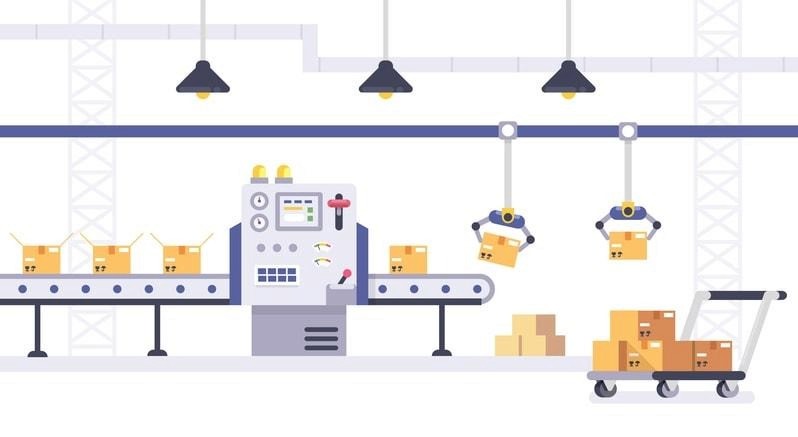
NPD manufacturing differs fundamentally from steady-state production through its emphasis on experimentation, flexibility, and frequent engineering changes. While regular manufacturing optimizes for efficiency and cost in high-volume, standardized production, NPD manufacturing prioritizes learning, validation, and rapid iteration capabilities.
The transition from prototype builds to pilot runs to full-scale production follows a structured progression, including Engineering Validation Tests (EVT), Design Validation Tests (DVT), and Production Validation Tests (PVT) for hardware products. Each phase validates different aspects: functionality, design robustness, and manufacturing process capability, respectively.
Supplier selection and qualification become critical early decisions, as partners must support both low-volume flexibility and eventual high-volume scalability. Teams must consider tooling investments (injection molds, SMT stencils, test fixtures), minimum order quantities that affect component costs, and lead times that impact development schedules in today’s complex supply chain environment.
Key manufacturing metrics for NPD include first-pass yield rates, scrap percentages, cycle times, on-time launch readiness, and early field failure rates. Modern electronics manufacturing typically targets >95% first-pass yield, <2% scrap rates, and <0.5% field failure rates within the first six months post-launch.
AI engineers contribute through production parameter optimization models, predictive equipment maintenance systems, and dynamic production scheduling algorithms that adapt to changing requirements. Fonzi provides rapid access to manufacturing AI specialists without the months-long hiring delays that can derail tight launch schedules.
Why Fonzi Is the Fastest Path to Elite AI Talent for NPD
NPD projects face unique hiring challenges: the need for rare cross-disciplinary AI expertise, compressed development timelines that leave no room for lengthy hiring processes, and the difficulty of consistently evaluating technical capabilities across diverse AI specializations. Traditional hiring approaches often take 3-6 months, far too slow for competitive NPD cycles.
Fonzi addresses these challenges through a specialized platform that sources, screens, and evaluates AI engineering candidates using standardized work-sample challenges and calibrated scoring systems. Rather than relying on resume reviews and generic interviews, Fonzi’s evaluation process focuses on real-world problem-solving capabilities directly relevant to product development and manufacturing optimization use cases.
The Fonzi process delivers remarkable speed: most AI engineering hires close within approximately 3 weeks from initial request. This timeline includes candidate sourcing from vetted talent networks, technical evaluation through domain-specific challenges, structured interviews, and final offer negotiation. This speed enables NPD teams to acquire critical AI capabilities without derailing project schedules.
Fonzi’s platform scales seamlessly from a startup’s first AI hire to hundreds or thousands of specialized engineers in larger enterprises, maintaining consistent evaluation standards and candidate experience quality throughout the scaling process. This scalability proves essential for organizations building substantial AI capabilities across multiple NPD initiatives simultaneously.
Beyond speed and scale, Fonzi preserves and elevates the candidate experience through transparent processes, targeted technical challenges that respect candidates’ time, and high-signal feedback that helps both successful and unsuccessful candidates improve their skills. This elevated experience makes NPD roles more attractive to top-tier AI engineers who value professional treatment and meaningful work opportunities.
Best Practices for Successful NPD from Concept to Market
These practices emerge from analysis of successful product launches across software, hardware, and AI-enabled products between 2018-2024, distilled into actionable guidance for modern NPD teams facing increasingly competitive markets and compressed development cycles.
Align every NPD project with explicit long-term product and portfolio strategy rather than pursuing “random acts of innovation” that don’t support clear revenue and margin objectives. Successful companies treat NPD as strategic investment portfolio management, with clear criteria for core business extensions, adjacent market opportunities, and breakthrough innovation bets.
Integrate Voice of the Customer continuously throughout development through systematic surveys, user interviews, product telemetry analysis, and customer support ticket analysis. Implement disciplined change management processes that incorporate customer feedback while maintaining project scope and timeline discipline.
Start with true minimum viable products (MVPs) or limited-scope launches that validate core value propositions, then layer additional features based on validated learning rather than overcommitting to extensive feature sets that delay market entry and increase development risk.
Establish robust governance through clear decision gates, time-boxed experimentation periods, and regular portfolio reviews that treat NPD investments like venture capital portfolios with explicit kill/go criteria based on market traction, technical progress, and resource requirements.
Build the right team early, including AI specialists through Fonzi, so NPD decisions can be supported by strong technical and analytical capabilities from day one. Teams that wait to add AI expertise often struggle to retrofit intelligent capabilities into products and processes designed without these considerations.
Conclusion
In today’s market, teams that combine structured NPD processes, smart manufacturing planning, and strong cross-functional collaboration ship better products faster and with less risk. That edge matters because modern NPD isn’t just about mechanical design or clean code anymore. AI now plays a central role in everything from market analysis and simulation-driven design to intelligent manufacturing and continuous, data-backed iteration. Companies that lack these capabilities often struggle to keep up as complexity and competition increase.
This is where talent becomes the real differentiator. Pairing proven NPD frameworks with fast access to elite AI engineers through Fonzi gives teams a practical way to execute without bottlenecks. Fonzi helps startups and enterprises alike bring in vetted AI talent quickly, so critical product and manufacturing decisions aren’t delayed by slow hiring cycles. If you’re serious about accelerating NPD while managing risk, aligning your product strategy with a modern AI hiring approach isn’t optional; it’s how the strongest teams stay ahead.
FAQ
What does NPD mean in product development?
What does an NPD engineer do and what skills are required?
How does NPD manufacturing differ from regular production?
What are the key stages in the NPD product development process?
What are best practices for successful NPD from concept to market?


