Management Interview Questions: How to Answer & What Hiring Teams Ask
By
Liz Fujiwara
•

Transitioning from AI engineer to team leader requires more than technical expertise. Hiring teams evaluate leadership candidates on their ability to influence others, balance technical depth with business impact, and guide teams through complex and ethical challenges unique to AI roles.
Modern management interviews use structured frameworks to assess these skills, going beyond informal discussions of leadership style. This article explains what hiring teams look for, outlines answer frameworks tailored to AI engineering roles, and shows how platforms like Fonzi are reshaping leadership interviews.
Key Takeaways
Management interview strategic questions assess leadership style, decision-making, and team dynamics through behavioral questions, with strong candidates using the STAR method to demonstrate real impact, measurable outcomes, and lessons learned.
Hiring teams evaluate both technical management ability and cultural fit by exploring delegation, motivation, diversity practices, and cross-functional collaboration, especially in complex AI-driven environments.
Effective preparation combines structured storytelling with 5–7 well-developed leadership examples, company research, and targeted interview preparation tools such as platforms like Fonzi’s Match Day.
Essential Management Interview Questions with Sample Answers

The most critical management interview questions fall into predictable categories that hiring teams use to evaluate leadership potential. Understanding these core questions and how to answer them effectively forms the foundation of successful management interviews. These questions are not just about management style; they reveal decision-making processes, emotional intelligence, and the ability to drive team success.
“Tell me about your management style” remains the cornerstone management interview question that opens most leadership conversations. Hiring teams use this to assess self-awareness, adaptability, and cultural fit. Your answer should name a specific style while immediately providing concrete examples of that approach in action.
For AI engineers, effective responses might describe a “data-driven coaching” approach where you guide junior team members through experimentation while giving senior researchers autonomy in architectural decisions. The key is connecting your style to measurable team outcomes, such as improved model accuracy, faster iteration cycles, or reduced production incidents. Avoid generic labels without substance; instead, explain how your style adapts based on team maturity, project urgency, and technical complexity.
“Describe a time you managed an underperforming team member” tests your ability to address performance issues with empathy and effectiveness. This behavioral question requires the STAR method structure: Situation (context of underperformance), Task (your responsibility to address it), Action (specific steps you took), and Result (measurable outcomes and lessons learned).
Strong answers for technical roles might involve a talented researcher whose models consistently missed deployment deadlines. Your response should detail the private conversation where you identified root causes, the specific support plan you implemented, such as clearer milestones, pair programming, or additional resources, and the ultimate outcome, whether improved performance or a respectful transition to a more suitable role.
“How do you measure team success” reveals whether you think strategically about outcomes versus activities. Hiring teams want leaders who can translate ambiguous goals into trackable metrics while balancing technical excellence with business impact. Your answer should demonstrate familiarity with both quantitative and qualitative indicators.
In AI contexts, strong responses include technical metrics such as model performance, latency, and accuracy improvements, business metrics like user engagement lift, cost savings, and conversion impact, and team health metrics including retention, promotion velocity, and learning progression. The best answers explain how you communicate these metrics to stakeholders and use them to guide priorities and resource allocation.
“Walk me through a challenging project you led” combines project management and leadership evaluation. This question assesses planning, execution, stakeholder alignment, and crisis handling, all critical competencies for technical managers. Your response should emphasize leadership decisions rather than technical implementation details.
Effective examples might include leading a cross-functional team to deploy a recommendation system under strict latency constraints, coordinating across ML, product, and infrastructure teams while managing scope and technical trade-offs. Focus on how you facilitated decisions, resolved conflicts, and maintained alignment throughout the project.
Leadership Style and Team Management Questions
Modern hiring teams dig deeper into leadership philosophy and team dynamics through questions that reveal your authentic approach to people management. These questions go beyond surface-level management preferences to understand how you build psychological safety, foster growth, and create high-performing technical teams in complex AI environments.
“What does being a manager mean to you” probes your fundamental understanding of the manager role beyond traditional authority structures. Hiring teams want leaders who view management as enablement and service rather than control or status. Your answer should emphasize mentorship, obstacle removal, and team amplification while acknowledging the responsibility that comes with influence over people’s careers and well-being.
Strong responses from AI engineers may emphasize creating environments where researchers can pursue innovative ideas while meeting business commitments, or building bridges between technical complexity and organizational objectives. Avoid answers that focus solely on decision-making authority; instead, highlight your role in developing talent, facilitating collaboration, and ensuring team members have the resources and clarity needed for success.
“How do you motivate different team members” tests your emotional intelligence and adaptability in people management. This question recognizes that motivation is highly individual. What energizes a senior ML researcher differs significantly from what drives a junior engineer or a product-focused team member. Your answer should demonstrate awareness of intrinsic versus extrinsic motivators and your ability to tailor your approach accordingly.
Compelling examples might describe providing autonomy and publication opportunities for research-oriented team members while offering clear advancement paths and skill development for engineering-focused colleagues. Strong answers include specific techniques such as regular one-on-ones focused on career goals, stretch projects aligned with individual interests, or recognition approaches that resonate with different personality types.
“Describe your experience managing diverse teams” has become increasingly important as organizations prioritize diversity, equity, and inclusion. This question evaluates cultural competence and the ability to create inclusive environments where different perspectives strengthen team performance. Your answer should demonstrate both awareness of diversity challenges and concrete actions you have taken to build inclusive, high-performing teams.
For technical roles, effective responses might discuss managing teams with varied backgrounds whether it’s different countries, educational paths, experience levels, or working styles. You might describe implementing inclusive code review practices, ensuring meeting structures accommodate different communication preferences, or creating psychological safety for team members to voice concerns about algorithmic bias or ethical implications.
“How do you give feedback and hold people accountable” reveals your approach to performance management and difficult conversations. Hiring teams want managers who can address issues directly but constructively, maintaining relationships while driving improvement. Your answer should demonstrate a structured approach to feedback that focuses on behaviors and outcomes rather than personalities.
Strong examples might involve using the SBI model (Situation-Behavior-Impact) to address code quality issues or missed deadlines, followed by collaborative problem-solving to identify solutions. The best answers show how you balance accountability with support, perhaps describing how you help team members develop improvement plans while providing necessary resources and check-in schedules.
“What’s your approach to team professional development” tests your investment in people growth and long-term thinking about talent development. This question is particularly relevant in AI, where technical skills evolve rapidly and career paths often span research, engineering, and product domains. Your answer should show strategic thinking about individual growth aligned with organizational needs.
Compelling responses might describe implementing learning programs (paper reading groups, conference attendance, internal tech talks), creating mentorship pairings between senior and junior team members, or developing individual development plans that balance current role requirements with career aspirations. The strongest answers show how you measure and track professional development progress, not just activities.
Behavioral and Situational Management Questions
Behavioral and situational questions form the backbone of modern management interviews, designed to predict future performance based on past behaviors and hypothetical scenarios. These questions require detailed storytelling that demonstrates problem-solving approaches, decision-making frameworks, and leadership judgment under pressure. For AI engineers transitioning to management, these questions often involve technical contexts that require both domain expertise and people skills.
“Tell me about a difficult decision you had to make” evaluates your decision-making process, consultation approach, and ability to handle ambiguity. Hiring teams want to see structured thinking, stakeholder consideration, and ownership of outcomes which are both positive and negative. Your answer should walk through your thought process, not just the final decision and its results.
Effective examples for technical managers might involve choosing between competing model architectures with different trade-offs, deciding whether to delay a product launch due to fairness concerns, or allocating limited GPU resources between multiple high-priority projects. The strongest responses show how you gathered input from relevant stakeholders, evaluated criteria systematically, and communicated decisions transparently while taking responsibility for outcomes.
“Describe a time when you had to terminate an employee” tests your ability to handle the most challenging aspect of people management with professionalism and empathy. While not every candidate will have direct termination experience, the question reveals your understanding of performance management processes, documentation requirements, and humane treatment of difficult situations.
If you lack direct experience, you can describe supporting a manager through this process or handling similar difficult conversations like role transitions or project reassignments. The key is demonstrating understanding of legal requirements, clear documentation of performance issues, provision of improvement opportunities, and respectful treatment throughout the process while protecting team morale and productivity.
“How do you handle high-pressure situations and stress” evaluates both personal resilience and your ability to support team members during challenging periods. AI teams often face unique pressures: model failures in production, regulatory scrutiny, or unrealistic stakeholder expectations about AI capabilities. Your answer should address both self-management and team leadership during stressful times.
Strong responses might describe managing a team through a critical model deployment with cascading technical issues, handling public scrutiny after an algorithmic bias incident, or maintaining team morale during organizational restructuring. The best answers show specific stress management techniques, clear communication strategies, and how you prioritize team well-being while maintaining performance standards.
“Give an example of when you had to adapt your management style” demonstrates flexibility and situational leadership which are critical skills for managing diverse technical teams with varying needs and preferences. This question reveals whether you can recognize when your default approach isn’t working and adjust accordingly while maintaining authenticity.
Compelling examples might involve switching from a hands-off approach to more structured guidance when a senior engineer struggled with ambiguous requirements, or adapting your communication style when managing a globally distributed team across different time zones and cultural preferences. The key is showing awareness of style effectiveness and intentional adaptation rather than random changes.
“Describe a time you disagreed with senior leadership” tests your ability to navigate organizational politics while maintaining integrity and advocating for your team’s interests. This question is particularly relevant in AI, where technical teams often need to push back on unrealistic expectations or unethical requests from business stakeholders.
Effective responses might describe advocating for additional testing time before deploying a safety-critical model, pushing back on feature requests that could introduce bias, or defending team resource needs when leadership wanted to accelerate unrealistic timelines. The strongest answers show respectful disagreement, data-driven arguments, and collaborative solution-finding that addresses both technical constraints and business objectives.
Questions Hiring Teams Ask Management Candidates
Understanding the hiring team perspective helps you prepare for the specific questions used to evaluate management potential. These questions often focus on motivation, cultural fit, and strategic thinking rather than only past experiences. For AI engineering roles, hiring teams especially want to assess your ability to bridge technical complexity with business needs while building sustainable, high-performing teams.
“Why are you interested in this management position” probes your motivation for transitioning from individual contribution to leadership. Hiring teams want to distinguish between candidates seeking status or compensation increases and those genuinely motivated by developing others and driving team success. Your answer should demonstrate understanding of management responsibilities and alignment with the role’s specific requirements.
Strong responses for AI engineers might emphasize enthusiasm for scaling technical impact through team building, interest in shaping AI strategy at an organizational level, or a desire to mentor junior engineers while remaining connected to advanced technology. Avoid responses focused primarily on personal advancement; instead, highlight how leadership enables broader impact aligned with company goals and values.
“What can you bring to our team and organization” evaluates your understanding of role requirements and ability to articulate a clear value proposition. This question requires research into the company’s challenges, team dynamics, and strategic priorities. Your answer should connect your background to specific organizational needs rather than generic leadership traits.
Compelling responses might highlight experience scaling AI teams during growth phases, expertise in technical domains central to the company’s roadmap, or experience navigating regulatory requirements in AI-driven industries. Strong answers demonstrate familiarity with current company challenges and explain how your background addresses them.
“How do you see technology impacting team management” has become increasingly relevant as AI transforms both the work and the management of technical teams. This question tests awareness of emerging trends and ability to apply technology to improve team effectiveness. Your answer should reflect thoughtful consideration of both opportunities and risks.
Effective responses might discuss using AI tools to support objective performance evaluation, implementing automation to reduce administrative workload, or leveraging collaboration platforms for distributed teams. For AI managers, this may also include how emerging technologies affect skill requirements, collaboration patterns, or the balance between human judgment and automation in management decisions.
“What are your salary expectations for this role” requires careful handling to avoid premature negotiation while demonstrating market awareness and professionalism. The timing and framing matter as much as the numbers themselves. Your response should respect the interview process while showing you have researched appropriate compensation ranges.
Professional approaches include expressing interest in understanding the full compensation package before discussing numbers, providing market-based ranges rather than exact figures, or emphasizing that role fit and growth opportunities are primary considerations while expecting compensation to align with market standards.
“Where do you see yourself in five years” evaluates career ambition, strategic thinking, and commitment to growth. Hiring teams want managers who think long-term about both personal development and organizational contribution. Your answer should balance ambition with realism and align with potential career paths within the organization.
Strong responses might describe expanding leadership scope, developing expertise in emerging AI domains, or contributing to industry standards and best practices. The key is demonstrating a growth mindset and strategic perspective without suggesting you would quickly outgrow the role or leave for unrelated opportunities.
Technical Management Questions for AI Engineering Roles
AI engineering management roles require unique technical depth combined with people leadership skills. Hiring teams use specialized questions to evaluate your ability to make complex technical decisions, manage cutting-edge technology risks, and lead teams working at the intersection of research and product development. These questions often blend technical knowledge with management judgment in ways that do not exist in traditional software roles.
“How do you manage technical debt and prioritize feature development” tests your ability to balance innovation with maintenance in fast-moving AI environments. This question is particularly important in ML teams where experimental code often becomes production systems and model complexity can create hidden technical debt. Your answer should demonstrate systematic thinking about long-term technical health while still meeting business objectives.
Effective responses might describe implementing regular “model health” reviews that evaluate performance degradation, maintainability, and resource consumption alongside feature development needs.
“Describe your experience with agile methodologies and sprint planning” evaluates familiarity with modern development practices while recognizing that AI work often does not fit traditional software cycles. Research projects follow different rhythms than product features, and model training introduces unique planning challenges. Your answer should show flexibility in applying agile principles to AI-specific workflows.
Strong examples might involve implementing two-track sprint planning where research experiments follow longer cycles while engineering tasks use standard sprints, or adapting retrospectives to address model performance issues and experimental learnings alongside delivery metrics. The strongest responses show how you preserve agile principles such as transparency, adaptation, and collaboration while accommodating the uncertainty inherent in AI development.
“How do you stay current with AI and ML trends and ensure your team does too” addresses the rapid evolution of AI technology and the need for continuous learning. This question evaluates your approach to knowledge management, team development, and strategic planning in a field where new research can quickly shift best practices. Your answer should demonstrate both personal learning discipline and structured team development.
Compelling responses might include implementing paper reading groups where team members review recent research, organizing conference attendance rotations to broaden exposure to emerging ideas, or hosting internal tech talks where engineers share learnings from experiments or training. The strongest answers explain how these efforts translate into practical improvements in team capability and project outcomes.

How to Prepare Effectively for Management Interviews
Successful interview preparation requires a systematic approach that goes beyond reviewing common questions. You need to develop compelling narratives, research organizational context, and practice delivery techniques that convey authentic leadership potential. For AI engineers, this preparation must bridge technical expertise with management competencies while demonstrating a growth mindset and cultural fit.
Researching company culture, values, and recent developments forms the foundation of effective interview preparation. Modern management interviews heavily emphasize cultural fit and values alignment, requiring a strong understanding of organizational priorities, leadership principles, and current challenges. Your research should extend beyond job descriptions to include leadership blog posts, employee reviews, recent news coverage, and technical publications that reveal company direction.
Effective research techniques include reviewing the company’s engineering blog for insights into technical culture and challenges, analyzing leadership team backgrounds and public statements about management philosophy, and studying recent product launches or research publications to understand strategic priorities. This research enables you to tailor examples and responses to demonstrate alignment with specific organizational needs and values.
Preparing 5–7 detailed stories using the STAR method across different management scenarios ensures you have strong examples ready for a range of behavioral questions. These stories should span core management competencies, including people development, conflict resolution, project leadership, difficult decisions, failure recovery, and stakeholder management. Each story should include specific details, measurable outcomes, and reflection on lessons learned.
For AI engineers, effective story categories may include leading a cross-functional AI project from conception to deployment, managing performance issues with a highly skilled but challenging team member, navigating ethical concerns related to model bias or privacy, handling ML production incidents, developing technical strategy, or building consensus around controversial technical decisions. The key is practicing these stories until delivery feels natural while remaining authentic and detailed.
Important frameworks for AI managers may include OKRs for goal setting and measurement, agile and lean methodologies adapted for research and engineering work, performance management systems such as calibration, diversity and inclusion best practices, and leadership models like situational or servant leadership.
Leveraging Fonzi’s Match Day for Interview Success
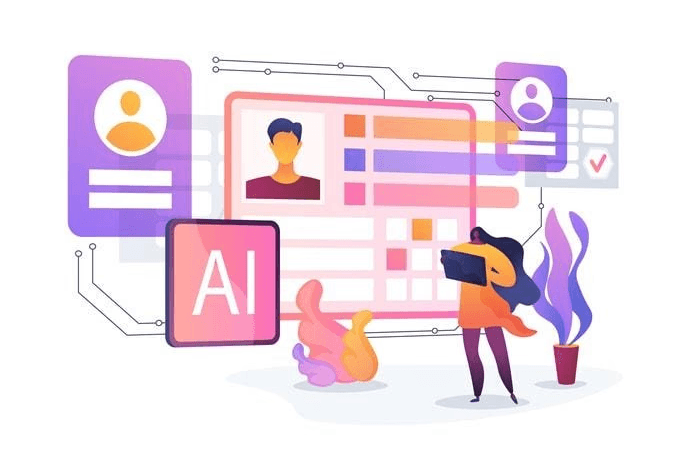
Fonzi’s Match Day supports management interview preparation by combining AI-powered role analysis with structured, skills-based evaluation to help technical candidates present leadership potential more effectively. This approach recognizes that traditional interview preparation often falls short for AI engineers who need to translate technical expertise into management-relevant signals while navigating company-specific expectations.
AI-supported interview preparation tailored to management roles and company requirements analyzes job descriptions, role scope, and required competencies to surface likely focus areas in interviews. This structured approach helps candidates concentrate preparation on relevant leadership scenarios and evaluation criteria rather than relying on generic management concepts that may not apply to the role.
The platform considers factors such as company size, industry context, and role responsibilities to frame realistic interview scenarios. For example, preparation for an early-stage AI company may emphasize scaling teams and prioritization under constraints, while preparation for larger organizations may focus more on cross-functional coordination and process alignment. This targeted framing improves preparation efficiency and relevance.
Rather than generic coaching, Fonzi emphasizes structured feedback grounded in skills-based assessment. Candidates receive guidance on how their experience maps to leadership competencies, helping them refine examples and communicate management readiness more clearly during interviews.
Preparation focuses on translating technical accomplishments into leadership signals, such as decision-making, collaboration, and accountability. Candidates practice articulating experiences related to conflict resolution, prioritization, and ethical considerations in ways that align with how hiring teams evaluate management potential.
Common Interview Mistakes to Avoid
Understanding common interview mistakes helps you avoid subtle pitfalls that can undermine otherwise strong management interview performance. Many technical professionals excel at demonstrating competence but struggle with management interview dynamics that require different communication styles, storytelling approaches, and self-presentation techniques. Awareness of these mistakes enables proactive preparation and more confident interview execution.
Speaking negatively about previous employers or team members is one of the most damaging mistakes candidates make during management interviews. While discussing challenges and conflicts is necessary to demonstrate problem-solving skills, negative framing raises concerns about judgment, discretion, and the ability to maintain professional relationships under pressure. Hiring teams want managers who handle difficulties with maturity and constructive focus.
Effective approaches involve discussing challenging situations with emphasis on your responses, learning, and outcomes rather than blame or criticism. For example, instead of describing an “incompetent” team member, you might refer to someone whose strengths were not aligned with role requirements and focus on how you supported a better fit while maintaining team productivity. This framing demonstrates leadership maturity and emotional intelligence.
Providing vague answers without specific examples or measurable outcomes fails to give hiring teams concrete evidence of management capability. Many candidates understand the need for examples but offer general descriptions that do not demonstrate real impact or learning. Management interviews require detailed stories with clear context, actions taken, and results achieved.
Focusing only on individual achievements instead of team success and development misses the core purpose of management interviews. Hiring teams evaluate your ability to deliver results through others, not just individual contribution. Many technical professionals struggle with this shift and continue emphasizing personal problem-solving rather than team enablement.
Failing to ask thoughtful questions about the role, team, or company culture can signal limited interest or preparation. Management roles involve mutual evaluation, and candidates should assess alignment with their leadership style and career goals.
Conclusion
Transitioning into management is about clearly communicating the leadership skills you already practice, not simply holding a formal title. For technical professionals, especially in AI and engineering, successful management interviews focus on demonstrating people leadership, judgment, and impact through teams rather than individual execution.
Candidates who prepare structured examples, emphasize team outcomes, and show adaptability and self-awareness stand out to hiring teams. Ultimately, organizations seek managers who balance technical credibility with empathy and clarity, and those who approach interviews with intention and authenticity are best positioned for long-term leadership success.
FAQ
What if I don’t have direct management experience?
How long should my answers be during management interviews?
Should I mention challenges with previous team members?
How can Fonzi’s Match Day help with technical management roles?
What’s the best way to discuss diversity and inclusion in management interviews?