Job References: What They Are, How to Format Them, and Tips
By
Liz Fujiwara
•
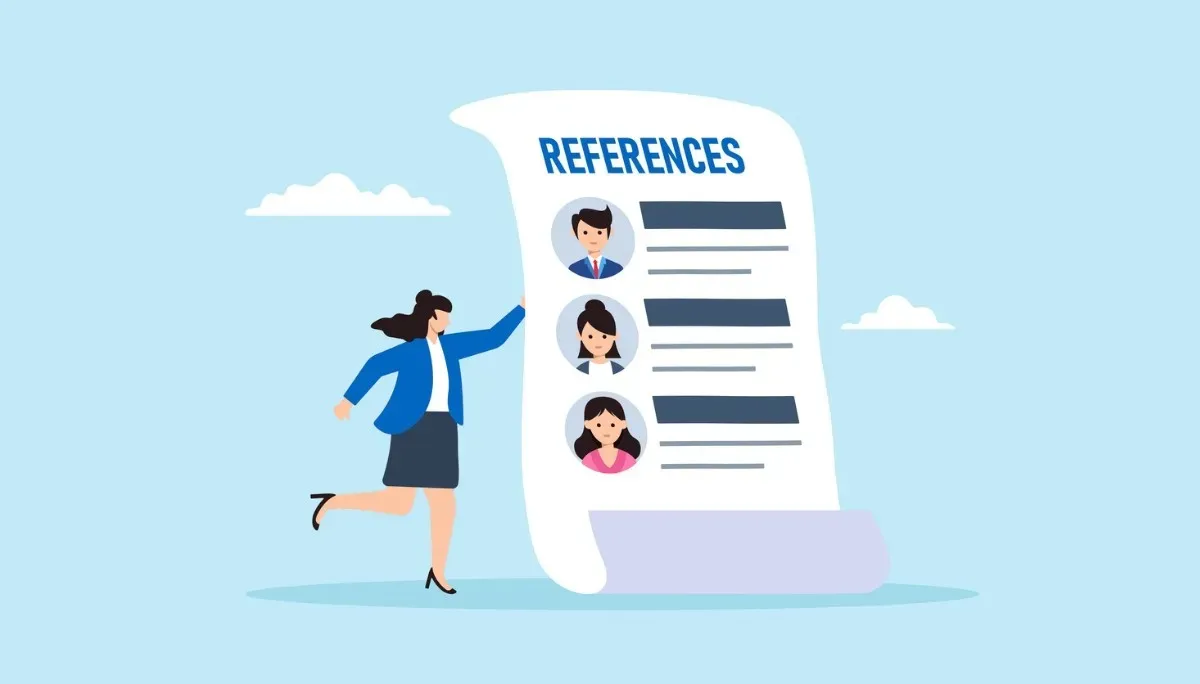
Employers use employment references to validate what they cannot see on paper: your collaboration style, ownership mentality, communication under pressure, and long-term impact. These are qualities that do not show up on LeetCode scores or arXiv papers. When a hiring manager calls your previous employer, they are looking to answer questions such as, “Did this person actually lead that migration, or just participate?” and “How do they handle ambiguous product direction?”
This article is a practical guide tailored to AI engineers, ML researchers, infrastructure engineers, and LLM specialists navigating fast-moving, high-signal hiring processes. It covers how to choose people for your reference list, format a references page, time when to share it, and how platforms like Fonzi, a curated talent marketplace built specifically for AI professionals, combine human recruiters with AI tooling to make reference checks and matching more fair and efficient.
Key Takeaways
Job references verify your skills, collaboration style, and reliability, providing hiring teams with signals that resumes, portfolios, and GitHub contributions alone cannot deliver.
AI-heavy roles, including ML engineers, infrastructure engineers, and LLM specialists, remain reference-driven because past collaboration, ownership, and technical judgment are difficult to measure from code alone.
Fonzi is a curated marketplace for AI talent where reference checks, portfolio signals, and AI tools are used responsibly to match candidates with companies, with AI designed to reduce bias and noise without replacing human judgment or sidelining candidate experience.
What Job References Are and How Employers Use Them

A job reference is a professional contact who can speak to your skills, performance, and character during a 10 to 20 minute call or written response. For AI and technical roles, this typically means a manager, tech lead, professor, or close collaborator who has directly observed your work.
For technical and AI roles, references or letters of introduction often cover specific examples rather than generic praise. Hiring managers want to hear about concrete achievements, such as:
Shipping a model to production in Q3 2024
Reducing inference latency by 40%
Leading a migration to a new infra stack
Debugging LLM biases under tight deadlines
Work references are usually requested after a successful onsite or virtual final round but before a formal offer. This is especially true for roles at Series B+ startups and established tech companies, where reference checks serve as a final validation step.
References reduce risk for employers by confirming that your resume claims and GitHub contributions reflect reality and that you collaborate well across product, research, and infrastructure teams. They can also address minor interview concerns. For example, if an interviewer noted you seemed quiet in meetings, a reference might explain that you are a deep thinker who follows up with thorough documentation.
Types of Job References (and Which Matter Most for AI Roles)
There are three main types of references: professional (work), academic, and character. AI-focused candidates typically rely on professional and academic references, with character references serving as supplements when other options are limited.
Employers generally prioritize references in this order:
Direct manager or tech lead from a recent role
Senior collaborator or staff engineer
Academic advisor or PI
Character references (if other options are limited)
For early-career AI engineers or PhD students graduating in 2026, a mix of industry internship supervisors and research advisors is often ideal.
Professional (Work) References
Professional references come from current or former supervisors, team leads, staff engineers, or senior collaborators from roles held in the last three to five years. These carry the most weight because they reflect real workplace dynamics.
For AI and infra roles, strong professional references might include:
An engineering manager at a cloud infrastructure company
A tech lead from a recommendation systems team
A startup CTO who oversaw your LLM product work
A senior ML engineer who reviewed your code and design docs
Prioritize references who directly reviewed your code, research, or design documents and can describe specific projects, metrics, and on-call responsibilities. For confidential job searches, avoid listing your current employer unless they explicitly agree. Use past employers or senior peers instead.
Academic References
Academic references are especially relevant for candidates finishing a PhD or MSc between 2024 and 2026 or coming from research labs. A professor, research scientist, or postdoc advisor can highlight your ability to design experiments, publish, and work on long-term projects.
Include academic references when applying to roles like:
Research scientist
Applied scientist
Lab-based fellowship programs
Positions where publications and conference work (e.g., NeurIPS 2023) matter
Academic references should know you beyond a single course, ideally from multi-semester work, lab collaborations, or co-authored papers. A teacher or instructor from a one-off class will not carry the same weight as a thesis supervisor who worked closely with you for two years.
Character and Community References
A personal reference speaks to your integrity, work ethic, and reliability when professional or academic references are limited. These are sometimes called character references.
Good examples include:
A founder of an open-source project you contributed to
An organizer of a local ML meetup where you volunteered
A lead from a nonprofit data project you supported
Avoid using family members or close friends. Instead, prioritize people who have seen you complete real work or sustained commitments over at least six to twelve months. For senior AI roles, character references are a supplement, not a replacement, for direct professional references.
How to Choose the Best References for AI and ML Roles

Not all references carry equal weight. Alignment between your reference and your target role is crucial, as an infrastructure-focused manager speaks differently than a research PI, and hiring teams notice.
When preparing your list of references, aim for:
3–5 references per application: At least two direct managers or leads, plus one or two peers or cross-functional partners
Recency matters: References generally carry more weight than those from internships in 2019, unless the older project was uniquely impactful
Diversity of context: Combine references from different settings (startup vs. big tech, production vs. research, infra vs. product) to showcase your range
Skip references who might give lukewarm feedback or are limited to HR-only confirmations, even if they hold impressive titles. A strong reference from a senior engineer who can speak to your specific contributions is better than a name-drop from a VP who barely remembers you.
Look for the best person who can describe your interpersonal skills, explain your work style, and answer specific questions about projects you completed together.
How Many References You Need (and When Employers Ask)
Most companies ask for 2 to 3 references for mid-level roles and 3 to 5 for senior or leadership positions. For AI managers and staff or principal engineers, expect requests on the higher end.
For contract or short-term research roles, employers may only call one reference, usually your most recent manager or PI.
Here’s a practical approach:
Maintain a broader “bench” of 6–8 potential references
Select a tailored subset once you understand the role and company priorities
Keep contact information current and get permission before sharing
It is no longer standard to include references on your resume. Instead, prepare a separate sheet and share it after a recruiter or hiring manager asks, typically following a successful interview process.
How to Ask Someone to Be a Reference (Without Making It Awkward)
Asking for references is a professional norm. Managers, PIs, and senior engineers are used to these requests; it is part of the job.
Timing: Reach out 1 to 2 weeks before you expect checks to happen.
Method: Send a concise email, Slack, or LinkedIn message that names the specific role and company. For example:
“Hi Dr. Mehta, I’m interviewing for a Senior ML Engineer position at a Series C fintech company, with final rounds in March 2026. Would you be comfortable serving as a reference?”
Include context: Remind them of key projects, dates, and impact. For example, “I’d love for you to mention the 2023 retrieval pipeline we shipped that cut latency by 35%.”
Ask directly: Give them an easy way to decline; you want enthusiastic advocates, not lukewarm confirmations that could hurt your candidacy.
Make it easy: Attach your recent resume and 3 to 5 bullet point talking points about achievements so references can prepare without extra research.
How to Format a References Page for a Job Application

Your reference list should appear on a separate document from your resume and never included directly unless the job description explicitly requests it. Use matching fonts, margins, and header style to create a cohesive application package.
The page should be clean and scannable, with 3–5 entries each containing:
Full name and current job title
Company name
Relationship to you and timeline
City (and time zone for remote/global roles)
Professional email and phone number
For remote or distributed AI teams, note whether the reference prefers email or phone contact. Save the document as “Firstname_Lastname_References.pdf” and update it for each specific job application.
Sample Reference Entry (AI/ML Candidate)
Here’s a realistic example of how to format a reference entry:
Dr. Priya Mehta
Director of Machine Learning, Aurora Analytics
San Francisco, CA (PST)
Former Manager (Jan 2022 – Oct 2024)
priya.mehta@aurora.ai | +1 (415) 555-0134
Managed me on the recommendations team; we shipped a new ranking model that increased CTR by 11% in 2023.
Order entries from strongest and most relevant to less central references. Start with your most recent manager or supervisor when possible. Keep each entry to 3 to 4 lines maximum with consistent formatting throughout.
What to Include (and Avoid) on a References Page
Include | Avoid |
Full name with professional title | Personal details (home address, birthdate) |
Current company and position | Outdated phone numbers or emails |
Professional email address | References from jobs before 2018 (unless uniquely relevant) |
Phone number with country code | People who haven’t agreed to be contacted |
Relationship description (e.g., “Former Manager”) | Family members or close friends |
Years worked together (e.g., “2022–2024”) | Basic information without context |
When and How to Share Your References
Do not send your reference list with your initial job application unless the posting explicitly requests it. Sending references too early can appear overeager and wastes your referees’ time if you do not advance.
Common triggers for reference requests:
After a successful onsite or final virtual panel
Before extending a formal offer for senior roles
As part of a background check process
Tailor which 3 to 5 references you share based on what the company values. Infrastructure-heavy roles should include infrastructure managers, while research positions should feature PIs or senior scientists.
Once you know references might be contacted, email them immediately with:
The job description or a summary of the position
Names of interviewers if you have them
Specific points you’d like them to highlight
Some companies now use structured reference questionnaires delivered by email. Brief your references so their responses align with your resume and interview story, as consistency matters and discrepancies can raise red flags.
How AI is Changing Hiring (and Where References Fit In)
Companies increasingly use AI to screen resumes, parse portfolios, and prioritize candidates, especially for high-volume roles. These tools can surface patterns such as relevant tech stacks, research areas, and open-source contributions faster than manual review.
However, AI does not replace human-led reference conversations that probe context and nuance. A phone number and a 15-minute call still reveal more about work experience and collaboration than any algorithm can extract from a GitHub profile.
Typical AI use cases in hiring:
Ranking applicants based on skills and experience
Matching candidates to job requirements
Summarizing candidate history for hiring managers before calls
Good hiring teams use AI to reduce noise and bias, standardizing how profiles are compared, while relying on humans to interpret reference feedback and make final decisions. References serve as a human layer of verification that AI tools complement.
How Fonzi Uses AI Responsibly in the Hiring Process

Fonzi is a curated talent marketplace focused on AI engineers, ML researchers, infrastructure engineers, and LLM specialists. Unlike generic job boards, Fonzi emphasizes candidate experience and fairness throughout the hiring process.
Fonzi uses AI to match candidates and companies based on skills, work experience, preferences, and portfolio signals. Reference checks and core hiring decisions, however, remain human-led. The platform is designed to:
Reduce bias: De-emphasize pedigree and prioritize demonstrable skills and outcomes from 2020–2026 projects
Protect privacy: Candidates control when and with whom references are contacted; no surprise calls
Create clarity: Fewer random recruiter messages, more aligned opportunities
Fonzi’s AI is built to shorten time-to-offer and reduce the noise that makes job searches exhausting. It supports the interview process without automating the human conversations that actually matter.
Inside Fonzi Match Day: High-Signal Matches Instead of Endless Applications
Match Day is a focused, time-bound event where pre-vetted AI candidates and vetted companies review and express interest in each other simultaneously.
Before Match Day, candidates create detailed profiles:
Technical skills and stack (Python, PyTorch, Kubernetes, etc.)
Research areas and interests
Preferred locations or remote setup
Compensation expectations
Prepared references (optional)
After mutual interest, recruiters and hiring managers reach out quickly with clear timelines for interviews, reference checks, and potential offers. This structure eliminates the long, opaque gaps many candidates experience when they submit applications and hear nothing for weeks.
Match Day encourages companies to be decisive and respectful. References are usually requested only after high-confidence mutual interest is established, protecting your referees from unnecessary calls for roles that were not serious matches.
Practical Tips to Get Strong Reference Feedback
Simply having references is not enough. How well you prepare them significantly affects the content of their feedback.
Preparation checklist:
Send a brief summary of the role, including the job title and key responsibilities
Update them on your recent work since you last collaborated
Provide 3–5 talking points you’d love them to highlight (ownership, communication across time zones, shipping LLM features to production)
Align your interview stories with what references will say; dates, outcomes, and project names should match
Address potential concerns (“They may ask about how I handle ambiguous product direction; could you share an example from the 2023 recommendation project?”)
After the process concludes, send a thank-you note and a quick update, regardless of whether you received the offer. Maintaining long-term relationships with references is essential for your ongoing job search and future career moves.
Preparing for Interviews and Showcasing Your Skills

Strong references are only one part of a successful hiring process. Candidates also need sharp interviews, well-organized portfolios, and clear communication.
Interview preparation for AI roles:
Prepare concrete project stories from 2021–2026 with clear problem, solution, and impact narratives that references can echo
Maintain a concise portfolio: GitHub repos, published papers, internal project summaries (sanitized for confidentiality), and benchmarks
Practice system design, ML design, and research deep dives that align with themes your references will emphasize
On Fonzi, candidates can highlight specific projects, such as fine-tuning open-source LLMs, building scalable feature stores, or deploying RL-based ranking systems, so companies know what to ask references about. This creates alignment between your profile, your interview answers, and your reference feedback.
Your cover letter should mention key achievements that references can expand on. When everything tells the same story, hiring teams gain confidence in extending an offer.
Conclusion
Job references remain one of the most human parts of hiring, providing context that AI tools and resumes alone cannot capture. In complex AI and infrastructure roles, they showcase collaboration, ownership, and technical judgment that algorithms cannot replicate.
Choosing recent managers, PIs, and collaborators and formatting a clear reference page positions candidates well for late-stage decisions. Strong references who speak to your work ethic and projects with genuine enthusiasm help you stand out.
With thoughtful preparation and strong references, your next full-time AI role is within reach.
FAQ
What is a job reference and who should I ask to be one?
How do I format a reference page for a job application?
What’s the difference between a reference letter and a reference list?
How many references should I provide for a job application?
Can I use a friend or family member as a job reference?