"Why Should We Hire You?": Perfect Answers That Land the Job
By
Ethan Fahey
•

With more than 300,000 AI roles sitting unfilled worldwide and hundreds of applicants competing for each opening, technical skill alone isn’t enough to stand out anymore. The question “Why should we hire you?” often catches even seasoned AI engineers off guard, not because they lack experience, but because it forces them to clearly connect deep technical work, like shipping ML systems or scaling infrastructure, to real business outcomes.
For recruiters and AI engineers alike, this question is where technical excellence meets impact. The strongest answers explain not just what you’ve built, but why it mattered and how it moved the company forward. As hiring becomes more signal-driven, platforms like Fonzi AI help bridge this gap by matching companies with AI engineers whose skills and experience align directly with business needs, so interviews focus less on proving credibility and more on confirming fit and momentum.
Key Takeaways
AI and ML professionals need to showcase both technical expertise and business impact when answering “Why should we hire you?”
Modern hiring platforms like Fonzi use AI responsibly to reduce bias and match candidates more effectively with companies
The best answers combine specific technical achievements, quantifiable results, and alignment with company goals
Match Day events and curated marketplaces are changing how top-tier AI talent connects with employers
Preparation should focus on researching company challenges and demonstrating how your skills solve their specific problems
How Technical Hiring Has Evolved in the AI Era
Traditional hiring processes often miss the nuances of AI and ML roles, treating them like generic software engineering positions. A hiring manager reviewing hundreds of resumes might not distinguish between someone who’s built recommendation systems at scale versus someone who’s only worked on proof-of-concept models. This mismatch has created frustration for both candidates and companies.
Companies now use AI-powered platforms to identify candidates with the right technical depth and cultural fit. These systems analyze not just resume keywords, but also GitHub contributions, publication records, and demonstrated expertise in specific frameworks like PyTorch, TensorFlow, or emerging technologies in the LLM space.
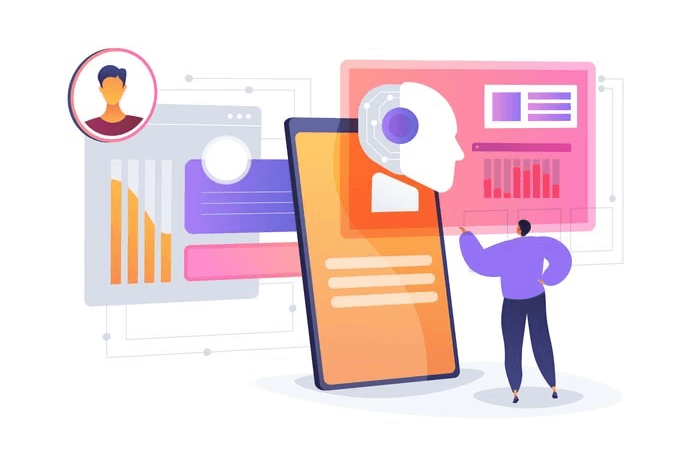
Fonzi represents a new generation of talent marketplaces designed specifically for AI engineers, ML researchers, and infrastructure specialists. Unlike broad platforms where 90% of applications result in “black hole” ghosting, Fonzi’s curated approach ensures that when you apply, you’re genuinely matched based on technical competency and project requirements.
AI in hiring focuses on reducing bias and creating more objective candidate evaluations. By analyzing skills graphs and actual project outcomes rather than demographic markers, these platforms help ensure that your technical abilities and relevant skills speak louder than unconscious biases that might affect human reviewers.
The emphasis has shifted from generic soft skills to demonstrable technical impact and problem-solving ability. When an interviewer asks why they should hire you, they’re not looking for someone who’s simply a “hard worker” or “team player”; they want to understand your unique perspective on solving their specific AI challenges and how you’ll contribute to their dynamic team.
What Interviewers Really Want to Know
When you hear “Why should we hire you?” during a job interview, the hiring manager is really asking several deeper questions that go beyond your resume. Understanding these underlying concerns helps you craft a strong answer that addresses their real needs.
Can you solve the specific technical challenges they’re facing with their AI/ML systems? Companies aren’t looking for generalists—they need someone who can tackle their exact infrastructure bottlenecks, improve model performance in their domain, or implement the latest techniques that drive measurable business outcomes.
Do you understand the business implications of your technical work? The best candidates can explain how reducing model inference latency by 40% translates to cost savings and improved customer experience. They connect their strong analytical skills to revenue growth and competitive advantages.
Will you fit into their existing team structure and engineering culture? Technical competence alone isn’t enough. They need to know you can collaborate effectively, mentor junior developers, and contribute to a fast-paced environment where priorities shift based on business strategy.

Can you adapt to rapidly changing AI technologies and methodologies? The AI landscape evolves rapidly, and companies want a fast learner who stays current with emerging frameworks, can implement new techniques, and contributes to their company’s goal of maintaining technological leadership.
What unique perspective or expertise do you bring to their AI initiatives? With 70-80% of applicants meeting basic criteria according to LinkedIn’s 2024 Workforce Report, differentiation comes from specialized experience, innovative approaches, or the ability to bridge different domains in ways that create impactful content and drive positive outcomes.
Crafting Your Perfect Answer: The IMPACT Framework
The most effective responses to “Why should we hire you?” follow a structured approach that demonstrates both technical depth and business acumen. The IMPACT framework provides a roadmap for crafting answers that resonate with interviewers and position you as the best candidate.
Identify the company’s specific technical challenges and business goals by thoroughly researching their company website, recent product announcements, and technical blog posts. Look for pain points mentioned in job descriptions or engineering team presentations. A well-researched answer shows you’ve done your homework and understand what they need.
Match your experience to their exact requirements, going beyond general skills to specific programming languages, frameworks, and scale requirements. If they’re scaling recommendation systems, mention your experience with distributed training on Kubernetes. If they’re fine-tuning LLMs, discuss your work with techniques like LoRA or RLHF.
Prove your value with quantifiable achievements that demonstrate real impact. Instead of saying “I improved model performance,” explain how you “reduced inference latency by 40% using AWS SageMaker, enabling real-time recommendations that increased click-through rates by 15%.” Numbers make your claims credible and memorable.
Articulate how you’ll contribute to their team culture and future projects beyond just technical delivery. Discuss your experience mentoring other team members, contributing to technical decision-making, or collaborating with product teams to align technical solutions with business objectives.
Connect your technical expertise to business outcomes and the company's mission. Show how your work on supply chain optimization using reinforcement learning agents directly supported cost reduction goals, or how your multimodal AI research aligns with their vision for next-generation user experiences.
Tell a compelling story that demonstrates your problem-solving approach and showcases your unique skills. The best answers weave these elements into a narrative that helps the interviewer visualize you succeeding in their specific role and contributing to their team’s success.
Common Mistakes AI Professionals Make
Even highly skilled technical professionals often stumble when answering “Why should we hire you?” Understanding these common pitfalls helps you avoid them and project confidence during your interview.
Focusing only on technical accomplishments without a business context is perhaps the most frequent mistake. While expertise in PyTorch or experience deploying models at scale matters, interviewers need to understand how your work created a positive impact for previous companies or research initiatives.
Using too much jargon that non-technical interviewers might not understand alienates potential hiring managers who may not have deep ML expertise but make important hiring decisions. Balance technical specificity with clear explanations of business value and outcomes.

Failing to research the company’s specific AI use cases and challenges makes your answer feel generic and unprepared. Take time to understand their tech stack, recent product launches, and strategic priorities from their company website and recent announcements.
Not quantifying the impact of their work represents a missed opportunity to demonstrate real value. Instead of vague statements about improving systems, provide specific metrics: “increased model accuracy by 12%,” “reduced training time by 60%,” or “deployed solutions serving 10M+ daily requests.”
Comparing themselves negatively to other candidates or showing uncertainty undermines confidence. Avoid phrases like “I might not have as much experience as other applicants” and instead focus on your unique strengths and what you bring to the role.
Being overly modest about achievements in a competitive field where confidence matters can hurt your chances. AI and ML roles require technical leadership and innovation, so own your accomplishments while remaining professional and authentic.
Sample Answers by AI Role Specialization
Different AI roles require different approaches when answering “Why should we hire you?” The following table shows how to tailor your response based on your specialization, incorporating relevant skills and quantifiable achievements.
Role | Focus Areas | Example Answer Elements | Key Metrics to Highlight |
ML Engineer | Production systems, scalability, deployment | “Deployed scalable ML pipelines reducing inference latency by 40% using AWS SageMaker” | Model performance, system efficiency, cost savings |
AI Researcher | Innovation, publications, novel approaches | “Published 3 papers on federated learning, advancing privacy-preserving ML techniques” | Publication count, citation metrics, innovation impact |
MLOps Engineer | Infrastructure, automation, reliability | “Built CI/CD pipelines for ML models, reducing deployment time from weeks to hours” | Deployment speed, system uptime, automation efficiency |
LLM Specialist | Fine-tuning, prompt engineering, applications | “Fine-tuned Llama models achieving 25% better performance on domain-specific tasks” | Model accuracy, fine-tuning efficiency, application success |
Computer Vision Engineer | Image processing, accuracy, real-world deployment | “Improved object detection accuracy by 30% for autonomous vehicle perception systems” | Detection accuracy, processing speed, real-world performance |
When crafting your answer, start with your solid background in the specific technologies relevant to their needs. For example, an ML engineer might say: “My expertise in distributed training and model optimization directly addresses your challenge of scaling recommendation systems to handle millions of daily users.”
Include specific examples from your previous role or previous company that demonstrate measurable impact. A computer vision engineer could explain: “At my last job, I led development of a real-time image analysis system that processed 50,000 images per hour with 95% accuracy, directly supporting our client’s quality control objectives.”
Connect your technical achievements to business outcomes. An LLM specialist might highlight: “My work fine-tuning language models for customer service automation reduced response times by 60% while maintaining 90% customer satisfaction scores, showing how technical excellence drives positive business results.”
How Fonzi’s Match Day Creates Better Hiring Outcomes
Traditional hiring processes often fail to capture the full potential of AI talent, leading to mismatches between skilled professionals and companies that need their expertise. Fonzi’s Match Day represents a fundamental shift toward more effective, efficient hiring that benefits both candidates and employers.
The curated matching process pre-qualifies both candidates and companies based on technical requirements, project scope, and cultural alignment. Unlike generic job boards where you compete against hundreds of applicants, Fonzi ensures that when you’re matched with a company, there’s genuine mutual interest based on skills, experience, and project fit.
Match Day events focus on technical depth and cultural fit rather than just resume screening. Candidates get 15-30 minute slots with 5-10 pre-matched companies, allowing for meaningful conversations about specific projects, technical challenges, and team dynamics that traditional interviews rarely achieve.
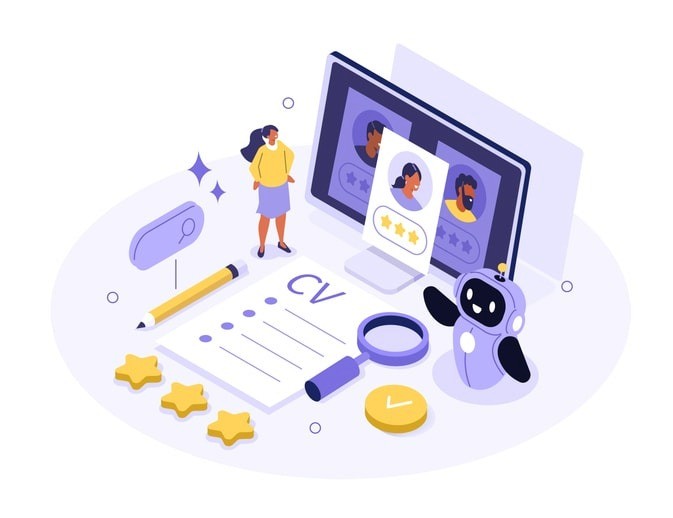
Structured interview processes fairly evaluate AI and ML expertise through live demonstrations and technical discussions. Instead of generic behavioral questions, you might walk through a fine-tuned model you’ve built or explain how you’d approach scaling their inference infrastructure.
The transparent communication about company challenges and growth opportunities helps you make informed decisions about potential roles. Companies share specific technical problems they’re solving, team composition, and career development paths, enabling better assessment of mutual fit.
Reduced bias through standardized evaluation criteria and diverse interview panels ensures that your technical capabilities and relevant experience are evaluated fairly. Match Day’s format minimizes the impact of unconscious biases that can affect traditional interview processes.
Faster hiring timelines with pre-vetted candidates and streamlined processes benefit everyone involved. While traditional tech hiring averages 42 days, Fonzi’s model reduces this to approximately 14 days by eliminating multiple rounds of redundant screening and focusing on qualified matches from the start.
Preparing for Success in the Modern AI Job Market
Success in today’s competitive AI job market requires more than technical expertise; it demands strategic positioning, continuous learning, and effective communication of your unique value proposition to potential employers.
Building a portfolio that demonstrates end-to-end project ownership showcases your ability to take ideas from conception through production deployment. Include projects that highlight your skills in data analysis, model development, infrastructure design, and business impact measurement.
Staying current with the latest AI/ML frameworks and industry best practices ensures you can speak knowledgeably about emerging technologies during interviews. Subscribe to technical publications, participate in online communities, and experiment with new tools to maintain your competitive edge.
Developing skills in explaining technical concepts to business stakeholders makes you valuable in organizations where AI initiatives require cross-functional collaboration. Practice translating complex technical achievements into business metrics and outcomes that non-technical team members can understand.
Contributing to open-source projects and maintaining an active GitHub profile demonstrates your coding abilities and commitment to the broader AI community. Many employers review GitHub contributions as part of their evaluation process, looking for evidence of real-world problem-solving skills.
Networking within the AI community through conferences, papers, and online discussions expands your professional connections and keeps you informed about industry trends. Attend events where you can meet other professionals, learn about new opportunities, and share your own insights and experiences.
Understanding ethical AI practices and responsible deployment considerations becomes increasingly important as companies face growing scrutiny around AI fairness, bias, and societal impact. Demonstrate awareness of these issues and experience implementing responsible AI practices in your work.
When you research potential employers, dig deep into their company website, recent blog posts, and technical publications to understand their specific challenges and strategic priorities. This preparation enables you to craft targeted answers that address their real needs.
Conclusion
Answering “Why should we hire you?” as an AI professional is really about connecting the dots between technical skill and real business impact. Strong candidates go beyond listing credentials; they explain how their experience, measurable results, and problem-solving approach directly help a company hit its strategic goals. The IMPACT framework can help structure this response by clearly tying company needs to your past work, quantifying results, and showing how you contribute on a team, not just as an individual contributor.
The hiring landscape itself has evolved to reward this clarity. Platforms like Fonzi AI are reshaping how AI engineers and companies find each other by focusing on skills, outcomes, and fit rather than surface-level signals. For candidates, that means your expertise and achievements carry more weight; for recruiters, it means faster, more accurate matching with engineers who can actually move the business forward. Mastering this question and using modern hiring platforms positions you to stand out in an increasingly competitive AI job market.
FAQ
How do I answer “Why should we hire you?” effectively?
What should I include when explaining why an employer should hire me?
What are good examples of “Why should we hire you for this job?” answers?
What mistakes should I avoid when answering “Why should we hire you?”
How do I answer “Why should we hire you?” with limited experience?