Career Counseling: What It Is, What It Costs, and Is It Worth It
By
Ethan Fahey
•

It’s 2025, and many AI engineers know the routine: late nights working through LeetCode problems, waiting on feedback from take-home LLM evaluations, and wondering why three different ATS systems rejected a resume before a human ever saw it. The traditional playbook of polishing your resume, applying everywhere, and hoping something sticks simply isn’t working the way it used to. Career counseling, at its core, offers structured guidance to help professionals clarify where they’re headed, how to present their skills, and how to navigate an increasingly complex hiring process. For AI and ML talent, that often means sorting through overlapping roles like applied scientist, research engineer, and infrastructure engineer, weighing remote versus on-site opportunities, and making sense of the surge of AI startups that followed the release of ChatGPT in late 2022.
This is where platforms like Fonzi AI come into the picture. Fonzi is a curated talent marketplace built specifically for AI engineers, ML researchers, infrastructure engineers, and LLM specialists, designed to give candidates direct access to high-quality teams without the noise of generic job boards or the endless “apply and pray” cycle. For recruiters and hiring managers, it also provides a faster way to connect with highly specialized talent. We’ll stay practical, covering real costs, examples, comparison tables, and actionable advice to help you decide whether career counseling is worth it and how to use platforms like Fonzi effectively.
Key Takeaways
Modern career counseling for technical talent blends human expertise with responsible AI tools to clarify goals, portfolio strategy, and job search tactics rather than adding noise or bias to an already complex process.
Fonzi is a curated talent marketplace built specifically for AI-focused roles, using AI to match candidates and companies with high signal while keeping humans in control of final decisions.
Costs range from free community resources to premium private counseling packages exceeding $3,000, but platforms like Fonzi can compress search time dramatically without traditional coaching retainers.
For many candidates, the ROI question isn’t “should I pay for counseling?” but “what combination of guidance and access will get me to the right role fastest?”
What Is Career Counseling for AI and ML Professionals?
Traditional career counseling, like resumes, aptitude tests, and generic job boards, doesn’t map neatly onto the needs of AI-focused roles in 2026. The career path of an LLM product engineer looks nothing like that of a fundamental research scientist, even if both have “AI” somewhere in their job title.
Modern career counseling for technical candidates looks different. It means clarifying target role types (do you want to optimize inference at scale, or do you want to publish papers on RLHF?), building a portfolio of repos and demos that actually matter to hiring managers, and aligning your projects with the hiring signals companies care about, including scaling inference, retrieval systems, and production deployments.
The core components of effective career counseling for AI professionals include:
One-on-one sessions to map your career trajectory and identify gaps
Skills and interest assessments to understand where you fit in the AI landscape
Goal-setting for 6-, 12-, and 24-month career development milestones
Job search strategy tailored to your target companies and role families
Interview preparation for coding rounds, ML system design, and research talks
There’s an important distinction between career counseling, career coaching, and recruiting. A career counselor helps a PhD pivot from academia to industry, working through identity questions and strategic positioning. A career coach focuses on performance: interview practice, accountability for applications, and refining your pitch. A recruiter fills a specific Staff ML role at a fintech company; they advocate for you to employers and are paid by those employers, not by you.
AI is now part of the counseling toolkit itself. Career counselors use LLMs to iterate on resumes, analyze job descriptions for key skills, and simulate interview questions. But human judgment remains essential for strategic decisions, and no model can tell you whether you’ll be happier at a research lab or a fast-moving startup.
What Does a Career Counselor Actually Do for Technical Candidates?

Good career counselors don’t just “fix your resume.” They help you architect your entire job search approach over weeks or months, identifying where to focus your energy and how to tell your story.
For AI engineers, ML researchers, infra engineers, and LLM specialists, a counselor maps your projects to business outcomes. They help you articulate why your 2023 work on model inference optimization matters, how your open-source contributions demonstrate production readiness, and which conference talks or publications are worth highlighting.
Specific deliverables from working with a career counselor typically include:
Targeted resumes for different role families (research vs. applied vs. infra)
LinkedIn and personal website positioning that speaks to hiring managers
GitHub and Hugging Face portfolio curation with clear project narratives
Project storytelling frameworks for interviews that emphasize metrics and tradeoffs
Interview strategy is a major focus. Counselors help with coding round prep, ML system design practice (e.g., designing inference at scale, handling model drift), whiteboard sessions on model evaluation and deployment, and mock research talks for candidates coming from labs or PhD programs.
For senior candidates at Staff or Principal levels, career counselors often coach on compensation negotiation, equity versus cash tradeoffs, remote versus hybrid decisions, and evaluating the risk profiles of 2023-2026 AI startups. Understanding whether a company has mature AI infrastructure or is still figuring things out can make or break your career growth.
How Much Does Career Counseling Cost in 2026?
Costs vary widely, from free community resources to multi-thousand-dollar packages, so you need a clear overview to avoid overpaying or undervaluing your time.
Free options exist and can be valuable. University career centers serve recent grads and sometimes PhD candidates with resume review, interview practice, and mock presentations. Community organizations, AI meetups, and tech networks often run free office hours or group coaching sessions.
Low-cost options include group programs, bootcamp alumni services, or online career courses tailored to tech and AI roles. These are typically priced per cohort or subscription, ranging from $150 to $400 for a focused program.
Private, one-on-one career counseling for engineers and researchers typically costs $100 to $300 per hour in 2024-20265, with some specialized tech counselors charging $300 to $500+ for executive-level guidance. Packages of 4-8 sessions often run $1,500 to $3,000 or more, including resume rewrites, mock interviews, and ongoing support.
Fonzi functions as a “zero-cost” career accelerator for candidates. There’s no fee to join, and candidates receive guided opportunities and high-signal introductions without paying retainers. The marketplace model shifts the cost to companies that are actively hiring.
Career Counseling Cost Comparison
Here’s how the main options stack up for AI and ML professionals in 2026:
Type of Support | Typical Cost (USD, 2026) | Best For |
Free campus career center | $0 | Recent grads, PhD candidates, students |
Community meetups / AI groups | $0 | Networking, peer feedback, industry insight |
Tech bootcamp alumni services | $0-$200 | Bootcamp grads needing structured job search support |
Group coaching programs | $150-$400 per cohort | Candidates wanting affordable, structured guidance |
Online career courses (AI/tech focus) | $200-$600 | Self-paced learning on positioning and interviews |
Private career counselor (mid-tier) | $150-$250/hour | Individual guidance on career decisions and strategy |
Specialized AI/ML career coach | $250-$500/hour | Senior candidates, complex transitions, negotiation |
Multi-session packages | $1,500-$3,000+ | Comprehensive career change or job search programs |
Curated marketplace (Fonzi) | $0 for candidates | AI engineers, ML researchers, LLM specialists seeking high-signal matches |
How AI Is Changing Career Counseling and Hiring
From 2020 to 2025, companies rapidly adopted AI in hiring, from resume screening models to interview insights, creating both efficiency and real concerns about bias and opacity.
Today, AI is used throughout hiring pipelines in concrete ways:
Automated resume filters that parse keywords and estimate job-candidate fit
Coding challenge analysis that evaluates solutions automatically
Conversation intelligence tools that analyze interview responses
Talent rediscovery in ATS databases, surfacing past applicants for new roles
The upside for candidates is real: faster responses, better matching to relevant roles, and reduced manual screening for recruiters. A recent study found that domain-specific hiring models can achieve both higher accuracy and better fairness than generic models.
The downside is equally real. Research shows that LLMs used in hiring tend to favor resumes that look like ones they’ve seen before. One study found that resumes refined by LLMs get preferred by LLM evaluators, a “self-preference bias” that can increase selection chances by 23% to 60%. Another study found that LLMs evaluating transcripts from different cultural backgrounds gave consistently lower scores to Indian candidates compared to UK candidates, even when the content was anonymized.
Responsible use of AI in hiring should include transparent criteria, human review on important decisions, regular bias audits, and clear communication with candidates about what’s automated. New York City’s Local Law 144 now requires independent audits of AI hiring tools and disclosure to candidates, a sign of where regulation is heading.
Fonzi uses AI differently: as a signal amplifier to understand skills, experience, and interests from profiles and portfolios, while keeping human talent partners in the loop to validate matches. The goal is clarity, not automation for its own sake.
Our process is designed to protect candidate experience: no endless applications, clear expectations around timelines, and curated opportunities instead of spammy outreach.
Fonzi as a Modern Career Counseling Alternative for AI Talent
Think of Fonzi as a “career-counseling-plus” experience for AI engineers, ML researchers, infra engineers, and LLM specialists. It’s not traditional therapy-style counseling, but focused, high-signal matchmaking and guidance designed for technical professionals.
The curated marketplace model works like this: companies are vetted for serious AI hiring needs, candidates are screened for relevant skills, and the platform focuses on roles like applied LLM engineer, infra and platform ML, and research engineer at high-caliber teams.
Fonzi effectively handles parts of what a counselor would do: clarifying your target roles during onboarding, reviewing your profile, highlighting your most relevant projects, and aligning you with the right hiring managers. The difference is that this guidance connects directly to real opportunities.
The candidate journey looks like this:
Create a profile highlighting your strongest work and role preferences
Share repositories and recent projects (2023-2025 work, especially)
Complete a lightweight evaluation of your skills and interests
Participate in Fonzi’s Match Day to connect with vetted companies
While Fonzi uses AI to understand candidate skills like parsing GitHub, reading short answers, and identifying relevant experience, while final matches and recommendations are reviewed by humans who understand the nuances of AI and ML work. This hybrid model delivers more value than generic career counseling alone because it connects guidance directly to high-intent roles.
How Fonzi’s Match Day Works
Match Day is a scheduled event where curated companies and vetted candidates are brought together in a focused, time-boxed format. Think of it as a high-signal alternative to the endless job board scroll.
Before Match Day, Fonzi’s team and models analyze candidate skills, preferences (research depth vs. product focus, infra vs. applied), location constraints, and compensation bands. This analysis is matched against employer needs and hiring priorities.
On Match Day, companies review anonymized or semi-anonymized candidate profiles and express interest in specific people. When there’s a mutual fit, Fonzi coordinates introductions. The result: instead of dozens of generic recruiter pings, candidates receive a small number of high-signal opportunities within days, not months.
This system complements career counseling. If you’ve worked with a counselor to clarify direction and refine your materials, Fonzi turns that clarity into concrete interview opportunities. The preparation meets the access.
Is Career Counseling Worth It for AI Engineers, ML Researchers, and LLM Specialists?
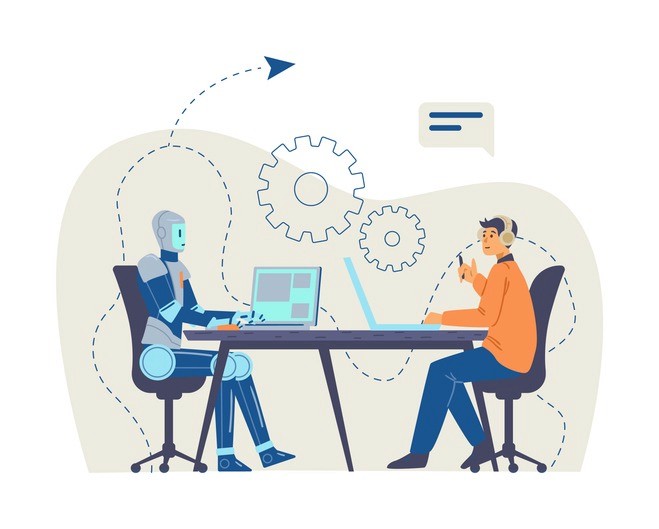
Many technical candidates wonder if paid counseling is necessary when there are open-source resources, Discord communities, and tech Twitter threads offering free guidance. The answer depends on your situation.
Factors to consider:
Stage of career: A recent grad needs different support than a Staff engineer
Clarity of goals: Do you know what role family you’re targeting?
Time pressure: Did you get laid off in the 2025 tech layoffs and need to move fast?
Network access: Are you connected to AI-heavy hubs like San Francisco, New York, London, or Berlin?
Career counseling is often worth it during career pivots from academia to industry, transitions from general software engineering into specialized ML roles, or moves from big tech to early-stage AI startups. These transitions involve making decisions about identity and positioning that benefit from an external perspective.
A curated marketplace like Fonzi alone may be enough for mid-career candidates with solid experience in production ML systems who mainly need access to the right companies rather than deep self-discovery work. If you know what you want and can articulate it clearly, the bottleneck is often exposure, not clarity.
The ROI frame matters. Compare spending several thousand dollars on counseling versus compressing your job search by weeks or months, increasing compensation via better offers, or avoiding poorly aligned roles that stall your career growth. Time saved and salary gained can easily exceed coaching costs.
The nuanced recommendation: many candidates benefit from a mix. Use free or low-cost resources to cover basics, consider targeted counseling for big transitions, and leverage platforms like Fonzi to convert readiness into real offers.
Practical Tips: How to Prepare and Stand Out in AI Hiring
Regardless of whether you use a counselor, you can take concrete steps in the next 30 days to improve your job search outcomes.
Portfolio building matters. Maintain active GitHub or equivalent repos with recent work—fine-tuning LLMs, building RAG systems, deploying models with Triton or TensorRT, or designing robust data pipelines. Hiring managers look for evidence of production deployment and real impact, not just toy models or academic test sets.
Storytelling separates candidates. Frame projects around real metrics: latency improvements, throughput gains, cost savings, model quality benchmarks. Practice explaining the tradeoffs you made in model architecture, infra decisions, and product integration. The ability to communicate technical depth clearly is a skill that leads to success in interviews.
Interview preparation requires consistency. Practice coding problems relevant to systems and ML regularly. Do mock ML system design interviews covering inference at scale, model drift, monitoring, and reproducibility. Read recent papers in your subfield. Rehearse how you talk through past failures and what you learned from them.
Tailor your profiles to platforms like Fonzi. Write concise summaries of your strongest work. Be clear about role preferences, “research-heavy LLM work” or “production inference infra.” Specify constraints around location, compensation, and company size so you hear about opportunities that actually fit.
Use AI tools responsibly. LLMs can help draft and refine materials, generate practice questions, and simulate recruiter screens. But ensure all final outputs accurately reflect your own skills and voice. Authenticity builds confidence and helps you succeed when you’re in front of real hiring managers.
Conclusion
Career counseling is evolving alongside the AI industry itself. For AI engineers, ML researchers, infrastructure engineers, and LLM specialists, it increasingly means aligning deep technical expertise with a rapidly changing job market and hiring processes that are themselves powered by AI. While the tools and platforms have changed, the core objective remains the same: finding the right role where you can build meaningful technology, contribute to impactful projects, and continue growing professionally.
Used thoughtfully, AI doesn’t replace the human side of hiring; it actually allows recruiters and hiring managers to spend more time evaluating real potential and long-term fit. The best companies understand this balance. Platforms like Fonzi AI are part of this shift, acting as curated, AI-assisted marketplaces that connect highly specialized technical talent with serious AI teams. Fonzi helps candidates gain high-signal exposure without the noise of traditional job boards, while also helping recruiters quickly identify qualified engineers. Creating a Fonzi profile, refining your portfolio, and preparing for upcoming Match Days can dramatically increase your chances of connecting with teams that truly understand your skills.
FAQ
What is career counseling and what does a career counselor actually do?
How much does career counseling cost, and are there free options?
What’s the difference between a career counselor, a career coach, and a recruiter?
How do I find a good career counselor or career guidance service?
Is career counseling worth it if I already know what field I want to work in?