How to Format a Cover Letter: Template, Examples & Professional Layout
By
Ethan Fahey
•
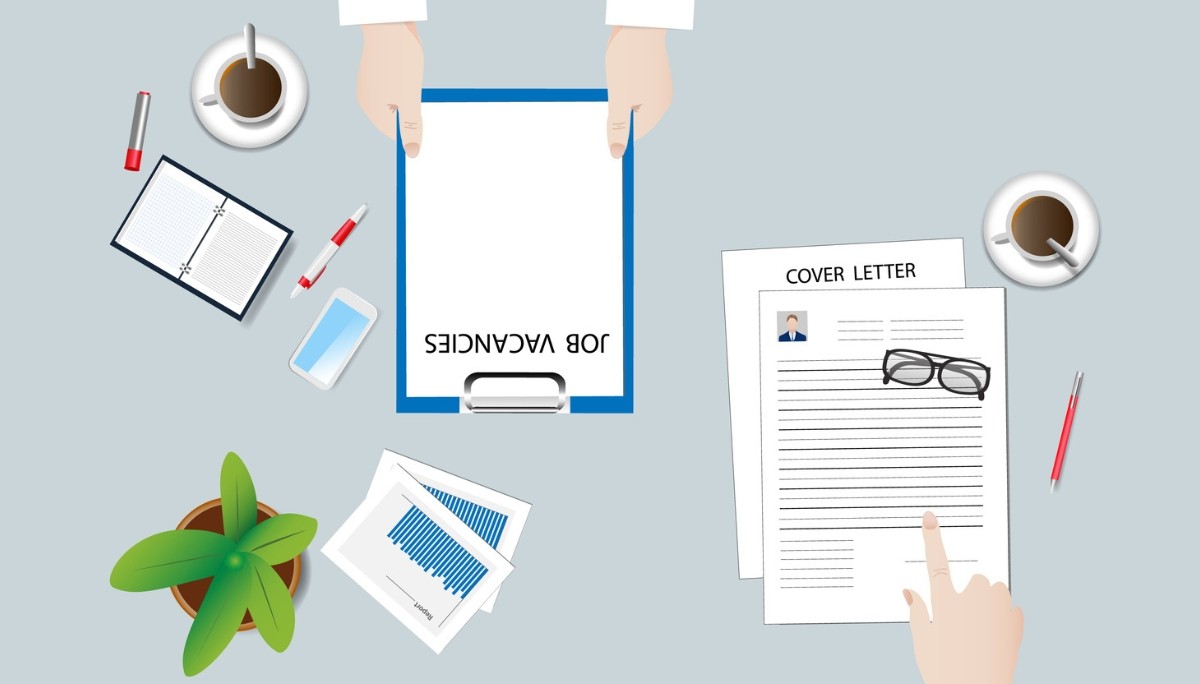
Even in 2026, strong written communication still matters for AI engineers and ML researchers, especially when you’re applying to AI-native startups, research labs, or infra-heavy teams. The cover letter is often the only place you can clearly explain why this role, why this company, and how your technical background maps to their real-world challenges. Some AI-first teams skip cover letters, but many still expect a short, well-structured one. When hiring managers are skimming dozens of applications, a clean, readable letter that highlights fit, impact, and motivation can be the difference between moving forward and getting lost in the stack.
That same emphasis on clarity is showing up across modern AI hiring more broadly. Platforms like Fonzi are built around high-signal communication, helping AI, ML, infra, and LLM specialists present their work and intent clearly, while giving companies a better view into real fit beyond keyword-stuffed resumes. A strong cover-letter-style intro on Fonzi can directly improve match quality, especially for roles in ML infrastructure, applied research, and AI product engineering, where context and motivation matter just as much as raw technical skill.
Key Takeaways
A modern cover letter for AI roles should fit on one page with a clear structure: header, greeting, 3–4 short paragraphs (opening, body, closing), and a professional sign-off like “Sincerely” or “Best regards.”
Formatting choices—fonts, spacing, margins, and file type—must match your resume and work seamlessly with both human readers and applicant tracking systems used by companies like Anthropic, OpenAI, and AI-native startups.
Fonzi is a curated talent marketplace designed specifically for AI engineers, ML researchers, infra engineers, and LLM specialists, using AI to match candidates with top companies fairly and transparently.
Responsible AI in hiring should reduce bias, surface signal from projects, code, and publications, and speed up timelines—not replace human judgment.
Fonzi’s Match Day gives candidates concentrated, high-signal exposure to vetted companies actively hiring for AI roles, making a well-formatted cover letter or profile intro even more valuable.
Core Cover Letter Format: Section-by-Section Layout

A successful cover letter follows a predictable structure that hiring managers can scan in under 60 seconds. The standard format includes:
Contact header (your info, including phone number)
Date
Employer information
Greeting
Opening paragraph
Body paragraphs (1–2)
Closing paragraph
Sign-off and signature
Optional postscript (P.S.)
For technical roles, aim for 250–400 words total. This keeps everything on a single page and respects the reader’s time. Layout recommendations here work for both PDF uploads through ATS platforms like Greenhouse and Lever, and direct recruiter emails.
The structure is flexible: you can merge or split paragraphs as long as the document stays readable and logically ordered. What matters is that each section serves its purpose clearly.
Contact Information and Date at the Top
Your header should be compact and scannable. Include:
Full name (slightly larger font, 14–16 pt)
City and state (e.g., “San Francisco, CA”)
Phone number
Professional email
GitHub, LinkedIn URL, or portfolio link
Date (e.g., “October 3, 2026”)
The header should match or closely mirror your resume heading to create a consistent professional brand across documents. In 2026, a street address city line is optional—remote and hybrid roles often only require city, state, and country.
For digital submissions, keep the header left-aligned and simple. Avoid images, icons, or complex graphics that might break in an ATS. Your contact details should be easy to scan in under two seconds, and usernames or domains should look professional.
Employer Information and Professional Greeting
Under the date, list the employer details:
Hiring manager’s name (if known)
Title organization
Company name
City location
For example: “Jordan Chen, Head of Machine Learning, Aurora Labs, New York, NY”
Invest a few minutes in finding the hiring manager’s name via LinkedIn, the job posting, or the company's careers page. When you address someone by name, your letter immediately feels more personal and less like a mass application.
For greetings:
Scenario | Recommended Greeting |
Name known | Dear Ms. Chen, or Dear Jordan Chen, |
Name unknown | Dear Hiring Manager, |
Team/committee | Dear Aurora Labs ML Hiring Team, |
Avoid | To Whom It May Concern, Hi there, Hey |
Phrases like “To Whom It May Concern” signal generic mass applications and feel outdated for AI and tech roles. If you’ve heard about the role through a specific channel, you can briefly mention it in the opening paragraph rather than the greeting.
Opening Paragraph: Role, Signal, and Motivation
The first paragraph should be 2–4 sentences. State the exact position title (e.g., “Senior ML Engineer: Recommendation Systems”) and how you found it, whether through a job board, referral, or Fonzi Match Day.
Quickly surface 1–2 strong proof points:
“I’m excited to apply for the Senior LLM Engineer role at HelixAI. In my previous role at Vertex, I shipped a production retrieval-augmented generation system serving 10M+ daily users, reducing latency by 35% while improving relevance scores.”
Include a concrete reason for interest. Reference the company’s AI stack, research direction, open-source projects, or recent product launches. This shows you’ve done focused research rather than applying blindly.
The tone should balance confidence with brevity. This opening paragraph is where the reader decides whether to continue or simply restate their skim of your resume.
Body Paragraphs: Evidence of Impact and Technical Fit
Create 1–2 short body paragraphs that tie concrete achievements to the role. Focus on measurable outcomes:
Latency reductions
Model performance gains
Infra cost savings
Revenue impact
User adoption metrics
Use 2–3 highly relevant experience examples rather than listing every project. Production LLM work, infra scaling on GPUs/TPUs, publications at NeurIPS/ICML/ICLR, or open-source contributions with GitHub links all work well.
Each example should follow a simple structure:
Situation/context
What you did (with specific tools like PyTorch, JAX, Ray, Kubernetes)
Quantifiable results
The middle paragraph or second paragraph should align examples with job description keywords, both for human readability and ATS matching. You can also briefly mention collaboration style (working with product, infra, or research teams) to show you’re more than an isolated individual contributor.
Closing Paragraph and Signature
The final paragraph should summarize in one sentence, restate enthusiasm, and invite next steps:
“I’d welcome the chance to discuss how my experience shipping LLM-based products in 2024 could accelerate your 2026 roadmap. Thank you for your time and consideration.”
Maintain a professional but approachable tone. Thank the reader for their time without being overly formal.
Use a simple closing:
Sincerely,
Best regards,
Kind regards,
Follow with your first and last name. For email versions, optionally include GitHub or portfolio URL under your name. For printed letters or attached PDFs, leave a line space between the closing and typed name to represent a signature.
A brief P.S. line can attract attention when appropriate:
“P.S. I recently open-sourced a retrieval-augmented generation toolkit used by 500+ engineers since July 2026.”
Professional Cover Letter Formatting: Fonts, Margins, and Spacing
Cover letter formatting extends beyond structure to the visual and technical details that make your letter ATS-safe and easy to scan on laptops and phones.
Consistency with your resume is essential. Use the same typeface family, sizing range, and general look across all application materials. When a hiring manager opens your resume and cover letter side by side, they should feel like cohesive documents from the same qualified candidate.
Fonts and Font Size
Use clean, widely available fonts:
Calibri
Arial
Helvetica
Cambria
Times New Roman
Match the font used on your resume if possible. For body paragraphs, use a 10–12 pt font size. Your name in the header can be slightly larger (14–16 pt) for emphasis.
Avoid decorative or script fonts; they render poorly in ATS systems and on small screens, and may feel unprofessional for technical roles. For LaTeX users, the default Computer Modern is acceptable if it matches your resume, though switching to a modern, screen-friendly font can improve readability.
Consistent font usage across resume, cover letter template, and portfolio communicates attention to detail, something particularly important in infra and reliability-focused roles.
Margins, Alignment, and Spacing
Element | Recommendation |
Margins | 1 inch (2.54 cm) on all sides; 0.75 inch minimum if needed |
Alignment | Left margin aligned (not justified) |
Line spacing | Single spacing within paragraphs |
Paragraph spacing | One blank line between paragraphs |
Section breaks | Single blank line only; no decorative separators |
Left alignment avoids awkward spacing gaps that appear on different devices and PDF viewers. Justified text can look clean in print but creates visual rivers on screens.
Keep spacing consistent. Dense blocks of text feel like academic papers and discourage skimming. Preview your letter as a PDF on both desktop and mobile to ensure spacing and alignment look clean before submitting.
Length Guidelines for AI and ML Candidates
AI and ML-focused cover letters should stay within 250–400 words, fitting neatly on one page even when printed with standard settings.
A typical structure:
One clear opening paragraph (2–4 sentences)
One or two focused body paragraphs (3–5 sentences each)
One compact closing paragraph (2–3 sentences)
This format works even for senior and staff-level engineers. Candidates with extensive research histories (multiple first-author papers) should link to external profiles like Google Scholar or a personal site instead of overloading the letter.
Recruiters and hiring managers often spend less than one minute on a letter. Prioritize clarity and relevance over comprehensive detail. Edit ruthlessly: remove redundant tech buzzwords, consolidate overlapping personal experiences, and ensure each sentence adds a new signal.
File Format and Email vs. Attachment Layout
How you save and send your cover letter affects compatibility with ATS systems and hiring workflows at AI-focused companies.
The difference between a standalone cover letter document (PDF or DOCX) and an email-style cover letter included directly in an email body or application form matters. Technical teams often review applications across devices, so attachments must open cleanly on Mac, Windows, and browser-based viewers.
Saving and Naming Your Cover Letter File
Save the final version as a PDF whenever possible. PDFs preserve formatting across devices and prevent accidental editing by recipients.
DOCX is acceptable if a specific ATS or employer explicitly requested it. Otherwise, PDF is safer for 2024–2026 workflows.
Use professional, searchable file name patterns:
FirstName-LastName-Role-Cover-Letter-Company.pdf
Examples:
Liam-Patel-LLM-Engineer-Cover-Letter-VertexAI.pdf
Aisha-Khan-ML-Infra-Cover-Letter-Anthropic.pdf
Keep personal files organized by date and company, especially when submitting applications to multiple AI labs or startups. Each new version should update both content and file name so hiring teams can distinguish tailored applications from generic ones.
Formatting for Email vs. Printed or Attached Letters
Element | Email Format | Printed/Attached PDF |
Full address block | Skip | Include |
Subject line | Required (clear, specific) | N/A |
Header | Minimal or email signature | Full header with date |
Hyperlinks | Clickable, clean text | Static URLs |
Greeting | Same | Same |
Body | Short paragraphs, scannable | Standard paragraphs |
For email cover letters, skip the full physical address block. Focus on a strong subject line like “Application – Senior ML Infra Engineer – Jordan Lee.” In email format, hyperlinks to GitHub, ArXiv papers, or demo apps can be clickable, but link text should look clean and descriptive, not raw URLs. Printed or attached letters should maintain the full header, date, and employer block while still fitting on a single page.
For online application text boxes, paste the email-formatted version (no complex header) and check that line breaks and spacing remain readable. Many platforms strip formatting, so simplicity wins.
Tailoring Your Cover Letter for AI, ML, Infra, and LLM Roles
A generic cover letter wastes everyone’s time. Adapting the standard format to different AI-specialized roles doesn’t require rewriting from scratch, just targeted customization.
Use precise language: name specific models, frameworks, infra components, and datasets to differentiate real relevant experience from buzzword-stuffing. Each letter individually should focus on a narrow set of experiences tightly aligned with the specific AI or infra niche of the role.
Aligning With the Job Description and Tech Stack
Review the job description line by line. Highlight the most important responsibilities and required skills (distributed training, RLHF, retrieval systems, vector databases).
Mirror the language the company uses for key technologies. If the posting says “foundation models,” use that phrase rather than just “large language models.” If they emphasize “MLOps pipelines,” describe your experience in those terms.
Examples in your letter should map directly to these points:
Job Requirement | Your Example |
Low-latency inference | “Reduced inference latency by 40% on a 7B parameter model in 2024” |
Distributed training | “Scaled training pipelines to 256 GPUs using PyTorch DDP and FSDP” |
Production LLM systems | “Shipped an LLM-powered code assistant serving 50K daily active users” |
Tailoring can be efficient. Maintain a base template but customize the opening hook, 1–2 examples, and closing sentence for each role. Reference publicly available information (blog posts, research repos, product announcements) to show focused research on the team.
Showcasing AI and ML Impact Clearly
Use metrics to quantify impact:
Model accuracy improvements
F1 scores, ranking quality
Throughput gains
Infra cost reductions
User adoption numbers
Specify timeframes where useful (“In 2024, I led…” or “Between 2022 and 2023, I…”) to show recent, relevant experience.
Senior candidates should include examples of system-level thinking: data pipelines, evaluation frameworks, A/B testing, and long-term maintainability. Junior candidates can highlight high-signal projects, internships, Kaggle competitions, or open-source contributions with clear outcomes.
Clarity and honesty are critical. Inflated claims are easy for experienced AI hiring managers to spot. Focus on what you actually did and the results you can explain in an interview.
Communicating Collaboration and Responsible AI Practices
AI roles increasingly require working across functions. Briefly mention how you collaborate with product managers, researchers, infra teams, and stakeholders beyond engineering.
Include one example of cross-functional work:
“Co-designed an experiment framework with our product to evaluate LLM response quality, resulting in a 15% improvement in user satisfaction scores.”
If relevant to the company’s mission, briefly mention involvement in responsible AI work: bias audits, model monitoring, safety evaluations, or explainability tooling. Many AI companies (especially in healthcare, financial services, and enterprise tools) value candidates who understand trade-offs between speed and responsibility.
Only a few sentences are needed. The goal is to signal awareness and maturity, not to write a full ethics statement.
How Fonzi Uses AI, and Why Your Cover Letter Still Matters
Fonzi is a curated talent marketplace for AI and ML professionals that uses AI to improve hiring while keeping humans in the loop. The goal is to reduce noise and bias, not replace recruiters or hiring managers.
A well-formatted cover letter is one of several signals Fonzi uses. Candidates can create a strong profile that functions like an enriched resume and cover letter hybrid, highlighting skills, projects, and preferences.
Fonzi’s matching algorithms consider skills, experience, and interests, but human talent partners still review and guide matches for quality. This gives AI-focused candidates a way to bypass generic application funnels and connect directly with teams that value depth and craft.
AI as a Signal Amplifier, Not a Gatekeeper
Fonzi’s AI models analyze candidate profiles, projects, and experiences to surface strong fits with roles at vetted companies. Rather than simply filtering by keywords, the system surfaces high-signal details, such as shipped LLM products, published research, and infra work at scale that might otherwise be buried in a resume.
This approach helps candidates who may not have “big name” credentials but have done substantive, technically impressive work. A candidate who built a production recommendation system at a Series A startup deserves the same consideration as someone from a household-name lab.
Human reviewers and hiring partners remain central. They interpret context, ask follow-up questions, and ensure matches align with candidate goals. A concise, well-formatted cover letter or profile summary helps Fonzi’s humans and algorithms both understand what problems you want to solve next.
Reducing Bias and Protecting Candidate Experience
Fonzi is intentionally designed to push against common sources of bias in traditional hiring pipelines. The platform emphasizes skills, projects, and outcomes over pedigree, encouraging structured evaluation criteria at client companies.
Key protections:
Focus on a curated, smaller set of highly relevant opportunities
Less time in opaque multi-month processes
Respectful communication timelines
Clear feedback where possible
Informed interview loops
A focused, well-formatted letter or profile summary helps reduce misalignment and wasted interviews for both sides. When a potential employer can quickly understand your strengths and interests, conversations start in a better place.
Fonzi Match Day: High-Signal Exposure to Top AI Teams
Match Day is a specific event-style feature where shortlisted AI candidates are introduced to a group of pre-vetted companies over a concentrated time window.
How it works:
Companies come ready to engage seriously with real, funded roles in LLM product engineering, ML infra, and applied research
Candidates’ profiles and short, cover-letter-style intros are shared in a standardized format
Hiring teams can quickly see fit and reach out directly
Multiple conversations can result from a single strong profile
This design reduces the need to send dozens of cold applications in your job search. Instead, a single strong profile and well-crafted summary can trigger multiple conversations with interested employers.
Refine your written narrative ahead of Match Day. A compelling intro similar in spirit to a great cover letter can make the difference between getting passed over and landing interviews with companies you’re excited about.
Practical Template and Example Outline for AI Job Cover Letters
This section provides a high-level template you can adapt to your own voice and experience. The goal is structure, not fill-in-the-blank copying.
Each part of the letter serves a specific purpose. Reference real technologies, such as Transformers, vector databases, and GPU orchestration tools, to keep your examples concrete and credible.
Suggested Paragraph-by-Paragraph Template
Header
Your full name, city/state, phone, email, GitHub/LinkedIn URL
Date
Employer name, title, company, location
Greeting
“Dear [Name],” or “Dear Hiring Manager,”
Opening paragraph (3–4 sentences)
State the exact role and company (e.g., “Senior LLM Engineer at HelixAI”)
Mention how you found it (referral, Fonzi Match Day, job board)
Include 1–2 top achievements that directly relate to the job
Body paragraph 1 (3–5 sentences)
Describe your most relevant recent experience
Include clear metrics and concrete tools used
Example: “Built a retrieval-augmented generation system using LangChain and Pinecone that reduced response latency by 45%”
Body paragraph 2 (optional, 3–4 sentences)
Cover a complementary angle: research results, infra scaling, cross-functional collaboration
Match the company’s focus areas
Closing paragraph (2–3 sentences)
Summarize your fit
Restate enthusiasm for this specific team
Invite next steps and thank the reader
Sign-off
“Best regards,” or “Sincerely,”
Your full name
Optional: key links (GitHub, portfolio, personal site)
Proofread carefully before sending. Typos and misaligned formatting undermine the signal you’re trying to create.
Common Mistakes to Avoid in Technical Cover Letters
Mistake | Why It Hurts |
Generic letters | Hiring teams notice when you don’t mention their product or research |
Dense paragraphs | Managers read on mobile; long blocks get skimmed or skipped |
Buzzword overload | Listing every ML library is counterproductive; focus on what matters for the role |
Repeating your resume | Simply restate information wastes space; interpret and connect experiences instead |
Negative framing | Apologizing for gaps or non-traditional paths draws attention to weaknesses |
Write in an active voice. Instead of “The model was optimized by me,” write “I optimized the model.”
Focus on strengths, learning, and concrete outcomes. Even if you’re making a career transition, position it as an asset: new perspective, transferable skills, and demonstrated ability to learn quickly.
Format as a Lever for Clarity and Confidence
A clean, one-page cover letter can make a real difference for AI and ML candidates, not because it’s flashy, but because it makes your strongest signals easy to spot. For recruiters and hiring managers skimming dozens of applications, format is part of communication. Matching your resume style, using a readable 10–12 pt professional font, keeping margins consistent, and sticking to roughly 250–400 well-focused words all help your message land. Addressing the hiring manager by name when possible, leading with a concrete proof point, and ending with a clear next step shows the same attention to detail you’d bring to a production system.
That kind of clarity also translates directly to how candidates are discovered and evaluated on platforms like Fonzi. Fonzi is built to surface well-presented, high-signal profiles so strong AI engineers don’t get lost in generic applicant funnels. Using a consistent cover-letter-style intro on Fonzi helps the right teams understand your impact quickly, whether they’re hiring for LLM product engineering, ML infrastructure, or applied research. Treat this structure as a reusable template, tailor the examples for each role, and pair it with a strong Fonzi profile to make sure your value is easy to see and hard to overlook.
FAQ
What is the proper format for a cover letter?
How should I structure and layout a cover letter professionally?
What are cover letter formatting examples that work?
What margins, fonts, and spacing should I use for cover letter formatting?
How do you format a cover letter for email vs printed applications?


