What Is M2M Communication? Machine-to-Machine Technology Explained
By
Ethan Fahey
•
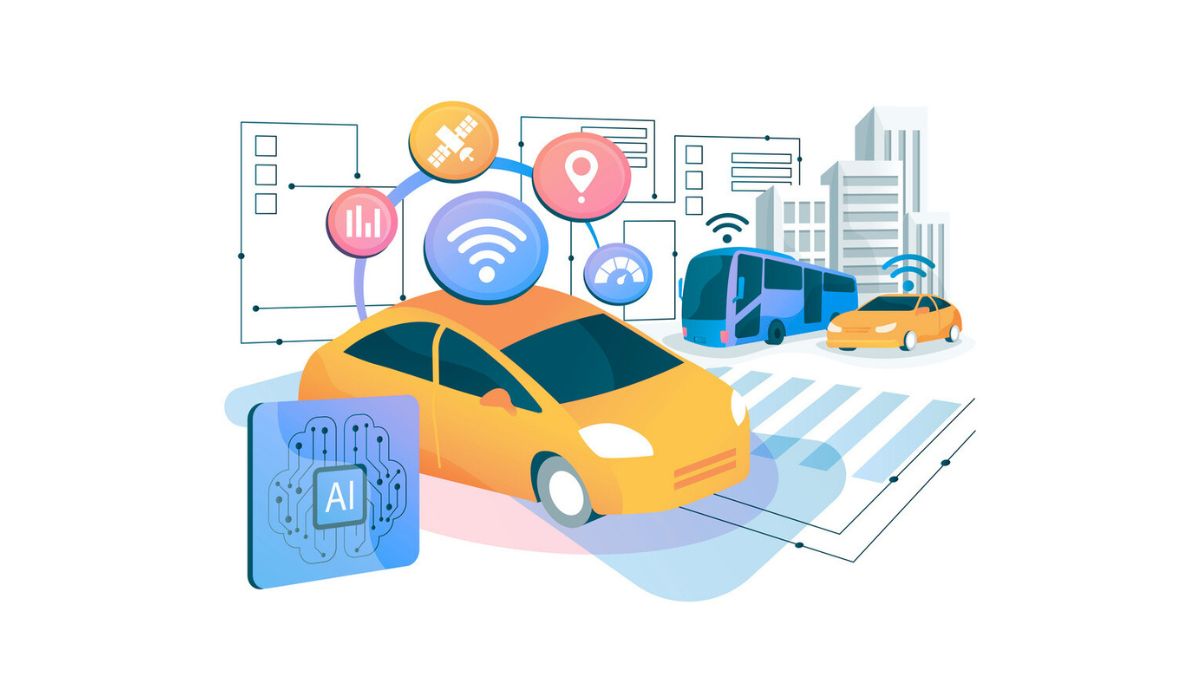
Since the early 2000s, machine-to-machine (M2M) communication has quietly become the backbone of connected systems across industries. From delivery fleets transmitting GPS coordinates to factory robots coordinating assembly tasks, and from smart meters reporting energy consumption to medical wearables streaming vital signs, M2M powers much of the automation operating behind the scenes. At its core, M2M simply means machines communicating directly with each other over a network to exchange data and trigger actions without human intervention: a sensor detects a condition, sends data to a processing system, and another device responds automatically, no dashboard or manual input required.
Today, M2M is rapidly converging with AI, edge computing, and 5G connectivity, enabling systems that are more autonomous, data-driven, and capable of real-time decision-making. For companies building connected products, understanding M2M architecture is no longer optional; it’s a foundational capability. The challenge, however, is talent: engineers who can work across embedded systems, cloud infrastructure, and AI are difficult to find. This is where Fonzi AI comes in. Fonzi helps startups, CTOs, and engineering leaders quickly assemble the specialized teams required to design, secure, and scale M2M and IoT systems, often closing critical roles in weeks instead of months. In the rest of this article, we’ll break down how M2M works, where it’s used, how it differs from IoT, and what technical roles companies need to implement it successfully.
Key Takeaways
M2M (machine-to-machine) communication enables automated data exchange between devices without human intervention, forming the foundational layer beneath broader IoT ecosystems.
In 2026, M2M technology powers connected products, smart factories, telematics, remote monitoring systems, and smart city infrastructure across virtually every industry.
Core M2M systems consist of sensors, communication modules, gateways, software platforms, and actuators working together to collect data, process it, and trigger automated actions.
M2M differs from IoT primarily in scope: M2M focuses on direct communication between specific devices, while IoT integrates many subsystems, cloud services, and user interfaces into larger ecosystems.
Building reliable M2M systems requires specialized engineering talent across embedded firmware, connectivity, backend platforms, and AI/ML roles that Fonzi helps companies fill in under 3 weeks.
What Does M2M Mean? Core Concepts and Definitions
M2M (machine-to-machine) communication refers to the automated exchange of information between devices like sensors, controllers, gateways, and servers without direct human input. Unlike traditional systems that require operators to interpret data and manually trigger responses, M2M systems handle detection, transmission, processing, and action autonomously.
M2M systems can be wired or wireless and may or may not use the public internet. The choice depends on latency requirements, security concerns, cost constraints, and environmental factors. A factory floor might use wired Ethernet connections for reliability, while a fleet of delivery vehicles relies on cellular networks for coverage.
The typical M2M communication loop works like this:
A sensor detects an event (temperature spike, vibration anomaly, location change)
Data is transmitted over a communication network to a central or edge system
Software processes the data using rules engines, analytics, or AI models
An actuator or machine takes automated action (adjusting temperature, rerouting a vehicle, sending an alert)
Historically, M2M evolved from mid-20th-century telemetry and SCADA (Supervisory Control and Data Acquisition) systems. The key shift came when M2M moved from proprietary networks to public infrastructure. By the 1990s, GSM-based remote monitoring emerged. The 2010s brought LTE-M and NB-IoT, enabling low-power consumption deployments at scale.
For technical leaders, M2M matters because it:
Reduces manual work and operational costs through automation
Provides real-time visibility into equipment status, inventory, and operations
Enables entirely new data-driven business models and revenue streams
How M2M Communication Works in Practice
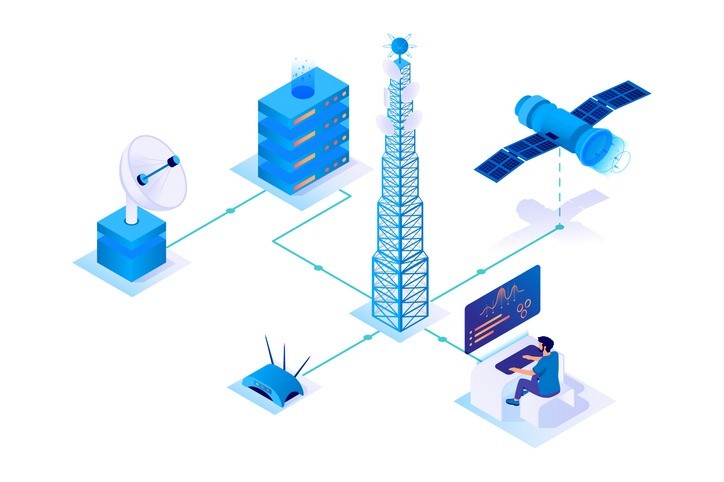
Understanding M2M architecture requires seeing the complete data path from physical sensors to business applications. At a high level, data flows from edge devices through communication channels to processing systems and back out to actuators or control systems, all coordinated by software that manages communication protocols, schedules data transfers, and triggers automated actions.
The four core building blocks of any M2M system:
Data endpoints: Sensors and devices that generate or receive data (temperature probes, GPS modules, medical monitors)
Communication networks: The channels that carry data (cellular, LPWAN, Wi-Fi, Ethernet, telephone lines)
Data integration points: Gateways, servers, and cloud platforms that aggregate, normalize, and route data
Actuators and controlled systems: The machines that execute physical changes based on processed data
The data lifecycle follows a clear pattern: collection, transmission, processing, and response. A refrigerated truck in 2026 might send temperature and location data every minute to a fleet platform. If the temperature exceeds safe thresholds, the system can automatically adjust the cooling unit, reroute the vehicle to a closer destination, or alert the driver, all without manual assistance.
Modern M2M deployments increasingly push processing logic to the edge. Instead of sending all sensor data to the cloud for analysis, gateways and embedded devices run local rules or AI models. This approach reduces latency, cuts bandwidth usage, and enables faster responses in industrial automation scenarios where milliseconds matter.
Key Components of an M2M System
Breaking down each component helps non-specialist technical leaders understand what they’re building or buying:
Sensors and endpoints: Physical devices that generate data, like radio frequency identification tags tracking inventory, energy meters measuring consumption, medical wearables monitoring heart rate, and factory PLCs controlling assembly lines. These are the eyes and ears of any M2M system.
Communication modules: Hardware that handles network access; cellular modems supporting 2G through 5G (including LTE-M and NB-IoT), LPWAN radios using LoRaWAN or Sigfox, and wired interfaces like Ethernet, Modbus, or CAN bus. Module selection determines range, power requirements, and data capacity.
Gateways and data integration points: Industrial gateways or cloud IoT hubs that aggregate data collected from many endpoints, normalize formats, and route information to applications or data lakes. These components handle protocol translation and ensure interoperability between devices from different vendors.
Software and applications: Device management platforms that track firmware versions and connectivity status, monitoring dashboards that visualize performance data, alerting systems that notify operators of important events, and business applications that use M2M data for maintenance scheduling, dynamic pricing, or supply chain management.
Actuators and control systems: The components that execute changes in the physical world; valves, motors, smart locks, HVAC controllers, and controlling machines in production lines. These elements close the loop, turning data into action.
Protocols and Networks Used in M2M Communication
Protocol and network choices fundamentally determine reliability, latency, energy consumption, and security for any M2M solution. Getting these decisions right early prevents costly rearchitecture later.
Common application-layer protocols include:
MQTT: A lightweight publish-subscribe protocol ideal for constrained devices and unreliable networks
CoAP: Designed for simple electronics with limited resources, using UDP for efficiency
HTTP/HTTPS: Standard web protocols used when devices have sufficient processing power and reliable internet connectivity
Transport and messaging options range from reliable TCP connections to lightweight UDP datagrams. Message brokers add queuing and delivery guarantees but introduce complexity and network costs.
Key network options for M2M deployments:
Network Type | Range | Power Use | Best For |
Cellular (2G-5G, LTE-M, NB-IoT) | Wide | Medium-Low | Fleet management, smart meters, remote locations |
LPWAN (LoRaWAN, Sigfox) | Wide | Very Low | Sensors in agricultural or industrial settings |
Wi-Fi | Limited | Higher | Indoor devices with power access |
Ethernet | Limited | N/A | Fixed industrial equipment, factory floors |
Bluetooth Low Energy | Short | Very Low | Wearables, proximity sensing |
RFID | Very Short | Minimal | Inventory tracking, access control |
Security layers like TLS, DTLS, VPNs, and SIM-based authentication are typically added on top of these protocols. The European Telecommunications Standards Institute has published standards specifically addressing M2M security requirements, ensuring data integrity across communication channels.
M2M vs. IoT: How Are They Different?
The terms M2M and IoT are often used interchangeably, but understanding their key differences helps scope projects, choose architectures, and define required skills for your team.
Traditional M2M systems tend to be point-to-point or closed, focused on specific operational tasks between a limited number of devices. A utility company’s smart metering infrastructure, for example, might consist of meters communicating directly with a central billing system, a classic M2M deployment that may not require broad internet connectivity.
IoT, by contrast, represents a broader ecosystem that integrates many devices, cloud services, user interfaces, and analytics platforms. An IoT smart home connects thermostats, cameras, door locks, and voice assistants through cloud services that consumers access via mobile apps.
Key distinctions between M2M and IoT:
M2M focuses on machine communication for specific tasks (meter reading, equipment diagnostics), while IoT connects many subsystems and stakeholders (devices, apps, customers, partners)
M2M doesn’t always require internet connectivity, as many systems operate on private wireless networks or direct cellular links
IoT typically relies on IP-based networking and cloud connectivity for data processing and user interfaces
M2M architectures tend to be simpler and more deterministic, while IoT platforms handle greater complexity and scale
In 2026, the line between M2M and IoT is increasingly blurred. Many “IoT” products use M2M communication as their foundational layer, adding cloud services and user experiences on top.
For hiring, this distinction matters: companies may need different profiles for pure embedded M2M engineers who work close to hardware versus full-stack IoT and cloud data engineers who build scalable platforms. Fonzi helps teams source across this spectrum, matching specific technical requirements to vetted candidates.
Comparison Table: M2M vs. IoT
Dimension | M2M | IoT |
Network Dependency | Often direct links, may not require internet | Typically requires internet and cloud connectivity |
Architecture | Point-to-point or closed systems | Multi-tenant platforms with diverse integrations |
Scope | Specific operational tasks between machines | Broad ecosystems connecting devices, users, and services |
Data Consumers | Primarily other machines and automated systems | Both machines and humans through apps and dashboards |
Typical Protocols | MQTT, CoAP, proprietary protocols | HTTP/HTTPS, MQTT, WebSockets, APIs |
Example Projects | Smart metering, fleet telematics, industrial sensors | Smart home ecosystems, connected insurance, consumer wearables |
Required Skills | Embedded firmware, networking, low-level systems | Full-stack development, cloud architecture, data engineering |
M2M is a foundational subset of IoT, but it remains a distinct design and hiring problem. Teams building M2M systems often need deeper expertise in embedded development and communication protocols, while IoT projects require broader cloud and application development skills.
Real-World Applications and Use Cases of M2M
Between 2020 and 2026, global M2M deployments have expanded dramatically across logistics, manufacturing, healthcare, consumer electronics, smart cities, and finance. The technology has moved from experimental pilots to production systems handling millions of connected devices.
Each vertical applies M2M to improve operational efficiency, reduce costs, and generate new data for analytics or AI models. Successful projects require cross-functional teams: embedded engineers, data engineers, security specialists, and ML practitioners, roles that Fonzi can help fill quickly when you’re ready to scale.
Industrial Automation and Smart Manufacturing
Factories, warehouses, and production lines adopting Industry 4.0 practices between 2015 and 2026 have deployed M2M extensively. The goal is to automate processes that previously required manual oversight while gaining real-time visibility into operations.
Common use cases include:
Predictive maintenance: CNC machines transmitting vibration and temperature data to ML models that predict failures before they happen, reducing downtime and maintenance costs
Remote monitoring: Assembly lines reporting production efficiency metrics continuously, allowing managers to identify bottlenecks without walking the floor
Autonomous coordination: Automated guided vehicles in warehouse logistics using M2M to coordinate movements, avoid collisions, and optimize picking routes
The concrete benefits are measurable: reduced downtime, optimized energy consumption, and better quality control through continuous sensor feedback. Modern deployments often combine M2M telemetry with machine learning to detect anomalies and optimize scheduling in real time.
Logistics, Fleet Management, and Smart Cities
Traditional telematics and emerging smart-city infrastructure share a common foundation in M2M communication.
Fleet management examples:
Trucks transmit GPS coordinates and diagnostic information continuously, enabling real-time route optimization
Automated maintenance alerts based on engine performance data, preventing breakdowns in remote locations
Usage-based insurance products where premiums reflect actual driving behavior captured by M2M devices
Smart city deployments:
Connected parking sensors report availability to reduce traffic congestion
Waste management bins signaling fill levels to optimize collection routes
Adaptive traffic lights responding to congestion patterns in real time
Municipal and logistics operators integrate M2M data into dashboards and analytics platforms that guide planning and policy decisions. The data collected from thousands of sensors creates opportunities for reducing errors, improving service levels, and cutting operational costs.
Healthcare and Connected Medical Devices
Regulated medical equipment and wellness devices sending continuous patient data to clinicians represent some of the most sensitive M2M applications. The stakes are high; reliability and security directly impact patient outcomes.
Examples in healthcare M2M:
Remote cardiac monitors transmitting heart rhythm data to cardiologists for review
Connected insulin pumps adjusting dosages based on continuous glucose readings
Fall-detection wearables alerting emergency services when sensors detect a fall pattern
Hospital medical equipment reporting equipment status for maintenance scheduling
Data privacy and regulatory compliance add complexity. HIPAA in the US and GDPR in Europe impose strict requirements on how patient data is transmitted, stored, and accessed. This makes ensuring data integrity and secure communication channels critical design requirements.
M2M in healthcare enables earlier interventions, fewer hospital visits, and more precise, data-driven care. But building these systems requires specialized expertise in both embedded devices and healthcare security requirements.
Consumer Electronics, Smart Homes, and Finance
Many “smart” consumer products rely on M2M behind the scenes, even when marketed as IoT.
Smart home examples:
Smart thermostats adjusting temperature based on occupancy sensors and learned preferences
Security cameras interacting with cloud services for motion detection and video storage
Smart appliances coordinating energy consumption with utilities during off-peak hours
Financial applications:
Wearables and phones conducting contactless payments through M2M communication with payment terminals
Point-of-sale terminals communicating with payment processors for authorization
ATM networks performing remote diagnostics, cash level monitoring, and security checks
Vending machine deployments reporting inventory and sales data for restocking optimization
AI-enhanced M2M in finance helps with fraud detection and risk scoring by analyzing machine-generated transaction patterns. The combination of real-time data and machine learning creates new business opportunities while reducing human error in transaction processing.
Benefits and Challenges of Machine-to-Machine Communication
M2M delivers clear advantages, but large-scale deployments come with technical, security, and organizational challenges that require careful planning.
Key benefits of M2M implementation:
Higher productivity through automated monitoring and response
Fewer manual tasks and reduced human error
Real-time visibility into operations, inventory management, and equipment status
Lower operating costs through predictive maintenance and efficient resource allocation
New data products, services, and revenue streams based on sensor data
Main challenges organizations face:
Security and privacy risks as devices expose new attack surfaces
Interoperability issues between devices and platforms from different vendors
Network reliability in remote locations or challenging environments
Device lifecycle management across thousands or millions of endpoints
Talent shortages in embedded engineering, connectivity, and AI
Well-planned architecture and strong engineering teams can mitigate many of these risks. This is where specialized hiring solutions like Fonzi provide a strategic advantage, getting the right people in place before problems compound.
Security and Reliability Considerations
As deployments scale to tens of thousands or millions of M2M devices, security and uptime become board-level concerns. A compromised device can expose sensitive data, disrupt operations, or provide entry points for broader network attacks.
Common threats in M2M deployments:
Unauthorized access to devices through default credentials or unpatched vulnerabilities
Data interception during transmission over wireless networks
Malware injected into embedded firmware during supply chain or update processes
Exploitation of poorly secured remote management channels
Key best practices for M2M security:
Device authentication and authorization using certificates or hardware security modules
Strong encryption for data in transit and at rest
Secure boot and firmware signing to prevent unauthorized code execution
Regular security updates with controlled rollout processes
Network segmentation to limit the blast radius of compromises
Reliability strategies include redundancy in communication paths, local failover logic at the edge when connectivity is lost, buffering of received data during outages, and continuous monitoring with alerting for anomalies.
Designing and implementing these controls requires specialized security and firmware expertise. Many startups and enterprises address this by expanding their AI and platform engineering teams with candidates who understand both low-level systems and modern security practices.
Organizational and Talent Challenges
Beyond technology, many M2M initiatives stall because organizations lack the right blend of embedded engineers, cloud and backend developers, data engineers, and ML experts. The work spans from low-level firmware running on microcontrollers to cloud platforms processing millions of events per second.
Hiring for these roles is competitive and time-consuming. Candidates who combine low-level systems knowledge with comfort in modern AI tooling are particularly scarce. Traditional recruiting approaches often take months, delaying product roadmaps and creating technical debt.
Fonzi is built to solve this talent bottleneck. By continuously vetting elite AI and systems engineers and matching them to companies in days rather than months, Fonzi gives organizations a predictable path to building the teams they need.
With faster, higher-quality hiring, organizations can iterate on M2M products more quickly, improve security posture, and scale from pilot to production with confidence.
Building M2M and Connected Device Teams with Fonzi
Turning M2M concepts into shipped products requires more than understanding the technology; it requires the right people. For startup founders, CTOs, and hiring managers building connected device platforms, talent is often the primary constraint on execution speed.
Core roles typically needed for modern M2M projects:
Embedded firmware engineers: Developing software that runs on constrained devices, managing power, memory, and real-time constraints
Connectivity and networking specialists: Implementing communication protocols, debugging wireless issues, optimizing data transfers
Backend and platform engineers: Building cloud infrastructure that ingests, processes, and stores M2M data at scale
Data and ML engineers: Creating analytics pipelines, training models on sensor data, deploying inference at the edge
Security engineers: Implementing device authentication, secure boot, encryption, and vulnerability management
Fonzi focuses on sourcing and rigorously evaluating these kinds of engineers, with particular emphasis on AI, data, and automation skill sets. The process is designed so most hires close within about three weeks, giving companies a predictable, repeatable way to staff critical projects instead of relying on ad-hoc recruiting.
Fonzi supports both early-stage startups making their first AI or M2M hire and large enterprises scaling to hundreds or thousands of engineers across multiple regions.
How Fonzi Works for M2M and AI Hiring
Fonzi’s model creates a continuous pipeline of vetted engineering talent ready for M2M and connected device roles.
The process starts with continuous identification and assessment of top-tier AI, ML, and systems engineers. Standardized evaluations and real-world project reviews separate candidates who can actually ship products from those who just interview well.
Companies share their role requirements and product context, whether it’s an industrial IoT platform, telematics solution, or smart device ecosystem. Fonzi curates a shortlist of highly relevant candidates matched to specific technical needs and team culture.
Candidate experience stays front and center throughout. Clear communication, tailored role matching, and efficient interview loops improve offer acceptance rates and long-term retention. Engineers feel respected rather than processed through a generic pipeline.
This creates a scalable, repeatable hiring engine for M2M and AI teams. Companies reduce dependency on traditional recruiters or unstructured inbound pipelines that produce inconsistent results.
Why Fonzi Is Effective for Scaling Connected Device Teams
This approach is particularly valuable for companies working on M2M and IoT systems where technical depth matters:
Speed: Most roles are filled in under three weeks, allowing teams to maintain momentum on product development
Consistency: Standardized vetting and assessments ensure every candidate meets quality thresholds
Scalability: Works for a single founding engineer hire or building large distributed teams across regions
Technical focus: Emphasis on AI, ML, and systems engineering skills that are critical for modern M2M applications
By focusing on both technical excellence and candidate experience, Fonzi helps companies attract engineers who can own complex, cross-stack problems typical in M2M environments.
With the right people in place, organizations can fully leverage machine-to-machine technology to automate operations, build new products, and stay competitive in markets where connected devices are increasingly table stakes.
Conclusion
Machine-to-machine (M2M) communication is the engine behind many of today’s connected systems, from industrial sensors that report equipment status in real time to smart meters that help utilities track usage and bill customers accurately. In practice, M2M enables devices, machines, and infrastructure to exchange data automatically, powering everything from smart factories and logistics fleets to automated service platforms. For companies operating at scale, these systems aren’t just operational upgrades; they’re becoming a core driver of efficiency and competitive advantage.
As AI, edge computing, and 5G networks continue to mature, M2M systems are becoming more autonomous and strategically important. Real-time sensor data combined with edge processing and cloud-scale analytics opens opportunities that simply weren’t possible a few years ago, but it also introduces new challenges around security, reliability, and managing complexity at scale. The real differentiator is talent: organizations need engineers who can work across embedded systems, distributed cloud infrastructure, and AI-driven analytics. Platforms like Fonzi AI help companies close that gap by enabling startups and enterprises to hire specialized engineers quickly, often filling critical roles in under three weeks and accelerating the path from concept to shipped connected products.
FAQ
What does M2M mean and how does machine-to-machine communication work?
What is the difference between M2M communication and IoT?
What are common real-world examples of M2M technology?
What protocols and networks are used for M2M communication?
What career opportunities exist in M2M and connected device technology?


