What Is IoT Networking? How Internet of Things Networks Work
By
Ethan Fahey
•
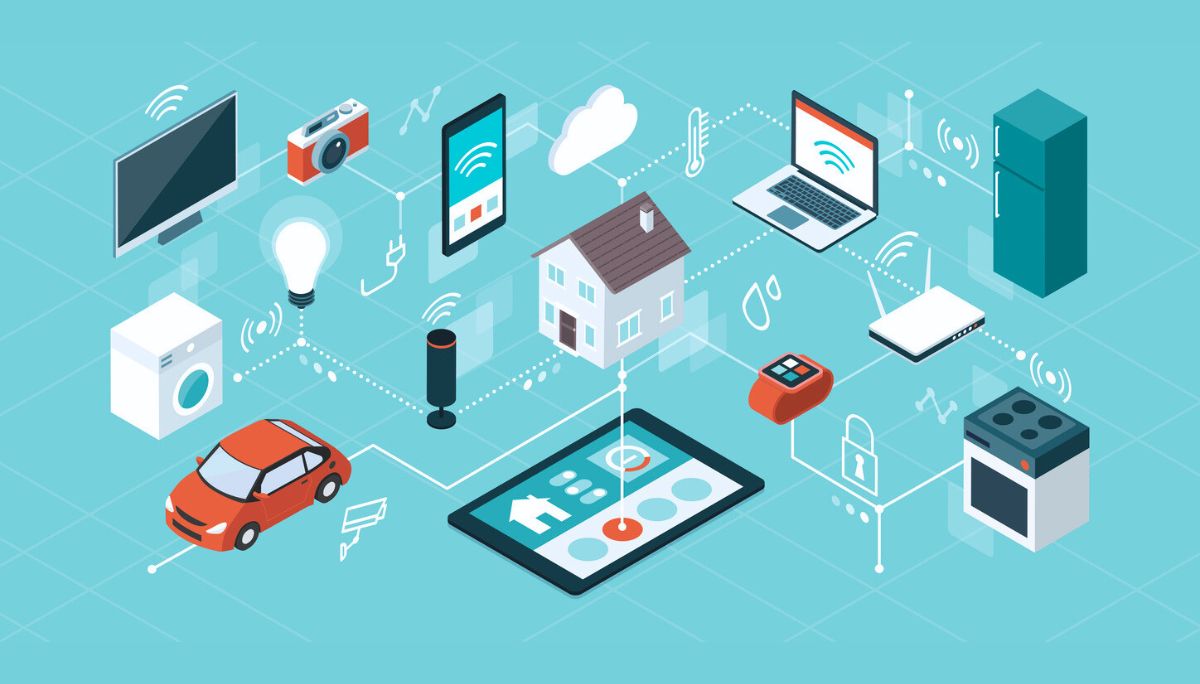
The Internet of Things has moved far beyond early prototypes. Today, smart thermostats automatically adjust heating based on occupancy patterns, 5G-connected robots coordinate production lines on factory floors, and large sensor networks across Europe and North America monitor traffic flow and air quality in real time. These systems aren’t just isolated devices, they’re part of vast IoT ecosystems where connected hardware continuously collects data, triggers actions, and learns from environmental signals.
At the center of it all is IoT networking, the connectivity technologies, protocols, gateways, and data pipelines that allow physical devices to communicate with each other and with cloud systems. For startup founders, CTOs, and AI team leads, this infrastructure is critical because IoT data increasingly fuels machine learning systems for predictive maintenance, anomaly detection, and operational optimization. Weak network architecture quickly becomes a bottleneck for AI ambitions. The challenge is that building and scaling these systems requires specialized engineers like protocol experts, embedded developers, and real-time data architects who are difficult to source through traditional hiring channels. Platforms like Fonzi help bridge that gap by connecting companies with vetted AI and backend engineers capable of handling IoT-scale complexity, often reducing hiring timelines from months to just a few weeks.
Key Takeaways
IoT networking is the connectivity fabric that links billions of physical devices like sensors, actuators, and gateways so they can exchange data autonomously without constant human intervention.
A complete IoT system moves data through multiple stages: sensing at the edge, local communication to gateways, transmission to cloud or edge platforms, analytics, and control signals back to devices.
Modern IoT networks rely heavily on cloud computing, edge computing, and machine learning to transform raw sensor data into real-time decisions and valuable insights.
Building production-grade IoT networks requires scarce engineering skills spanning protocols (MQTT, CoAP, 5G, LoRaWAN), embedded systems, security, and distributed architectures.
Fonzi specializes in helping companies hire elite AI and distributed-systems engineers who can design, secure, and scale IoT networking, with most hires closing within about 3 weeks.
What Is IoT Networking? Core Concepts and Architecture
Before diving into protocols and topologies, it helps to understand what an IoT network actually is and how it differs from the traditional IT networks you might already manage.
An IoT network is a system where physical devices like sensors, actuators, wearables, industrial machines, or smart home devices connect via wired or wireless links to gateways, edge nodes, and ultimately cloud services. These networked devices don’t just passively sit on a network like a laptop waiting for user input. They actively collect data, communicate data to upstream systems, and often receive instructions that trigger physical actions in the real world.
The key components of an IoT ecosystem include:
Devices and sensors: The endpoints that gather data from the physical world, such as temperature probes, vibration sensors, GPS trackers, cameras, and smart meters.
Local networks: Short-range connectivity like WiFi, Bluetooth Low Energy (BLE), Zigbee, or Thread that links devices to nearby gateways.
Gateways: Bridge devices that aggregate data from many IoT devices, perform protocol translation, and forward information to cloud or edge platforms.
Message brokers and cloud services: Platforms like AWS IoT Core or Azure IoT Hub that ingest, route, and store incoming telemetry.
Analytics and applications: Dashboards, ML pipelines, and business process integrations that turn raw data into actionable insights.
IoT networking differs fundamentally from traditional IT networking in several ways. Traditional networks connect computers, servers, and user devices like laptops and smartphones, typically dozens to thousands of endpoints sending high-bandwidth traffic like file transfers and video streams. IoT networks accommodate millions of heterogeneous, resource-constrained devices that send tiny payloads intermittently. A temperature sensor might transmit 50 bytes every five minutes on a battery that needs to last five years.
The scale is staggering. Approximately 16-17 billion internet-connected devices were active globally in 2024, with forecasts projecting tens of billions by 2030. This explosion means architecture choices made today around protocols, security, and data management will determine whether a system can scale or collapse under its own weight.
Different IoT domains have different networking requirements. Smart buildings prioritize low power consumption and mesh coverage across large facilities. Industrial IoT demands deterministic latency for real-time control loops. Connected cars need cellular connectivity that works at highway speeds across geographic regions. Healthcare applications handling sensitive data require strict compliance and end-to-end encryption. Understanding these variations is essential for making sound design decisions.
How IoT Networks Work End-to-End
A typical IoT data path follows a predictable flow: sensing at the device, local communication to a gateway, transmission over wide-area networks to cloud or edge platforms, data processing and storage, analytics, and finally control signals sent back to devices to trigger actions.
Let’s walk through this flow using a concrete example: a cold-chain logistics company tracking refrigerated trucks across Europe. Temperature sensors inside each truck continuously monitor conditions. These sensors connect via BLE or WiFi to an onboard gateway with cellular connectivity. The gateway aggregates readings, compresses them, and transmits them over LTE-M to a cloud platform. There, stream processing engines analyze incoming data against thresholds. If a truck’s temperature rises above safe limits, the system alerts dispatchers and can automatically reroute the shipment to a closer distribution center.
Each stage of this pipeline requires different engineering expertise, like embedded firmware for the sensors, networking for the gateway, cloud data pipelines for ingestion and analytics, and ML models for predictive alerts. Hiring across this spectrum is one of the hardest challenges IoT companies face.
Devices, Sensors, and Actuators
IoT endpoints are built around low-power microcontrollers running embedded operating systems like FreeRTOS or Zephyr. These devices contain specific sensors tailored to their use case: temperature probes for cold storage, accelerometers for vibration analysis, GPS modules for asset tracking, or cameras for visual inspection.
The constraints are severe. Many IoT sensors operate with just kilobytes of RAM and limited CPU cycles. Battery-powered operation is common, which forces designers to make careful trade-offs around radio duty cycling and protocol overhead. A sensor that chatters constantly will drain its battery in weeks rather than years.
Concrete device examples include:
Smart electricity and gas meters have been rolled out by utilities since 2018, transmitting usage data hourly over cellular networks
BLE beacons are deployed in warehouses for indoor positioning and asset tracking
Vibration sensors mounted on CNC machines in automotive plants, detecting anomalies that predict bearing failures
Environmental monitoring stations measuring air quality, humidity, and particulates in smart cities
Actuators work in the opposite direction. They receive commands over the network and take physical action opening valves, starting motors, and adjusting lighting based on occupancy data, or activating security systems when sensors detect intrusion.
Local Connectivity and Gateways
IoT devices typically don’t connect directly to the internet. Instead, they communicate over short-range networks to a more capable gateway node that handles the heavy lifting.
Short-range options include:
WiFi: High bandwidth but power-hungry; suitable for devices with continuous power
Bluetooth Low Energy: Excellent for wearables and proximity applications with low power consumption
Zigbee and Thread: Mesh-capable protocols ideal for dense deployments in smart buildings
LPWAN links: For devices spread across large areas, like agricultural sensors or utility meters
An IoT gateway acts as a bridge between constrained devices and the broader internet. It aggregates data from multiple devices, filters noise, performs protocol translation (converting Zigbee messages to MQTT, for example), and encrypts traffic before sending it upstream.
Consider an industrial gateway deployed in a factory in 2026. It connects dozens of legacy Modbus machines and modern OPC-UA sensors via Ethernet and Zigbee, then routes aggregated telemetry over a 5G uplink to the cloud. The gateway also runs local logic for time-critical decisions, shutting down a pump instantly when pressure spikes, rather than waiting for a round trip to the cloud.
Fault tolerance matters here. Gateways must cache data when WAN connectivity drops and resynchronize when the connection returns. This store-and-forward capability ensures no data is lost during network outages, which are inevitable in remote monitoring scenarios.
Cloud, Edge, and Data Processing
Once data leaves the gateway, it typically flows to cloud platforms via secure channels, TLS-encrypted connections, VPNs, or private APNs for cellular networks. Major platforms like AWS IoT Core, Azure IoT Hub, and their successors provide managed infrastructure for device connectivity, message routing, and integration with analytics services.
The typical data pipeline looks like this:
Ingestion and message brokering: Incoming telemetry is routed to appropriate downstream systems based on device type, topic, or content.
Stream processing: Real-time engines analyze data as it arrives, detecting threshold breaches or running ML inference.
Storage: Time-series databases or data lakes retain historical data for trend analysis and model training.
Analytics and dashboards: Business intelligence tools surface insights to operators and decision-makers.
Edge computing has emerged as a critical layer between devices and the cloud. Rather than sending all raw data to a centralized data center, edge nodes perform data processing close to the source. A wind farm might run anomaly detection models directly on gateway hardware, flagging potential turbine failures in milliseconds rather than waiting for cloud round-trip times.
AI and machine learning increasingly operate across both tiers. Lightweight models run on edge devices for real-time classification, identifying unusual vibration patterns or detecting objects in camera feeds. Heavier model training and advanced analytics remain centralized where compute resources are abundant.
Control Loops and Automation
The value of IoT networks often lies not just in collecting data but in acting on it. Control loops transform insights, predicted failures, threshold breaches, and optimization opportunities into automated responses.
Examples of automated control:
Shutting down an industrial pump within 200 milliseconds when pressure spikes above safe limits
Rerouting delivery trucks based on real-time traffic and refrigeration temperature readings
Adjusting HVAC settings in smart buildings based on occupancy sensor data to optimize energy usage
Triggering alerts to maintenance teams when vibration patterns predict imminent bearing failure
Standard patterns enable this automation:
Publish/subscribe messaging: Devices subscribe to command topics and receive instructions when conditions change
Rules engines: Cloud platforms evaluate incoming telemetry against predefined rules and trigger actions
API integrations: IoT platforms connect to enterprise systems like ERP, MES, or CRM to coordinate business processes
Reliability and safety are paramount for control loops, especially in healthcare or industrial environments. Systems must be designed to fail-safe, defaulting to a secure state when connectivity is lost or commands are ambiguous. Human-in-the-loop interfaces provide oversight for high-stakes decisions while still enabling automation for routine responses.
IoT Networking Technologies, Protocols, and Topologies
No single connectivity technology fits all IoT use cases. Real-world IoT deployments typically combine multiple network types, BLE for local device communication, LTE-M for wide-area backhaul, and WiFi for high-bandwidth applications, each selected based on range, power, cost, and bandwidth requirements.
IoT networks are built from several protocol layers:
Physical and link layer: The radio or wired connection, like WiFi, 5G, LoRa, Zigbee, or Ethernet
Transport layer: TCP for reliable delivery or UDP for low-overhead transmission
Application layer: MQTT, CoAP, HTTP/HTTPS for structuring messages and interactions
Comparison of Major IoT Network Types
Network Type | Typical Range | Power Consumption | Bandwidth | Example Technologies | Typical Use Cases | Pros | Cons |
Cellular IoT | 5-15 km (cell coverage) | Medium to High | 100 kbps - 100+ Mbps | LTE-M, NB-IoT, 5G | Connected cars, mobile asset tracking, smart meters | Wide coverage, carrier-managed infrastructure | Higher power draw, ongoing subscription costs |
WiFi | 50-100 m indoors | High | Up to 1+ Gbps | 802.11ac/ax | Smart home devices, video cameras, high-bandwidth sensors | High throughput, ubiquitous | Power-hungry, limited range without mesh |
Bluetooth Low Energy | 10-50 m | Very Low | ~1 Mbps | BLE 5.0+ | Wearables, beacons, proximity sensors | Excellent for battery-powered devices | Limited range and throughput |
LPWAN | 2-15 km urban, 40+ km rural | Very Low | 0.3-50 kbps | LoRaWAN, Sigfox | Smart agriculture, city-wide environmental monitoring, utility meters | Long range, multi-year battery life | Low bandwidth, not for real-time apps |
Mesh Networks | Node-to-node: 10-100 m; total network: hundreds of meters | Low to Medium | 40-250 kbps | Zigbee, Thread, Z-Wave | Smart buildings, industrial sensors, lighting control | Self-healing, extends range via hopping | Complexity, relay nodes need power |
When choosing a network type, consider your primary constraints:
Battery-powered sensors in remote locations: LPWAN (LoRaWAN, Sigfox) or cellular IoT (NB-IoT)
High-bandwidth video or imaging: WiFi or 5G
Dense indoor deployments: Mesh networks (Zigbee, Thread) or BLE
Mobile assets crossing regions: Cellular IoT with LTE-M or 5G
Real deployments often combine multiple types. A city-wide LoRaWAN network deployed since 2019 might handle lamppost sensors for environmental monitoring, while NB-IoT covers smart meters that need carrier-grade reliability.
Key IoT Application Protocols: MQTT, CoAP, HTTP(S)
Application-layer protocols define how IoT devices structure and exchange data over underlying network connections. The right choice depends on device constraints, network conditions, and integration requirements.
MQTT (Message Queuing Telemetry Transport) has been the workhorse of IoT since around 2010. It’s a lightweight publish/subscribe protocol designed for low-bandwidth, unreliable networks. Devices publish messages to topics, and subscribers receive relevant updates through a central broker. MQTT headers are tiny, around 2 bytes compared to HTTP’s 200+ bytes, making it ideal for constrained devices sending small payloads infrequently. Quality of Service levels (0, 1, 2) let developers trade reliability for overhead.
CoAP (Constrained Application Protocol) provides a REST-like interface over UDP, designed for resource-constrained devices that still want a familiar request/response model. It’s particularly useful when devices need to expose resources that can be queried or updated individually, similar to HTTP APIs but with dramatically lower overhead.
HTTP/HTTPS remains relevant for IoT despite its heavier footprint. It’s often used for configuration interfaces, firmware updates, and integrating IoT data with existing web backends. When devices have adequate power and connectivity, HTTP’s ubiquity and tooling ecosystem make it attractive.
Trade-offs to consider:
Protocol | Overhead | Latency | Firewall-Friendly | Best For |
MQTT | Very low | Low | Yes (runs over TCP/TLS) | High-volume telemetry, unreliable networks |
CoAP | Low | Low | Challenging (UDP) | Constrained devices, resource-oriented models |
HTTP(S) | High | Medium | Yes | Config UIs, firmware updates, web integration |
Network Topologies: Star, Mesh, and Hybrid
Network topology determines how devices are connected and how data flows through the system.
Star topology connects all devices directly to a central hub or gateway. It’s simple to deploy and manage; each device has one path to the network. LoRaWAN and NB-IoT typically use star-of-stars architectures where devices connect to base stations that aggregate traffic. The downside: if the central gateway fails, all connected devices lose connectivity.
Mesh topology allows devices to relay traffic for each other. Data can hop across many iot devices to reach a gateway, extending the effective range and providing redundancy. If one node fails, traffic routes around it. Zigbee and Thread networks use mesh extensively for smart home devices and industrial deployments. The trade-off: relay nodes must stay powered and active, increasing energy consumption.
Hybrid topologies combine approaches. A factory might deploy mesh networks locally within each production cell, with each cell’s gateway connecting via Ethernet or cellular backhaul to the cloud. This balances local resilience with efficient data transfer to centralized systems.
Design pitfalls to avoid:
Bottleneck gateways: A single overloaded gateway becomes a chokepoint for all downstream devices
Single points of failure: Critical paths should have redundancy, especially for safety-related control loops
Interference: In dense 2.4 GHz deployments (shared by WiFi, Bluetooth, microwave ovens), packet loss can reach 20-30% without careful channel management
Security, Privacy, and Reliability in IoT Networking
IoT networking security remains a serious concern in 2026. The Mirai botnet attack in 2016 demonstrated the danger vividly; over 100,000 IoT devices, primarily cameras and DVRs with default credentials, were hijacked to launch massive DDoS attacks. Since then, the attack surface has only grown as many IoT devices enter homes, hospitals, and factories.
Every layer of an IoT system presents vulnerabilities:
Device firmware: Unpatched bugs, hardcoded credentials, insecure boot processes
Radio links: Unencrypted Zigbee traffic can be eavesdropped; BLE pairing weaknesses have been exploited
Gateways: As aggregation points, compromised gateways expose entire device fleets
Cloud APIs: Weak authentication or insecure APIs can leak data or allow unauthorized control
Security analyses report that 70% of IoT breaches stem from weak link-layer encryption and poor credential management. Data security becomes especially critical when systems handle sensitive data like patient health metrics, industrial process data, or location tracking that reveals customer behavior patterns.
Privacy concerns compound security issues. IoT networks can collect intimate details: when people are home, their health status, their movement patterns, and their energy consumption habits. Misuse or exfiltration of this data generated by connected IoT devices creates regulatory and reputational risks.
Reliability intersects with security. Compromised devices can be used for DDoS attacks that degrade availability for legitimate users. A firmware bug pushed to thousands of devices can cause cascading failures. Robust IoT device management isn’t optional; it’s foundational.
Best Practices for Securing IoT Networks
Securing IoT networks requires a coordinated approach across devices, networks, and cloud infrastructure:
Device security fundamentals:
Unique device identities: No shared keys or default credentials across device fleets
Secure boot: Verify firmware integrity before execution
Signed firmware: Accept only cryptographically authenticated updates
Minimal attack surface: Disable unused services and ports
Network security:
TLS/DTLS is standard for data transmission encryption
Network segmentation: Isolate IoT traffic from general corporate networks
Access control: Strict policies governing which devices can communicate with which services
Zero-trust principles:
Never assume any device or network segment is inherently safe
Continuous verification of device identity and behavior
Monitor for anomalies that suggest compromise
Lifecycle management:
Secure onboarding: Provisioning credentials during manufacturing or first activation
Credential rotation: Regular key updates to limit the blast radius of compromises
Decommissioning: Securely wipe devices when retired or resold
Regulatory context matters. California’s IoT security law (SB-327) mandates unique passwords and reasonable security features. EU data protection requirements (GDPR) impact how personal data from IoT deployments is collected, stored, and processed.
The bottom line: Hiring security-minded embedded and cloud engineers is essential to implementing these practices correctly from day one. Retrofitting security onto insecure foundations is far more expensive than building it in from the start.
Designing for Resilience and Observability
IoT networks must operate reliably in hostile conditions, extreme weather, intermittent connectivity, device failures, and software bugs. Resilience requires intentional design:
Fault tolerance techniques:
Retries with exponential backoff for failed transmissions
Store-and-forward at gateways when WAN connectivity is lost
Redundant network paths are critical
Graceful degradation: Systems continue operating (perhaps with reduced functionality) when components fail
Observability for IoT:
Metrics: Track device health, message rates, latency distributions, error rates
Logging: Centralized logs from devices, gateways, and cloud services
Distributed tracing: Follow individual messages through the pipeline to diagnose issues
Fleet monitoring: Detect when thousands of devices silently go offline
Consider concrete failure scenarios during design:
A severe storm knocks out cellular coverage across a region for 12 hours. Gateways must buffer data and resynchronize without data loss.
A firmware bug causes devices to reboot in a loop. Remote management must allow rollback without physical access.
A sudden spike in traffic overwhelms a message broker. Load shedding and prioritization keep critical control messages flowing.
Build observability and remote management, especially over-the-air (OTA) updates, into the network from the earliest prototype stages. Adding these capabilities later is painful and often requires hardware redesigns.
Why IoT Networking Depends on Specialized Talent, and How Fonzi Helps

The technical complexity of IoT networking translates directly into hiring challenges. Building and operating production IoT systems requires a rare combination of skills that spans multiple engineering disciplines.
Roles typically needed for serious IoT projects:
Embedded firmware engineers: Writing code for resource-constrained microcontrollers, managing radio stacks, optimizing for low power consumption
Network and protocol specialists: Deep expertise in MQTT, CoAP, Zigbee, cellular protocols, and integration patterns
Cloud data engineers: Building ingestion pipelines, stream processing, time-series storage, and analytics infrastructure
ML/AI engineers: Developing models for anomaly detection, predictive maintenance, and optimization that run on both cloud and edge
Security experts: Implementing secure boot, cryptographic protocols, threat modeling, and incident response
Founders and CTOs face consistent hiring pain points:
Noisy inbound applications from candidates without relevant experience
Inconsistent interviewing that fails to evaluate deep protocol or distributed-systems skills
Long hiring cycles that delay product development by months
Difficulty distinguishing genuine expertise from buzzword familiarity
Fonzi addresses these challenges directly. The platform rigorously vets elite AI and backend engineers who can handle IoT-scale data, streaming architectures, and ML-driven control loops. Rather than sifting through hundreds of resumes, companies receive curated shortlists of candidates who have already demonstrated relevant capabilities.
Fonzi outcomes that matter:
Most AI-focused hires close within approximately 3 weeks
Consistent evaluation methodology across candidates reduces mis-hire risk
Support scales from your first AI hire to building teams of thousands
Candidate experience remains high-touch and transparent, keeping top engineers engaged throughout the process
In a competitive market for IoT and AI talent, speed and quality both matter. Companies that take months to hire fall behind competitors who move faster. Poor hires in specialized roles set projects back even further.
What Fonzi Is and How It Works for IoT & AI Teams
Fonzi is a specialized hiring platform focused on elite AI and distributed-systems engineers, not a generic job board or traditional recruiting agency. The platform is built around the premise that hiring for technical depth requires technical evaluation, not just resume screening.
The Fonzi process:
Requirements intake: Understanding the specific role, technical stack, team context, and company stage
Curated candidate shortlist: Presenting pre-vetted candidates whose skills match the requirements
Standardized, skills-based evaluations: Assessing systems design, ML for time-series data, streaming architectures, and relevant domain knowledge
Streamlined hiring: Supporting offer negotiation and onboarding to close hires quickly
Fonzi’s talent pool includes engineers experienced with IoT-related capabilities:
Real-time analytics and event-driven architectures
Edge-to-cloud ML pipelines
Embedded systems and protocol implementation
Data infrastructure for high-volume sensor data
The structured, repeatable approach gives both startups and enterprises a scalable way to build IoT networking and AI capabilities without reinventing the hiring process each time.
When to Bring in Fonzi for Your IoT Networking Project
Certain inflection points signal that it’s time to invest in specialized engineering talent:
Early-stage triggers:
Planning your first connected hardware product and need embedded and cloud engineers who understand the full stack
Moving a prototype IoT system into production, where reliability, security, and scale suddenly matter
Building your first IoT platform team from scratch
Growth-stage triggers:
Retrofitting a factory or facility with sensors and edge AI requires engineers who can integrate legacy systems with modern data pipelines
Scaling from dozens to thousands of devices connected, with corresponding infrastructure challenges
Expanding into new IoT applications (healthcare, logistics, industrial IoT) that require domain-specific expertise
Benefits across company stages:
Time savings: Faster time-to-hire (often within 3 weeks) compared to traditional recruiting
Risk reduction: Lower chance of mis-hires in specialized roles through rigorous evaluation
Predictable scaling: A repeatable process for growing IoT and AI teams over time
If your company is facing any of these inflection points, a conversation with Fonzi can clarify what engineering capabilities you need and how to acquire them efficiently.
Conclusion
IoT networking has evolved from a futuristic idea into a core business infrastructure. Today, supply chains track assets in real time, and smart buildings automatically optimize energy use through connected devices. The constant stream of data moving between IoT sensors, gateways, and cloud platforms fuels advanced analytics and machine learning models that help companies operate more efficiently and uncover new competitive advantages.
Getting the architecture right early makes all the difference. Decisions around connectivity technologies, security, system resilience, and observability determine whether an IoT network scales smoothly or becomes a bottleneck. Modern deployments rely on multi-layer architectures like devices, gateways, and cloud services working together to support reliable data transfer and control loops. For many organizations, the real challenge isn’t recognizing the opportunity but hiring engineers who can design and run these systems in production. Platforms like Fonzi help solve that problem by connecting companies with vetted AI and systems engineers who understand distributed infrastructure and data pipelines, making it easier to build capable IoT teams without months of recruiting friction.
FAQ
What is IoT networking and how does it differ from traditional networking?
What protocols and technologies do IoT networks use?
What are common real-world examples of IoT networks?
What are the biggest security challenges with IoT networking?
What skills do I need to work in IoT networking as an engineer?


