What Is Reverse Recruiting? How It Works, Costs, and Who It's For
By
Ethan Fahey
•

Imagine you’re a senior AI engineer with published research, meaningful open-source contributions, and three years of experience scaling distributed training systems. You apply to 200+ roles across foundation model teams, ML infrastructure companies, or AI safety labs, and hear nothing back. Not because you lack depth, but because your resume is filtered out by automated ATS systems before a human ever reviews it. In 2024–2025, this has become a common reality: headcount is tighter, applicant pools are larger, and automated screening often buries highly qualified candidates in the noise.
Reverse recruiting emerged as a response to this imbalance. Instead of companies paying recruiters to source talent, candidates pay specialists to run their search and pitch them directly to employers, a model that shifts leverage toward the job seeker, but often requires upfront cost and trust. At Fonzi AI, we’ve taken a different approach. As a curated marketplace for AI talent, Fonzi connects vetted engineers and researchers directly with serious companies through structured, signal-focused Match Days without requiring candidates to pay to start their search.
Key Takeaways
Fonzi operates differently: it’s a curated AI talent marketplace where vetted companies compete to interview pre-screened AI professionals, and candidates never pay fees or give up a cut of their salary.
AI-assisted matching at Fonzi prioritizes skills, experience, and preferences over demographic proxies, with humans making all final hiring decisions and conducting interviews.
Reverse recruiting and curated marketplaces like Fonzi can compress your search from the typical 6–9 month slog down to a few focused weeks when you use them strategically.
This article covers: how reverse recruiting works step by step, realistic 2024–2025 pricing, how Fonzi’s Match Day model differs, and who should (and shouldn’t) invest in these services.
The bottom line: you don’t have to pay thousands of dollars to get leverage in a tough AI hiring market; there are candidate-first alternatives.
Reverse Recruiting 101: Definition, History, and Why It Exists

Reverse recruiting is a candidate-paid service where a recruiter or dedicated career agent manages your job search, similar to how a Hollywood agent represents an actor. Your interests come first because you’re the one paying the bills. The concept represents a departure from how recruiting worked for decades. From the 1950s through the 2010s, recruiting was almost exclusively employer-paid. Companies hired agencies and headhunters to fill roles, and candidates never saw a bill. The recruiter’s loyalty was split, and they were paid by the company, but needed to keep candidates happy enough to accept offers.
Between 2020 and 2024, several forces changed this dynamic:
Tighter talent markets in high-demand fields like AI and ML
AI-powered hiring tools that created more noise and automated rejection
Remote work expanding candidate pools while shrinking available roles
Growing frustration among qualified candidates who couldn’t get past initial screens
Reverse recruiting differs from traditional approaches in several important ways:
Traditional agency recruiting: Employer pays, recruiter fills roles quickly, candidate is free but loyalty is split
Internal corporate recruiting: Company employees source candidates, no external cost to candidates
Career coaching: Candidate pays for guidance and skill-building, but doesn’t get hands-on search execution
Reverse recruiting: Candidate pays for full done-for-you search management, 100% loyalty to candidate
Factor | Traditional Recruiting | Reverse Recruiting |
Who Pays | Employer | Job seeker |
Who the Recruiter Represents | Employer (primarily) | Candidate (exclusively) |
Typical Cost to Candidate | $0 | $1,500–$10,000+ |
Done-For-You Support | None | Full search execution |
Risk of Misaligned Incentives | High (pressure to fill quickly) | Lower (aligned with candidate goals) |
Industries that have embraced reverse recruiting include executive search, senior individual contributors, and niche specialists. In 2024–2025, AI and ML professionals have become a primary target for these services, given the competitive nature of the market and the high salaries that justify significant upfront investment.
How Reverse Recruiting Works Step by Step
Understanding the reverse recruiting process helps you evaluate whether it makes sense for your career trajectory. Here’s how a typical engagement unfolds from first call to signed job offer.
Initial Consultation
The process starts with a deep-dive conversation. Your reverse recruiter learns your target roles (Staff ML Engineer, Research Scientist in LLM alignment, Principal Infrastructure Engineer), preferred locations, compensation bands, and constraints like remote-only work or startup versus FAANG preferences.
This phase should feel like strategic planning, not just intake. A good personal recruiter will push back on unrealistic expectations and help you clarify your career goals based on current market conditions.
Tooling and Profile Revamp
Next comes the overhaul of your professional presence:
Resume rewrite tailored to AI roles with quantifiable achievements (e.g., “deployed LLM models reducing inference time by 40%”)
Portfolio and GitHub clean-up to highlight 3–5 high-signal projects
Publication list organization for research scientists
LinkedIn optimization with AI-relevant keywords, project highlights, and certifications
For AI talent specifically, this means showcasing open-source contributions, benchmarks, hosted demos, and any work on popular frameworks or tools.

Done-For-You Applications
This is where the rubber meets the road. Your dedicated career agent:
Identifies matching open positions across job boards, company pages, and networks
Tailors each application and cover letter to the specific role
Submits job applications on your behalf
Runs direct outreach to hiring managers via LinkedIn and email
Leverages strategic networking to uncover hidden roles not publicly posted
Some reverse recruiting services send dozens of applications per week, treating volume as a key metric. Others focus on fewer, higher-quality submissions. You should clarify which approach your provider takes.
Interview Preparation
Once you start getting callbacks, preparation intensifies:
Mock interviews covering technical screens and system design
ML-specific practice sessions (training infrastructure, model evaluation, inference optimization)
Research presentation prep for scientist roles
Salary negotiation coaching aligned with current AI market compensation data
Interview coaching on behavioral stories and explaining complex work to non-experts
Transparency and Communication
Throughout this job search process, you should expect:
Weekly progress updates with clear metrics
Shared trackers showing applications submitted, responses received, and interviews scheduled
Clear boundaries about what’s sent under your name
Daily updates during active interview phases
If a reverse recruiting program can’t provide this level of visibility, consider it a red flag.
What Does Reverse Recruiting Cost in 2025?
Let’s talk money. Paid reverse recruiting often costs thousands of dollars, is frequently front-loaded, and remains mostly unavailable to early-career candidates who can’t justify the investment.
Common Pricing Models
Pricing Model | Typical Range | How It Works |
Monthly retainers | $1,500–$3,000/month | Ongoing fee for continuous search support |
Flat package fees | $5,000–$10,000+ | One-time payment for defined scope of services |
Hybrid models | Base + 10–20% of first-year salary | Upfront fee plus success bonus upon placement |
Some firms offer premium executive packages that can reach $15,000 or more for C-suite or VP-level searches.

Guarantees and Fine Print
Many reverse recruiting services market guarantees like:
“Guaranteed interviews within 90 days”
“Job offer guarantee or partial refund”
“Free extension if no offer within six months”
AI talent should read the fine print carefully. Ask questions like:
What counts as a “qualifying offer”?
What notice requirements exist for refunds?
Are there exclusions for certain industries or role types?
How are monthly fees handled if you land a role quickly?
How Fonzi’s Cost Structure Differs
Fonzi takes a fundamentally different approach to the reverse recruiting cost equation. Companies pay to access a curated AI talent pool; candidates never pay fees and never give up a cut of their compensation.
This alignment matters. When recruiters are paid by candidates, there’s pressure to show activity (more applications, more interviews) even if quality suffers. When companies pay for access to pre-vetted talent, the incentive shifts toward high-signal matches rather than volume.
Model | Cost to Candidate | Time Investment | Signal Quality |
Paid Reverse Recruiting | $1,500–$10,000+ | Low (done-for-you) | Variable |
Random Online Applications | $0 | Very high | Low |
Fonzi Marketplace | $0 | Moderate | High |
Pros and Cons: Is Reverse Recruiting Worth It for AI & ML Talent?
Reverse recruiting can be powerful, but it’s not a magic bullet, especially in a noisy AI hiring market where even well-positioned candidates face challenges.
Benefits for Senior AI Engineers
Time savings: Outsourcing the application grind frees you to focus on interviews and your current role
Strategic positioning: Expert help positioning niche skills (RLHF, distributed training infra, safety evaluation)
Access to hidden roles: Career agents often have networks that surface opportunities never posted publicly
Structured interview prep: Mock/practice interviews, system design practice, and negotiation coaching
Unbiased advocacy: Someone fighting for your best offer, not the employer’s hiring timeline
Drawbacks and Risks
High upfront cost: $5,000+ is a significant investment with no guaranteed outcome
Uneven quality: The reverse recruiting market is fragmented, with providers ranging from excellent to barely competent
Over-representation risk: Some employers are skeptical of heavily polished, third-party-written resumes
Misaligned incentives: Pressure to land any job offer rather than the right offer
Dependency: You may not build the networking and search skills needed for future transitions
Ethical and Equity Concerns
Critics have raised valid points about paid reverse recruiting in 2023–2025:
Pay-to-play access disadvantages candidates without disposable savings
Interaction with biased AI screening can compound existing inequities
Limited availability for early-career professionals who might benefit most from support
Self-Check Before Paying
Ask yourself these questions before signing up for a reverse recruiting program:
Do I have a savings buffer that can absorb $5,000–$10,000 without financial stress?
Is my search urgent enough to justify the investment?
Am I senior enough that my salary can realistically recoup this cost?
Do I have clear career aspirations, or do I need coaching first?
Is my existing network strong enough that I might surface similar opportunities myself?
Fonzi vs Traditional Reverse Recruiting: How the Model Is Different
Fonzi is not a paid reverse recruiting agency. It’s a curated AI talent marketplace where vetted companies compete to interview pre-screened AI professionals.
The distinction matters for your career journey. With paid reverse recruiting, you’re hiring someone to execute your search. With Fonzi, you’re joining a talent pool that companies actively want to access, and you’re doing it without writing a check.

How Fonzi Uses AI Differently
Fonzi’s matching system emphasizes:
Skills-based profiles over keyword-stuffing
Model-assisted matching based on explicit preferences and experience
Structured signals like publications, repositories, and prior infrastructure scale
Instead of blasting your resume to hundreds of roles and hoping something sticks, Fonzi surfaces you to companies that actually need your specific expertise, whether that’s LLM evaluation tools, multi-tenant training infrastructure, or safety research.
No Candidate Fees, No Salary Cuts
Companies pay platform fees to access Fonzi’s curated talent pool. You never pay, and Fonzi never takes a percentage of your compensation. This removes a key conflict of interest present in traditional reverse recruiting services.
Comparison Across Dimensions
Dimension | Paid Reverse Recruiting | Random Applications | Fonzi Marketplace |
Cost to Candidate | $1,500–$10,000+ | $0 | $0 |
Time Investment | Low | Very High | Moderate |
Signal Quality | Variable | Low | High |
Control Over Profile Distribution | Varies | Full | Full |
Candidate Experience | Depends on provider | Often frustrating | Designed for clarity |
Reduced Noise, Curated Quality
Fonzi works with curated companies (verified AI startups, AI research orgs, infra-heavy scaleups) and curated talent (limited to AI-focused roles). This prevents the mass-application fatigue that makes traditional job searching so demoralizing.
Inside Fonzi Match Day: A High-Signal Alternative to Reverse Recruiting
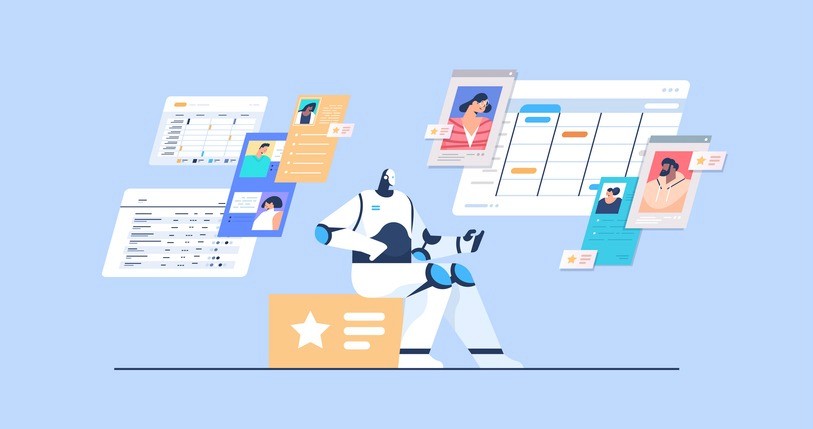
Match Day is Fonzi’s flagship mechanism for connecting AI talent with hiring companies. Think of it as a “demo day” for talent, a specific window where partner companies see a fresh batch of vetted AI candidates and send interview requests.
The Candidate Journey
Application: Submit your profile to Fonzi with details on your experience, skills, and target roles
Profile review: Fonzi’s team reviews your background for AI specialization fit
Light vetting: Confirmation of skills, work authorization, and preferences
Cohort inclusion: If accepted, you’re included in a scheduled Match Day batch
What Happens on Match Day
Companies receive structured snapshots of each candidate:
Technical skills and specializations
Research interests and prior work
Work authorization and location preferences
Compensation range expectations
Based on these snapshots, companies send interview invitations. You then choose which invitations to accept. No blind applications, no wondering if anyone actually saw your materials.
The Human Element
AI is used to rank and match preferences, but human hiring managers and founders make all outreach decisions and conduct all interviews. This reinforces Fonzi’s human-centered approach: AI handles the grunt work so people can focus on people.
How to Prepare for Match Day
Finalize your portfolio: Make sure your GitHub repos, demos, and project write-ups are current
Clarify target compensation and locations: Be specific about what you want
Sharpen your narrative: Prepare a concise answer to “what do you want to work on next?”
Research partner companies: Understand who might be hiring for your specialization
Practice explaining complex work: Be ready to talk about your projects to technical and non-technical audiences
How Fonzi Uses AI in Hiring Responsibly
AI professionals are rightfully skeptical of AI-driven hiring tools. Research has shown that many systems reinforce bias when trained on historical data, and opaque auto-rejection feels like a slap in the face when you know you’re qualified.
Skills Over Proxies
Fonzi’s matching systems prioritize:
Explicit skills and experience (LLM evaluation tools, distributed training infra, safety research)
Stated preferences and interests
Concrete work samples and contributions
The system is designed to avoid demographic proxies or school pedigree as primary signals. Your projects and capabilities matter more than where you went to school.
Human Review and Safeguards
Key safeguards in Fonzi’s approach:
No black-box auto-rejection: Candidates aren’t eliminated solely based on algorithmic scores
Human review override: Fonzi’s team and company hiring managers make final decisions
Model choices aimed at reducing bias: Deliberate design decisions to avoid perpetuating historical inequities
AI as a Tool, Not a Replacement
The philosophy is straightforward: AI reduces grunt work (sorting, ranking based on explicit preferences) so humans, including recruiters, hiring managers, and founders, spend more time actually speaking with job candidates.
Candidate Experience as North Star
Fonzi’s commitments to candidates:
No mass blind submissions
Clear controls over who can see your profile and when
Transparent communication about visibility and outreach
Protection of your current employment situation
Who Reverse Recruiting (and Fonzi) Is Best For
Not everyone needs reverse recruiting, and not everyone is the right fit for Fonzi. Here’s how to think about it based on your career stage.
Early-Career AI/ML Engineers
Paid reverse recruiting: Generally not recommended. The high recruiting cost is hard to justify when your salary may not recover the investment quickly. Many firms don’t even accept early-career clients.
Fonzi: Can be valuable. Curated employers who value projects over pedigree, access to companies that understand AI specializations, and zero cost to you.
Mid-Level Engineers Pivoting into AI
Paid reverse recruiting: Mixed value. If you have savings and need help repositioning your experience for AI roles, it might accelerate your transition.
Fonzi: Strong fit if you have demonstrable AI skills even without a traditional AI background. The skills-based matching can surface opportunities at companies willing to bet on your trajectory.
Senior/Staff/Principal AI and Infra Engineers
Paid reverse recruiting: This is the target demographic. If you’re earning $300K+ and need to land a new job quickly with minimal time investment, paying $5,000–$10,000 for a done-for-you search can make financial sense.
Fonzi: Excellent fit. Access to stealth roles, high-signal companies that understand your niche, and no upfront fees eating into your search budget.
Research Scientists
Paid reverse recruiting: Can be valuable if you’re transitioning from academia to industry and need help translating research experience into corporate-friendly positioning.
Fonzi: Strong fit for scientists working on LLMs, safety, evaluation, and related areas. The curated company pool includes research-focused organizations actively seeking this profile.
When Fonzi Shines
Fonzi is particularly valuable for:
Candidates in niche AI specialties (retrieval infra, model tooling platforms, safety evaluation)
Professionals who need companies that understand and value their specific expertise
Job seekers who want control without paying for a personal recruiter
Anyone who’s tired of sending applications into the void
Consider applying to Fonzi if you:
✓ Work in AI, ML, LLM, or infrastructure engineering
✓ Have demonstrable projects, publications, or contributions
✓ Want to reduce time spent on low-signal applications
✓ Prefer transparency and control over your search
✓ Don’t want to pay thousands before you even land an interview
Practical Tips: How to Succeed in a Competitive AI Job Market

Whether you use reverse recruiting, Fonzi, or run your own search, presenting strong evidence of impact is non-negotiable. Here’s a tactical playbook.
Structure Your Portfolio for Maximum Signal
Highlight 3–5 high-signal projects with concrete metrics:
“Scaled training from 8 to 64 GPUs with linear efficiency improvements”
“Shipped retrieval-augmented generation system serving 10M queries/day”
“Contributed core features to [popular LLM framework]”
“Reduced inference latency by 40% through model optimization”
Your GitHub, personal site, and LinkedIn should tell a coherent story about what you build and why it matters.
Interview Preparation Specific to AI Roles
Core ML algorithms: Be ready to explain fundamentals, not just framework calls
System design for training/inference: Understand distributed systems, GPU memory management, and scaling patterns
Recent LLM research: Know the major papers from the past 12 months
Explaining complex work: Practice talking about your projects to non-experts (this matters for cross-functional interviews)
Consider mock interviews with peers or mentors who work in your target domain.
Compensation and Negotiation in 2024–2025
Current trends for total comp in AI-heavy roles:
Senior ML Engineers at well-funded startups: $250K–$400K total comp
Staff/Principal levels: $350K–$600K+ with significant equity variation
Research Scientists: Wide range depending on publication record and industry vs. academic hybrid roles
When evaluating offers:
Model equity scenarios realistically (especially at early-stage companies)
Consider cash vs. equity tradeoff based on your risk tolerance
Don’t accept the first offer without negotiating: AI talent has leverage
Maintain Your Own Pipeline Awareness
Even if you’re working with Fonzi or a reverse recruiting service, track your own process:
Keep a spreadsheet of applications, responses, and interview stages
Set calendar reminders for follow-ups
Don’t outsource all visibility; you need to know where you stand
This ownership helps you make better decisions and ensures you’re never completely dependent on a third party for information about your own career.
Conclusion
Reverse recruiting reflects a broader shift in how technical professionals approach their careers: instead of waiting to be discovered, you hire someone to actively advocate for you. For senior AI and ML engineers with clear goals and financial flexibility, it can shorten the path to an offer. But writing a check for thousands of dollars isn’t the only way to gain leverage in a competitive market. At Fonzi AI, we believe hiring should be clearer, faster, and more human. Our curated marketplace flips the dynamic by putting companies in competition for vetted AI, ML, and infrastructure talent through structured Match Days, without candidates paying a fee.
For recruiters and engineers alike, the lesson is strategic focus. High-volume applications rarely work for specialized AI roles; high-signal, curated channels consistently outperform spray-and-pray tactics. Whether that’s intentional networking, targeted outreach, or participating in marketplaces like Fonzi, concentrated exposure to serious employers drives better outcomes. If you’re an AI engineer, ML researcher, or infra specialist looking to move beyond the application grind, joining a structured, signal-first ecosystem can dramatically improve both speed and quality of conversations.
FAQ
What is reverse recruiting and how is it different from traditional recruiting?
How much does reverse recruiting cost for job seekers?
Is reverse recruiting worth it, or can I do it myself?
What does a reverse recruiter actually do during a job search?
Who benefits most from reverse recruiting, senior execs or everyone?