What Is a Coffee Chat? Best Questions to Ask
By
Liz Fujiwara
•
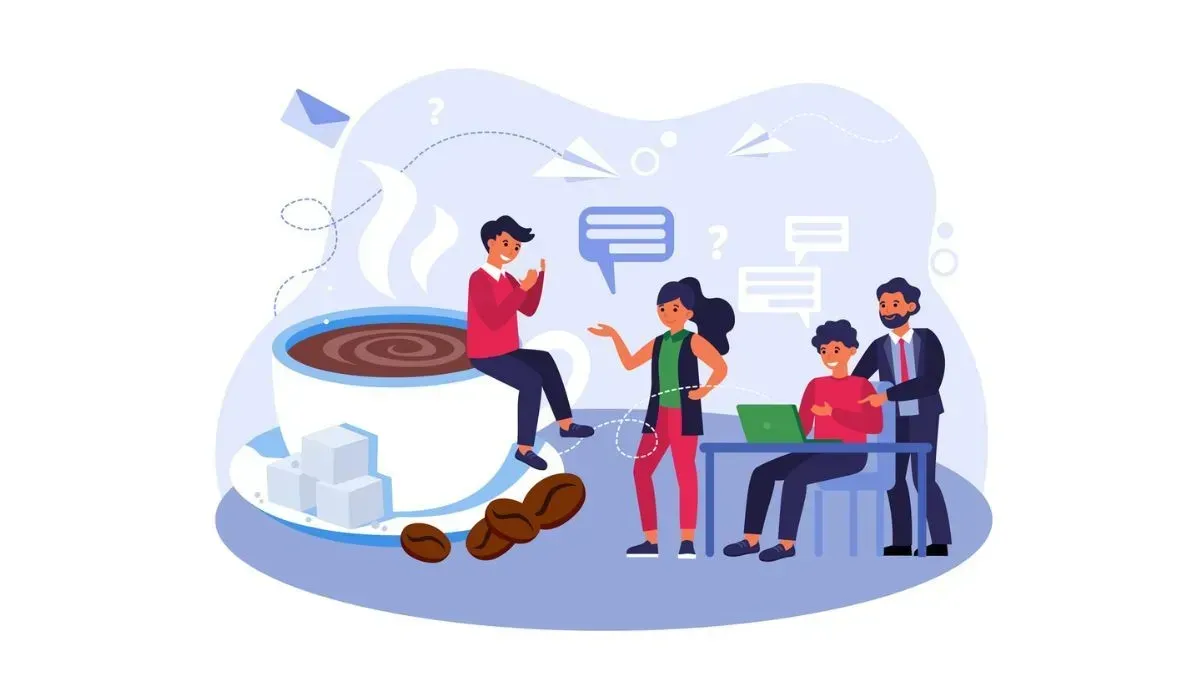
Picture this: an AI engineer scrolling through noisy job boards, facing automated rejections from systems that never read past the first keyword, then landing a role after a single high-quality coffee chat with a staff engineer at a leading AI company. This happens more often than you might think.
A coffee chat is an informal 15–30 minute meeting, in person or on Zoom, used to understand a team’s work, hiring needs, and company culture. These conversations are common in high-growth AI organizations and research labs where hiring managers want to quickly gauge mutual fit before formal interviews.
This article will show how to use coffee chats strategically, what questions to ask as a technical candidate, and how Fonzi differs from generic AI hiring platforms.
Key Takeaways
Coffee chats are informal 20–30 minute conversations that AI engineers, ML researchers, infra engineers, and LLM specialists use to explore roles, teams, and companies without the pressure of a formal interview.
Fonzi uses AI to reduce noise and bias in hiring while keeping human judgment central, concentrating high-intent conversations into a short, focused Match Day with top AI teams.
This article provides step-by-step guidance on requesting coffee chats, what to say, how to follow up, and question lists tailored to AI roles, covering model ownership, infra stack, research culture, and safety practices.
What Is a Coffee Chat? (Especially for AI & ML Roles)
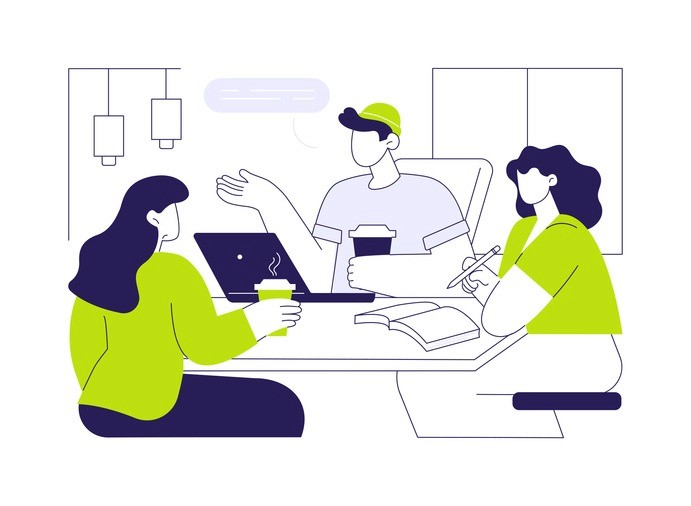
A coffee chat is a low-stakes, information-dense casual conversation where both sides learn about each other. AI engineers, ML researchers, infra engineers, and LLM specialists use these informal conversations to evaluate teams, roadmaps, and expectations before committing to a formal process.
This differs fundamentally from a formal interview. There’s no live coding, no timed whiteboard, and no pass/fail rubric. Instead, the conversation focuses on context, narrative, and alignment on direction. The goal is mutual understanding, not evaluation.
In 2026, these meetings happen across multiple formats:
Virtual coffee chats on Zoom with shared screens
Quick 30-minute calls after conferences like NeurIPS or ICML
In person coffee chats at a coffee shop after a mutual intro from a former teammate
Virtual meeting slots arranged through platforms like Fonzi
For AI roles specifically, coffee chats serve as a sense-check. Both parties explore level expectations (Senior vs Staff), scope (research vs production), and constraints (GPU budget, data access, safety policies). They reveal hidden details that job descriptions never capture.
Core attributes of a coffee chat:
Duration: 15–30 minutes
Goals: Mutual learning, relationship building, fit assessment
Tone: Informal, conversational, low-pressure
Outcomes: Clearer understanding, potential referral, or next steps toward a formal process
Key Takeaways vs. Job Interviews: How Coffee Chats Are Different
A coffee chat is exploratory and two-sided. A job interview is evaluative and structured with a clear pass/fail outcome. Understanding this difference changes how you prepare and what you decide to bring to the job interview.
Aspect | Job Interview | Coffee Chat |
Purpose | Evaluate candidate fit for a specific role | Mutual exploration of interests and alignment |
Agenda | Structured by interviewer with defined rubrics | Flexible, driven by natural conversation flow |
Preparation | Study system design, practice coding problems | Research the person and prepare specific questions |
Example Activity | Live debugging round or ML system design | Discussing how you approached scaling a retrieval system |
Signal Types | Technical accuracy, communication under pressure | Curiosity, depth of experience, cultural alignment |
Follow-up | Formal feedback from hiring committee | Thank you note and continued relationship building |
Power Dynamic | Company evaluates candidate | Both sides evaluate each other equally |
Coffee chats allow candidates to ask probing questions about research direction, infra investment, and safety practices, questions that feel too nuanced for a recruiter screen. You can explore whether the team’s problems genuinely interest you before investing days in an interview loop.
For companies, coffee chats help identify high-signal AI talent quickly, especially when evaluating niche profiles like RLHF experts or systems-for-ML engineers. They provide a low-cost way to de-risk later-stage offers.
Best Coffee Chat Questions for AI, ML, Infra, and LLM Roles

The goal is to give copy-and-paste-ready question sets tailored to different AI specializations, not generic networking questions for any industry. Each subsection focuses on one persona with sample questions written exactly as you might ask them.
At least one or two questions per persona probe how the company uses AI in its hiring process and how they prevent bias or over-automation.
Questions for AI / Applied ML Engineers
These questions help an applied ML engineer understand model ownership, experimentation speed, and production responsibilities on a team.
Sample questions to ask:
How do you typically take a model from prototype to production? What does that lifecycle look like on your team in 2026?
What does on-call look like for ML incidents versus traditional infra incidents?
How do product managers and ML engineers collaborate on feature design and success metrics?
What’s one recent model you shipped that you’re excited about, and what made it challenging?
What does your MLOps stack look like today (feature store, experiment tracking, deployment), and what’s still painful?
How do you manage model monitoring and drift in production? Are there dedicated people or is it shared across the team?
What key skills are you seeing gaps in among incoming AI talent?
For someone joining as a Senior ML Engineer, what would success look like in the first 6–12 months?
How does your team balance rapid iteration with responsible AI practices?
Does your team or company use ML models in the hiring funnel, and if so, how do you make sure they don’t introduce unfair bias?
Questions for ML Researchers
These questions focus on research freedom, publication policy, and alignment between research and product teams which are critical factors for anyone considering a research role.
Sample questions to ask:
How do you balance publishing at conferences like NeurIPS or ICLR with shipping research into products?
What percentage of your time is spent on open-ended exploration versus product-driven deliverables?
How does the team pick which research directions to pursue each quarter?
What internal benchmarks or leaderboards do you track for your core research areas?
What kind of compute do researchers typically have access to (A100 clusters, shared vs dedicated)?
Do you have internal tools for large-scale ablations, or is it more ad hoc?
How closely do researchers work with engineering and product teams? Are there embedded hybrids or more distinct roles?
Can you walk me through a recent project where infra decisions impacted ML outcomes?
What does the research interview loop look like here? Are there paper discussions, code reviews, or take-home projects?
How has AI changed your hiring process here, and what role do humans play in final decisions?
Questions for Infra / Systems for ML Engineers
Infra engineers should probe scale, tech debt, and appetite for investing in platform work versus only shipping features.
Sample questions to ask:
What are the main bottlenecks in your current training and inference pipeline?
How do you plan capacity for GPUs and storage over the next 12–18 months?
Have you invested in things like model parallelism or parameter-efficient fine-tuning infra, and what drove those decisions?
How is responsibility split between the core infra team and product ML teams?
When something breaks in the training stack, who is on point and how do incidents get handled?
What does your deployment strategy look like for large models on-prem, cloud, and hybrid?
How much input do infra engineers have on the technical roadmap versus taking requirements from research and product?
What’s the biggest technical challenge your team is tackling with LLMs right now?
In your interview process for infra roles, how do you balance systems design, low-level performance questions, and ML-specific knowledge?
Are there specific insights you can share about how your company thinks about work-life balance for on-call engineers?
Questions for LLM Specialists and Generative AI Engineers
These questions target teams building with or on top of large language models, whether fine-tuning, RAG, or agents.
Sample questions to ask:
Are you primarily using third-party models (OpenAI, Anthropic, Google) or training your own LLMs, and why?
What does your evaluation framework look like for LLM features?
How do you handle retrieval quality and data freshness in your RAG systems?
How do you approach safety, red-teaming, and prompt injection defenses in your LLM products?
Is there a dedicated safety or policy team working with engineers?
Who typically defines success for an LLM feature?
What’s an example of a recent LLM-driven feature that didn’t work as expected, and what did you learn?
How do you think about the career path for someone specializing in LLMs?
What does collaboration look like across teams when shipping an LLM-powered product?
Do you use LLMs to summarize resumes or interview feedback, and if so, how do you keep humans in the loop on final decisions?
How to Ask for a Coffee Chat (Without Being Awkward)

Even senior AI engineers feel awkward asking for coffee chats. But concise, specific messages tend to get much better responses than vague networking requests.
The key elements of good outreach:
Context: How you found them
Specific reason: Reference a talk, paper, or project (e.g., “I saw your talk at NeurIPS 2026 on retrieval-augmented generation”)
Clear time ask: 15–20 minutes
Low-pressure tone: Make it easy to decline
LinkedIn message template:
Hi [Name], I came across your work on [specific project/paper] while researching [company]. I’m an ML engineer currently focused on [your specialty], and I’d love to hear your perspective on [specific topic]. Would you have 15 minutes for a quick virtual meeting sometime in the next few weeks? Totally understand if your schedule is packed. Thanks!
Email template:
Subject: Quick question about [specific topic] at [Company]
Hi [Name],
I’m [Your Name], an AI engineer working on [brief context]. I recently read your blog post on [topic] and found your approach to [specific insight] really compelling.
I’m exploring new opportunities in [area] and would value your perspective on how [Company] thinks about [specific challenge]. Would you have 15–20 minutes for a coffee chat in the next couple weeks?
Either way, thanks for putting your work out there! It’s been helpful.
Best,
[Your Name]
Always research the person before reaching out. Check their LinkedIn profile, recent GitHub commits, or any arXiv preprints. Personalization matters as generic “I’d love to connect” messages get ignored.
If you don’t hear back after a week, one polite follow up is appropriate. After that, move on. Most people are genuinely busy, not ignoring you specifically.
Preparing for a High-Signal Coffee Chat
A 20–30 minute chat goes by quickly. Thoughtful preparation is the difference between a generic conversation and one that leads to a clear next step.
A simple 3-part prep process:
Research the person: Read their LinkedIn profile, scan their GitHub for recent commits or repos, check if they’ve published papers or blog posts. Look for mutual interest or shared connections.
Research the company: Skim the company website for recent AI/ML blog posts. Check for recent funding rounds or product launches. Understand their tech stack and what problems they’re solving.
Define your goals: What do you want to learn? Maybe it’s “understand how they decide between research and product work” or “learn what their infra challenges are.” Write this down.
Specific research actions:
Review their last 3–5 LinkedIn posts or articles
Check their GitHub for active projects or contributions
Search for recent conference talks or podcast appearances
Read the company’s engineering blog for specific insights on their stack
Note any recent news about the team (new hires, product launches)
Have a short, 30–45 second elevator pitch ready as an AI/ML professional. Focus on 2–3 concrete projects:
“I’m an ML engineer with 5 years of experience, most recently at [Company] where I led a retrieval system that cut latency by 40% on a fleet of A100s. Before that, I built the evaluation pipeline for our LLM features. I’m now looking for a role where I can work on [specific area] at a company that takes safety seriously.”
Prepare 5–7 targeted questions. Write them down so you don’t forget in the moment. Take notes during the conversation as it shows you’re genuinely interested and helps with follow-up.
Running the Conversation: Structure, Flow, and Red Flags

While coffee chats are informal, having a loose structure keeps the conversation productive and respectful of time.
Suggested flow:
2–3 minutes: Intros and small talk
5–10 minutes: Their background and current work
10–15 minutes: Your prepared questions
3–5 minutes: Aligning on next steps or referrals
Good small talk openers for technical contexts:
“I caught your talk on [topic] at [conference] and what’s changed since then?”
“I saw your team open-sourced [tool]. What drove that decision?”
“I noticed you started your career at [previous company]. How did that shape your approach?”
Avoid generic personal questions early on. Technical professionals often prefer discussing work. Save the “what do you do for fun” questions for later if the conversation flows naturally.
Red flags to watch for:
Vague answers about roadmap or technical direction
Lack of clarity on ownership and decision-making
Dismissive attitudes toward ethics, safety, or responsible AI
Heavy reliance on fully automated hiring decisions with little human oversight
Inability to explain what success looks like in the role
Negative talk about current or former team members
Remember, you are evaluating whether you want to work with these people as much as they are evaluating you. A coffee chat is a two-sided conversation. Trust your instincts about company culture fit.
Practice actively listening rather than just waiting for your turn to talk. The best conversations feel like genuine dialogue, not an informational interview where one person extracts information from the other.
How Companies Use Coffee Chats and AI in Hiring
Many companies combine AI screening tools with human-led coffee chats to identify promising AI talent faster than traditional recruiting funnels allow.
How companies use coffee chats:
Sourcing specialized AI talent before roles are publicly posted
Giving candidates an unfiltered view of the team and work
De-risking later-stage offers by aligning expectations early
Building relationships with potential future hires even when timing isn’t right
How AI is typically used in hiring:
Ranking inbound applicants based on skills and experience
Matching profiles to open roles using embeddings or recommendation systems
Flagging candidates with relevant niche experience (RLHF, distributed training, etc.)
Summarizing interview notes for hiring committees
The concern for candidates is valid: opaque AI systems can introduce bias or auto-reject qualified people. Strong teams address this by:
Keeping humans in the loop for all final decisions
Regularly auditing models for demographic bias
Using AI to surface candidates, not to make pass/fail determinations
Being transparent about what automation does and doesn’t do
Generic hiring platforms often feel one-sided and opaque. You submit your resume into a black box and hope something happens. Fonzi is designed specifically to be transparent, curated, and candidate-friendly for AI professionals navigating the job search.
How Fonzi Uses AI to Create Better Coffee Chats, Not Just More Noise
Fonzi is a curated talent marketplace purpose-built for AI engineers, ML researchers, infra engineers, and LLM specialists. It’s not a generic job board or a spray-and-pray platform.
How Fonzi uses AI:
Understanding your actual skill graph based on projects, papers, and code
Matching you to teams with aligned tech stacks and problem domains
Suggesting high-value introductions likely to turn into substantive coffee chats
Reducing noise so you spend time on conversations that matter
Candidate protections built in:
Focus on skills and work samples over pedigree or keywords
Human review of matches rather than pure algorithmic decisions
Explainable matching so you understand why a company is interested
Audited processes to minimize demographic bias
Transparency features:
You know which companies are interested and why
You can see role and stack details before accepting a conversation
You opt in to specific matches instead of being spammed with irrelevant outreach
Inside Fonzi’s Match Day: Turning Coffee Chats into High-Signal Conversations
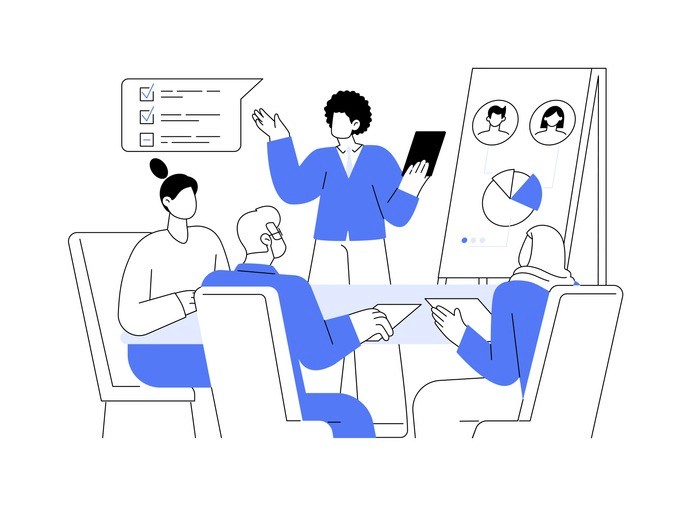
Match Day is a recurring event where vetted AI candidates and curated companies are matched, and intros are released in a short, focused window.
The sequence:
Before Match Day: Candidates complete detailed profiles covering projects, papers, and infra experience. Companies share specific role requirements and team context.
On Match Day: You see which companies want to connect with you and why. You can review role details, tech stack, and team information before deciding.
After Match Day: You accept or decline specific conversations. Many first interactions are coffee-chat style calls with hiring managers, staff engineers, or research leads, not just recruiters.
This structure saves significant time compared to scattered cold outreach. Instead of hoping your message gets noticed among hundreds of LinkedIn requests, you have a handful of targeted, high-context conversations over a few days.
How to prepare for Match Day:
Block time in your calendar for potential conversations
Refine your elevator pitch so you can explain your background concisely
Prepare targeted questions for each team you’ll speak with
Review your Fonzi profile to ensure your key projects are highlighted
Set clear goals for what you want to learn from each conversation
Think of Match Day as a concentrated version of what would otherwise take a few months of networking events and cold outreach. The job opportunities surfaced are pre-qualified, and both sides arrive ready to have a real conversation.
Using Coffee Chats to Showcase Your Skills
Even though coffee chats are informal, they’re often the first impression a team has of your technical rigor and communication style. How you discuss your work matters.
Come ready with 2–3 brief case studies:
A retrieval system you scaled and the trade-offs you navigated
An LLM evaluation pipeline you designed and what you learned
A research project you took from idea to implementation
An infra challenge you solved and the measurable impact
Weave these into conversation naturally:
When they ask about your background or specific projects, answer with compact stories that include:
Context: What was the problem and why did it matter?
Constraints: What made it hard?
Trade-offs: What decisions did you make and why?
Impact: What was the measurable outcome?
“At my last company, we were struggling with retrieval latency for our RAG system; P99 was over 2 seconds. I led the effort to redesign the embedding pipeline, which involved trade-offs between index size and recall. We ended up cutting latency by 60% while maintaining accuracy above our threshold.”
Have links ready, such as GitHub repos, arXiv papers, or blog posts, but share them only if the other person shows interest. Keep the focus on dialogue rather than a portfolio dump. Write down any resources they recommend so you can follow up.
After the Coffee Chat: Follow-Ups, Next Steps, and Momentum
A thoughtful follow up within 24 hours significantly increases the chances of moving from a coffee chat to a formal interview process or a referral.
What a good follow-up includes:
Brief thank-you acknowledging their time
1–2 specific things you learned or appreciated
Clear expression of interest (or non-interest)
Any promised materials (link to a repo you mentioned, a paper they might find valuable insights in)
Follow-up email template:
Subject: Thanks for chatting today
Hi [Name],
Thanks for taking the time to chat earlier. Your perspective on [specific topic] was really helpful, especially the point about [specific insight].
I’m excited about the work your team is doing on [project/area]. If it makes sense, I’d love to explore a formal process for the [Role] we discussed.
Here’s that [paper/repo/resource] I mentioned: [link]
Looking forward to staying in touch.
Best,
[Your Name]
If the timing isn’t right:
Keep the connection warm with occasional updates:
When you publish a paper or blog post
When you open-source a tool or contribute to a notable project
When you change roles or take on new responsibilities
Don’t spam. One update every few months is enough. The goal is to stay on their radar so that when a relevant opportunity opens, you are top of mind. Recommend talking again when circumstances change rather than pushing now.
On Fonzi, some of this follow-up is streamlined through the platform. Candidates and companies can signal mutual interest and schedule the next step directly, reducing miscommunication and ghosting. The platform helps you connect without endless email threads.
Conclusion
Coffee chats are one of the most effective tools for AI professionals to cut through automated hiring funnels and build relationships with teams they actually want to join. In a world where algorithms mediate job searches, these informal conversations remain human.
The approach is simple: prepare thoughtfully, ask targeted questions about work, infra, and ethics, treat each chat as two-sided, and follow up to turn promising conversations into next steps. Personal connections still drive hiring in this industry more than most people realize.
AI engineers, ML researchers, infra engineers, and LLM specialists can create a Fonzi profile, share key projects, and join the next Match Day to start more intentional coffee chats and take control of their career journey.
FAQ
What is a coffee chat and how is it different from a job interview?
What are the best questions to ask a recruiter during a coffee chat?
How do I ask someone for a coffee chat without being awkward?
What should I talk about during a coffee chat if I’m job searching?
How do I follow up after a coffee chat to keep the connection going?